The first people to back Roy Salsinha did not need a conference invitation. They were his parents. When he started his business at 26, they lent him $20,000. His sisters helped pay for his first computer. His girlfriend, who later became his wife, was there from the beginning. The office was his parents’ basement. Before he was arranging introductions for other people, a small group had already decided he was worth a chance.
He returned to that beginning in March 2026, as Carmo Companies marked its tenth anniversary. There are many ways to commemorate ten years of self-employment. Salsinha chose to name the people who helped him start and the team who helped turn the idea into a working business. The recollection gives a human scale to a career otherwise described in the vocabulary of institutional capital.
The first people to say yes
Today, Salsinha is Carmo’s president and CEO, responsible for its strategy and its institutional investor, private equity and development partner ventures. The New York business organizes conferences and capital introductions across private markets. Its participants include fund managers, institutional investors and family offices. Much of the work is arranging an occasion for people with related interests to compare them.
The basement beginning makes that occupation particularly interesting. His own first financing depended on people who knew him. The company he went on to build helps other people begin relationships that may become commercially useful. The scale, setting and obligations are different. Still, his story puts a familiar question near the center of finance: what makes someone willing to listen?
A first computer is a modest object to include in an anniversary account. That is part of its appeal. It brings the story down from the language of platforms and partnerships to the equipment required to get through a working day. His sisters’ contribution sits beside his parents’ loan. The business began with several people doing something practical.
A family accustomed to casting nets
Salsinha has also described a family photograph from Nazaré, Portugal, around 1974. His father and uncle were unloading the day’s catch from his grandfather’s boat. His grandmother and her sisters prepared the fish for market. He remembered difficult times with affection and said his generation was the first in the family to earn its living away from the sea.
In his telling, the old work and the new work share the daily obligation to go out, make an effort and return with something that sustains a family. It is his analogy, drawn from his own history. A deal, a lead or a breakthrough becomes another kind of catch. The fishing story gives his business language a place and a set of people.
“Be proud of where you come from. I certainly am.”
Roy Carmo Salsinha
There is no need to turn the photograph into a prediction of his career. Its value is more immediate. Salsinha chose it to explain how he thinks about work. The family account includes the people preparing the catch as well as those bringing it ashore. Read alongside his anniversary thanks, it suggests that he likes to describe an achievement with its helpers still in the picture.
Learning the geography of money
His formal education was in international business. He holds a Bachelor of Business Administration from Hofstra University in New York. He is fluent in English and Portuguese and proficient in Spanish. Those languages fit a professional history that has repeatedly crossed the United States and Latin America.
Before founding Carmo, Salsinha worked at Markets Group. His focus included building platforms in Latin American economies that introduced international allocators to real estate funds and developers seeking financing. He also worked with US real estate vehicles looking for Latin American institutional capital, particularly private wealth.
The traffic went in both directions. A developer in one market might need access to investors elsewhere. An investment vehicle in the United States might be looking south for capital. The task required attention to who had an opportunity to explain and who had a reason to consider it. An international business degree supplies a subject; those encounters supply the working detail.
That background helps explain Carmo’s approach. The company offers a combination of conferences, roadshows and executive search. Salsinha’s role joins business strategy to investor and development relationships. The meetings are part of a wider effort to connect people whose work depends on capital, expertise and an understanding of another market.
The question before the handshake
One revealing episode came in May 2018, when Salsinha published an interview with Kenneth Munkacy, then senior managing director of Kingbird Properties. The questions moved through the family office’s objectives, Munkacy’s career, investment horizons, property strategy and the reasons for attending a Carmo event in Toronto.
Munkacy described Kingbird as the real estate investment management subsidiary of Grupo Ferré Rangel, a fourth-generation family office based in San Juan, Puerto Rico. His answers made distinctions between the pressures on public companies, investment funds and family offices. Different investors can look at the same property through different clocks.
Near the end, the interview became especially practical. Munkacy wanted to find investment opportunities and diversify a portfolio. Gathering prospects in one city and one location made the search more efficient. A conference, in this account, had a job to do. The hotel could be handsome; the trip still needed a purpose.
Salsinha’s choice of questions matters. He asked about the person’s mandate before asking about the event. That sequence allows the reader to understand why the introduction might be useful. The conference appears as an answer to an investor’s problem, rather than simply a date to put in a diary.
The following month, the Brazil-Canada Chamber of Commerce listed him on its Toronto breakfast agenda. His slot concerned the Canada Latin America Real Estate Meeting. A discussion of Brazilian investment opportunities led into a gathering spanning Canada, Latin America and the United States. The cross-border theme had become a public appointment.
A room, a screen, a follow-up
By November 2021, Salsinha was inviting participants to the fourth annual Latin America US Real Estate Meeting at W South Beach in Miami, during Art Basel week. The invitation anticipated more than 250 real estate funds, institutional investors and other professionals. Its stated ambition was to encourage more institutional real estate transactions between Latin America and the United States.
The timing placed investment discussions beside a week better known for looking at pictures. A real estate agenda brings its own forms of appraisal. People arrive with different views of value, different appetites and a limited amount of time. The organizer has to give those differences a useful place to meet.
A December 2021 European meeting used Zoom and Slack. Its invitation, signed by Salsinha, anticipated more than 400 senior executives discussing opportunities, allocations and private-market performance. The event was closed to the media and prohibited recording. The medium had changed, while the emphasis on a defined audience remained.
A diagram of the offered formats, not a promise of investment.
Carmo’s roadshow offering extends beyond the event itself. It describes virtual introductions, individual in-person appointments and selected private dinners or cocktails. The company says its events help keep its investor database informed about activity and appetite. The large gathering can lead to a smaller conversation with a more specific purpose.
The distinction is useful when considering Salsinha’s work. An agenda can put a subject in front of a room. An individual meeting gives someone an opportunity to ask how an investment might fit particular priorities. Both take organizing, but they ask different things of the participants.
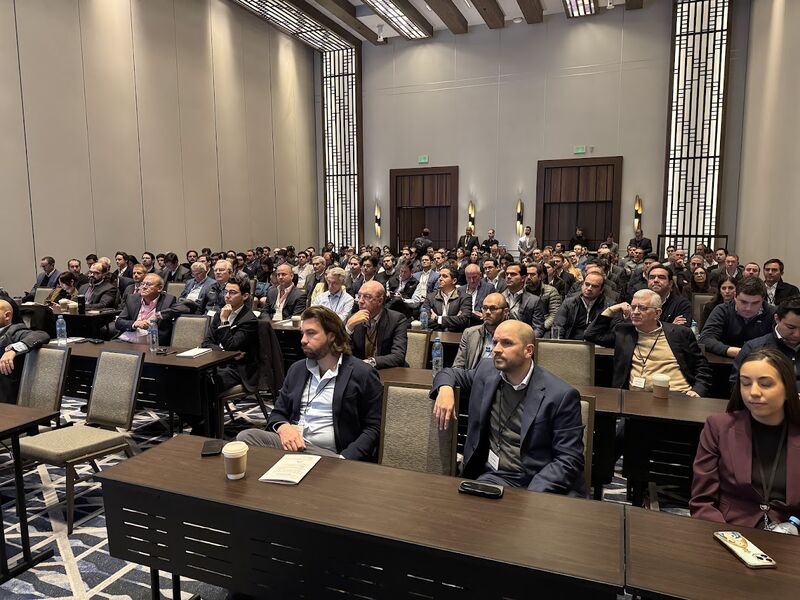
The first Monterrey Private Markets meeting prompted a lighter note from Salsinha. He called his conferences his children and gave this one a special mention. The company highlighted the turnout of family offices. His accompanying photographs showed an audience listening, people talking at a reception and panelists comparing views.
“I love all my children (conferences) the same. But this one was special!”
Roy Carmo Salsinha, on Monterrey
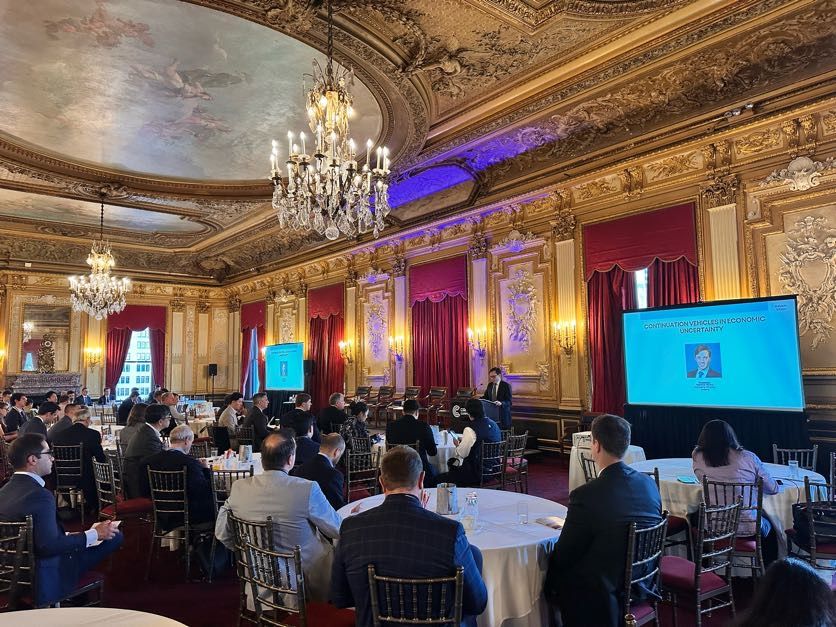
Other agendas show how specific the discussions can become. In Chile in 2023, pension investors were scheduled to discuss private equity, infrastructure, private debt and real estate allocations. A 2024 credit meeting placed institutional investor perspectives and portfolio construction near the start of the day, after Salsinha’s opening remarks. The subjects give participants something firmer than a general invitation to mingle.
When introductions become buildings
Another part of Salsinha’s professional world is Cobra Carmo. The business is a joint venture between Mexico City-based Cobra Development and New York-based Carmo Companies. Salsinha appears on its team. It focuses on residential rental communities in the four major metropolitan areas of Texas.
The venture gives the cross-border story a different physical scale. Meetings require rooms; development concerns the buildings themselves. Cobra Carmo describes a vertically integrated real estate development business. The partnership links organizations in Mexico and New York around work in Texas, carrying the geography of Salsinha’s career into a development setting.
A calendar with several time zones
As of October 2026, Carmo’s published schedule lists forthcoming meetings in Austin, Mexico City, São Paulo, Riyadh, Santiago and Miami. The 2027 calendar extends to places including Singapore, Brussels, Abu Dhabi and London. These are scheduled gatherings, each with its own audience and agenda. Their variety shows how far the company’s organizing work now reaches.
The anniversary reflection remains a useful way to look at that calendar. Salsinha recalled his family’s help and thanked his team. His public story contains both the person making the invitation and the people whose work makes a meeting possible. Ten years gives him a reason to take stock; the next appointment gives the business something concrete to do.
The basement, the first computer and the borrowed money belong to an earlier chapter. He has kept them in the account. Amid the titles and time zones, they make the beginning recognizable: a person setting out to earn a living, with other people willing to help him get started.
Continue the conversation
Explore the meetings, the ventures and Salsinha’s public writing.
Carmo Companies ↗Roy Salsinha on LinkedIn ↗His tenth-anniversary reflection ↗The Kenneth Munkacy interview ↗Cobra Carmo ↗The meeting calendar ↗Carmo Companies on Instagram ↗More photographs from Monterrey ↗The Secondaries Meeting East photographs ↗