Mark Sanor had a problem that money and a respectable résumé could not conveniently solve. Back in New York after years in Russia, he knew people. They were largely somewhere else. The alumni events he attended offered a familiar remedy: put graduates together and hope something useful happened. Sanor wanted more structure. He began arranging introductions in a circle, giving each person a turn to explain what they needed. An evening could now have a purpose beyond remembering who had taken which class.
That modest change in furniture and manners belongs near the beginning of his business story. Sanor is the CEO and founder of 360 One Firm, known as 361Firm, a community connecting family offices, investors, fund managers and founders. It deals in the complicated territory of private investments. Yet its origins are remarkably legible. A person arrived in a city, found the existing gatherings unsatisfactory and started organizing his own. Before the platform, there was the problem of making a room useful.
Eight winters, then New York
His route into this work began in Ohio. He graduated from Denison University in 1990 and the University of Michigan Law School in 1993. As a young lawyer, he joined Hahn Loeser & Parks in Cleveland to work in business and corporate law. The legal background is a useful starting point for understanding the later organizer: transactions require people to be precise about what they want, what they can offer and what must happen next.
Sanor credits mentors and professional connections with opening a path to Moscow. At Price Waterhouse, he worked in a group spanning legal services and corporate finance. He became a partner at Arthur Andersen and later at EY. A contemporary EY presentation described him as an M&A group leader and a technology, communications and entertainment group co-leader in Russia and the Commonwealth of Independent States. It also recorded his advisory work on a $200 million syndicated credit line for the City of Moscow.
This was cross-border finance conducted through an organization with its own working philosophy. Andersen's “One Firm” culture encouraged colleagues to collaborate across countries and service lines. Sanor retained that phrase long after his employment there ended. It supplied part of the name of his eventual company, and a practical ambition: a contact in another country should be someone with whom you can actually work.
He describes the Russian chapter with a memorable unit of measurement: eight winters. New York came next, followed by a partnership with a single family office. He spent roughly a decade investing in companies and funds, sometimes alongside other family offices. The work brought him closer to the people whose difficulties would eventually shape 361Firm. It also placed his international experience beside a much more immediate question: which people could help get a particular transaction done?
Cleveland legal practice
Andersen + EY
Roundtables + 361Firm
An introduction with an assignment
A family office can have capital and still have a narrow view of the opportunities around it. In Sanor's recollection of his own experience, his team considered a broad pool of deals but could concentrate on only a handful within its network. A wider set of funds and fellow investors might have made more collaborations possible. His later community was built around that frustration, with access to opportunities and potential co-investors at its center.
Meanwhile, he was developing the alumni gatherings. Denison Connecting! used roundtables where participants introduced themselves and described their requests. His public explanation of the format also included an offer: how could each person help someone else? These are ordinary questions with an unusually clarifying effect. They turn a professional biography into something another person can respond to. A room full of accomplished people becomes a room full of specific possibilities.
Sanor's alumni project credits Denison graduate Lou Mitchell as a mentor who encouraged its expansion to other cities. London joined the itinerary, and the program eventually reached cities across Asia and Europe. Michigan Connecting! added another university community. By the time Sanor began applying the approach to private investors, he had already been practicing the less glamorous work of gathering people, arranging their participation and giving them a reason to come back.
There is a certain comedy in the premise. Professional networking is often sold as an art of effortless charm. Sanor's version gives it an agenda. Everybody gets a turn; everybody brings a request. The format makes room for a person who has something useful to say but little appetite for interrupting a stranger's conversation. You can see the attraction of a circle: it is rather difficult to pretend the person opposite you does not exist.
The offer
How can I help someone in this room?
The request
What would help me move forward?
The roundtable learns to travel
Sanor dates the founding of 361Firm to 2015. Its subsequent development included family office roundtables and a shift into conferences in 2018. The early event itinerary shows how literally he took the idea of a global network: Seoul, Tokyo, Shanghai, Hong Kong and Singapore appeared on an Asian tour; European and Middle Eastern stops included London, Milan, Abu Dhabi and Dubai. The method could travel because its central questions did not require everyone to have attended the same college.
His own role is part organizer, part financial professional and part host. The community brings together people allocating capital, people raising it and people with relevant operating experience. That mixture explains why the business extends beyond introducing an investor to a fund. Strategic partners and talent are part of the program too. An investment can need a colleague, an adviser or an experienced board member as much as it needs another meeting about money.
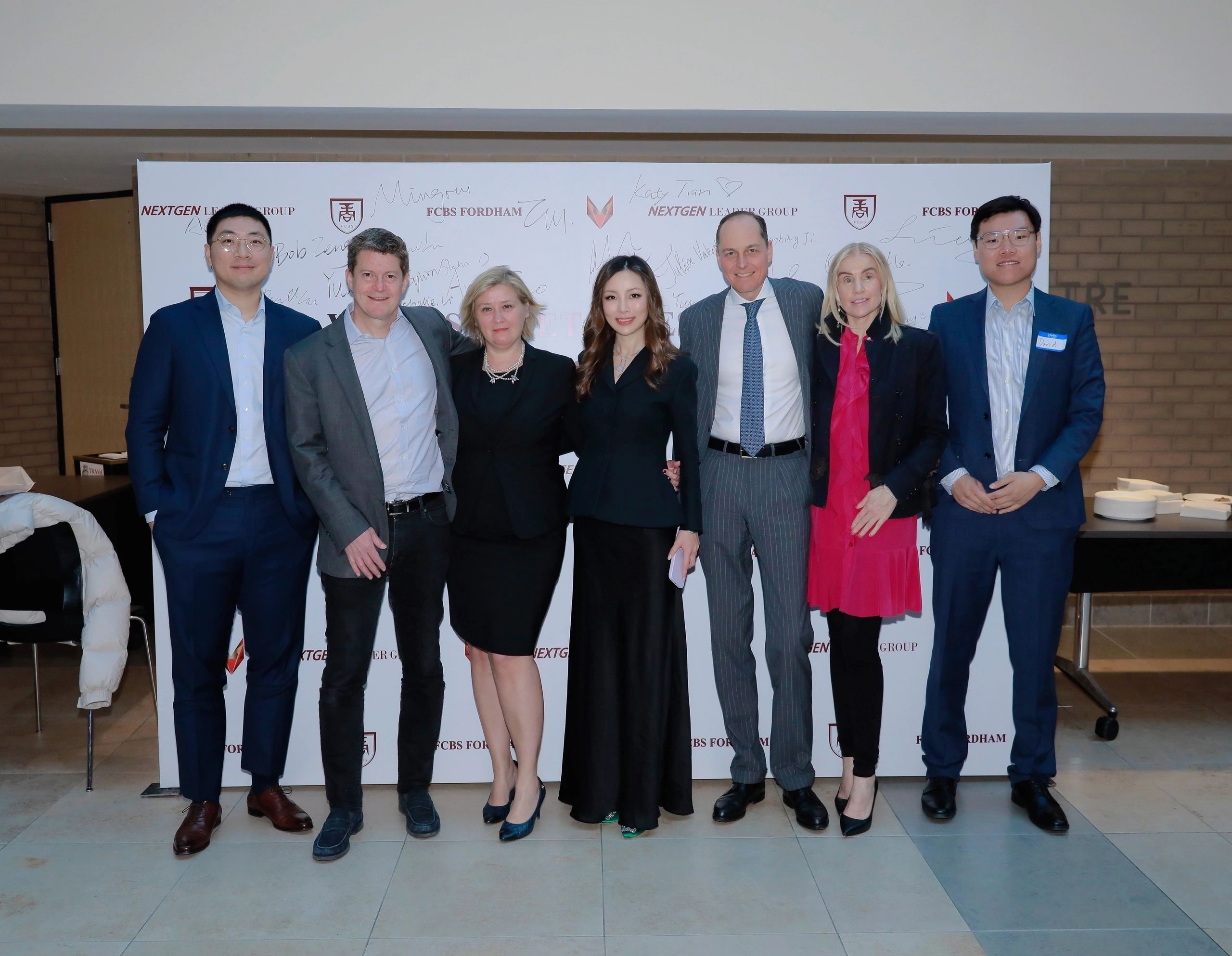
The format also returns him to educational settings. In March 2023, Fordham University's Nextgen Leader Group featured Sanor in a fireside chat alongside Julia Valentine, Bo Zhang and Sebastian Ficht. The discussion covered leadership, innovation and finance. The gathering placed a founder working with family offices in the same conversation as professionals from a family office, Morgan Stanley and JPMorgan. For Sanor, whose organizing work grew from alumni connections, it was a familiar kind of company.
The scope is broad, but his stated areas of collaboration are specific: investing, raising capital, connecting partners and talent, and philanthropy with the next generation. The combination is revealing. It follows several ways people put resources to work, rather than one asset class. A family might be looking for a co-investor in one conversation and considering how to organize its giving in another. Sanor gives both discussions a place on the calendar.
A host who asks for the uncomfortable half
You can hear his method in the opening of the artificial intelligence panel at 361Firm's New York Tech Summit on February 25, 2025. Sanor asks participants to introduce themselves, offer an insight and describe “what scares and excites you about AI.” The question makes enthusiasm only half the assignment. A person making a confident case for a technology is also asked to identify what could go wrong.
The weekly briefings provide another rhythm. Economist and investment professional Stephen R. Burke has anchored Tuesday discussions, while Sanor organizes the surrounding community conversations. A conference asks people to make time occasionally. A regular briefing gives them a recurring appointment. His June 2026 posts promoted discussions on China's economy, affordable housing, growth and economic shocks. The subjects change; the invitation keeps arriving.
There is room for less solemn pursuits. His 2022 digest included pickleball items and a proposed Naples pickleball mixer. The racket is a small but welcome interruption to an otherwise formidable vocabulary of allocators, funds and asset classes. Shared time can take a sporting form as easily as a seated one. The detail helps explain the host behind the financial terminology: he offers his community more than one way to meet.
“what scares and excites you about AI”
Mark Sanor’s prompt at the New York Tech Summit, February 2025
Giving gets a seat at the table
Philanthropy appears throughout Sanor's public account of the community. In 2021, Mitzi Perdue led a 361Firm discussion focused on human trafficking. The program's description also outlined a foundation intended to connect the community around vetted causes, including education and inclusion. These conversations sit alongside the investment program, with their own questions about where resources can make a useful contribution.
Sanor has described philanthropy as a guiding priority and an opportunity for members to become more strategic and effective. His emphasis is on connecting people who might otherwise work separately. The same organizing habit returns: identify interests, introduce relevant participants and give collaboration a setting. The purpose changes, but the practical work still involves helping someone discover who else is already thinking about the problem.
The current calendar makes that commitment concrete. As of October 10, 2026, 361Firm lists its seventh New York Philanthropy, Impact & NextGen Summit for October 14 and 15, followed by its ninth Global Flagship Conference in November. The pairing keeps giving and investing close together in the program. It also leaves an opening for younger participants, whose relationships with family capital and family philanthropy are still taking shape.
Can software remember a conversation?
At Newport in July 2025, Sanor announced 361Firm.Digital to a gathering of investors and operators. He presented it as a way to use the community's conversations, content and relationships through an AI agent. The launch carried a recognizable question into a different medium. If years of useful discussion had accumulated across events and briefings, could members find the relevant person or idea without relying on the host to remember every connection?
The current platform describes matchmaking, diligence and intelligence, alongside a free portal for profiles, the calendar and the latest Tuesday briefing. Access to search involves review and a mutual confidentiality agreement. Membership and transaction engagements are separate. Securities are offered through Finalis Securities LLC, while 361Firm itself is not a registered broker-dealer. Those distinctions matter to the shape of Sanor's work: convening people, supplying tools and carrying out transactions have different requirements.
The firm now describes a community of more than 11,000 members and a footprint spanning more than 140 cities. Those are the company's figures, describing its reach rather than the quality of any individual introduction. The more interesting test for Sanor's project remains close to its origin. Can a participant state a need clearly, encounter someone relevant and have a conversation worth continuing? Software can help locate the match. The participants still have to make something of it.
361Firm’s published figures, October 2026.
Sanor's career has moved from Cleveland law to Moscow finance, New York family office investing and a traveling community with an online platform. The recurring gesture is smaller than the itinerary: make the introduction purposeful. His first circles gave people a turn to speak. His latest tools aim to keep the useful parts within reach after the meeting ends. Somewhere beneath the conference schedule and the AI agent is a host still trying to improve an evening he once found disappointing.
Continue the conversation
More from Sanor and the communities he convenes.