In the first weeks after ChatGPT appeared, Rowan Cheung did what people do when they discover a trick too good to keep: he showed his friends. He had been following AI tools already, but the speed of the chatbot still startled him. What startled him again was how many people around him had never heard of it. He kept demonstrating it, and the reaction repeated. There was an audience for an explanation, even before there was a plan for a business.
Cheung had considered making videos. In a 2023 interview, he gave a disarmingly ordinary reason for choosing another medium: he did not yet feel comfortable speaking to a camera. “I’m better at typing it all out. So I decided to start a newsletter.” It is a good reminder that a media company can begin with a preference as modest as knowing where your sentences come out best.
He called it The Rundown. In January 2023, it had zero subscribers. His Twitter account had roughly 1,000 followers. The news cycle, meanwhile, had plenty of material and very little mercy. New tools appeared; companies made enormous promises; busy people wanted to know what had actually changed. Cheung’s answer was a short daily email that aimed to make AI news readable in about five minutes.
Before the inbox, the pool
The familiar shorthand for Cheung’s career is “college dropout,” which skips the interesting part. He grew up in Burnaby, near Vancouver, with a Swiss mother and a father from Hong Kong. He swam competitively. At Simon Fraser University, he tried psychology, criminology and kinesiology. He moved to the University of Victoria in 2020 and joined its swim team. His own timeline describes an athletic routine of roughly 11 practices a week. Whatever else that schedule teaches, it leaves a person acquainted with repetition.
In 2021, he left university and began teaching himself to code, design interfaces, market products and make content. Those are several careers’ worth of verbs. He studied online and discovered that he liked learning in public, through trying things. The next year, AI became the subject that held his attention. An image generator, DALL-E 2, gave him an early jolt. Then ChatGPT arrived in November 2022, and the subject he had been testing privately became a public conversation almost overnight.
He describes himself plainly: “I would say I’m a very obsessive person.” There is no need to romanticize the word. For Cheung, it meant hours with tools, code and other creators’ work. He has said he studied how successful online creators held an audience’s attention. Swimming had offered a schedule; the internet offered a syllabus. His first editorial assignment came from the questions people close to him were asking.
A thread, a link, a reason to return
The first growth engine was not mysterious. Cheung posted explanatory threads on Twitter, which could move quickly through an audience interested in AI. At the end of a thread, he invited people to subscribe. He has said the first 55,000 newsletter readers arrived organically that way. The thread answered a question now; the email promised to answer another tomorrow. That second step made the audience more than a number on a social platform.
By May 2023, the newsletter had more than 150,000 subscribers, while his Twitter following had passed 235,000. Numbers that rise so quickly invite tidy stories about an algorithmic secret. Cheung’s own recollection is less tidy: he says he got lucky with the timing. He also wrote, tested tools and posted for long days. The timing opened a door. The work kept a reason to walk through it.
The Rundown’s format helped. Readers could find the day’s main developments, tools and practical tips without first sorting through a blizzard of launch posts. A five-minute briefing cannot settle every question about AI. It can tell a curious reader which questions are worth carrying into the rest of the day. Cheung’s early advantage was the ability to turn a fast-moving subject into a repeatable appointment.
The operation soon needed more than one person. Cheung credits Joey Liu with partnerships and Zach Mink with the daily newsletter. Those names matter because a founder-led publication can appear to be the work of a single voice long after it has become a team. The Rundown broadened into technology and robotics editions. The original email remained the front door, while the rooms behind it multiplied.
The audience, in dated snapshots
Newsletter subscribers across The Rundown as reported at each point
2024 and 2025 are Cheung’s figures; June 2026 is his reported active subscriber count across newsletters. Figures describe different points and product mixes.
The interviewer arrives
In 2024, Cheung conducted his first interview. The guest was Mark Zuckerberg. It was a peculiar first assignment, in the way that opening a neighborhood theatre with a stadium act would be peculiar. Yet the progression makes sense. Once readers trust someone to summarize a field, they begin to want that person’s questions put directly to the people making decisions inside it.
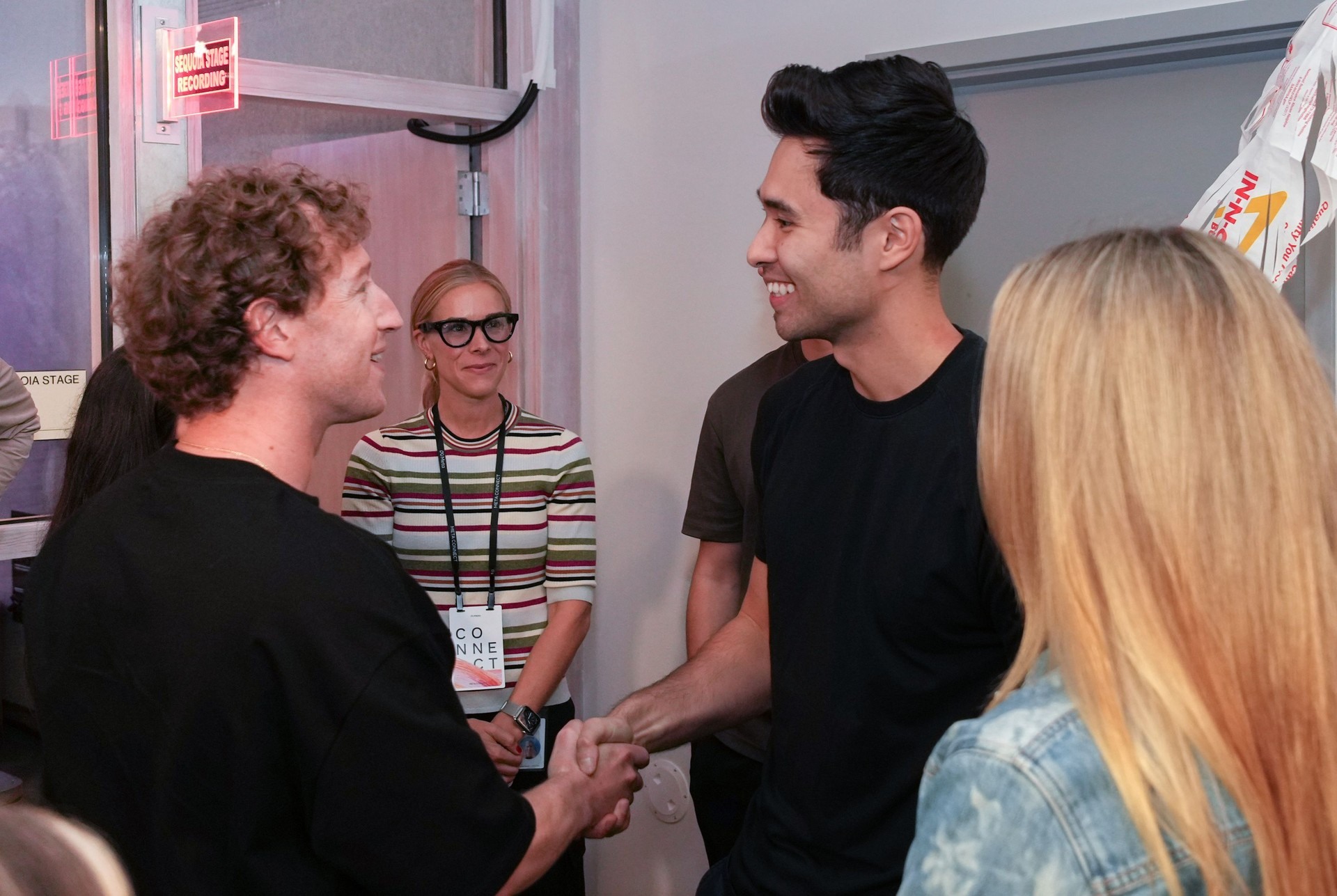
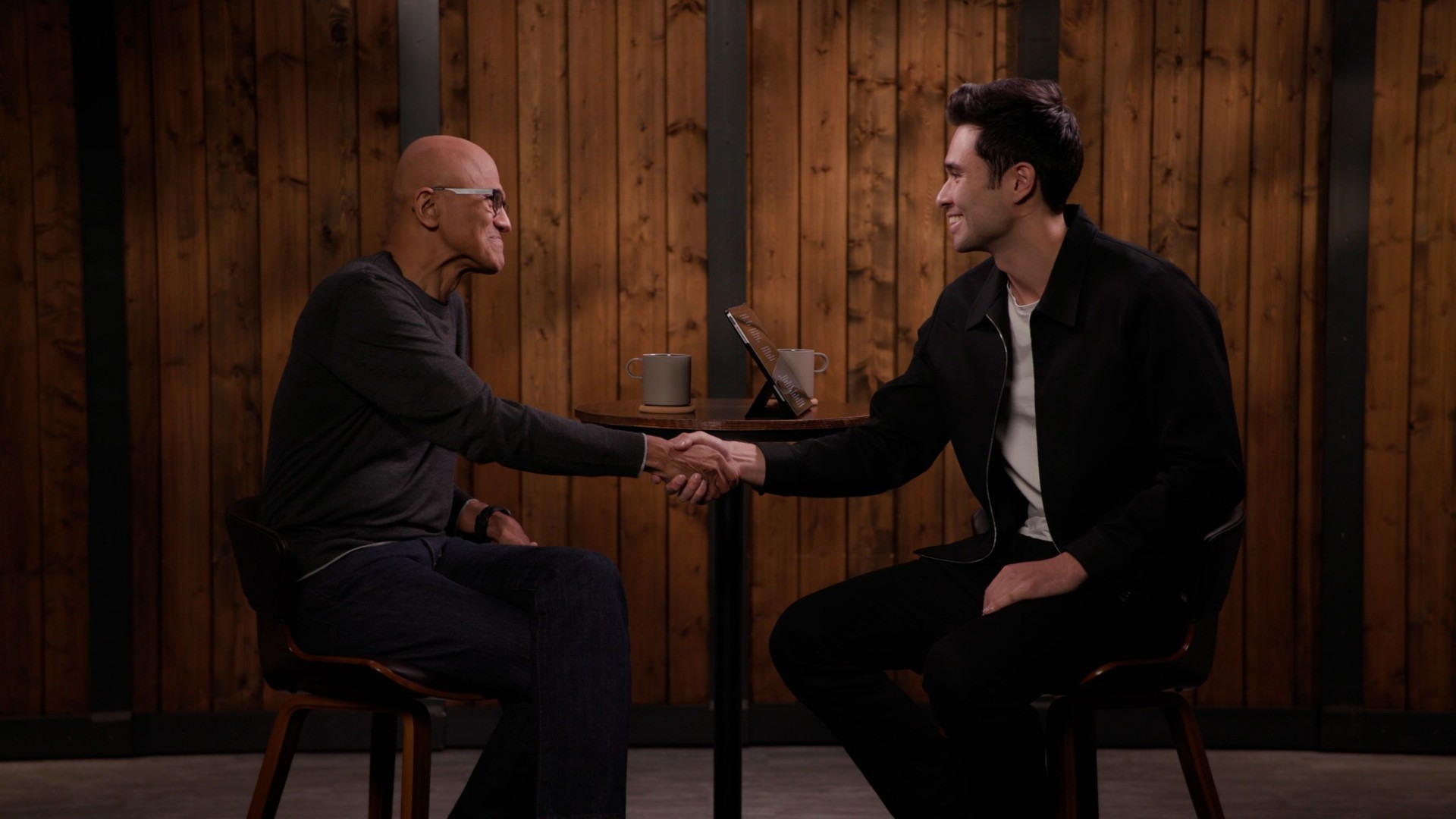
The guest list widened: Sam Altman, Satya Nadella, Demis Hassabis and others. Cheung’s site presents these conversations beside his writing, and The Rundown carries them as a distinct part of the publication. A long interview changes the job. Summarizing a product launch asks what happened; interviewing its architect asks why it happened, and what that person expects next. It gives a reader access to the thinking behind the headline, including the points a short bulletin cannot hold.
There is a small comedy in remembering that Cheung once chose an email because video felt uncomfortable. The person who did not yet want to speak into a camera eventually sat across from the heads of Meta and Microsoft. That is less a personality transplant than an example of how a working format can teach its maker a new one. Writing built the audience; the audience created the invitation; the invitation asked him to learn again.
The question after the headline
News has an expiration date. A skill is supposed to last longer. The Rundown’s next turn was toward teaching people how to use the technology its newsletters covered. Cheung launched AI University in 2024 and later expanded it into a personalized learning platform, with courses, workshops and a community. The language around the project is practical: workflows that fit actual jobs, tools tested in the world, lessons a person can use after closing the browser.
It is a different promise from the original email, though the two belong together. A reader may begin by wanting to know what an AI model can do. The next question is what it can do for them, in the awkward particulars of a workday. Cheung has made that distinction inside his own company too. He has discussed using AI to scale content production, while insisting that human judgment still decides whether something is worth an audience’s time.
His 2025 launch presentation made the point with a wink: the version of him speaking at the start was an AI avatar. The gag worked because it served a real question. If a creator can be present in more than one place, what work deserves the creator’s actual attention? Cheung’s public answer has returned to taste, verification and editorial choice. Tools can draft and distribute. Someone still has to decide what is useful, accurate and worth publishing.
By December 2025, Forbes had placed him on its 2026 30 Under 30 Education list. The recognition reflected how far The Rundown had traveled from a digest of AI announcements. It also sharpened the new job description: founder, editor, interviewer and educator, all attached to a project that began as one daily email.
A partner for the next edition
In June 2026, The Rundown announced its first strategic investment, from Electrify. The company described a business reaching more than two million subscribers across AI, technology and robotics. Cheung reported 2.6 million active subscribers across the newsletters and more than 63,000 professionals and companies trained through The Rundown University. Electrify would bring operational support and shared resources; Cheung said he would remain CEO and keep control of editorial content and direction.
The distinction is central to a publication that lives on trust. Readers can forgive a briefing for being brief. They have less patience when the person choosing what matters seems to have handed over the choice. Cheung’s stated mission is enormous: make AI a practical skill for one billion people. The daily version of that ambition is smaller and more demanding. It is to send an email people want to open, ask a question that earns a useful answer, and make a lesson clear enough to survive a real Monday morning.
He moved to Switzerland in 2025, a long way from Burnaby, though the working rhythm of his story remains recognizable. A swimmer repeats a lap; a writer faces an empty page; a company has to be useful again tomorrow. Cheung caught an unusually good wave in AI’s public arrival. He built something lasting by turning the moment into a habit, then asking what the habit could teach.