The awkward detail in Sunny Singh’s story is the second burnout. Building Edifecs, his healthcare technology company, had exhausted him. He went on to found Roundglass, an organization devoted to wellbeing. And then, by his own account, it happened again. In a June 2025 essay, he described experiencing burnout at both companies. Knowing the vocabulary of balance had apparently offered no automatic protection against losing it.
- One daily plan: breathing, meditation, movement, food, and music organized around personal goals.
- Two routes in: free individual access and programs delivered through employers, campuses, and teams.
- The practical lesson: make a healthy action small enough to repeat on an ordinary day.
That tension makes Roundglass Living interesting. The wellbeing platform within Roundglass has to address the distance between understanding a good habit and actually doing it. Its proposition is straightforward: pick a goal, receive a manageable plan, and use reminders and check-ins to keep returning. The ambition is large. The unit of action is deliberately small.

A daily plan beats another shelf of videos
Consider the difference between a cookbook and dinner. The cookbook can contain everything you need to know. Dinner still requires a decision, ingredients, and a moment when you stop doing something else. A wellness library has a similar problem. Its usefulness depends on the bridge between browsing and beginning.
Roundglass Living builds that bridge with a personal daily plan. Seattle University’s description gives a plain account of the sequence: choose something like sleeping better or stressing less, then receive a customized feed of activities and tips. Mood tracking, progress statistics, timers, and reminders provide ways to return. The app brings several kinds of practice into the same routine rather than asking users to assemble separate services.
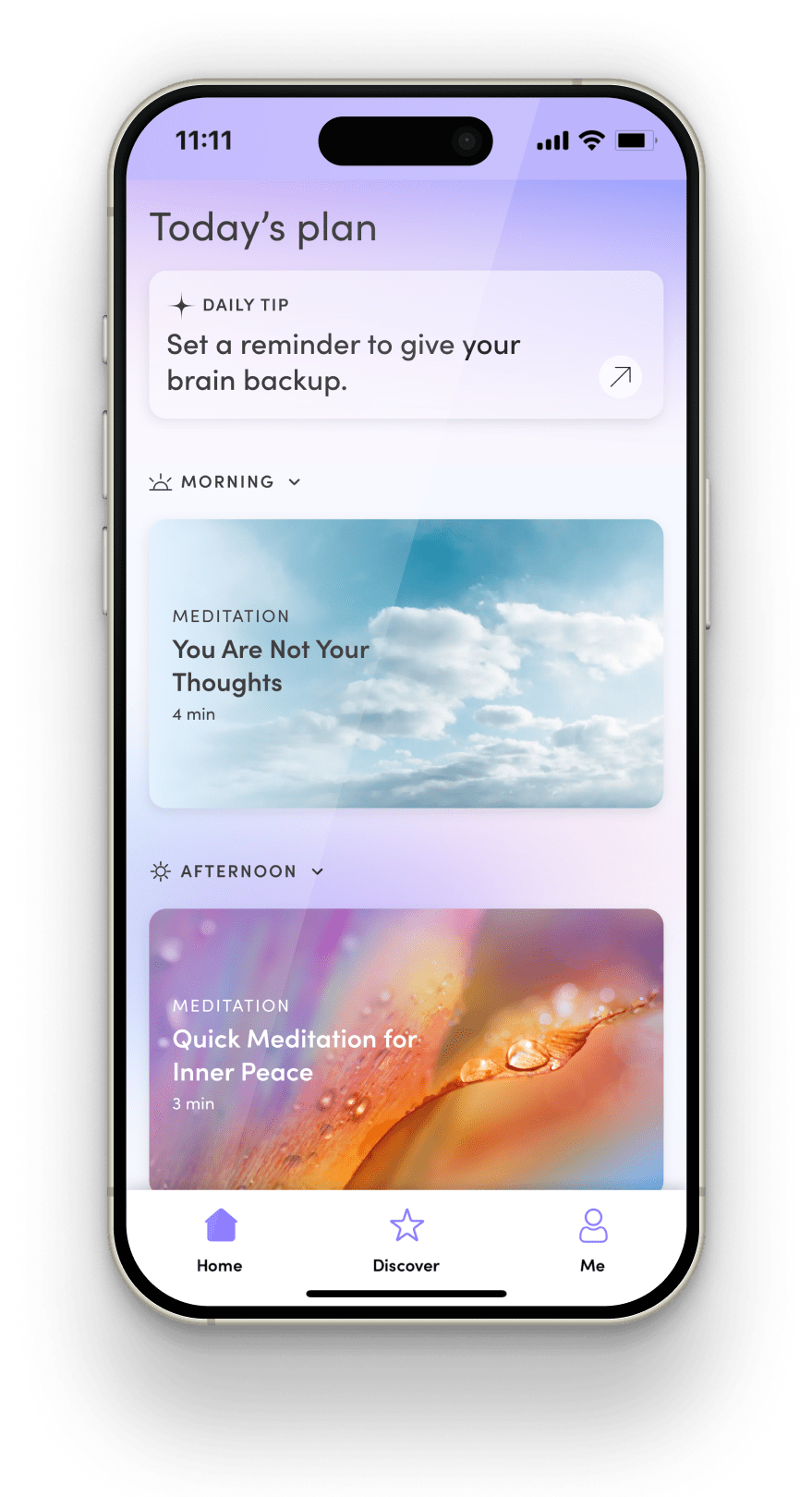
The range can be pleasantly unexpected. Its 2022 food-channel launch included chef-led cooking courses featuring Amanda Cohen and Shenarri Freeman, alongside recipes and an ingredient encyclopedia. Its music launch named producer Jerry Wonda and artist Amrita Sen as collaborators. These choices give the company expertise beyond the familiar voice guiding a meditation. A meal and a soundtrack become legitimate entry points.
The company calls its approach “wholistic,” keeping the W to emphasize the whole person. That spelling is doing branding work. The more consequential design decision is the bundle: attention, movement, food, and rest in one place. Headspace also combines meditation, sleep material, movement, and music. Breadth alone cannot settle the competitive argument. The question is whether Roundglass makes the next useful action easier to choose.
“I’ve experienced burnout twice.”
Gurpreet Sunny Singh · June 2025
The customer already has a community
There is another way to understand the business: look at who introduces it. At Seattle University, the offer extends to students, faculty, and staff. The university tells people to register with their campus email and explicitly notes that its setup does not use single sign-on. Such details sound pedestrian. They are also the difference between an announced benefit and one somebody can open.
Grassroot Soccer, the adolescent-health organization, offers another example. Its partnership gives employees and affiliate employees free app access. This is a staff benefit inside an organization already concerned with health. The institutional customer supplies a ready-made community; Roundglass supplies practices and the tools around them.
The US Youth Soccer partnership was announced across this network. Partnership reach is different from app adoption.
On September 24, 2025, US Youth Soccer announced Roundglass as its official wellbeing partner. The agreement included free app access for registered players, coaches, referees, administrators, and families, alongside workshops and community activities. Here the product sits beside an existing routine of practices, matches, and team relationships. It has a place to be introduced, and people who can encourage its use.
Free at the front door
The pricing history reveals a changing approach to access. February 2022 launch coverage described a free version and Living+, priced at $7.99 monthly or an introductory $59.99 annually. The current website advertises a free individual tier and directs enterprise customers to sales. App stores still carry in-app purchase listings, so those older subscription numbers deserve their date attached.
For organizations, the offer includes work beyond supplying content. Workplace materials describe onboarding support, communication kits, team challenges, and a collective dashboard. School materials add lesson manuals and integration with learning-management systems such as Canvas. These features address a buyer’s operational problem: getting a program into everyday use and seeing whether people engage.
- 01ChooseA personal goal
- 02PracticeA manageable step
- 03NoticeMood and progress
- 04ReturnA reminder to repeat
That dashboard needs a careful reading. Minutes spent practicing and participation patterns can help an administrator understand use. They do not, on their own, establish that a workforce is healthier or a classroom performs better. Buyers should distinguish delivery, engagement, and outcomes when deciding what success would mean.
Give the habit somewhere to live
A reader can borrow the operating idea without adopting the entire product. Choose one goal. Pick a practice short enough to fit the day you actually have. Attach it to an existing moment, then review whether you returned to it. This is an editorial interpretation of the app’s design, rather than a promise of a particular result.

The surrounding conditions still matter. An employer must give people usable time. A school needs a workable introduction and appropriate oversight. A person who dislikes guided practices may prefer another route. More available content cannot solve every mismatch. Roundglass Living’s useful wager is that healthy intentions deserve practical scaffolding. Singh’s own story gives that wager its stakes: even the person building the wellbeing company needs help making room for wellbeing.