The Drug-Free Trip You Can Buy on the App Store
A game-industry executive turned a lifelong meditation habit into the first mindfulness app on the Meta Quest. Now TRIPP is betting an AI guide named Kokua can follow you off the headset and into your pocket.
The pitch sounds like a wellness fever dream: put on a headset, and instead of a soothing voice over a forest soundtrack, you are shrinking into an atom, or drifting through a nebula, while a guide counts your breath. That is the point. TRIPP, Inc., a Los Angeles company founded in 2017, decided early that realistic calm was the wrong target. Fake nature, its team found, can quietly stress people out. So TRIPP went the other way - surreal, saturated, deliberately psychedelic - and became the first meditation app ever shipped on the Meta Quest.
Six years on, that bet has produced more than 14 million guided wellness sessions across VR, AR and mobile, a place on TIME's Best Inventions of 2022 list, roughly $28 million in funding from names like Mayfield, Amazon's Alexa Fund, Qualcomm and HTC, and a company that keeps quietly refusing to be pinned to any single device. The headset was never the product. The mood was.
01 / The FounderFrom shipping games to shipping calm
TRIPP's CEO and co-founder, Nanea Reeves, spent about two decades in the video-game industry before she ever built a wellness app. She had also been an early angel investor in Oculus, which means she watched the headset business take shape from the inside before deciding what to build on top of it. Her thesis was simple and personal: meditation, which she had practiced since her teens, and games, which she had shipped for a living, had both carried her through hard stretches of life. Why not fuse them?
Reeves is joined by co-founder Zack Norman, who serves as President, and CTO Andreja Djokovic. It is a small team - roughly 26 people - for a company that ships on nearly every headset on the market. That constraint shows up in the culture, which Reeves has framed around building "resiliency to failure," a phrase that reads less like a slogan and more like a habit carried over from years of iterating on games that shipped, broke, and shipped again.
The origin story is smaller and stranger than the pitch deck. Before TRIPP was a wellness company, it was a VR Solitaire prototype that Reeves and Norman set inside a haunted house - a project that convinced them the medium could do something to a person's state of mind that a flat screen could not. Reeves has also been candid that the work is personal, shaped by loss in her own life, which is part of why the company keeps circling back to a practical question rather than a grand one: did that session actually help.

02 / The ProductWhat you actually do inside TRIPP
Open TRIPP and you pick a goal - calm, focus, sleep, or a mood-boosting "ascend" session - and the app drops you into a 360-degree worldscape built to match it. Guided narration, breathwork prompts, binaural audio and gentle gamification (points, streaks, a sense of progress) run underneath the visuals. The result is closer to an interactive light show with a purpose than a traditional meditation track. Users can also shape their own sessions with TRIPP Composer, blend the calm into their real room with the mixed-reality Sanctum, or join live group meditations in VR - a community TRIPP scaled by acquiring EvolVR, then the largest live-meditation gathering in virtual reality, in 2022.
The through-line across all of it is a phrase the company likes to use: Mood on Demand. Whether you are in a $500 headset or holding a phone on the bus, the promise is the same - a short, designed experience meant to move your emotional state on purpose.
03 / The Data LoopThe survey hiding inside a meditation app
Here is the decision that quietly turned TRIPP from a wellness app into a data company: it asks you to rate your mood before and after nearly every session. Over millions of sessions, that before-and-after loop became a dataset about what actually shifts how people feel - not what people say they like, but what measurably moves them. It is also how the company can make a claim most meditation apps cannot back up with numbers.
An average 25% mood lift
TRIPP reports that about 80% of users record an average 25% improvement in mood after a session, drawn from the in-app ratings the company built into the product from the start. Results, of course, vary by person.
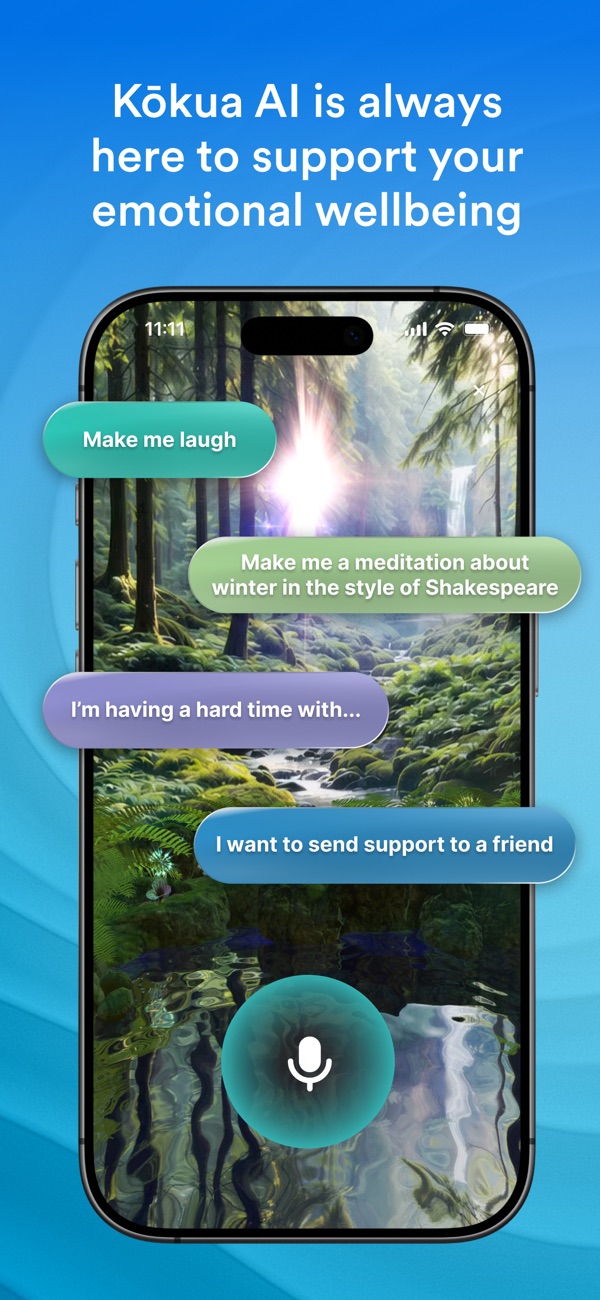
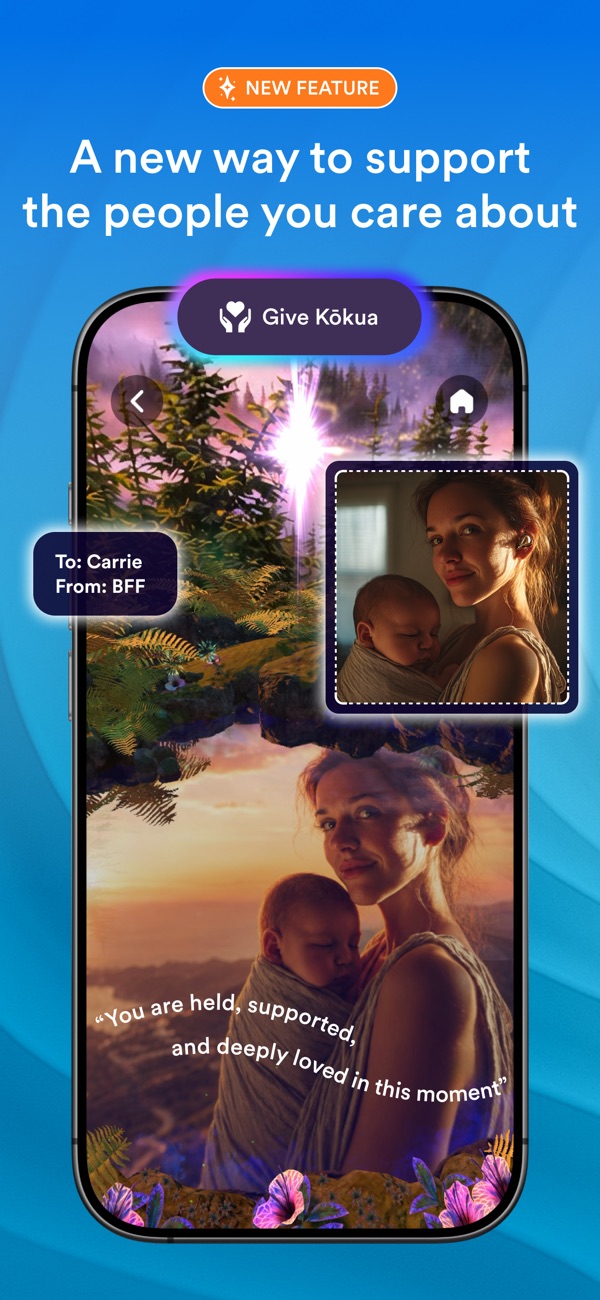
That same data foundation is what makes the company's newest move possible. In 2024, TRIPP introduced Kokua - a Hawaiian word for help or support - an AI wellness guide trained on the company's years of user experience. You tell Kokua how you are feeling, and it responds with personalized reflections, a custom meditation, or simply supportive conversation. It launched first in a mobile beta in early 2024, then as Kokua XR inside virtual reality, and by 2025 had spread across mobile, Quest, Apple Vision Pro, HTC Flow, PSVR and Pico. The company says Kokua draws on tens of millions of emotional inputs to tailor a session in real time, and that it holds patents on that real-time personalization. Notably, TRIPP has been public about what it does not do with the data: it says voices are not stored and user data is not sold - a stance that matters in a category where the raw material is how people feel at their most vulnerable.
04 / The MoneyHow you fund a calm subscription
TRIPP sells calm as a subscription - a direct-to-consumer membership that unlocks the full library across headsets and phones, distributed through the Meta Quest store, Apple's App Store, Google Play, PlayStation and other XR storefronts. On top of that consumer base, the company chases enterprise wellness and clinical-research channels, and is now monetizing Kokua as an AI product.
The capital arrived in stages. An early round of about $4 million in 2017 got the company off the ground. In June 2021, an $11.2 million Series A - led by Mayfield and Vine Ventures, with participation from the Amazon Alexa Fund, Qualcomm and HTC - funded the push to build what Reeves called a "mindful metaverse." Strategic investment from BITKRAFT Ventures followed, and a convertible note in 2023 rounded the total toward roughly $28 million.
05 / The CompetitionAudio gave you a voice. TRIPP gave you a universe.
The obvious comparison is Calm and Headspace, the audio-first giants that taught a generation to meditate through their earbuds. TRIPP's answer is immersion: a soothing voice asks you to picture a peaceful place, while TRIPP just puts you there and surrounds you with it. On the immersive side, it competes with a smaller field of VR wellness players - Healium, Liminal, Guided Meditation VR, Maloka, Novobeing - but few have shipped as widely or collected as much mood data.
06 / The ClinicTrying to make calm prescribable
TRIPP's most ambitious frontier is the one furthest from the app store. The company has published peer-reviewed research and run clinical trials, including work suggesting VR meditation might help mood in cancer patients. It also won a $1.7 million grant from the National Institutes of Health, alongside the peer-support network Sober Grid, to study whether its technology can support addiction recovery. That is a different game than consumer subscriptions - slower, harder, and, if it works, far more durable. It is also the clearest signal of where Reeves wants the category to go: from a nice-to-have app to something a clinician might actually reach for.
07 / Where It FitsNot the metaverse. The mood layer.
When the metaverse hype cycle collapsed, plenty of VR-first startups went with it. TRIPP did not, largely because it never really sold the metaverse - it sold a feeling, and let the feeling ride whatever hardware showed up. That platform-agnostic instinct is the company's quiet advantage. The headsets will keep changing. The phones will get faster. AR glasses are coming. Through all of it, TRIPP's actual product - a short, designed experience that moves your mood, now increasingly voiced by an AI companion - stays portable. In 2026, the bet looks less like "the future is VR" and more like "wherever you look, someone should be able to hand you a moment of calm."