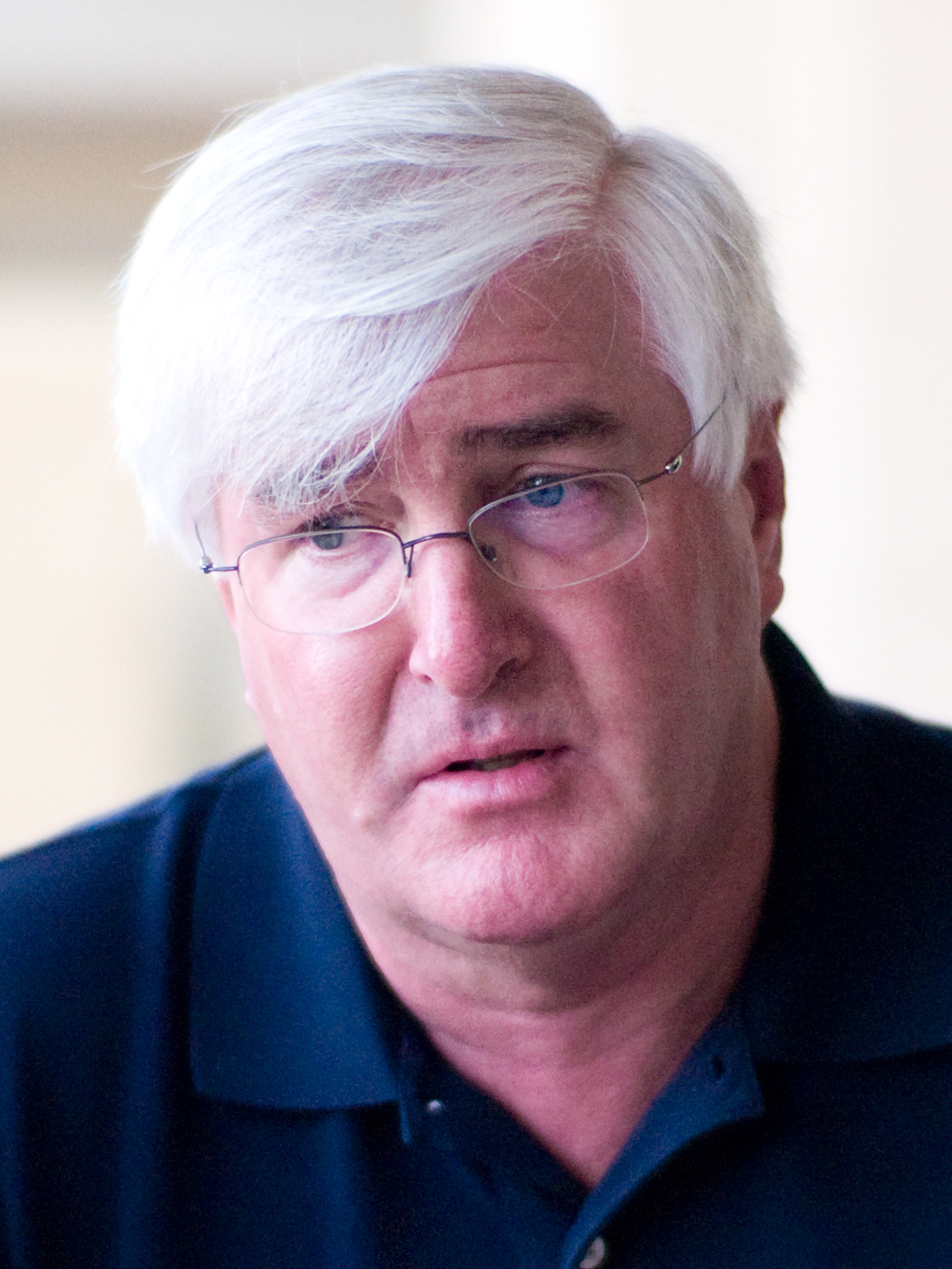
He Doesn't Code. He Connects. And That Changes Everything.
At a 1999 internet party with Napster's Shawn Fanning drawing the room like a celebrity magnet, Ron Conway did what Ron Conway always does: he ignored the crowd and walked toward the two people no one was talking to. Two graduate students, a little awkward, standing against the wall. Their names were Larry Page and Sergey Brin. Within months, Conway had helped them land Sequoia Capital and secured his own piece of a company that would eventually define the internet age.
He didn't discover Google because he's a genius. He discovered it because he's a router. A human router - Marc Andreessen's phrase, not his - the kind of person whose mind is an 18-page contact list of 1,300 names: executives, bankers, journalists, artists, politicians. When something needs to connect to something else, Ron Conway is the junction.
The Sixth of Twelve
Born on March 9, 1951, in San Francisco - sixth of twelve children in an Irish Catholic family - Conway did not grow up surrounded by technology. He attended Catholic schools, earned a Political Science degree from San Jose State University, and joined National Semiconductor in 1973 doing marketing. Not engineering. Not product. Marketing. The people side.
In 1979, he co-founded Altos Computer Systems, a computer manufacturer. Three years later, he took it public on Nasdaq, raising $59 million. By 1990, he was gone and building again. That's his pattern: build something, take it somewhere real, and move to the next thing. Personal Training Systems came next - he led it, sold it to SmartForce/SkillSoft, and by the mid-1990s, he was already writing angel checks.
His first investments? Marimba Systems and Red Herring magazine. Not obvious bets. Not obvious returns. But that was 1996, and the internet was still a theory to most people. Ron Conway was already a practitioner.
The Spray-and-Pray That Wasn't
People call Conway's model "spray and pray" - $50,000 to $200,000 checks, one investment per week, hundreds of companies, diversify the bet and wait for outliers. The framing makes it sound like randomness. It isn't. Conway's filter is people. He invests in strength, not weakness. He's looking for founders who have extreme ability in the things that matter most: leadership, communication, product obsession, and the willingness to pivot when wrong.
When he met Mark Zuckerberg and asked how he'd measure success, Zuckerberg didn't talk about revenue or market share. He said: "Someday I am going to have 300 million users using this product." Conway heard it and was done deliberating. That kind of conviction - stated plainly, without hedging - is exactly what he's looking for. He compares founders like Zuckerberg and Jack Dorsey to "the Michael Jordans of startups."
SV Angel: The Infrastructure Play
In 2009, Conway formalized his angel investing operation into SV Angel - a seed-stage fund built around one central premise: advocate for founders. Not advise. Advocate. The difference matters. An advisor gives perspective. An advocate picks up the phone at 11 p.m., replies "AM ON IT," and has the deal arranged before breakfast. That's the SV Angel promise.
The firm's portfolio now spans Google, Facebook, Twitter, Airbnb, Stripe, OpenAI, Coinbase, Databricks, Anthropic, Dropbox, GitHub, Pinterest, Square, Snapchat, Reddit, Notion, Vercel - and 600+ more. In March 2022, SV Angel raised $269 million for its first-ever growth equity fund. Conway is no longer writing $50K checks alone. But the core instinct - find founders worth backing, back them hard - hasn't changed.
His three sons are now embedded in the ecosystem. Topher Conway has been running day-to-day operations since 2009. Ronny Conway, after stints at Andreessen Horowitz and founding A.Capital, returned in 2024 as Managing Partner. Conway built a firm, then built the people to run it.
The Night That Saved OpenAI
In November 2023, when OpenAI's board abruptly fired CEO Sam Altman, the company teetered on collapse. Investors were furious. Employees were threatening to resign en masse. Altman was reportedly considering starting a new AI company that would gut OpenAI's talent base. Ron Conway worked "around the clock for days." He talked Altman out of leaving. He helped negotiate the reinstatement. He was the circuit that closed the loop.
Sam Altman said it directly in January 2025: "I am reasonably confident OpenAI would have fallen apart without their help." Conway doesn't take credit for this publicly. He's a router, not a switchboard. He doesn't need the signal to know he passed it through.
The Civic Operator
Conway's influence isn't contained to venture. He's a longtime Democratic power broker in San Francisco - the city he grew up in, the city he still lives in, the city he fights for. In 2012, he co-founded sf.citi, the San Francisco Citizens Initiative for Technology and Innovation. In 2013, he joined FWD.us, Mark Zuckerberg's immigration and education reform effort. In 2020, he co-chaired San Francisco's COVID-19 Technology Task Force.
In 2024, he lobbied Nancy Pelosi and Gavin Newsom to veto California's AI safety bill, SB 1047 - and Newsom vetoed it. Conway now leads an AI Ad Hoc Workgroup. He's not interested in being a bystander while policy gets made around the industry he built. He shows up. That's who he is.
In October 2025, after 25 years of friendship and more than a decade on the Salesforce Foundation board, Conway resigned with a public letter blasting Marc Benioff for supporting Donald Trump and calling for National Guard deployment to San Francisco. He wrote: "I now barely recognize the person I have so long admired." That's Conway at his most characteristic: loyal to the city and his values above any personal relationship, no matter the cost.
The Fighter
In April 2026, Conway announced on X that he had been diagnosed with a rare form of cancer. He declined to name the type to avoid speculation. He's being treated at UCSF - the medical center where he's served as Vice Chairman and major donor for years. He's stepping back from SV Angel's day-to-day, leaving Ronny and Topher to run the firm. But the message he posted was unmistakably him: "I never back down from a fight."
75 years old, white-haired, khaki-trousered, pressed shirt in a sea of hoodies - Ron Conway is fighting cancer the same way he approached every party, every pitch meeting, every political battle, every founder in trouble. He finds the two people no one's talking to. He walks toward the problem. And then he connects everything that needs connecting until the job gets done.