A fifteen-year-old singer has a practical problem: getting her voice heard. Roberta Thomson was in a mostly female rock band, putting herself in front of audiences in a setting she remembers as dominated by men. Years later, she would describe that experience as part of learning to speak up. Today her professional problem has acquired a peculiar twist. She runs an AI studio where some of the voices belong to characters who have never existed.
Thomson is CEO of Sixth Wall, Hasbro’s studio for authorized interactive characters. Its public launch in June 2026 brought a familiar entertainment question into unfamiliar territory: how do you keep a character recognizable when the audience can interrupt? A recorded performance has an ending. A conversation keeps asking for another line.
Her route to that question includes ancient literature, auditing, financial public relations and years inside Facebook. Put the jobs beside one another and the sequence can look unruly. Follow the work itself and a connection emerges: the relationship between what something is, how it presents itself and what other people understand.
A voice before a job title
Thomson, also known as Bertie, came from Wolverhampton. When Oxford revisited her experience for its Regional Classics project, the question of who gets to belong at the university was part of the story. She recalled people struggling to imagine someone with her appearance and accent going there. The distance between other people’s expectations and her own possibilities had an early, very concrete setting.
She studied classics at St Hilda’s College, Oxford, from 2000 to 2004. Ancient Greek literature and philosophy were among her interests. That gives the later communications career a pleasing historical companion. Long before corporate messaging had departments, the classical world had people arguing about persuasion, public speech and the obligations of an audience.
There is a temptation to make this sound inevitable, as if a classics student were simply a communications executive waiting for a laptop. Her account is more interesting because it leaves room for chance. The music mattered. The literature mattered. Neither supplied a neatly printed map to the next occupation. A person could love both and still have to work out what to do on Monday.
An accountant discovers the other side of the newspaper
Monday initially meant Deloitte. Thomson trained as a chartered accountant in London, working on audits and compliance. Her later Brunswick work involved communications around more than $150 billion in mergers and acquisitions. It is an unusually substantial bridge between the financial statements and the sentences written about them.
She has explained the move into public relations through a much smaller event: dinner with a neighbor in London. He worked at Brunswick and described his job. The work sounded interesting. After three years in accounting, she moved into a business where understanding the numbers could become the beginning of a conversation, rather than the final deliverable.
The appeal was partly that she had something useful to contribute while starting again at a junior level. She could read financial statements. Depreciation was familiar territory. Her account of the change is refreshingly free of the idea that starting over requires throwing everything away. She carried a qualification across the street, metaphorically speaking, and discovered that the new neighbors could use it.
Brunswick took her to New York and then to Dallas, where she worked with AT&T at its headquarters. She had thought of herself as someone who would stay in agency work. Working closely with a large company gave her a different view of what it might mean to help lead from within. Another supposedly settled preference became available for revision.
Explaining the company from inside
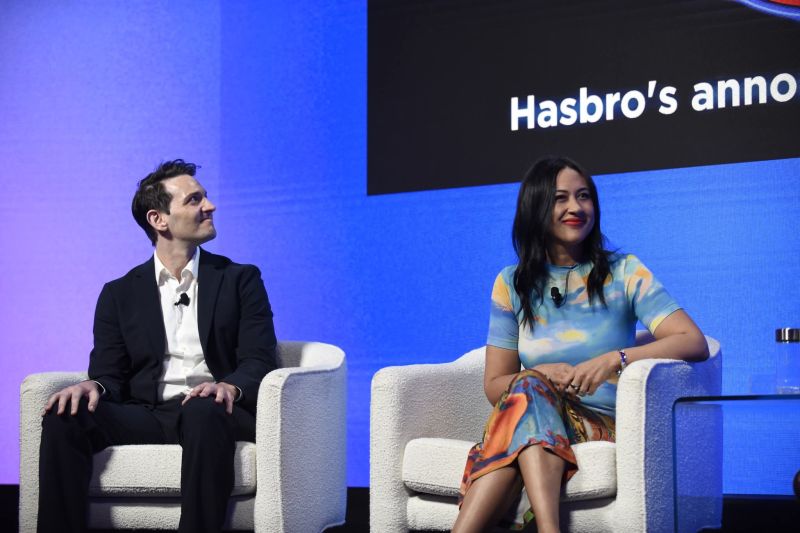
At Facebook, later Meta, Thomson led corporate communications and then product communications. The remit reached across financial matters, litigation, employee communications, data, design and film. Product responsibilities included Facebook, Instagram and Messenger. She spent more than seven years helping a company explain itself to people both inside and outside its walls.
Her Facebook years included the company’s change of name to Meta. At Notion, she helped evolve the brand during its expansion. At Hasbro, her communications responsibilities accompanied organizational change. These were situations in which a company’s account of itself had to move while the company was moving too.
The practical difficulty is easy to underestimate. An employee hearing about a change has different questions from a customer, a reporter or a business partner. They may all encounter the same announcement. They do not all arrive with the same concerns. A message travels through relationships, previous experiences and private calculations before anyone decides what it means.
At Notion, Thomson led brand and communications and built a team working across design and storytelling. Hasbro announced her appointment as chief communications officer in April 2023, effective May 17. She would report to CEO Chris Cocks. By then the career that began with accounts had accumulated responsibilities for images, products, people and the language tying them together.
- OxfordClassics, 2000-2004
- Deloitte → BrunswickAccounts become corporate relations
- Facebook / Meta → NotionCommunications, brand and design
- Hasbro → Sixth WallCommunications leadership to studio CEO
The next assignment makes an intriguing extension of that background. A communications leader thinks about what a company can credibly say. An interactive character business has to consider what a fictional personality can credibly say, repeatedly, in circumstances the owner cannot fully script. The family resemblance helps explain why this particular executive’s history is relevant to the new job.
The characters get a turn
Sixth Wall launched publicly on June 3, 2026, with an ElevenLabs partnership and twelve Hasbro characters available to request for licensing. Optimus Prime, Megatron, Cobra Commander, Mr. Potato Head and the cast of Clue were among the announced roster. The initial focus was experiences for people aged thirteen and above, alongside enterprise uses.
That is a specific starting point for a company associated with so many childhood possessions. Thomson’s launch post described the concerns on both sides of the arrangement: rights owners contemplating conversational characters, and performers considering what new technology might mean for their income. Agreement among people was part of the task before any imagined conversation with a character could begin.
“Think of us as the talent agents for our AI characters.”
Roberta Thomson
Her comparison brings a sprawling technical proposal back to a recognizable business relationship. An agent has something to represent, relationships to maintain and terms to negotiate. The character arrives with an identity people already care about. The studio’s work has to make room for a new experience while keeping that inherited attachment intact.
Sixth Wall calls its approach Behavioral Licensing. CharacterOS is the underlying system, designed to keep a character’s voice, history, personality and boundaries consistent through interactions. Authorized recordings and a participation model for performers are part of the announced arrangement. The concept makes behavior itself part of what a partner is licensing.
One character identity, carried into an unscripted exchange.
In describing the recording process, Thomson has spoken about performers capturing a character across a roughly two-hour session, with scripts built around episodes from that character’s life. The result becomes part of a detailed character record. Her ambition is to establish both a licensing category and the economic arrangements for how intellectual property appears in AI experiences.
A useful demonstration came when a visitor at Licensing Expo provoked Cobra Commander with a suggestion involving Destro and M.A.R.S. Industries. The character responded within that fictional rivalry. The exchange was a small test of a large proposition: a fan should be able to recognize the personality through its reactions, as well as through its sound.
For Thomson, this puts commercial judgment beside creative judgment. Partners need a workable arrangement. Performers need an agreed place in it. Fans need an encounter worth having. A familiar name can attract an audience once; each subsequent line has to live with the expectations that name brought into the room.
A fan at the controls
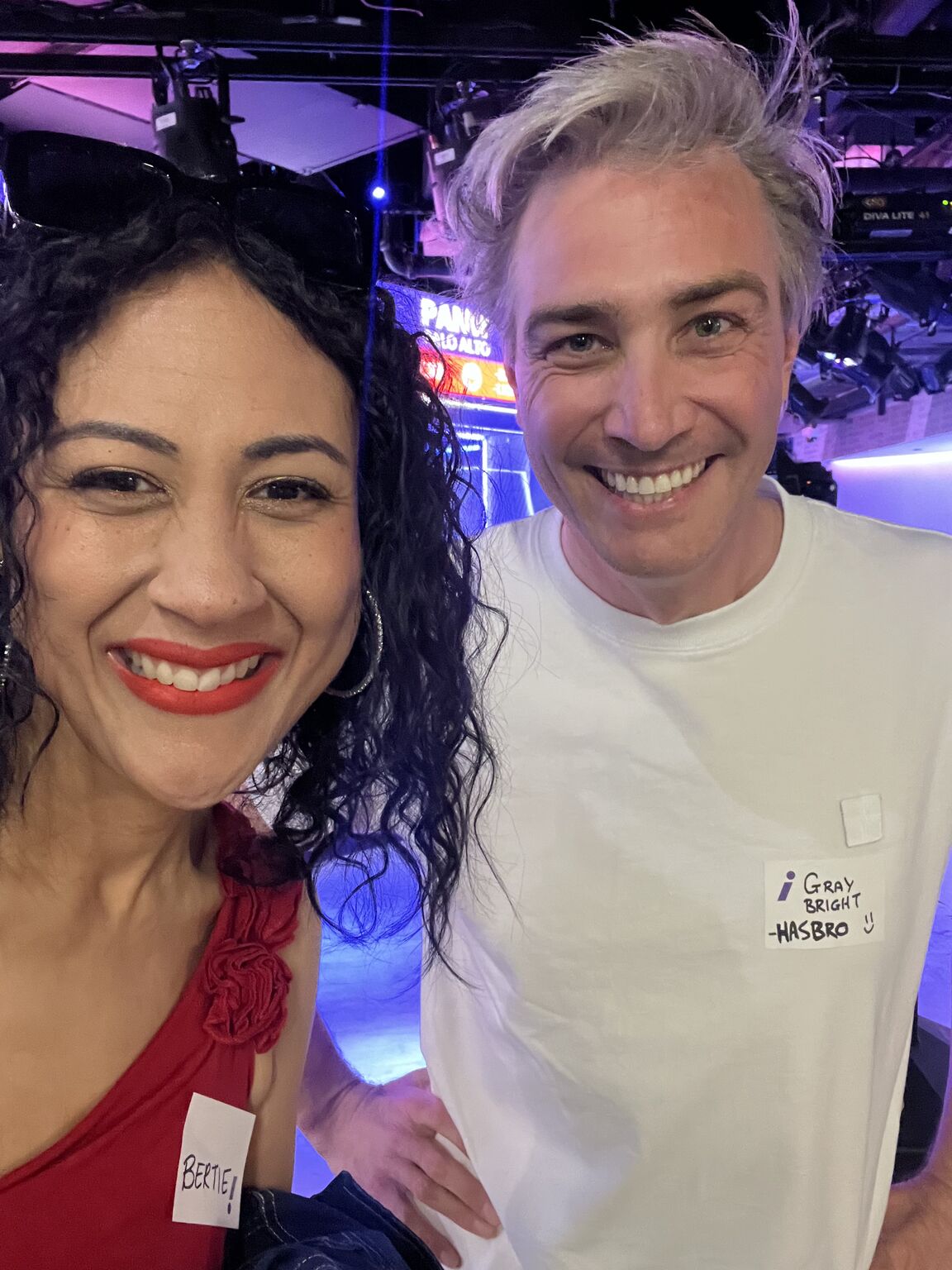
Thomson’s public life around the work has room for the pleasures that make the assignment legible. She has written about taking her child to a Star Trek convention and watching the series herself since she was two. Another update described a Seattle team gathering with s’mores and Dungeons & Dragons. These are small details, but they give the word “fan” something to do beyond appearing in a business presentation.
Her enthusiasm has a mischievous register, too. Asked to imagine a musical crossover with Hasbro’s characters, she suggested Unicron as a rapper. A planet-eating villain does come with a certain appetite for an audience. She has also described using language models to analyze board-game positions, supplying images and asking for strategic advice. Experimenting with play can be quite literal.
The teenage singer remains a useful person to keep in view. Before there were corporate narratives or character systems, there was someone learning to put a voice into a room and discover how people responded. Now Thomson is responsible for a business in which the response can become another line of dialogue. The microphone has acquired a great deal of software. Someone still has to decide what belongs in the song.