Before Robert Leshner tried to put securities on a blockchain, he tried to get people off the internet. Or, more precisely, to get their personal details out of the databases of companies they had never met. His father’s identity had been stolen. Leshner responded by starting a business that would find exposed information and help remove it. A home address was somebody’s merchandise; he thought its owner ought to have a say.
Safe Shepherd, founded in 2011 with Geoffrey Hayes, offered an automated answer to an aggravating chore. Getting a record removed could involve letters, faxes and repeated requests. The internet had made collecting information wonderfully efficient while leaving the business of correcting that collection remarkably tedious. There was a startup opportunity in the gap between those two speeds.
The customers supplied an early lesson in the difference between building a product and finding an audience. Leshner wanted younger people to care more about privacy. Many of the people who actually wanted help were older. In 2012, he said, “I would like there to be more concern and awareness.” A founder can automate a process. Automating concern is a much trickier assignment.
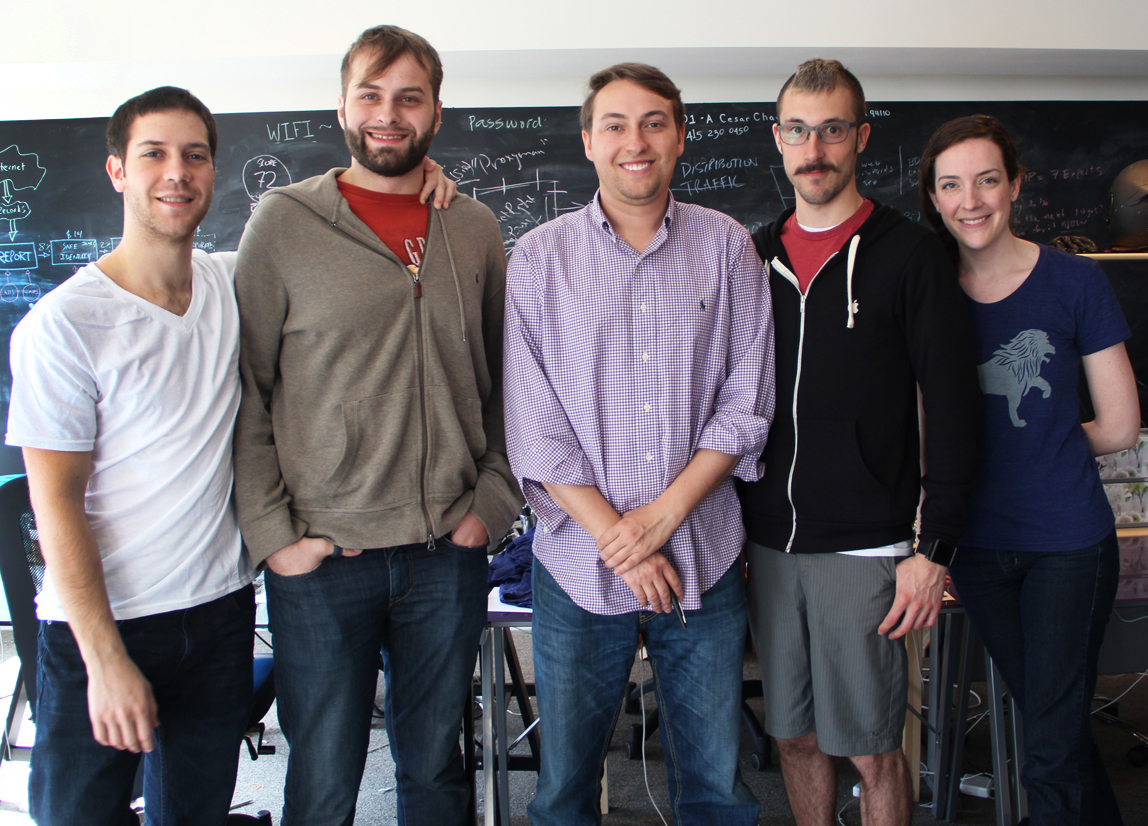
By March 2013, Safe Shepherd was reporting 16,000 paying members and 150,000 records removed. Its team worked in San Francisco’s Mission District. The business dealt in a peculiarly modern problem: information could be accurate, publicly available and still be something a person desperately wanted to control. Years before decentralized finance became his public identity, Leshner was already working on who gets to manage a record.
An economist meets a programmable market
Leshner arrived at technology with an economics degree from the University of Pennsylvania and the Chartered Financial Analyst designation. He also served as chair of San Francisco’s Revenue Bond Oversight Committee. Municipal bonds are an unusually sober credential for a future crypto founder. They suggest familiarity with the financial world’s less theatrical rooms, where the question is what the money actually does.
There was a spell as a product lead at Postmates before he and Hayes co-founded Compound Labs in 2017. The partnership outlasted the change of subject. They had worked together on software that removed personal information; now they were building software to coordinate financial transactions. The recurring question, as their work can be read, was how much of an awkward process a computer could reliably take over.
Compound’s proposition was legible even to someone unmoved by crypto culture. People holding digital assets could supply them to a market and earn interest. Other people could borrow against collateral. Interest rates would respond algorithmically to supply and demand. The market’s operating rules lived in smart contracts, programs executed on the blockchain, rather than in a loan officer’s discretion.
The February 2019 white paper carried both founders’ names. Its subject was the time value of Ethereum assets: what someone would pay to use an asset now, and what someone else should receive for making it available. Under the unfamiliar machinery sat a familiar economic question. Leshner’s work was making a market around that question, with software doing more of the coordinating.
Personal information
Borrowing and lending
Funds and securities
The week software needed people
Compound also helped make governance part of the product. The COMP token’s distribution began in June 2020, giving participants a financial incentive to use the protocol while extending a system in which holders could influence changes. A lending application was becoming a shared institution. Its rules could evolve, but evolution required a process.
That process became painfully visible in September 2021. An upgrade introduced a bug in the distribution of COMP rewards, allowing some users to claim too many tokens. Compound said supplied and borrowed funds were not at risk. The error concerned the rewards machinery, but its consequences were substantial enough to turn a technical problem into a public argument.
Leshner asked recipients to return the excess, offering a portion as a reward. Then he threatened tax reporting and referred to users being identified. The reaction was hostile. He subsequently called his approach “a bone-headed tweet/approach.” The founder of a privacy business had managed to find an especially uncomfortable way to ask for cooperation.
There was no convenient administrative switch to stop the distribution. A remedy had to go through governance. That made the episode a revealing test of the system’s design: reducing a founder’s power also reduces that founder’s ability to intervene when things go wrong. Leshner could argue with people on the internet. He could not simply wish an approved change out of existence.
He continued to defend transparent, automated lending during the market failures of 2022, while acknowledging that rapid price declines and hacks remained dangers. His distinction was operational: public contracts expose positions and rules in ways an opaque lender may not. It was a case for inspectable finance, with the uncomfortable proviso that visible machinery can still break.
A new company, an old asset
In 2023, Leshner left Compound to found Superstate. The move took him toward investment funds, government debt and securities administration. For someone associated with decentralized lending, it could look like an unusually elaborate return to conventional finance. His explanation was that crypto’s financial machinery needed a wider range of things to work on.
A market that mostly accepts assets created by other crypto projects has a limited menu. Moving existing securities onto blockchains could supply different ingredients. That is the thread connecting Compound and Superstate: first build ways to use digital assets, then help bring more kinds of assets into reach. The ambition depends on useful ownership, rather than simply giving a familiar asset a new ticker.
Superstate’s first tokenized fund, USTB, launched in early 2024 with exposure to short-duration U.S. government securities. The underlying investment was deliberately familiar. The experiment concerned how fund shares were issued, held and moved. Treasury exposure gave the new infrastructure a practical assignment; a speculative token would have made it harder to separate the plumbing from the excitement.
A second fund, USCC, followed in July 2024. It pursued a crypto cash-and-carry strategy, combining positions in assets and futures to capture a price difference. That expanded the offering beyond government debt. It also kept the company anchored to an identifiable investment strategy, rather than asking tokenization itself to supply the reason an investor should want a product.
The shareholder register gets interesting
In May 2025, Superstate announced Opening Bell, extending its work to public equities. The central idea was that companies could bring their registered shares onto blockchains. The words “registered shares” do considerable work here. A token might represent an actual company share, an intermediary’s claim or a derivative tracking a price. Those arrangements can look alike on a screen while giving the holder different relationships to the business.
Galaxy provided a concrete example in September 2025, announcing that stockholders could tokenize its Class A common shares on Solana through Superstate. Transfers update the registered shareholder list. The company’s announcement described transfers between approved, identity-verified participants. The blockchain changes the recordkeeping mechanism; it does not make the surrounding securities obligations evaporate.
For Leshner, the attraction goes beyond longer trading hours. A share that can interact with other software could become useful collateral or support a more direct relationship between an issuer and its shareholders. In interviews he has described possibilities such as shareholder benefits and new applications built around tokenized assets. These are ambitions for what the infrastructure can enable, rather than proof that every proposed application already exists.
His November 2025 interview offered an example with pleasingly little mystique: borrowing against Tesla stock to help buy a car. The appeal would be the financial action a customer could perform. The blockchain would be underneath it. After years of asking people to be interested in the technology, here was an argument for letting the technology disappear into the task.
The blockchain would be underneath it.Useful machinery can leave the spotlight to the task.
Let somebody else manage the bonds
In January 2026, Superstate announced an $82.5 million Series B led by Bain Capital Crypto and Distributed Global. The funding supported its securities issuance, settlement and recordkeeping infrastructure. It was money raised by the company, distinct from money invested in the funds running on its platform. Keeping those figures separate helps explain the business Leshner is building.
A March announcement with Invesco made the division of labor clearer. Invesco would become USTB’s investment manager; Superstate would continue providing its blockchain infrastructure and digital transfer agency services. At that announcement, USTB held more than $967 million and had onboarded over 150 institutional investors. Those figures describe a dated milestone, rather than a live counter.
Leshner called the arrangement “the blueprint for how funds and ETFs will come onchain.” The useful detail is who would do what. An established asset manager could select and manage investments while Superstate handled the technology of issuing and moving the shares. His company’s role could extend beyond operating its own funds to supporting other firms’ products.
He has other outlets for his appetite for financial arguments. He invests through Robot Ventures and co-hosts The Chopping Block, a crypto podcast. His public X biography supplies its own warning label: his tweets are typically satire. The combination is recognizably Leshner: formal financial credentials, software markets and a public voice that does not always sound like an investment committee.
The distance from Safe Shepherd to Superstate looks considerable until one considers the records. Once, Leshner helped people challenge where their information appeared. Now he works on how financial ownership is recorded and what its owner can do next. Privacy records and shareholder registers serve different purposes, but both become consequential when someone tries to change them.
In September 2026, he returned to The Crypto Tape during the RWA Summit, again emphasizing the difference between putting the primary security on a blockchain and tokenizing a brokerage balance. The distinction is technical, but it reveals where he wants to work: close to the issuer and its ownership records. Even as tokenized trading attracts attention, he keeps pointing back to what the token actually represents.
His present wager puts much of the drama in an unfashionable place: administration. The bonds can remain bonds. The shares can remain shares. If the surrounding software gives their owners something useful to do, the novelty has earned its keep. For a founder whose career passed through crypto’s noisy adolescence, a boring asset with better machinery is a fairly pointed ambition.
Follow the argument
Explore Superstate, Robot Ventures and Leshner’s writing. Follow him on X or LinkedIn.