The crowd did not arrive because of a billboard. It arrived because a handful of people walked home and told a better story. Robert Ferrell was in Mali with a team providing dental care. They began with a small group. The patients returned to their village carrying news that these visitors could be trusted, that they had come to help, and that the welcome was sincere. By the next day, hundreds of people had gathered.
For Ferrell, the remarkable part is not the number. It is the route the message traveled. Trust moved from person to person, with no campaign manager and no clever conversion funnel. The work supplied its own introduction. Goodwill did what goodwill often does when it is felt rather than announced: it acquired legs.
That scene has become a compact expression of the career Ferrell has built across rooms that rarely appear on the same résumé. He spent more than two decades in periodontics. He has led a charitable foundation, mentored young adults, coached leaders, taught at Brigham Young University’s Education Week, helped run organizations, and become a public advocate for putting service inside company culture. Today his roles include CEO and founder of Liberate, president of Awaken, and ambassador for Build Then Bless.
A career built at conversational distance
Ferrell grew up in California’s Bay Area and came to Utah for college. At Brigham Young University, he studied psychology before moving into dental surgery and postgraduate training in periodontics. The combination now looks almost suspiciously tidy: first the study of people, then a profession conducted inches from them. But careers rarely explain themselves so politely while they are happening.
He once described 95 percent of his dental work as surgery - removing teeth, placing implants, doing the things, as he put it, that nobody particularly wants done. It is a job in which expertise is non-negotiable and rapport is tested quickly. Ferrell’s favorite joke from the chair is that everyone has trouble speaking when his hands are in their mouth. The joke works because the situation is inherently lopsided. One person has the instruments. The other has to trust.
His later leadership philosophy keeps returning to that imbalance. Authority may get a person into the room, but it cannot manufacture openness. A title can begin a conversation. It cannot do the listening. Ferrell’s preferred alternative is captured in one crisp line from his years mentoring younger people: “It’s got to be collaboration instead of control.”
I have always created a culture of service in every one of my businesses. I view the new currency today as service.Robert Ferrell
The line could be mistaken for a slogan, so it is worth asking what it demands in practice. Currency has to circulate. Service stored in a values statement has approximately the utility of money printed on a poster. It becomes useful when people are given permission, resources, and time to act.
The Friday-night test
Years before workplace culture became his main stage, Ferrell was working through the same problem in volunteer leadership. He had been asked to organize and lead a new young-adult stake in northern Utah. The assignment arrived with roughly a month to assemble counselors, a high council, and a wider leadership structure across a large geographic area. There was little inherited protocol and plenty of trial and error.
He became convinced that younger adults were too often described from a distance: entitled, distracted, unwilling to work. So he did the unfashionable managerial thing and treated their perspective as useful information. He advocated giving them a genuine seat at the table. He favored peer influence where it worked better than top-down instruction. He asked older leaders to build bridges instead of defending territory.
Then he tried a small experiment. Once a month, on a Friday night, he held an open discussion. Colleagues assumed attendance would be thin. Friday evening is crowded real estate, particularly when the alternative is a meeting with a middle-aged dentist. Yet the chapel filled repeatedly. People came to ask candid questions and participate in conversations that belonged partly to them.
The lesson was not that every organization needs a Friday-night gathering. It was that leaders are unreliable judges of what people will show up for when those people have not helped shape the invitation. Ferrell saw appetite where the conventional diagnosis had predicted apathy. Participation increased when control loosened its grip.
The Ferrell flywheel
Do good along the way
There is a popular fantasy in ambitious circles: generosity begins after arrival. Build the company, hit the number, arrange the life, then become useful. The promise is emotionally convenient because “later” has no calendar invitation. Ferrell’s work with Awaken, Liberate, and Build Then Bless rejects the delay. His phrase is “give until you grow.”
The distinction matters. Giving after success can distribute surplus. Giving during the building can shape the builder. It trains attention toward people who do not appear in the quarterly plan. It lets employees exercise judgment in a register broader than efficiency. And it creates stories that no brand workshop could write without sounding as though a brand workshop wrote them.
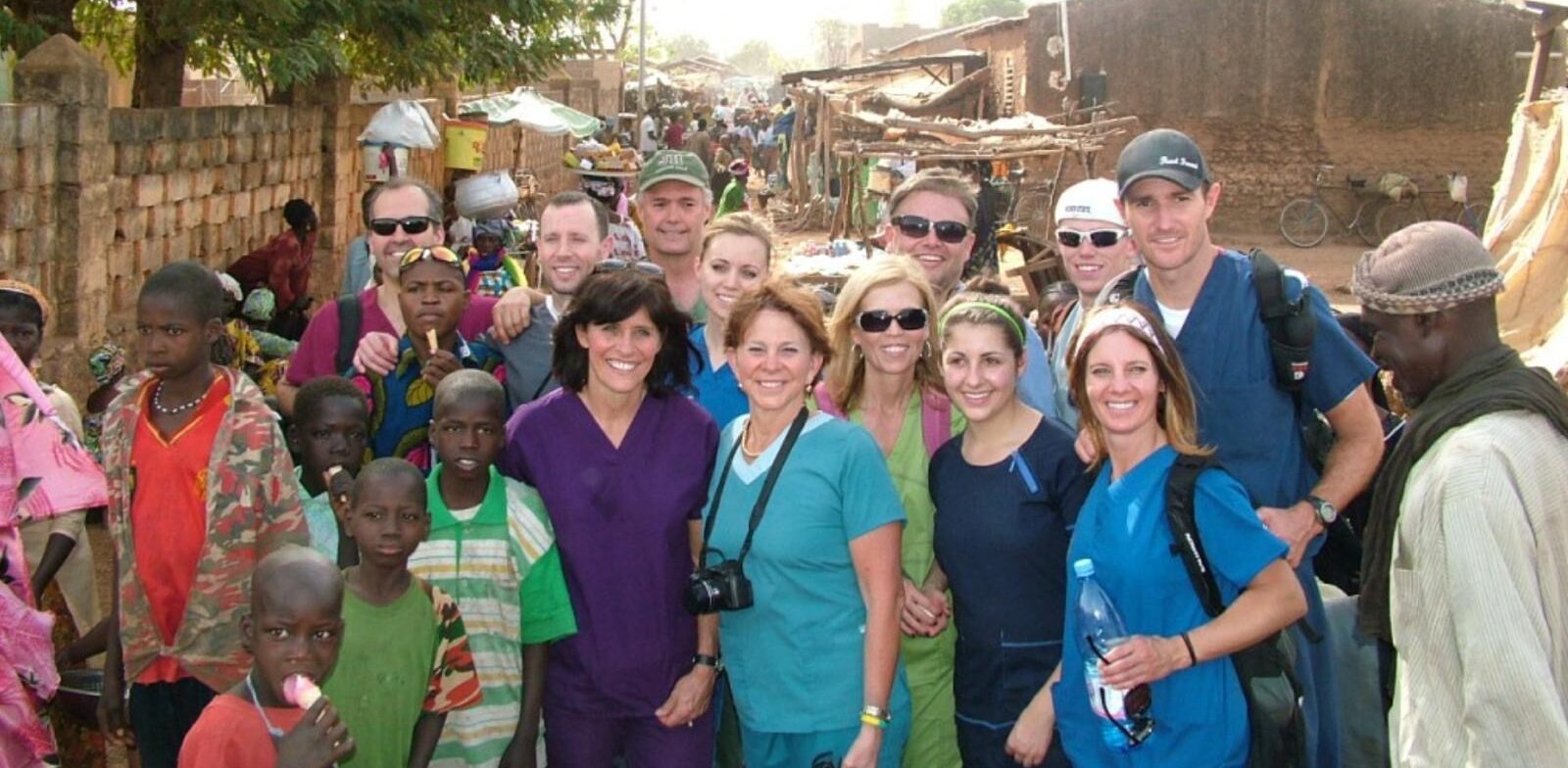
This is where the Mali story becomes more than an attractive anecdote. The first patients were not an audience segment. They were people receiving attention. Their account to the village carried weight because they had lived the experience. By morning, their testimony had become infrastructure.
Ferrell has described leadership as pathfinding: helping others locate their potential, gifts, and contribution. It is a less glamorous definition than command. The pathfinder does not need to be the destination. The work is to make a route visible, then allow someone else to walk it.
Help others find their path, so they can see their potential, their gifts, and their contribution to the world.Robert Ferrell
The interruption in the middle
After 22 years practicing periodontics, Ferrell stepped away for three years to serve a church mission. A pause of that size carries obvious professional cost. Skill has rhythm. Clients move on. A practice cannot be tucked into a drawer and expected to emerge exactly as it entered.
He later returned to periodontics part time, but the arc of his public work had widened. Dentistry remained part of the story rather than the whole of it. The later chapters put more weight on coaching business leaders, directing humanitarian work, speaking, and building organizations. Liberate became his founder’s vehicle. Awaken organized service. Build Then Bless supplied a public vocabulary for making generosity part of daily operations.
The interruption also clarifies his relationship with ambition. Ferrell has not abandoned building. He is a founder and operator, after all. His revision is to the purpose and timing of it. Build and bless are verbs meant to share a sentence.
Connection, scheduled
Ferrell’s 2026 conference talk carried the title “Reclaiming Connection In An Age of Isolation.” The phrasing is large, but his most persuasive material remains small: a patient telling a village, a young adult invited to help lead, an employee noticing somebody who could use a hand. Connection is easiest to admire in theory and hardest to protect on a crowded Tuesday.
For an operator, this is the useful theft from Ferrell’s playbook. Put values where work can reach them. Give a team a modest resource and clear permission to serve. Make time for people to tell what happened. Keep the recipient human rather than turning the moment into promotional scenery. Repeat often enough that nobody needs the values poster to remember what the company permits.
He is fluent in Spanish after years in the Dominican Republic and Peru. He skis, surfs, boxes, and explores with his wife and their nine children. These details make a portrait of someone disinclined to sit still. Yet the core of his message asks for a kind of stillness: notice who is in front of you before reaching for the next transaction.
The world is full of leaders eager to be followed. Ferrell’s pathfinder is interested in a different result. If the work succeeds, someone else leaves with a clearer route and enough confidence to take the next step without him. It is an admirably self-erasing ambition.
Back in Mali, the proof arrived in a crowd. Hundreds of people came because the first few had felt safe enough to send for others. The mechanism was ancient, wonderfully difficult to automate, and available to every organization with the patience to earn it. One person had a good reason to trust. Then they told another.