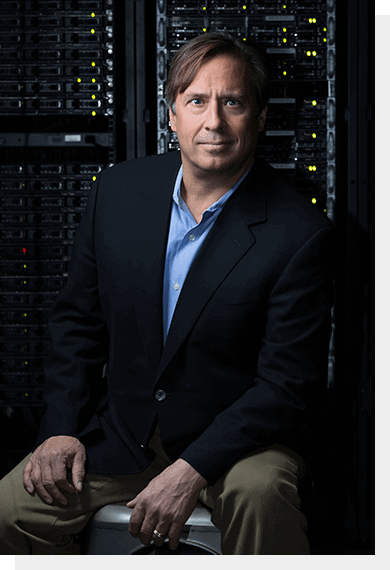
Rob McCormick sells something that sounds faintly disappointing in a technology business: fewer things to think about. Fewer systems to assemble. Fewer suppliers to coordinate. Fewer mornings devoted to discovering which piece of the machinery has developed an opinion of its own. Avatara, the St. Louis company he founded in 2005, puts business IT on a per-user monthly subscription. Behind that tidy billing arrangement sits a career spent around infrastructure that people notice most when it fails.
The idea has a pleasingly ordinary ambition. A company should be able to get on with its work. Its technology should support that work without becoming a second business for the customer to run. McCormick has pursued this through private cloud infrastructure, managed services and standardized systems. His argument now reaches into cybersecurity compliance, where the machinery includes both keeping information secure and demonstrating that somebody has done so.
There is an interesting tension here. He wants customers to experience simplicity, yet the operation delivering it must handle an enormous amount of detail. Someone still has to know how everything fits. McCormick has built his business around moving that responsibility to a place equipped to carry it.
Before the monthly bill
Before Avatara, McCormick was chief operating officer at Bridge Information Systems. Financial information was becoming a real-time business, and the infrastructure underneath it had immediate consequences. A delayed number could change a decision. Reliability belonged in the commercial conversation alongside speed.
He later recalled that period in a March 2026 essay, describing systems whose apparent soundness did not survive operating pressure. At Savvis, where he served as CEO from 1999 to 2005, the scale changed. Networks, servers and applications expanded. Managed hosting and virtualization offered ways to deliver more computing without requiring every customer to build the whole operation internally.
Savvis went public in 2000 after its separation from Bridge. McCormick's career therefore ran through an especially noisy moment in the infrastructure business, when the internet's commercial ambitions demanded physical networks and data centers. The language might have been virtual; the obligations were substantial.
The connection to his later work is practical. Outsourcing an activity can reduce the number of people doing it inside a customer's office. It can also leave the customer coordinating a complicated collection of services. McCormick's subsequent answer was to take responsibility for more of the system together. Avatara would aim at smaller and midsize businesses, carrying an enterprise infrastructure idea into companies with less room for a large technology organization.
The utility bill, with computers attached
Avatara's subscription model makes the economic argument visible. Customers pay per person, per month, with no upfront capital requirement for the platform. The company describes its remit as a complete, managed operating environment. Infrastructure, security and the work of maintaining the system belong inside the service.
This asks a buyer to make a different kind of decision. Instead of selecting every ingredient and then arranging for someone to make dinner, the customer selects an operating approach. Standardization does some of the work. A provider that repeatedly operates a defined environment has a different task from one asked to reconcile a new collection of components at every address.
That logic also explains McCormick's recurring attention to the customer's time. Procurement is work. Coordinating suppliers is work. Replacing systems is work. A subscription price can be compared with other prices; the attention absorbed by the arrangement is harder to put in a spreadsheet. Yet it can determine whether a small business spends its week on customers or on the technology meant to help serve them.
Co-founder and chief scientist Max Mutrux is part of the leadership behind that effort. The current team also includes president Vince DiMemmo and chief technology officer Gabe Pilla. McCormick's role sits alongside the scientific, operating and technical work required to make a broad promise behave consistently. The business model may fit in one sentence. Running it requires considerably more people than that. The appeal of one accountable service rests on the work of a team.
Fourteen years before the outside capital
In July 2019, Avatara announced a $10 million growth investment from a group led by Bank Street Capital Partners and Post Road Group. By then, its private cloud supported about 15,000 users across the United States. Those are historical figures, a snapshot of the business fourteen years after its founding.
McCormick described the company as having grown organically using capital it generated itself. The new money was intended to support research and development, sales and marketing. CompleteCloud, the platform name at the time, combined private cloud, managed security, managed IT and voice services. Channel partners were an important route to customers.
The sequence gives the funding announcement its character. Outside investment arrived after years of operating the service. The story was less about financing an untested proposition than giving an established operation more room to develop and sell. For a founder concerned with repeated, reliable delivery, the distinction matters. The daily work of serving users had preceded the larger financial announcement.
A cloud company wanted an address
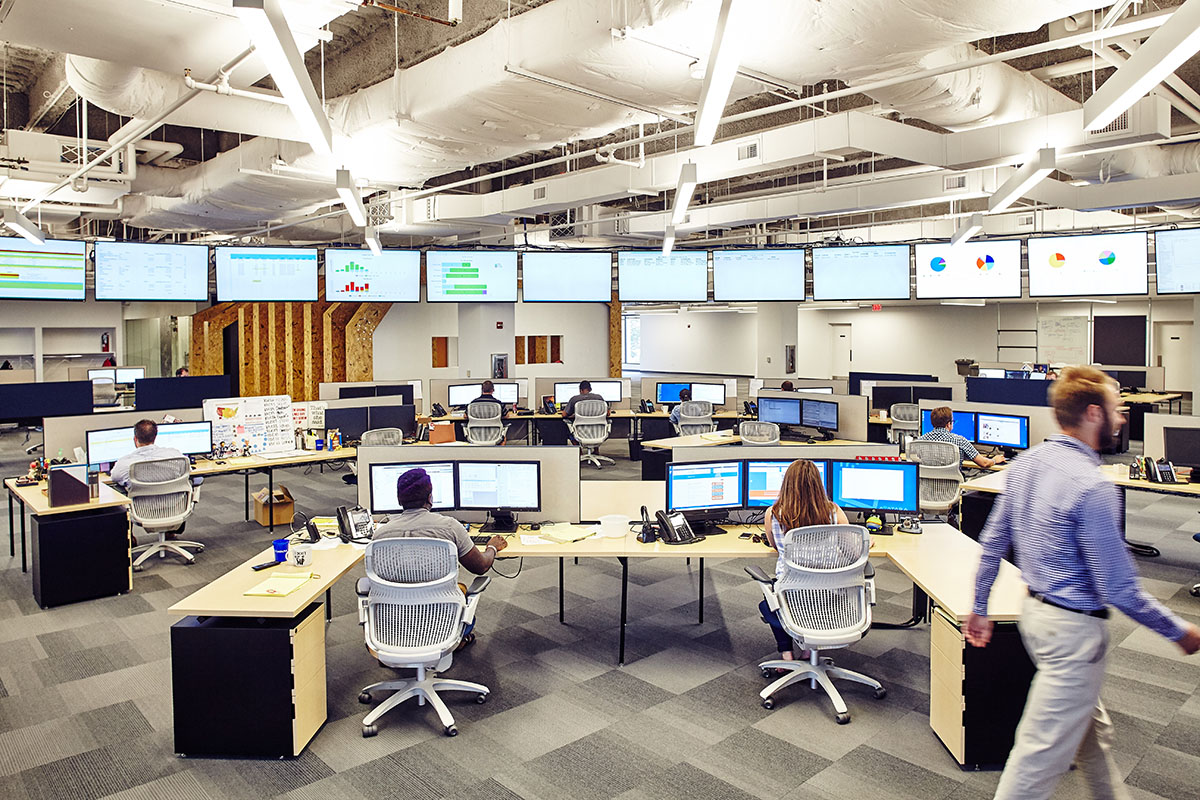
McCormick's interest in infrastructure also found a distinctly physical expression in St. Louis. Avatara worked with developer Green Street and architecture firm Arcturis on office space on Market Street. A company delivering remote computing wanted a workplace with an identity of its own.
He called the goal a “permanent identifying space.” Avatara wanted room to work together and the connectivity to support its business. The collaboration linked the company's needs with the reuse of urban property. Bandwidth belonged in the planning conversation with the arrangement of the office.
It is a useful glimpse of McCormick beyond the product description. An office could express what the company had become. The surrounding idea was that other businesses could arrive in spaces already prepared for their technical needs, spending more of their effort on the work they came to do. His utility argument had acquired walls and a ceiling.
The paperwork catches up with the architecture
By 2026, McCormick's public writing was concentrating on governance. In a March essay, he argued that accumulating tools and integrations can leave organizations with systems that are difficult to understand and control. Regulation makes that weakness harder to overlook. A business must show how its environment works, as well as keep it working.
His diagnosis places a demanding condition on simplicity. It must be designed into operations. Otherwise, each new requirement invites another product, another integration and another responsibility for somebody to track. The customer can end up paying for the privilege of supervising an increasingly elaborate collection.
In July, he turned to FedRAMP, the federal cloud security program. He acknowledged that he initially regarded it as another complicated hurdle. His view developed toward an appreciation of the operating discipline it encourages: standardized controls, monitoring and evidence of how systems behave over time.
“The environment itself has to do more of the work.”
Rob McCormick, July 2026
That sentence carries his older infrastructure argument into a newer setting. A customer using a managed environment may be able to rely on controls already maintained there. The customer's own duties remain. McCormick explicitly preserves a place for leadership decisions, oversight and human judgment. His ambition concerns the recurring mechanical work underneath those decisions.
environment↓Ongoing
monitoring↓Repeatable
evidenceAn illustration of his argument, not a certification guarantee.
There is a commercial test hidden in this position. An all-inclusive provider assumes a broad set of expectations, so the relationship depends on what the service actually delivers day after day. A neatly packaged bill cannot carry that relationship on its own. Support, maintenance and the underlying environment must agree with the promise printed above the price.
That gives McCormick's long commitment to standardization a sharper edge. Repeatability offers a way to organize responsibility across customers. It also requires choices about how the service is built and what it will support. Simplicity for the buyer depends on discipline inside the supplier. His career makes more sense when read through that exchange: the customer gives up some assembly work, and the provider takes on the job of making the whole arrangement dependable.
The customer has other work to do
A technology founder's convictions are often easiest to see in the chores he thinks should disappear from somebody else's desk. For McCormick, those chores include assembling infrastructure and repeatedly rebuilding the processes around it. He has spent years making the case that a provider should absorb more of that effort.
His writing supplies a revealing measure of progress. More advanced tools alone do not settle the question. An environment also has to remain understandable as it changes. A company should be able to explain what it operates, observe it and account for it. That is a demanding test of an apparently simple monthly service.
The arc from Bridge to Savvis to Avatara follows the same practical concern through different customers and different scales. Financial data needed reliable delivery. Growing enterprise systems needed managed infrastructure. Smaller businesses needed access without an infrastructure project of their own. Regulated companies now need operating environments that can carry more of the evidence burden.
McCormick's proposition leaves the customer with a modest aspiration: an ordinary working day. People log in. They reach what they need. The machinery receives professional attention somewhere else. For an industry fond of announcing the future, there is something rather appealing about a founder still working on making Tuesday less troublesome.