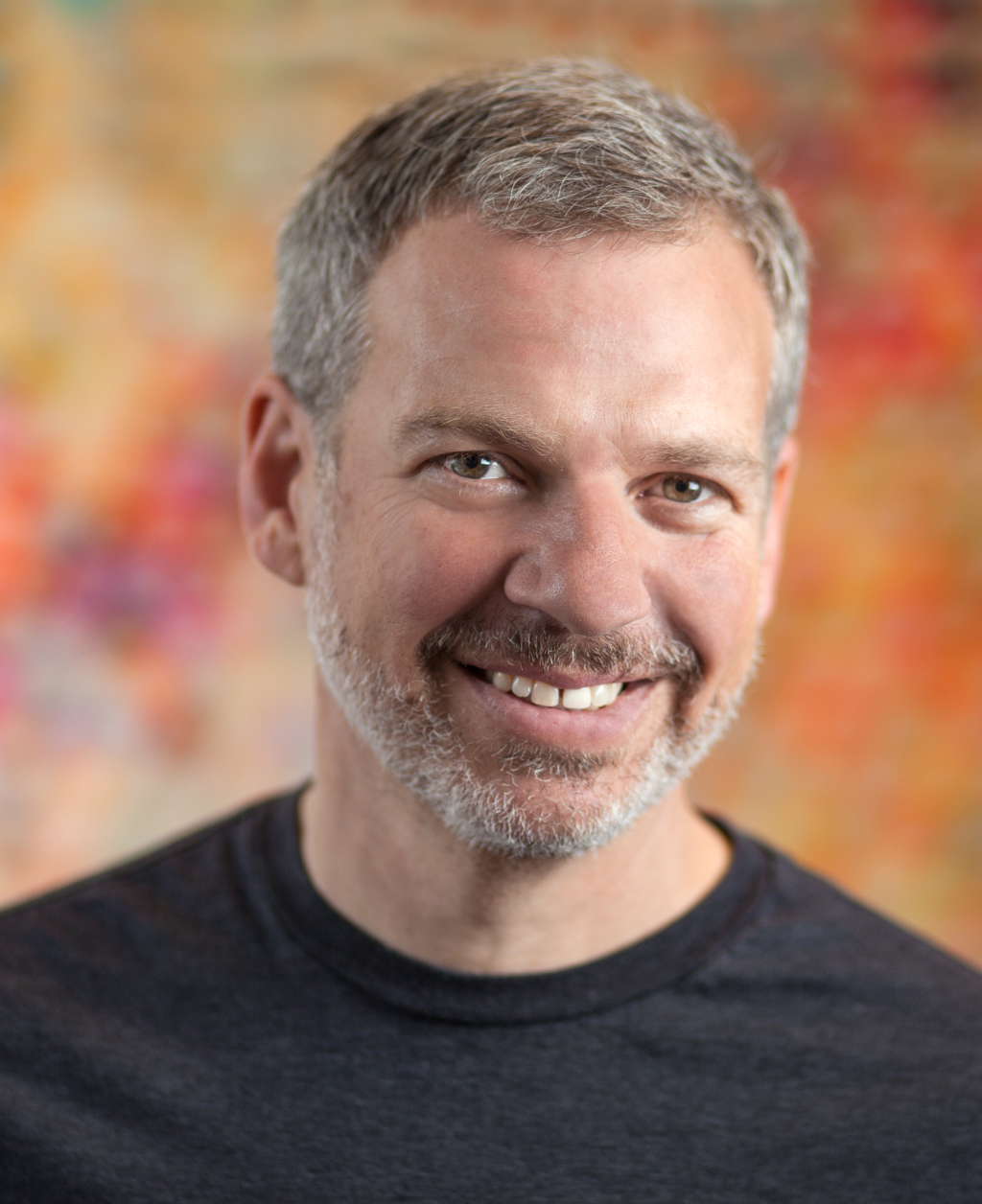
ROB HAYES * BOARD PARTNER, FIRST ROUND CAPITAL * UBER'S FIRST INSTITUTIONAL INVESTOR * BACKED UBER AT $4M VALUATION * SQUARE EARLY BACKER * MINT.COM, EERO, PLANET LABS, GNIP * OPENED FIRST ROUND'S SF OFFICE IN 2006 * OMIDYAR NETWORK FIRST VC * PALM OS PRODUCT MANAGER * MBA COLUMBIA '95 * UC BERKELEY POLITICAL ECONOMY * ROB HAYES * BOARD PARTNER, FIRST ROUND CAPITAL * UBER'S FIRST INSTITUTIONAL INVESTOR * BACKED UBER AT $4M VALUATION * SQUARE EARLY BACKER * MINT.COM, EERO, PLANET LABS, GNIP * OPENED FIRST ROUND'S SF OFFICE IN 2006 * OMIDYAR NETWORK FIRST VC * PALM OS PRODUCT MANAGER * MBA COLUMBIA '95 * UC BERKELEY POLITICAL ECONOMY *
Venture Capital / First Round Capital

Rob
Hayes

The man who wrote the first check into Uber — for half a million dollars, at a four-million-dollar valuation

Before Surge Pricing was a thing. Before Uber was a verb. Rob Hayes read a tweet from Garrett Camp, typed four words back, and set the terms for the decade's most consequential venture bet.

$4M
Uber valuation at seed
12yrs
As First Round partner
2006
Opened First Round SF
Rob Hayes, Board Partner at First Round Capital

The investor who caught a wave others couldn't see

In October 2010, a San Francisco startup nobody had heard of was trying to turn iPhones into a black-car hailing platform. It was called UberCab. Rob Hayes was the First Round Capital partner who noticed Garrett Camp tweeting about it. He sent a reply that would become tech lore: "I'll bite. Can I learn more?" What followed was a $500,000 check, a $4 million valuation, and a board seat on what would become one of the most valuable companies on earth.

Hayes is quick to puncture the myth of his own prescience. He will tell you directly that he didn't see Uber becoming a global logistics juggernaut worth hundreds of billions. What he saw was a founder - Ryan Graves, dismissed by others for lacking Silicon Valley pedigree - who he believed could execute. That instinct, more than any market thesis, is what Hayes has made a career of trusting.

Before Uber, before First Round Capital, before any of it, Rob Hayes was something a lot of venture capitalists aren't: a product person. He managed Palm OS during the Palm III, Palm V, and Handspring Treo era - back when carrying a Palm Pilot meant you were the person in the room who had figured something out. He watched Jeff Hawkins present a balsa wood prototype and understood that hardware doesn't care how smart you are. "There's a reason why hardware has the word 'hard' in it," he'll say, with the weariness of someone who lived it.

After Palm, Hayes became the first venture investor at Omidyar Network, Pierre Omidyar's post-eBay investment vehicle. He built the technology investing function from scratch, led most of the firm's initial VC deals, and then left in 2006 for First Round Capital, where he opened the San Francisco office. For 12 years as a full partner, he ran one of the most productive investment records in early-stage VC.

The investments read like a decade's syllabus: Square before Jack Dorsey was universally celebrated as a payments visionary. Mint.com, which Intuit bought for $170 million. eero, the home WiFi company Amazon would later acquire. Planet Labs, the satellite imaging startup that took on orbital photography. Gnip, the social data firehose that Twitter bought. The through-line isn't a sector thesis - Hayes invests across fintech, hardware, sharing economy, logistics. The through-line is founders who don't need to be told what to build.

In 2018, Hayes moved from Partner to Board Partner, a transition he has written about with characteristic candor. The word "generational" comes up a lot when he talks about venture firms - he's watched too many firms get torn apart by succession struggles to romanticize longevity. "Generational transition is one of the things that tears firms apart," he's said. What he values above almost anything is the relationships among partners. "There is no relationship that's more important to me than the relationship with these partners."

There's a missed bet that still stings: Dropbox. Hayes lost the deal over what amounted to a rounding error in valuation. He's talked about it publicly, which says something. The VC who regrets losing Dropbox is the same VC who stays close to founders even when he's not investing - because he believes, genuinely, that "the biggest joy I get is walking out of a meeting feeling like I was able to add some value." That's either very sincere or very good brand management. Given his 12-year track record, it's probably both.

There are two types of founders. Those that find waves to ride and those that create the waves so they can control when and where the ride happens.

Rob Hayes - First Round Capital

$4M
Uber's valuation
at seed round
$500K
First Round's
Uber seed check
$170M
Intuit's acquisition
of Mint.com
12
Years as full partner
at First Round
2006
Opened First Round
San Francisco office

The bets that defined a decade

Seed - 2010
Uber
Hayes read Garrett Camp's tweet about "Uber Cab" and fired off a four-word reply. His $500,000+ seed check at a $4 million valuation became one of the greatest VC returns in history. He'll tell you he didn't predict the global scale.
Board Seat / Generational Return
Seed - 2009
Square
Jack Dorsey's second act - turning smartphones into point-of-sale terminals. Hayes backed it early, when "mobile payments" sounded like science fiction to most investors. Square grew to a multi-billion dollar fintech company.
Early investor / IPO exit
Early stage - 2008
Mint.com
Personal finance management before the fintech category existed as a category. Mint aggregated bank accounts, credit cards, and bills into a single dashboard. Intuit bought it for $170 million.
Acquired by Intuit - $170M
Series A - 2015
eero
The home WiFi company that made mesh networking a consumer product. Hayes invested when the team was re-imagining a category nobody knew needed re-imagining. Amazon disagreed with the skeptics and acquired it.
Acquired by Amazon
Early stage - 2015
Planet Labs
A satellite imaging company that launched dozens of small satellites to photograph the entire Earth every day. Hayes backed it when commercial satellite constellations still sounded like a moonshot pitch.
Went public (NYSE: PL)
Early stage
Gnip
Social data infrastructure - the firehose that made it possible to consume social media data at scale. The kind of boring-but-essential layer that Hayes specializes in recognizing. Twitter acquired it outright.
Acquired by Twitter

How he thinks

🔍
Founders Before Markets

Hayes backs people, not sectors. His two core questions: Is there a real problem being solved? Can this founder execute? If both are yes, the market thesis can follow. Ryan Graves didn't have Silicon Valley pedigree. Hayes invested anyway.

📞
Tactical Over Strategic

"There are not enough venture capitalists who help with the tactical stuff as opposed to the very large strategic stuff." Hayes prides himself on being the investor who helps with the actual work - introductions, feedback, operational problems - not just big-picture cheerleading.

🌐
Distribution is the Hard Part

"Distribution is absolutely the hardest part of creating an internet company." Hayes watched too many technically excellent products fail at go-to-market to treat distribution as an afterthought. He pushes founders on this from day one.

📍
Reputation is Long-Term

"Reputation is made over careers and lost over deals." The Dropbox miss changed how Hayes approaches deal terms. A short-term win on valuation isn't worth the relationship cost. He starts every founder interaction from an orientation of helping.

🤝
Generational Transition

"Generational transition is one of the things that tears firms apart." Hayes moved to Board Partner at 54-ish, not because he burned out, but because he understood that the best gift a senior partner can give a firm is a clean hand-off. Trust and transparency make it work.

🔥
Hire Like Your Life Depends On It

"If you're not spending at least 50% of your time hiring - and that's the minimum - you're already on the road to failure." He says it without hedging. Most founders nod and then spend half their week in product reviews instead.

Reputation is made over careers and lost over deals.

Rob Hayes - First Round Capital

From Japan trade missions to Uber's first check

Early 1990s
Japan External Trade Organization International trade relations work - the first hint of a pattern: Hayes gravitates to things before they're obvious. Japan in the early 90s was still the future.
Mid 1990s
Geoworks and Go Corp System-level product development, with a focus on the Japanese market. Early mobile computing before mobile computing was mobile.
1995
MBA, Columbia Business School Class of '95. He joined Columbia's Board of Overseers decades later.
Late 1990s - 2004
Palm - Product Manager, Palm OS Managed Palm OS across dozens of devices - the Palm III, Palm V, Handspring Treo. Also started Palm's corporate venture fund and ran the strategic spinoff of PalmSource. He watched the entire handheld category get annihilated by the iPhone seven years later.
2004 - 2006
Omidyar Network - First Venture Investor Pierre Omidyar's post-eBay investment vehicle. Hayes was their first VC hire, built the technology investing group from scratch, led most of the firm's initial deals.
2006
First Round Capital - Partner Opens the San Francisco office. Begins 12 years as a full partner, investing across fintech, hardware, marketplaces, and consumer.
2010
Seeds Uber $500K+ into UberCab at a $4M valuation. Joins the board. The deal came from a tweet and a four-word email. "I'll bite. Can I learn more?"
2006-2018
Key Investments: Square, Mint.com, eero, Gnip, Planet Labs Multiple landmark bets across 12 years. Several acquired; several went public.
2018 - present
Board Partner, First Round Capital Transitions from leading new investments to supporting existing portfolio companies and continuing as an active angel investor. Focused on generational transition at the firm.

Things Rob Hayes actually says

"Distribution is absolutely the hardest part of creating an internet company."
"If you're not spending at least 50% of your time hiring - and that's the minimum - you're already on the road to failure."
"Marketplaces and platforms are extremely difficult to spin up, but once they're working, they can become massive businesses."
"Ideally, every founder is excited to get out of bed because they believe they're doing something big and important in the world."
"Our money is just as green as everybody else's. The difference is what we do beyond writing the check."
"There are not enough venture capitalists who help with the tactical stuff as opposed to the very large strategic stuff."
"I absolutely did not see it as the amazingly global and massive company that it is today." [on Uber]
"There is a reason why hardware has the word 'hard' in it."

The details that define him

01
The Tweet That Launched a Thousand Surcharges

In 2010, Hayes noticed Garrett Camp tweeting about something called "Uber Cab." Camp had previously founded StumbleUpon, a First Round portfolio company. Hayes fired off a four-word email - "I'll bite. Can I learn more?" - and got introduced to Ryan Graves, Uber's then-GM. The rest of Silicon Valley was sleeping. Hayes was not. First Round invested $500,000+ at a $4 million valuation and took a board seat. Hayes will note, with characteristic honesty, that he didn't foresee the global empire. He just liked the founder.

02
The Dropbox Deal He Still Thinks About

Hayes lost Dropbox over a minor valuation disagreement. Not a large one. A minor one. He talks about it openly, which is unusual for a VC. The lesson he drew wasn't sentimental - it changed his entire approach to deal terms. A rounding error on valuation is not worth the relationship cost. He has applied this logic consistently since. The willingness to tell the story publicly is itself the lesson.

03
The Balsa Wood and the Board Room

While at Palm, Hayes watched Jeff Hawkins present a balsa wood prototype to illustrate the concept of the Palm Pilot to Craig McCaw. A piece of wood. No screen, no battery, no OS. Just a carved block to demonstrate the interaction model. It worked. Hayes absorbed something from that room: a great product person can make you feel the experience before the product exists. He's looked for that quality in founders ever since.

04
The CrossFit Injury (and Return)

Hayes helped start an early CrossFit gym. Then he got injured and had to stop. Then he came back. He mentions it almost as a footnote - a detail that says more than it appears to. He doesn't quit things. He pauses, heals, and resumes. The same investor who regrets losing Dropbox is the same guy who returned to CrossFit after getting hurt. Pattern consistent.

05
Japan Before Japan Was Interesting to VCs

Before Columbia, before Palm, Hayes was working in Japanese trade relations and doing system-level product development focused on the Japanese market. It was the early 90s. Most aspiring VCs were clerking at law firms or doing finance rotations. Hayes was studying international market dynamics in a country that was still considered a technology powerhouse. The internationalism in his thinking - visible in how he recognized Uber's European potential as a signal of its real scale - traces back here.

06
Bob Cagel and the Art of Listening

Hayes credits Bob Cagel from Benchmark with teaching him the most important lesson about board meetings: "Listen intently and speak only when necessary." In a room full of people competing to sound smart, the most valuable person is often the one who's cataloguing what everyone else is missing. Hayes carries this into his work with founders. He asks questions first. Adds value second. Invoices never.

Eight things worth knowing

1
Uber's first institutional investor. He wrote the seed check when Uber was a San Francisco black-car app with a $4 million valuation. The email that started it all was four words.
2
His undergraduate degree from UC Berkeley is in Political Economy - not Computer Science, not Finance. He came to venture from a humanities-adjacent angle and it shows in how he talks about markets.
3
His favorite book is "Travels with Charley" by John Steinbeck - the one where Steinbeck drives across America with his poodle. Hayes appreciates it for its reflective nature and the California heritage thread.
4
He reads Dan Primack's Term Sheet newsletter religiously. For the uninitiated: it's the deal-by-deal daily newsletter that serious VC and PE people treat as the morning paper.
5
He started and then quit CrossFit after an injury - then returned to it healthy. He also started First Round's SF office from zero. He has a pattern with building things from scratch and seeing them through.
6
Was managing Palm OS across dozens of devices when smartphones were still science fiction. He watched the entire handheld category get disrupted - from the inside. It probably explains his hardware caution and hardware respect simultaneously.
7
Was the first venture investor at Omidyar Network - Pierre Omidyar's post-eBay investment firm. He built the technology investing group from scratch. For a man who insists VCs should provide tactical support, he has practiced what he preaches at every firm he's touched.
8
Columbia Business School Board of Overseers member. The 1995 MBA graduate eventually became an advisor to the institution that trained him. The article about him on CBS's site is titled "Uber Investor" - a headline that will follow him forever, and probably should.

The full picture

Full Name Robert Hayes
Role Board Partner, First Round Capital
Location San Francisco, California
Nationality American
Firm Founded First Round Capital
Partner Since 2006
Focus Fintech, Consumer Hardware, Marketplaces, Sharing Economy
Known For Uber seed investment, Square, Mint.com, eero, Planet Labs
Twitter @robhayes
Email rob@firstround.com
Columbia Business School
MBA, 1995 - Board of Overseers Member
University of California, Berkeley
B.A. in Political Economy
First Round Capital Omidyar Network Palm Geoworks Go Corp Columbia BS Board

Share this profile