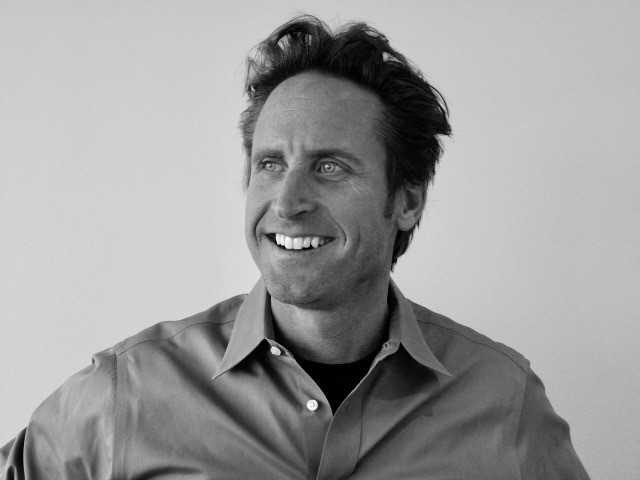
One morning in 2003, Will Ward woke up and confronted the purest expression of entrepreneurial freedom: an empty calendar. No clients. No business. Ward had left the agency world to help build ROAR, then a young management firm. Years later, he remembered the thought that arrived before breakfast: “What have I just done?” It is the sort of sentence that tends to disappear from corporate histories, which prefer beginnings to feel inevitable. This one did not.
The reason Ward had taken the risk explains ROAR better than a roster ever could. A manager had room to move. Television, film, music - the category lines mattered less. In Ward’s formulation, the manager behaved like a career CEO, connecting the agent, publicist, lawyer and business manager. The work was not simply finding the next deal. It was deciding which deals belonged to the same story.
Jay Froberg founded ROAR in 2000 and still owns it. The company now describes itself with three nouns - management, production and investment - and operates from Beverly Hills with locations listed in Nashville, London and Melbourne. Its clients have included actors, writers, directors and musicians: Chris and Liam Hemsworth, Brie Larson, Norman Reedus, Cobie Smulders, Jacob Elordi, Zac Brown Band and Dead & Company among them. The names are bright. The machinery behind them is more interesting.
The earnings and audience figures are company-reported. They are useful as scale signals, not audited accounts.
01 / THE SWITCHBOARDThe valuable work happens between the obvious jobs
An actor appears in a film. A writer sells a script. A musician goes on tour. Those are visible events, which makes it tempting to mistake them for the whole business. ROAR works in the less photogenic intervals: choosing material, coordinating advisers, packaging a project, shaping a company, or identifying a piece of intellectual property that can travel farther than one paycheck.
That is the problem it solves for artists. A successful career produces more choices than one person can evaluate cleanly. Opportunities collide. A role may help prestige but consume the year needed to develop an owned project. A brand offer may pay now and confuse the audience later. Each specialist sees one portion of the board. The manager is paid to see the board.
“The manager is like the CEO who connects all the dots between the agent, publicist, lawyer and business manager.”Will Ward, an early ROAR partner
connects
the system
This is also what separates a management company from a conventional agency. An agent’s regulated core is procuring and negotiating employment. A manager can stay closer to the unruly, long-horizon question: what should this person build? ROAR then stretches the answer into film and television development, digital content, strategic advice and selected investments. For producers and studios, it can help assemble talent and material. For companies and investors, it supplies entertainment judgment and access. For artists, it can turn a job into a platform.
02 / THE WIDER BETRepresentation pays once. Ownership can keep paying.
ROAR’s expansion was not theoretical. In 2010 it acquired Abstract Entertainment, adding literary managers and a production pipeline. Projects in development included material at Columbia Pictures and Dark Castle Entertainment. In 2017, longtime CAA agent Jon Levin crossed over to join the management company. Each move increased the density of the network: more writers, more projects, more senior judgment.
Then came a bet that looked less like old Hollywood. ROAR invested in and advised Influential, a company using data and artificial intelligence to match brands with online creators. It joined Influential’s $12 million Series B in 2018 alongside entertainment and venture investors. Publicis Groupe acquired Influential in 2024 in a transaction reported at roughly $500 million. The precise return to ROAR is private. The strategic logic is public: an entertainment firm saw early that influence itself was becoming measurable infrastructure.
This is the compounding loop. Managing talent teaches the firm where creators and brands struggle. That knowledge sharpens product and investment judgment. Equity creates upside beyond commissions. Production creates assets rather than only assignments. None of this guarantees a hit, but all of it gives one relationship several possible ways to become valuable.
Froberg establishes ROAR in Los Angeles as a talent-management company.
ROAR acquires Abstract Entertainment, expanding management and production.
Senior partners leave to form Activist while ROAR joins Influential’s Series B.
Publicis buys early ROAR portfolio company Influential.
ROAR continues across management, production, advisory and investment.
03 / THE BILL COMES DUEBreadth changes risk. It does not abolish it.
The same history contains its warning labels. Abstract’s managers left for New Wave a year after the acquisition. The management relationship with Zac Brown Band, signed in 2007 and one of ROAR’s largest music clients, unraveled in 2018. That year Bernie Cahill, Greg Suess, Matt Maher and Liz Norris also departed to launch Activist Artists Management. A relationship business can lose assets by elevator ride.
What failed first, in other words, was the fantasy of smooth compounding. People leave. Clients change direction. Acquisitions do not automatically retain the humans who made the target valuable. A broad model provides more shots on goal, but it also demands fluency in several businesses with different clocks. Film development may take years. A tour pays on a schedule. A startup may return nothing.
The price of ROAR’s service is not advertised. Its business model combines privately negotiated management commissions, production economics, advisory fees and investment returns. That opacity is normal in bespoke representation, but it matters to anyone tempted to copy the model: the engine depends on trust and access that cannot be purchased like software.
04 / THE COPYABLE PARTBuild the option before you need the answer
The useful lesson is not “become a Hollywood manager.” It is to design each piece of work so it can reveal the next one. ROAR’s managed relationships exposed production opportunities. Production knowledge exposed investment opportunities. Investment created a claim on long-term value. The sequence travels well outside entertainment.
Name the coordinating job
When five specialists serve one customer, assign someone to protect the whole outcome.
Look one transaction ahead
Ask what capability, audience or intellectual property today’s deal can create.
Earn before asking to own
Equity makes sense where your judgment and access materially change the asset.
Keep concentration visible
A famous customer can conceal fragility. Track dependence on people, not only revenue.
The model works best with talent already capable of generating choices, managers who can distinguish motion from progress, and enough time for owned projects to mature. It is weaker for artists who mainly need fast booking volume, companies without real cross-domain expertise, or teams that use “strategic” as a polite word for unfocused. Optionality is valuable only when somebody is willing to say no.
That brings the story back to the empty calendar. The early terror of ROAR was not merely that it lacked clients. It was that freedom had arrived before the system needed to use it. Twenty-five years later, the system is the company: talent, projects, businesses and capital arranged around a manager’s oldest task - seeing the whole board while everyone else studies a square.