A lawsuit is a tidy thing, at least as a data point. It has a filing date, a defendant and a court. The trouble is that the conditions behind it may have been gathering for years in academic papers, regulatory notices, consumer complaints and conversations no one thought to connect. By the time the suit is easy to count, the most useful warning has already passed.
RiskWise by TICKR is built for the untidy interval. The San Francisco software company gathers signals from news, social media, legal records, scientific research and regulatory material, then asks a more pointed question than “Is this topic getting attention?” It asks which entity is exposed, what is driving the risk and what outcome might follow. Its intended readers are underwriters, financial teams and consumer-product businesses, people whose decisions become expensive when a faint signal is mistaken for a harmless murmur.
The short version
- RiskWise watches for emerging exposure across legal, scientific, regulatory and public data.
- It links signals to specific companies, products and causal drivers, then produces indices, alerts and research.
- TICKR says a Fortune Global 500 carrier validated the platform against real-world losses; the carrier has not been named publicly.
- The practical test is whether an analyst can inspect the evidence behind a warning before acting on it.
A million mentions, one useful clue
TICKR knows the appeal of a dashboard full of conversation. Its earlier products helped agencies and brands pull scattered media data into a single view. In 2020, Tickr 3.0 offered AI-assisted media analysis, configurable charts and a Brand Risk Monitor. It was sold with modular pricing and optional add-ons. The company had already raised $3 million from Angels 3.0 in 2018 to expand its enterprise data platform and had acquired visualization company Market.Space later that year.
That history matters. It gave TICKR a way to ingest and arrange huge amounts of material, but it also exposed the limit of counting attention. A company may be discussed in an alarming article without being exposed to the harm it describes. A supplier may scarcely be mentioned while sitting in the path of a developing problem. Sentiment can tell you a room is anxious; it cannot identify who owns the leaking pipe.
In that sample, 879 of 12,941 documents were flagged as containing exposure evidence. The figure is company research, not an audit of every risk topic, but it gives the product its central problem: most material in a broad search should not move a risk score. The first thing that fails is usually relevance. The second is attribution. Without both, an impressive stream of alerts is merely an expensive way to interrupt people.
The underwriter changes the question
TICKR's own timeline says it began working with underwriters and risk leaders in 2020, then had its platform validated by a Fortune Global 500 carrier in 2024. RiskWise launched publicly in 2025. Those dates sketch the company's change in ambition: from showing what people are saying to helping a decision-maker judge what could become a claim, a recall, a regulatory action or a damaged reputation.
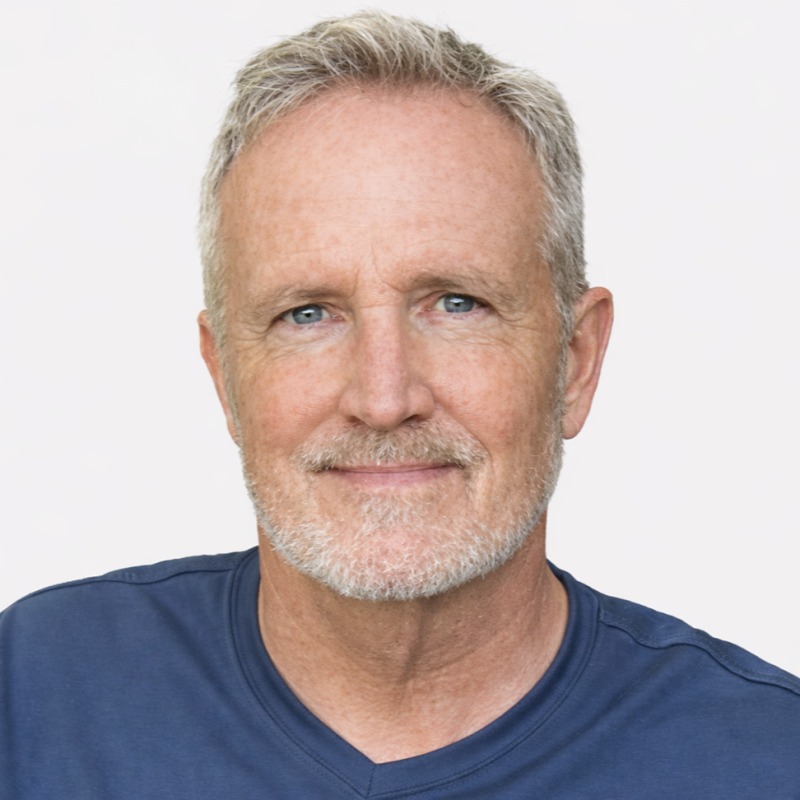
Founder and CEO Tyler Peppel has steered a company that has repeatedly changed the decision sitting at the far end of its data pipeline. The older audience might ask how a campaign is performing. An insurer asks whether a new class of exposure could alter underwriting or claims costs. A consumer-product maker asks whether a product issue warrants investigation or reformulation. A financial team asks whether a risk is growing before the market has settled on a price. RiskWise sells to those enterprise users; it has no public price list, so the known cash figure is TICKR's 2018 financing, not the cost of deploying RiskWise.
The company does not name the carrier that tested it, and its public material does not give a customer count. Its claim of validation is useful context, though a buyer would still need to examine the test design, false alarms, missed events and the fit with its own portfolio. A prediction that helped one carrier in one setting is a promising clue, not a universal conversion rate.
A warning needs a chain of custody
RiskWise's pipeline begins with broad retrieval. The company says it monitors billions of signals and more than 14,000 legal sources. A query agent checks whether the search has adequate coverage before other models begin drawing conclusions. Specialized models then rank documents, identify risk drivers and decide whether the text truly connects a company or product to the exposure. From there, the platform creates comparable risk indices, litigation forecasts, alerts and cited research reports.
How an alert becomes a decision
Consider a hypothetical food ingredient. A spike in angry posts might be a passing campaign. A cluster of clinical papers, new regulator interest, retailer questions and early plaintiff activity is a different pattern. RiskWise's job is to keep these signals separate long enough to see how they relate, then attribute the pattern to the right companies. Its context graph is meant to follow relationships through parents, subsidiaries, suppliers and peers, including firms with little direct coverage of their own.
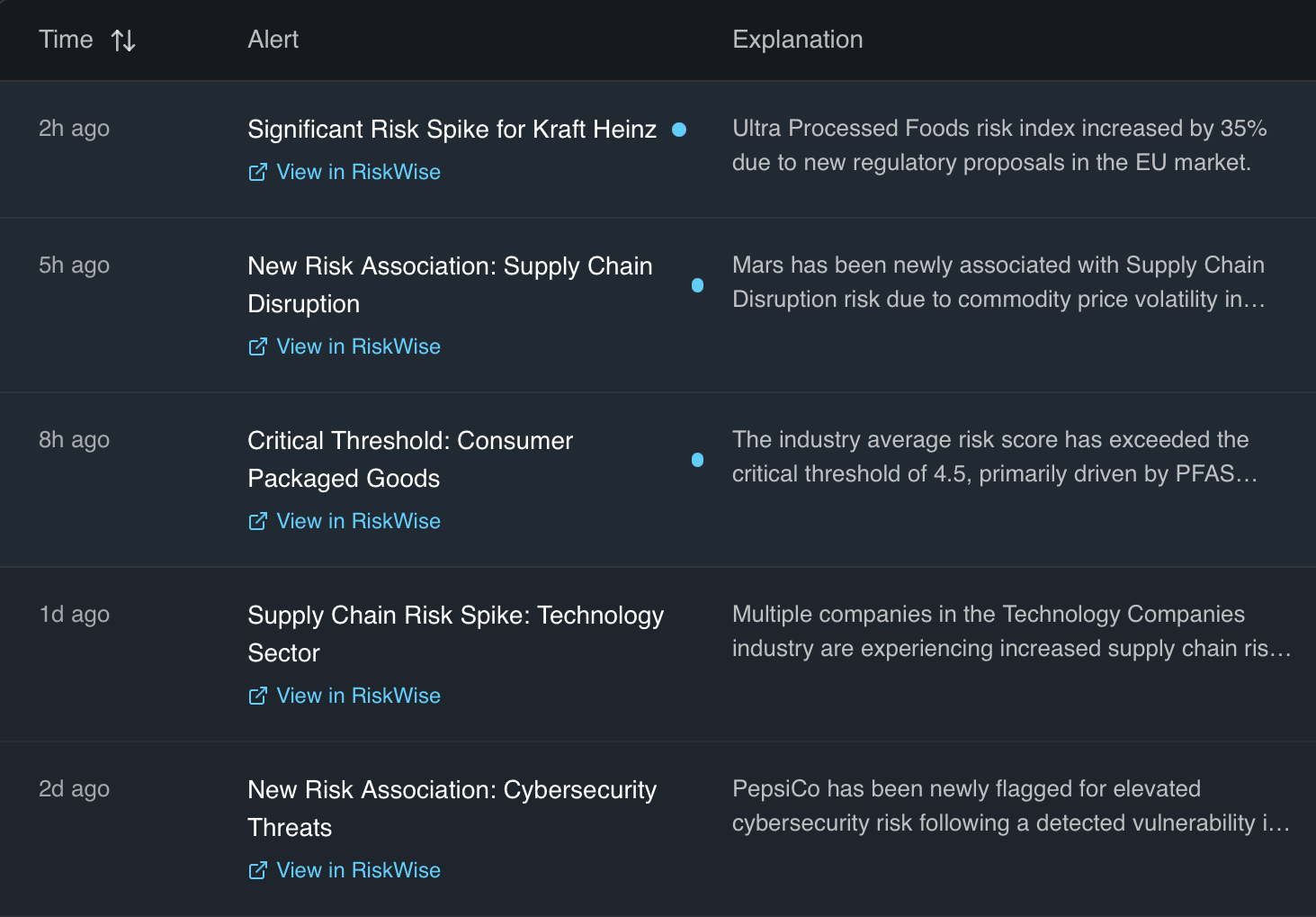
The company draws a useful distinction between perceived risk, the scrutiny and concern forming around an issue, and actual risk, the events that have already materialized. Its researchers argue that a single score generated directly from text can look precise while changing for obscure reasons. RiskWise instead measures drivers separately and builds an index from them. That is its clearest difference from a media-monitoring service or a general AI model asked to summarize a pile of articles: it wants a score with a visible cause and a record of what happened afterward.
The forecast is only as good as the record
TICKR publishes examples of early warning in opioid litigation, ultra-processed foods and generative AI. Those are company-reported validations, and the public descriptions do not establish how often the system stays quiet when it should speak or speaks when it should stay quiet. In risk work, both errors have a cost. An unneeded investigation consumes staff time; a missed signal can reach the balance sheet years later.
The product's security claims are more concrete: TICKR says it holds SOC 2 Type II certification, undergoes annual independent audits and makes reports available to customers on request. That matters because underwriting files and internal risk judgments are not material a firm casually drops into a public chatbot. The company's newer writing on agent infrastructure describes memory, procedures, permissions and audit traces around AI models, an attempt to make the answer reproducible when someone asks, “Why did we believe this?”
There is a practical lesson here for anyone building an intelligence system. Start with a decision, not a feed. Define the loss or change you care about; collect signals that could precede it; test whether each signal belongs to the entity in question; keep the underlying documents; and measure predictions against outcomes. RiskWise packages that sequence as enterprise software. A smaller team can copy the logic with a narrow risk topic and disciplined review, though it will not have TICKR's claimed data reach.
The method has limits wherever evidence is missing, delayed, private or badly attributed. A quiet settlement can leave a thin public trail. A novel threat can lack historical outcomes for calibration. A score may also rise because scrutiny rises, not because harm has become more likely. These are reasons to inspect the chain, not to abandon early warning. RiskWise's wager is that the first credible clue is worth finding, provided it can survive a second look.