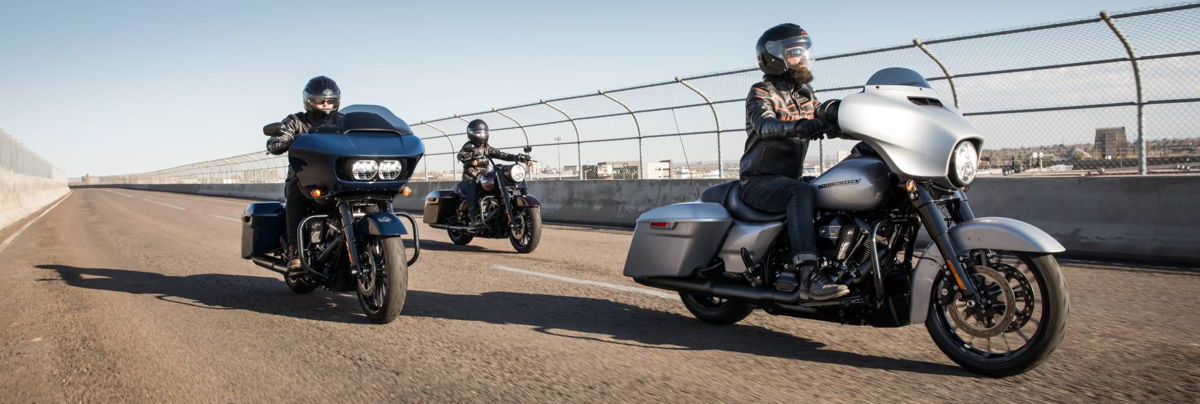
Somewhere in Austin tonight, a Harley that would otherwise be gathering dust in a garage is idling at a curb, waiting for a rider who has never met its owner. The keys change hands through an app. No dealership, no fleet counter, no tourist markup. This is the ordinary miracle Riders Share has spent years making boring: renting a stranger's motorcycle is now about as remarkable as booking a spare bedroom.
Riders Share is, by its own measure and most outside ones, the largest peer-to-peer motorcycle rental platform in the United States. The pitch fits on a license plate: owners list bikes, riders book them, everybody saves money. The execution - insurance, screening, trust, the unglamorous machinery of letting people lend $20,000 machines to people they will never meet - took a great deal longer.
"It's Airbnb and Turo, except the asset has two wheels and a personality."
- The shorthand investors kept reaching forThe problem they saw
Twenty million people who quit
Here is the inconvenient fact the motorcycle industry prefers not to dwell on: more than 20 million Americans used to ride and stopped. Life got in the way. The bike got sold. Renting one back, it turns out, was absurdly expensive - rental counters quote tourist prices for an afternoon, and buying a machine you would ride twice a month is a poor use of a garage and a worse use of money.
The founder learned this the hard way. Guillermo Cornejo crashed at 80 miles per hour, walked away with broken bones, serious road burn, and a stack of hospital bills that made buying his next bike impossible. When he went to rent one instead, the price gave him a second, smaller kind of shock. The supply existed - it was sitting in millions of garages. There was simply no good way to reach it.
"The motorcycles were never the scarce thing. Trust was."
- The whole business in one sentenceThe founders' bet
An MBA, a Redditor, and a crash
Cornejo had spent his career as an automotive analyst - Nissan, GM, Hyundai - which is to say he understood vehicles as spreadsheets before he understood them as freedom. He started Riders Share in 2018 while still in a full-time MBA at UCLA Anderson, an arrangement that is either very brave or very tired, possibly both. He found his co-founder, an engineer named Brendon Lamb, the way one finds many useful things: on Reddit.
The bet was that the same trust-and-insurance scaffolding that made strangers comfortable handing over house keys and car keys could be built for motorcycles - a category everyone assumed was too risky to insure at scale. Most people thought that assumption was correct. The company's main job, for years, was proving them wrong.
It is worth pausing on how unfashionable that work is. Nobody writes a breathless headline about an underwriting model. The early money came in small, unglamorous pieces - a $300,000 check here, a cumulative pile of angel and accelerator funding there - and much of it went toward the deeply boring problem of figuring out which riders to trust and how to price the risk of the ones you weren't sure about. That patience is the part of the story that does not photograph well, and it is also the part that competitors found hardest to copy.
"You cannot disrupt an industry that won't insure you. So they built the insurance."
- On the unglamorous moatThe mile markers
// A short history of getting strangers comfortable
The product
What you can actually do with it
Strip away the funding narrative and Riders Share is a tool with a simple promise. If you own a bike, you list it and it earns money on the weekends you are not riding. If you want to ride, you open the app, find a Ducati or a BMW or a Harley near you, and book it - often for around $25 a day, a number that makes corporate rental counters look like daylight robbery.
Underneath the simplicity sits the hard part. Machine-learning screening scores riders so owners are not handing keys to a stranger at random. A proprietary insurance program - backed by a partnership with Lloyd's of London - protects the owner if things go sideways. Roadside assistance covers the rider when the romance of the open road meets the reality of a dead battery. Rider Pass, launched in 2021, wraps a subscription around it for the people who ride often enough to want a discount.
The line that matters
// Platform rental volume, by year (USD)
A 61% jump in a single year. Marketplaces are slow until they aren't.
"$4.4 million to $7.1 million in twelve months is not a logo on a deck. It's people actually riding."
- Reading the chart out loudThe proof
Customers, claims, and competitors
The competition is real and named. EagleRider and Twisted Road work the same American roads; BikesBooking does it in Europe. The difference Riders Share keeps pointing to is structural: a fleet company prices a bike like an airline prices a seat, while a peer-to-peer owner prices it like what it is - a machine sitting idle that would rather be earning. That gap is the whole product.
The proof is in the boring metrics. Around 80,000 people have registered. More than 15,000 have actually completed a rental, which is the only number that counts in a marketplace - registrations are vanity, completed trips are revenue. And the insurance partnership with Lloyd's of London is the quiet evidence that the riskiest part of the model has been made underwritable.
The catalog helps too. This is not a row of identical fleet bikes in fleet colors. It is Ducatis and BMWs and Harley-Davidsons and Indians and the occasional Can-Am, each one belonging to someone who chose it on purpose and now lets you borrow it. That variety is the kind of thing a corporate fleet cannot replicate without buying the whole inventory first - which is precisely the cost a peer-to-peer model is designed to avoid. The supply is already out there, parked, depreciating, waiting. Riders Share just gave it a way to pay rent.
"A fleet rents you a seat. An owner rents you their weekend toy. The price tells the difference."
- Why peer-to-peer undercuts the counterThe mission
Bikes back to the people
The stated mission is almost stubbornly practical: make motorcycling affordable by generating income for owners and cheap access for everyone else. The subtext is more romantic. Those 20 million ex-riders did not lose the desire to ride - they lost the math. Riders Share is, at bottom, an argument that the math can be fixed without anyone buying another machine.
Five things worth knowing
- The company was born from a crash - Cornejo wiped out at 80 mph and couldn't afford a replacement bike.
- He started it while doing a full-time MBA at UCLA Anderson, which is a lot of nights.
- Before founding it, he analyzed cars for Nissan, GM and Hyundai.
- One of the earliest investors was one of the platform's own top hosts in Houston.
- You can rent a Ducati, BMW, Harley, Indian or Can-Am from a real garage, not a corporate fleet.
Why it matters tomorrow
The garage stops being a graveyard
The bigger idea outlives the motorcycle. We bought a century of vehicles that sit parked 95% of the time, and we are slowly admitting that ownership and access are not the same thing. Cars went first with Turo. Homes went first with Airbnb. Motorcycles - smaller market, scarier insurance, fiercer community - were supposed to be too hard. Riders Share is the bet that they weren't, just last.
So return to that curb in Austin. The Harley that was a depreciating ornament is now a small business with two wheels. Its owner is paid. The rider, who used to ride and quit and assumed that chapter was closed, is pulling away into traffic. Nobody filled out a clipboard. Nobody met a fleet manager. The keys just moved from a stranger to a stranger - which, when you think about it, is the entire trick.