He couldn't drive a car. He bought a motorcycle for the adrenaline, crashed it at 80, and turned the wreckage into the largest peer-to-peer bike-sharing platform in America.
CO-FOUNDER & CEO / RIDERS SHARE / AUSTIN, TX
Somewhere in America right now, a Ducati Monster that would otherwise be gathering dust in a garage is being ridden by a stranger who paid to borrow it. A Harley Road Glide is heading down a coast highway. A Ural with a sidecar - yes, a sidecar - is being rented purely because someone saw one and thought, I have to try that. All of it runs through a marketplace Guillermo Cornejo built.
Cornejo runs Riders Share from Austin, Texas. The pitch is simple enough to fit on a napkin: most motorcycles sit idle most of the year, so let owners rent them to vetted riders and split the money. Think Airbnb, but the guest rides away at speed on something that can hurt them. The hard part - the part everyone else avoided - is the risk. And risk happens to be the one thing Cornejo spent his entire career learning to price.
Today the platform lists more than 3,000 motorcycles and counts roughly 250,000 registered riders. Rentals climbed from $4.4 million in 2021 to $7.1 million in 2022. He has raised about $3.3 million to get here. But the number that explains him best isn't on a pitch deck. It's the number of surgical pins in his hand.
I was 23, I quickly got overconfident, and I crashed it at 80 miles per hour. I have a lot of pins in my hand.— Guillermo Cornejo, on the ride that started everything
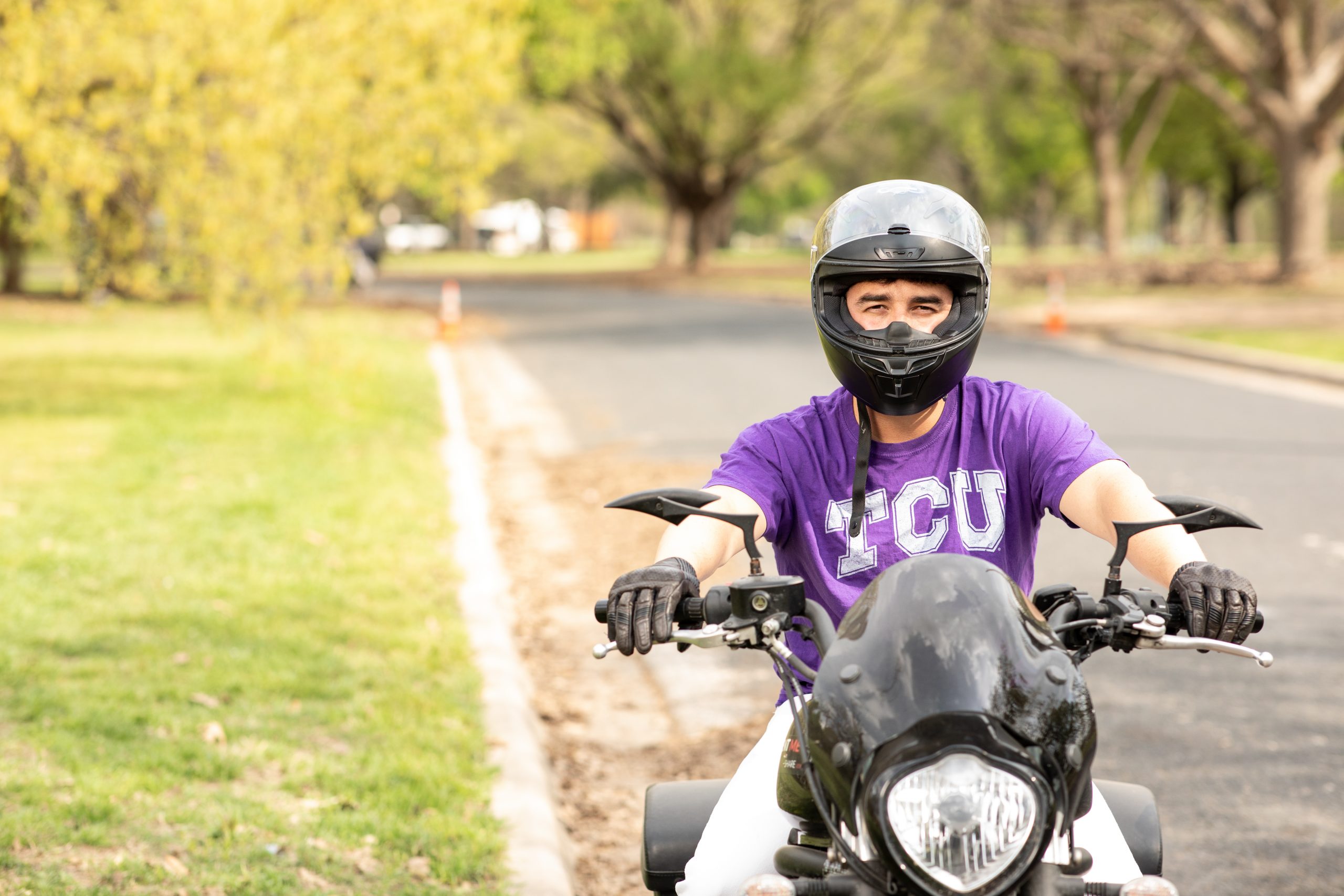
Cornejo grew up in Peru, where he surfed. When he landed in Texas - he'd followed his older sister to Texas Christian University, and his younger brother would follow him - he found himself missing the rush. "I had never driven a car in my life," he has said. "I knew surfing while I was in Peru, so I was like, 'What can give me adrenaline kind of like that?'"
The answer was a Kawasaki Ninja 250. He was 23, he got overconfident, and the bike went down at 80 miles per hour. The crash left his hand full of pins and left him with hospital bills that made buying another motorcycle impossible. So he looked into renting one instead. A day's rental ran around $200 - absurd next to the price of renting a car.
That gap sat in his head for years. He'd study Turo and RVshare and notice the same blank space: nobody had cracked peer-to-peer for motorcycles. Everyone assumed the insurance math was impossible. Cornejo, by then a professional risk analyst, wasn't so sure.
Before Riders Share there was a decade inside the machinery of auto finance. He credits an econometrics class at TCU - taught by professor Kiril Tochkov - for landing him at Nissan Motor Acceptance Corp. "Nissan hired me because I had taken that class," he says. From there came roles at General Motors Financial and Hyundai Capital America.
The through-line was managing high-risk auto loans during the Great Recession - deciding who was likely to default, and pricing that likelihood. It's not a glamorous education. It is, however, exactly the education you'd want if your business plan is to insure strangers riding each other's motorcycles.
"I knew a thing or two about how to manage risk," he says, "and I thought I could do it, figure out insurance risk, and run with it." Riders Share now uses algorithms that read credit scores and driving records to predict a renter's odds of crashing. Higher risk means a higher deposit - which quietly filters out the riskiest riders before they ever throw a leg over a bike.
He hit $1 million in annual rentals in 2018 - with a two-person team, while enrolled full-time in an MBA. The pandemic flattened 2020. Then demand for open-air, socially-distanced adventure did what no marketing budget could.
The first version of Riders Share was, by his own account, a mess. The site was bad enough that he pulled the plug and regrouped rather than limp forward. He brought in a coding partner, Brendon Lamb, gave him equity, and relaunched clean in February 2018.
The candor is a pattern. He'll tell you the marketing firm that spent $60,000 without approval. He'll tell you the company lost about $100 on every early rental because the insurance costs were brutal. He'll even tell you he was nearly replaced as CEO by a former Uber executive - who turned the job down, so Cornejo simply kept going. "I had no idea how difficult it would be to run this," he admits. He built it anyway.
Some of the most-rented bikes come with sidecars. "When people see one, they go, 'Oh, I wanna try this.'" Curiosity, it turns out, is a demand driver.
He learned to ride a motorcycle before he ever learned to drive a car - the crash came before the driver's ed.
As a Texas student he tried importing chicha morada, a Peruvian purple-corn drink. The entrepreneurial itch showed up early.
Cornejo lists his own Kawasaki on Riders Share to help cover the loan payments on it. The founder is also a user.
"If it's stolen, we cover it. If it's destroyed, we cover it. If one part is cracked, we replace that part." Coverage with zero-dollar deductibles.
He followed his older sister to TCU. His younger brother followed him. A family pipeline from Peru to Fort Worth.
"I had never driven a car in my life. I knew surfing while I was in Peru, so I was like, 'What can give me adrenaline kind of like that?'"
"I knew a thing or two about how to manage risk and I thought I could do it, figure out insurance risk, and run with it."
"If it's stolen, we cover it. If it's destroyed, we cover it. If one part is cracked, we replace that part."
"I had no idea how difficult it would be to run this."
Most motorcycles sit idle most of the year. The whole business is turning that idleness into a ride for someone else.— The Riders Share thesis, in one line
If someone you know owns a bike they never ride, they'll want to read this.