Rick Frost gave his colleagues a piece of paper when he took the top job at Louisiana-Pacific. On it, he described the leader he intended to be and the behavior he wanted to avoid. Then he gave the document a practical purpose: if he stopped living up to it, they could bring it into his office and confront him. A chief executive had supplied his own complaints form.
It is an unusually useful opening to a business career. The familiar executive biography moves from promotion to promotion, as though a bigger office were proof of better judgment. Frost's little document raised a different question. Who would tell him when his judgment slipped? He said people actually used it. The invitation had survived contact with the boss.
The education before the corner office
Frost's route to leadership began in forestry. He earned two bachelor's degrees at Louisiana State University, including industrial forest management, and an MBA at Northwestern State University of Louisiana. His industry experience included Boise Cascade, Scott Paper, S.D. Warren and SAPPI. The vocabulary of his working life was timber, procurement, mills and the movement of materials.
Those are subjects with physical consequences. A purchasing decision affects what reaches a plant. A logistics decision affects when it arrives. A production decision becomes an actual panel, with an actual customer expecting it to perform. This is useful context for a leader whose responsibilities kept widening across operations: the work connected an executive decision to something someone else had to build.
Years after his LP retirement, the Forest Resources Association held up Frost's career as an example for young foresters. He had advanced from field forestry by accepting difficult assignments. Its account attached a compact motto to him: “If it is to be, then it is up to me.” The advice has little room for waiting to be discovered. It suggests putting your hand up when the assignment looks inconvenient.
A company learning what to keep
Frost joined LP in 1996. By the time the board chose him as CEO in 2004, his responsibilities had encompassed timberlands, procurement, purchasing, logistics, engineering and major wood-products businesses. He had helped build the Chilean operation and participated in restructuring. This was a promotion for someone already familiar with the machinery behind the financial statements.
His predecessor, Mark Suwyn, had spent three years preparing the succession. Suwyn singled out Frost's negotiating ability, operational drive and relationships with employees. Frost, in turn, credited Suwyn with preparing him through involvement in strategic and operating decisions. There was no need to manufacture an outsider's dramatic entrance. The incoming leader had been working on the company for eight years.
The handover also divided the top responsibilities. Frost would become chief executive; Gary Cook would become chairman. LP was separating jobs previously held by Suwyn. That detail matters to the shape of Frost's story: even at his own promotion, leadership was being distributed across more than one chair.
Two letters, one football stadium
In June 2006, Frost appeared alongside Tennessee Titans owner Bud Adams to announce a naming agreement for the team's stadium. The venue would become LP Field. The agreement called for ten years of naming rights at approximately $3 million a year. A company accustomed to selling materials to builders was putting its initials in front of football spectators.
There was a local logic to the national exposure. LP had relocated its headquarters to Nashville in 2004. The stadium offered a conspicuous way to associate the business with its new home. Frost presented the deal as an opportunity to build the LP brand and connect the company, its customers and the Nashville community.
The agreement also included joint philanthropic activity. LP and the Titans planned support for a Nashville Habitat for Humanity house, and LP announced product donations for homes in the cities where the team would play away games that season. The distance between sponsorship and the company's everyday business became rather short: the name went on a stadium; the materials went into houses.
November 2008: the arithmetic changes
Then came a much less comfortable kind of visibility. By November 2008, LP was describing a severe response to the housing downturn. It had suspended dividends, indefinitely curtailed operations at four oriented strand board mills and taken downtime elsewhere. For a manufacturer, waiting for buyers has a cost. Buildings, equipment and working capital do not pause politely when demand does.
Planned annual capital spending was reduced to $25 million, against expected spending of $170 million in 2008. Around 200 salaried positions were eliminated. Flight operations and research facilities were closed; salaries were frozen; marketing and sales spending was reduced. Frost's leadership belongs beside those decisions, with their consequences for employees, as well as beside the more appealing stories about accountability.
The figures describe the scale of the retreat without making it a triumph. LP expected the organizational cuts to reduce annual cash use by roughly $30 million to $35 million. Preserving cash meant giving things up. A corporate promise to endure can sound stirring at a podium; its implementation arrives as a list of expenditures and jobs.
Meanwhile, in Lautaro
That same month, Frost visited LP's operation in Lautaro, Chile, with local general manager Frederic Price. He met industrial-park directors and regional business representatives. The contrast is striking: the company was reducing its commitments at home while discussing the role of a manufacturing operation in a market with different building habits.
Frost described Chile as having room for wider adoption of oriented strand board, the structural panel central to LP's business. The Lautaro plant had been operating for about ten months. He discussed its importance in supplying future demand. The point was geographical as much as industrial: a building method familiar in one country could still have a different commercial trajectory elsewhere.
It would be too tidy to treat an overseas visit as an answer to an American housing collapse. It does show the range of problems on his desk. He had to consider what demand might develop in Chile while managing the immediate cost of insufficient demand in North America. A global business supplies very little opportunity to concentrate on one difficulty at a time.
The recovery that kept changing its mind
By the second quarter of 2010, LP reported earnings of $24 million, compared with a $27 million loss a year earlier. Sales rose 67%. The home buyer tax credit had helped stimulate activity. These were encouraging numbers for a company that had spent the downturn trying to preserve room to operate.
But Frost described a sharp slowdown as the quarter ended. Orders that had been difficult to keep up with in spring gave way to a quieter June after the credit expired. The quarterly total contained two different experiences. Looking only at the improvement would miss how abruptly the pace of business had changed underneath it.
The next quarter made the problem clearer. LP lost nearly $32 million. Frost concluded that the earlier stimulus had brought business forward in time. He expected an uneven recovery and saw repair and remodeling as likely to lead a lasting improvement. There is something chastening about this sequence: even better numbers needed to be questioned before they could be trusted as a new normal.
Principles with a product attached
Frost had put quality and ethics at the center of his early explanation of the CEO's job. In LP's 2004 annual report, he insisted that products needed processes and testing to ensure customers received the performance and value they expected. For a building-products company, quality follows the goods out of the factory and into someone else's project.
He also offered a familiar line about shared responsibility. The setting gives it weight. LP's work crossed engineering, manufacturing, procurement and sales. A confident person at the top could not personally substitute for all those forms of knowledge.
“None of us is as smart as all of us.”
Rick Frost · LP’s 2004 annual report
This is where the paper he handed colleagues becomes interesting again. Product testing checks whether a panel meets its promise. His invitation to challenge him offered a rough equivalent for executive behavior. The comparison has limits, of course. A colleague requires considerably more nerve than a laboratory instrument. Still, both arrangements make a claim open to inspection.
A handover, then another seat at the table
LP announced Frost's retirement in March 2012. Curt Stevens would become CEO on May 4, and Frost would remain through May 31 to help with the transition. Stevens already knew the company: he had joined in 1997 and held senior financial and operating responsibilities. Another succession would draw on experience accumulated inside the business.
Frost's farewell emphasized improvements made by employees during difficult industry conditions. Cook praised his leadership through the turbulence. Those judgments accompanied a planned transfer of authority, rather than a promise that the departing executive remained indispensable. A company that must keep operating needs someone ready to take the next decision.
In July 2012, Beacon Roofing Supply appointed Frost to its board alongside former Ryerson chief Neil Novich. The manufacturer had become a director at a distributor. Beacon pointed to his operating experience and his background in building products. He also had board experience at Tractor Supply and Westervelt, extending his career beyond LP's executive suite.
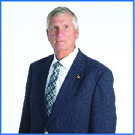
Beacon's 2024 proxy disclosed that Frost would retire at that year's annual meeting under its director retirement policy. That later chapter puts a longer frame around his LP years: running a company, handing it over, and then contributing through governance.
The most revealing object in the story remains small enough to carry into an office. A written promise gave colleagues something firmer than a recollection of what the boss once said. They could keep it. They could return it. For all the mills, markets and millions surrounding Frost's career, that piece of paper made accountability wonderfully portable.