A used-car business called Honest Rick’s Used Cars would have required a certain amount of nerve. Richard L. Sharp had that. Fortunately, his colleagues also had a naming discussion. Honest Rick’s and Sharp Motors were passed over, and the business became CarMax. The less personal name suited a rather personal ambition: make buying a used car a transaction people could understand without first acquiring a taste for combat.
Sharp was running Circuit City when he championed the idea. The merchandise outside this proposed store would weigh considerably more than a television. It would also arrive with a history. Yet he saw room for a familiar retail discipline: a large selection, an intelligible price, and a process that worked the same way for the next customer. The challenge was to make that promise survive contact with an actual car lot.
By September 1993, the first CarMax had opened in Richmond, Virginia. Two decades later, the company dedicated that same store to him. Between those moments lies a career that began with computer systems and kept returning to a practical question: how do you make a complicated business easier to use?
The programmer behind the price tag
Born in Washington, D.C., on April 12, 1947, Sharp grew up in Alexandria, Virginia, and graduated from George Washington High School in 1965. He attended the University of Virginia, studying electrical engineering, but left without graduating. His interest lay in computers. He later studied computer science at William & Mary and attended Harvard Business School’s Advanced Management Program.
That background matters because Sharp arrived in retail through its machinery. In 1975 he founded Applied Systems Corporation, developing custom computer hardware and software for businesses. Before he became the person deciding where stores should open, he worked on the systems that helped businesses function. A cash register and an inventory record were part of the same problem: knowing what had been sold, what remained, and what should happen next.
His work brought him into contact with Alan Wurtzel, whose electronics business became Circuit City. Sharp joined the company as executive vice president in 1982. He became president in 1984, chief executive in 1986, and chairman in 1994. These were successive jobs within an existing enterprise. Circuit City had its own history before Sharp arrived, and his contribution belongs to that longer story.
During his years as chief executive, its store count rose from 69 to 616. Sales increased from about $1 billion to $12.6 billion. The figures describe a retailer learning to repeat itself across the country. Every added store made the systems behind the selling floor more consequential. Scale could multiply an efficient process; it could also give an inefficient one a very expensive travel itinerary.
A bigger stage for the same systems
Number of stores. Endpoints, not an annual growth curve.
A question from outside the showroom
The CarMax origin has room for more than one person. Austin Ligon, then responsible for strategic planning at Circuit City, was looking for another business in which the company’s skills and capital could be useful. Sporting goods, furniture, and auto parts were among the possibilities. The search was deliberate. Circuit City had resources; the team needed a market where those resources could make a difference.
In October 1991, consultant and Richmond entrepreneur Ron Moore raised the possibility of used cars. Ligon took the suggestion to Sharp. Both saw potential, and they began working on the concept. Sharp also brought information-systems manager Richard Smith into the effort. The sequence is revealing: a question, a collaborator, then someone who could help build the underlying system.
“The truth is, it’s been a team effort from the beginning.”
Austin Ligon, reflecting on CarMax’s origins in 2003
There is a temptation to tidy this into an account of a lone executive having an idea. The actual division of work is more interesting. Moore suggested a category. Ligon helped develop the opportunity. Sharp supplied executive backing and a way of thinking about retail. A venture team turned those discussions into a store. Giving everyone their place makes Sharp’s role clearer: he could recognize a proposition worth putting the company’s money behind.
The board committed $50 million to development and prototype stores. That was a substantial permission slip. It bought room to learn, but it also meant that someone would eventually need to explain the results. A new retail concept becomes much less abstract when it acquires premises, employees, inventory, and a board waiting for an update.
The customer had already written the brief
Sharp and Ligon commissioned research into what people liked and disliked about buying cars. Thousands of consumers were surveyed. Their answers helped shape the offer: broad choice, fixed prices, and assurances about the vehicles being sold. The business began by listening to customers describe an experience they would rather improve.
A fixed price removed one source of uncertainty. Customers could compare vehicles without needing to estimate how much bargaining talent was built into the number on the window. A large inventory gave them another reason to visit. Inspections and reconditioning addressed the awkward fact that a used car is an individual object, with an individual past, rather than a new television in a sealed carton.
Those elements had to work together. A clearly marked price is of limited comfort if the product is mysterious. A reassuring inspection is less useful if the shopping process exhausts the buyer. CarMax’s proposition joined the merchandise to the method of selling it. That connection is where Sharp’s earlier experience with business systems becomes especially relevant.
Choice
A broad selection in one place.
Clarity
A fixed price for the vehicle.
Confidence
Inspection and reconditioning.
The concept still needed time. Early expansion was cautious, and the team continued refining operations as it added locations. In 1997, CarMax began trading as a tracking stock associated with Circuit City. It became an independent public company on October 1, 2002. The experiment had acquired an identity of its own.
There were other bets, and some lost
Sharp’s career offers little support for the idea that retail judgment is an uninterrupted sequence of good decisions. Circuit City also backed DIVX, a home-video system launched in 1998. Customers needed a special player, and a purchased disc came with a limited viewing period. The venture closed in 1999. An attempt to change how people watched movies had failed to win enough acceptance.
CarMax itself experienced disappointing stretches. In an April 1999 results announcement, Sharp acknowledged that “CarMax’s used-car sales remained below our expectations.” He pointed to competition from new-car pricing and the need to improve awareness and customer traffic in several markets. The language is useful precisely because it is ordinary. Customers had not shown up in sufficient numbers. Management had work to do.
Both ventures asked people to accept a different way of buying something familiar. Their outcomes differed. Seen together, they complicate the flattering version of the executive who simply knows what consumers want. A proposition has to be tested in public. People can like the sound of an idea and still decline to spend money on it.
Sharp left Circuit City’s daily management in 2000 and its chairmanship in 2002. He remained CarMax’s chairman until June 2007. Circuit City’s eventual liquidation in 2009 belongs in the account, too. The parent business disappeared while the company it had helped incubate continued. The relationship between the two makes easy verdicts about his legacy rather difficult.
- 1991Sharp and Ligon develop the used-car concept.
- 1993The first Richmond store opens.
- 1997CarMax begins trading as a tracking stock.
- 2002CarMax separates from Circuit City.
- 2007Sharp retires as CarMax chairman.
Rick on the road, Richard at home
Sharp’s investments extended beyond the two retailers. He was an early investor in Crocs and served as its board chairman, retiring from that position in 2011. He also served on the board of electronics manufacturer Flextronics and founded V-Ten Capital Partners. Computers, cars, and molded shoes make an unusual collection. His career crossed the boundaries that product categories tend to impose on a résumé.
At home, the name was more consistent. “Most people called him Rick. I called him Richard,” his wife Sherry recalled. They had been high school sweethearts in Alexandria. Their family included two daughters and four grandchildren. Sherry described a confident person who also retained humility, a combination that colleagues’ memories of his energy help make less abstract.
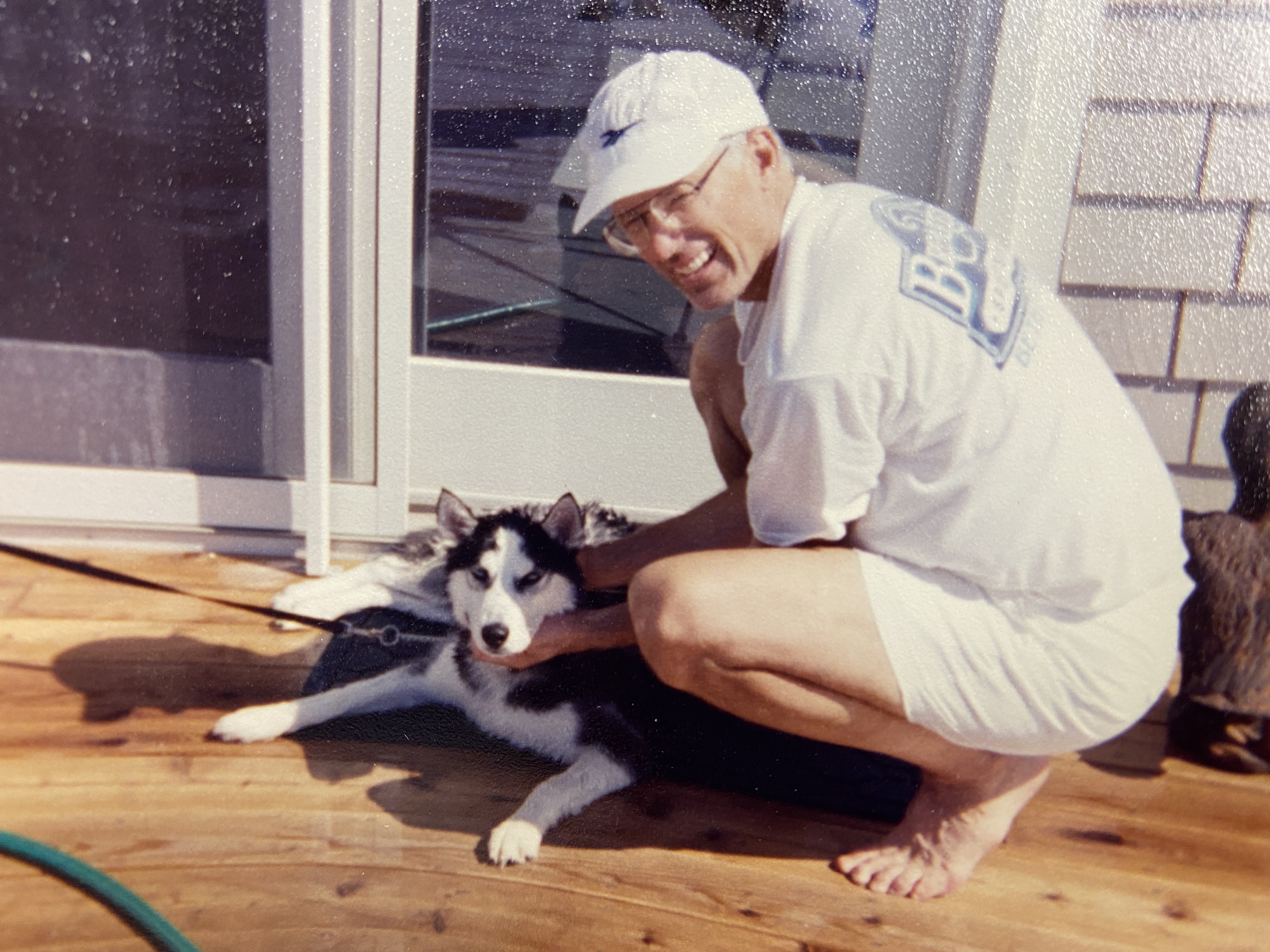
Her account of traveling with him supplies a better portrait than a list of appointments. Passing a CarMax could turn into a visit. Sharp liked to walk around, meet employees, and see how that particular location was doing. A store remained a place to investigate, even when its sign already carried the name of a business he had helped create.
That habit brings the story back to the distance between an executive’s intention and a customer’s experience. A concept can look perfectly orderly on paper. The store contains the details. Visiting puts those details within reach, along with the people who know where the process works and where it becomes troublesome.
Back to West Broad Street
On May 6, 2013, CarMax honored Sharp at its original Richmond store. A bronze plaque marked his contribution. The company also established a $250,000 endowment for the CarMax-Rick Sharp Entrepreneur Scholarship, intended for graduating high school seniors in the greater Richmond area. The tribute tied a successful business to opportunities for people who had yet to begin their careers.
Sharp died on June 24, 2014, aged 67. His association with CarMax continued in the company’s history. In October 2023, founding employees joined its leadership at the New York Stock Exchange to mark the retailer’s thirtieth anniversary. By then, it had sold more than 11 million cars at retail.
The store dedication is the more intimate ending. After years of expansion, investment, and board meetings, the recognition took place where the proposition first met its customers. A business once considered for the name Honest Rick’s had become large enough to honor Rick without needing his name above every door. And the scholarship left another possibility open: someone from the same region could have an idea of their own, with a little help getting started.