A loose cable is an unglamorous place to begin a business story. Someone has to find it, reach it, disconnect it, reconnect it, and check that the new arrangement works. In Richard Rauch’s corner of computing, that small errand contained a useful question: how much of this should require a person standing beside the equipment?
In June 2001, Rauch was granted a patent for an electronically controllable fiber-optic patch panel. The title offers little assistance to dinner-party conversation. The underlying problem is easier to appreciate. Changing connections by hand takes time. Remote control makes a different kind of working day possible. A network administrator could choose a connection without making a pilgrimage to the cables.
Rauch had founded APCON eight years earlier, in 1993, to develop computer connectivity products. He remains publicly identified as its president and CEO. Across the intervening decades, the equipment has changed, the traffic has accelerated, and some conversations have moved inside virtual machines. His business has kept returning to the practical matter of access: getting information somewhere useful, with fewer obstacles along the way.
The engineer behind the signature
Before APCON, Rauch held executive and engineering leadership positions at Metacomp, Unisys, and Wavetek. He earned a bachelor’s degree in electrical engineering. Those are the foundations of a career that puts a named inventor behind the executive title. The person signing off on the business also has a place in its technical record.
The patch-panel patent, US 6,243,510, names Richard B. Rauch as inventor and APCON as the original assignee. Its design converts incoming optical signals into electrical signals, directs them through electronically controlled circuitry, and converts them back for transmission. The operator can select an output from a remote location. It is an intervention in the physical work of running a network.
There is a pleasing economy to that starting point. The invention concerns a connection, but its practical effect concerns a person’s time. The technician who no longer has to visit the panel can do something else. For an infrastructure company, this is a perfectly respectable ambition. A successful afternoon may consist of preventing an errand.
A business in the middle of things
APCON’s work sits between the network carrying traffic and the tools trying to understand it. Its hardware takes a copy of that traffic. Its software helps organize and direct the copy. Security and performance tools receive the material they need to examine. The arrangement sounds almost clerical until one considers how much can go wrong when the delivery fails.
In August 2012, the company introduced APCONTAP, a modular passive network TAP. A TAP lets monitoring equipment observe traffic without interrupting its journey. The announced chassis could accommodate multiple modules in a small amount of rack space. This was another extension of Rauch’s connectivity business: make observation practical, then give the observer somewhere useful to plug in.
Later that year, he announced a development program for software-defined networking. The objective was to integrate APCON’s monitoring switches with emerging network controllers. Here was a founder adapting a hardware business to a changing division of labor between hardware and software. The equipment still mattered; the way people would control it was changing.
The appeal of this territory is its stubbornness. A company can buy capable analytical tools and still have trouble supplying them with the right traffic. Every new connection, location, and operating environment can complicate that supply. Rauch built a company around the work required before an analyst gets to ask an interesting question.
Building that business also meant reaching customers beyond its home market. In July 2013, APCON announced Singapore-based M.Tech as an Asia-Pacific channel partner and distributor. The partnership covered intelligent monitoring and aggregation products for enterprise data centers. Rauch described the arrangement as a way to extend the company’s regional reach. It is a useful counterpart to the engineering announcements: distribution gives a product another kind of route. A switch can have the required capabilities and still need people who know the customer, understand the installation, and can explain why the equipment belongs there.
When the conversation left the cable
Virtualization introduced an awkward variation. Two virtual machines could exchange information inside a server, beyond the view of a monitoring point on a physical network. A business could modernize its computing and create a fresh place where its observers could not see. Progress had brought along a small administrative joke.
In February 2015, Rauch announced APCON’s strategy for integrated virtual network monitoring. The plan extended the company’s monitoring architecture across physical and virtual environments. By October, a TitanXR software release included IntellaTap-VE for monitoring traffic between Linux KVM virtual machines. A problem described earlier in the year had become a specific software capability.
The following March brought a different pressure: speed. APCON introduced its IntellaFlex 100G monitoring solution, with compatibility for existing IntellaFlex XR systems. Rauch connected the launch to a familiar customer predicament. More bandwidth benefited users while creating risks for security visibility. The monitoring machinery had to keep up with the network it was supposed to explain.
That compatibility detail deserves attention. Customers upgrading a network have already spent money on equipment, skills, and operating procedures. An expansion path that works with installed systems addresses the cost of change as well as the attraction of higher capacity. Rauch’s product announcements repeatedly concern the conditions under which an organization can keep doing its work.
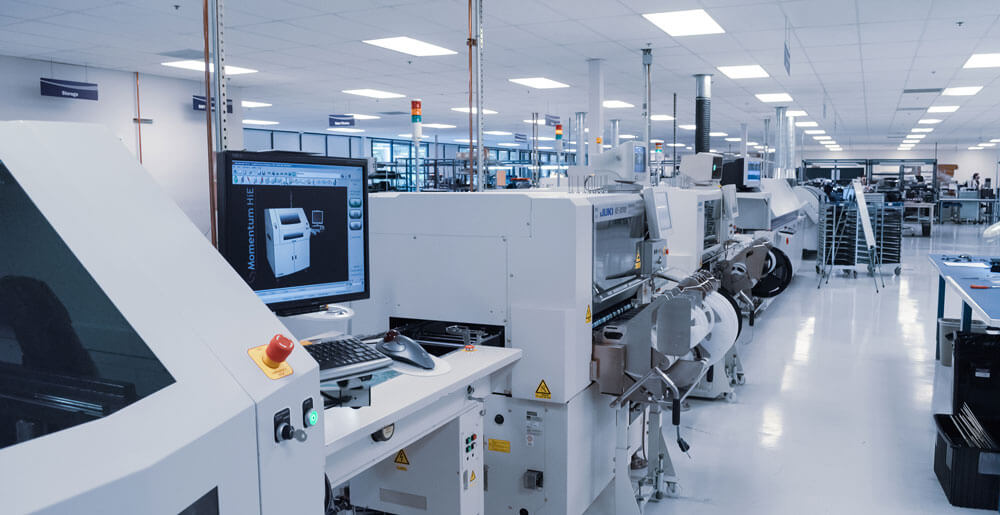
There was an organizational side to that technical work. In May 2017, APCON announced expanded leadership responsibilities: Mohit Jalori became regional director of engineering, Philip Chan joined as director of solutions engineering, and Kevin Copestake took responsibility for sales in the United Kingdom and Ireland. Rauch tied the appointments to changing network infrastructure and customer needs. New products required people who could develop them, explain them, and support their adoption. The founder’s job included building those connections within the company.
A second set of foundations
While APCON was building network products, Rauch opened another business chapter. He founded Gemini Investments in 2008. The private real-estate organization has holdings in Oregon and Texas and is headquartered in Plano. Its work includes property investment, asset operation, and customized real-estate and build-to-suit arrangements.
The Gemini biography adds a detail that belongs comfortably outside a server room: Rauch is an experienced aircraft pilot. It describes him flying around the country to visit his property investments. For someone whose network work enables remote access, the property business supplies a reason to go and look in person. Buildings retain a certain resistance to being reduced to a dashboard.
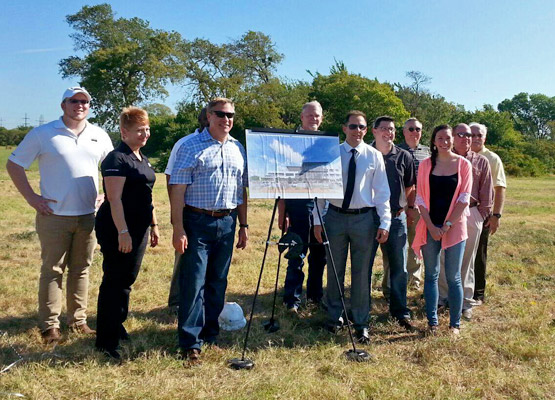
Gemini’s company page even includes an APCON construction time-lapse. In September 2015, APCON was reported to be building a 58,000-square-foot regional office in Plano after outgrowing its Richardson premises. The planned facilities included a cafeteria and outdoor areas. A company’s expansion becomes rather concrete when someone has to decide where everybody will eat.
The day the argument went to a jury
In April 2021, the company Rauch had founded faced a test far removed from a product demonstration. Gigamon had accused APCON of infringing network-technology patents. APCON’s lawyers described the requested injunction as a threat to the business. Decades of engineering were now part of an argument in an East Texas courtroom.
On April 23, the jury returned a verdict of no infringement and invalidity on all six asserted claims across five patents. The distinction matters: these were the claims presented at trial. The decision gave APCON a complete defense verdict in that proceeding. Rauch thanked the legal team and said the company had been confident in its position.
The episode puts some weight behind a familiar phrase, founder-led. By then, Rauch had spent 28 years building APCON. The company’s defense involved lawyers Adam Alper and Michael De Vries and a technical record that had to withstand scrutiny. An enterprise built around making networks observable had reached a moment when its own work required close examination.
The operator who has to read the alerts
Rauch’s writing offers another view of his priorities. In a January 2017 essay about cyber-threat detection, he organized his advice around tool selection, understanding normal network behavior, addressing vulnerabilities, and making reports useful. His attention extended to the person receiving the notification. An alert achieves little if its recipient cannot act on it.
“Getting the right traffic to the right tool is critical.”
Richard Rauch, 2017
He also warned about alert fatigue. That concern makes his argument more human than the equipment catalogue might suggest. Security teams have limited attention. Systems can produce more notifications than people can sensibly investigate. Rauch’s prescription included getting useful information to the appropriate expert, alongside the less glamorous work of maintaining policies and keeping tools effective.
His company returned to that subject in October 2026 with a blog post about dealing with alert overload. Earlier, on April 1, it had announced ThreatGuard, bringing threat detection, packet inspection, traffic analysis, and AI-assisted investigation into a shared environment. Its Connections Graph maps relationships among devices and traffic flows. These are company developments, extending the business Rauch founded into the investigator’s working process.
The continuity is unusually tangible. First there was a connection that could be changed without a trip to a panel. Later came traffic that could be observed inside a virtual environment. Now the company is arranging evidence so an investigator can follow it. Across those changes, Rauch’s career keeps circling the same ordinary frustration: the thing you need is somewhere else, and reaching it is taking too long.