The customer grew up. This is an inconvenient thing for a clothing retailer’s customer to do. She acquires other interests, different rooms to furnish, less enthusiasm for the shop that understood her perfectly at twenty. Richard Hayne’s response was to help give her somewhere else to go. In 1992, in a former automobile shop in Wayne, Pennsylvania, Anthropologie opened its doors.
The setting suited the idea. A building could have a second occupation; so could a shopper. Clothing shared space with objects for the home. The invitation extended beyond replacing something in a wardrobe. Here was a room in which a woman might recognize the life she was making, or find a small addition to it. A dress and a dinner plate could plausibly belong to the same afternoon.
Hayne, known as Dick, had already spent more than twenty years in retail. His starting point had been considerably closer to a student’s budget. What connects the two ventures is the attention paid to a particular person at a particular moment. Looking at his career through that lens makes more sense than imagining a founder who simply kept adding clothes rails.
A shop, then another life
In 1970, Hayne joined Scott Belair and Judy Wicks to open the original shop near the University of Pennsylvania. Belair needed a project for an entrepreneurship class. The name was Free People. Second-hand clothes, furniture, jewelry and household objects gave college-age shoppers a place to browse. It was a modest, practical response to the people living nearby.
Hayne had graduated from Lehigh University the previous year. He and Wicks spent time volunteering in Alaska before the Philadelphia venture. The store began as a collaboration among young people figuring out what they wanted to do. Its later scale can make the beginning seem predestined. A shop assembled around students and used merchandise offered no such assurance.
The business became Urban Outfitters. The company incorporated in 1976, with Hayne as chairman. By the early 1990s, the original audience was moving into another stage of adulthood. Anthropologie addressed women with a different mix of interests and spending power. Hayne could have tried to stretch the existing store across those changes. Instead, he developed another concept.
There is a useful distinction between remembering a customer and continuing to observe her. Memory preserves the college student. Observation notices that she now wants something else. Anthropologie’s combination of clothes and homewares allowed the business to meet more of that changed life in one visit. The product categories made sense together because of the person considering them.
Philadelphia
Wayne, Pennsylvania
Clothing rental
The decision also left Urban Outfitters free to keep serving young adults. Each brand could address its own customer without requiring the whole company to age at one pace. Seen this way, the portfolio records several choices about where a shopper might go next. The founder’s continuing task was to decide which of those choices deserved the people, space and money required to test it.
Giving the concept its own name also gave it room to develop its own manners. A shopper does not need to understand a parent company’s brand architecture to know whether she enjoys a room. She can wander, touch a fabric, consider a bowl and decide whether to return. Those are small actions. A retail business depends on a great many of them.
Hiring another pair of eyes
The work required other people’s judgment. Glen Senk, who joined in 1994 to run the Anthropologie prototype, had initially resisted Hayne’s invitation. He was considering a business of his own. Hayne agreed to help finance it, became a mentor, and eventually persuaded him to join. Senk’s route into the company involved an offer, a detour and a second decision.
That relationship matters to the story of Anthropologie. A founder can identify an opening without personally supplying every detail that makes a store work. Merchandising involves decisions about how objects meet one another, how an assortment holds together and what someone sees first. It is possible to have appealing individual products and an unconvincing whole.
Hayne has argued against organizations that treat seniority as the source of every good idea. In discussing the conventional corporate pyramid, he said, “We think that’s the absolute wrong model.” His preferred approach gave younger employees, closer to the intended shopper, a meaningful voice in what the business sold. The arrangement asked him to take their observations seriously.
“We think that’s the absolute wrong model.”
Richard Hayne, on creativity flowing only from the top
That principle has an everyday test. When someone on the floor spots a better way to arrange merchandise, does the observation travel? Can a buyer explain a customer’s enthusiasm even if the founder does not share it? Creative freedom becomes useful when a company can turn such information into decisions, then accept the evidence of what shoppers actually choose.
Freedom also needs coordination. During a difficult period in the mid-2000s, the company found that merchandise decisions could work poorly together: loose tops and loose trousers did not necessarily produce an outfit customers wanted. The problem was painfully concrete. Attractive ingredients still needed someone to consider the meal.
A garden beyond the clothes rail
Hayne’s interest in places extended beyond apparel. A vegetable gardener himself, he noticed the expensive cars outside a garden center while on a shopping trip. The observation fed a question about what those customers might want from the experience. Terrain opened in Glen Mills, Pennsylvania, in 2008, extending the company’s interests into gardens and outdoor living.
Gardening is a revealing accompaniment to his retail career. A customer can want seeds and also enjoy the place where she buys them. Practical purpose and pleasure occupy the same visit. Terrain gave URBN another setting in which merchandise, surroundings and time spent browsing could work together. The move was adjacent to the home, even as it stepped outside the wardrobe.
The physical setting had long mattered across the business. URBN’s stores often retain older architectural features rather than smoothing them away. Exposed brick and original fixtures leave a building’s previous life visible. The Philadelphia Navy Yard headquarters follows a related instinct: former industrial space became a workplace for people designing the next assortment.
Such surroundings do not guarantee that anyone will buy anything. They do help establish the terms of a visit. A room can encourage an unhurried look. It can put a familiar object beside something unexpected. For a business selling discretionary purchases, making the act of looking enjoyable is consequential work. The ceiling, the light and the clothes are all part of the encounter.
The founder returns to the desk
Hayne’s leadership history includes a handover and a return. Senk became chief executive in 2007. Hayne remained chairman and president, then resumed the principal executive role in January 2012. He stopped serving as company president in February 2016. Today he is chairman and CEO of URBN, the parent company. Tricia Smith is the Global CEO of the Anthropologie Group.
There are several Haynes at work in the organization, with distinct responsibilities. His wife, Margaret, known as Meg, is co-president and chief creative officer. Her private-label work helped lead to the Free People wholesale business. His nephew Azeez is chief administrative officer. His son Dave is chief technology officer and president of Nuuly, which launched in 2019.
Nuuly adds a different question to the portfolio: what if a customer wants to wear something without keeping it? The original shop dealt in second-hand clothes; the later subscription business rents them. The resemblance is interesting, although the systems are different. Both ask a retailer to consider how people gain access to clothes as well as which clothes they want.
URBN net sales, up 10.4% year over year.
In the quarter ended July 31, 2026, URBN reported $1.66 billion in sales. Anthropologie’s comparable retail sales grew 3 percent. The group’s subscription revenue grew 28.6 percent. Those numbers describe a portfolio moving at different speeds. They also show how far Hayne’s job now extends beyond the small shop near Penn.
Quarter ended July 31, 2026. Selected brands, not total company revenue. FP Group includes Free People and FP Movement.
A different sort of seed money
Hayne’s connection to Philadelphia also runs through education. A Drexel trustee since 1996, he has supported spaces for design students and practical routes into work. In 2012, after receiving the Edward Powell Award for contributions to the city’s economic prosperity, he donated the $100,000 prize and an equal amount of his own money to Drexel’s Baiada Center for Entrepreneurship.
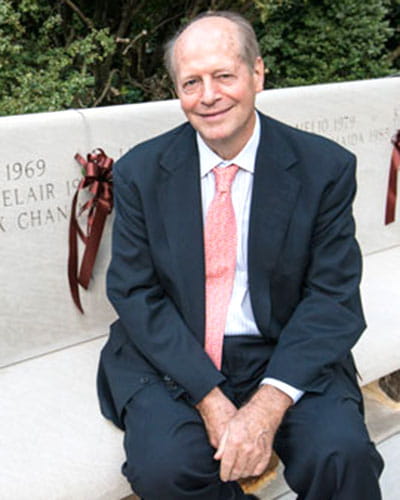
A later $5 million commitment supported experiential learning and student assistance. The proposed apprenticeship model paired study with mentored work at Urban Outfitters, with funding intended to cover students’ costs. Its appeal is straightforward: a person can learn design principles in class and see what happens when a working business must put them to use.
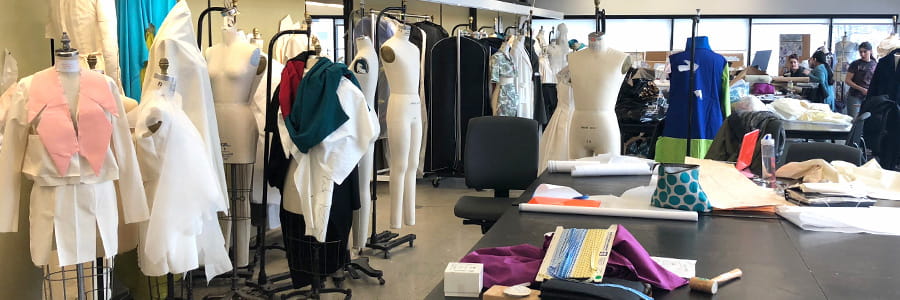
This commitment brings his story back toward its beginning. The first store grew out of a student’s class project. Decades later, he was funding opportunities for students to work with real products, real colleagues and real constraints. The connection is pleasing without needing to make the two experiences identical. Both leave room for learning through doing.
Hayne remains a relatively quiet figure beside the recognizable brands. The businesses have changed, the customers have changed, and new colleagues have taken responsibility for what comes next. Anthropologie’s original proposition still gives his career a human scale. Someone had grown older. Her interests had moved. A retailer paid attention, and a former garage found another use.