Richard Edelman's career began with a canceled holiday and the sort of offer that only a father can make sound both generous and compulsory. It was 1978. Edelman was three months from finishing Harvard Business School, already bound for a marketing job at Playtex, and looking forward to six weeks in Europe with his girlfriend. His father, Dan, had another idea. Doyle Dane Bernbach wanted to buy the public relations firm Dan had founded in Chicago. Dan proposed a bargain: Richard would try the family business for one year; while he was there, Dan would not sell.
Richard negotiated his salary to $25,000, a summit meeting he later said lasted five minutes. He asked to begin after Europe. Then the firm won ContiCommodity, and Dan decided that his son's college thesis on commodity futures made him indispensable. Richard finished his exams on Friday and started in Chicago on Monday. Europe disappeared. So did the girlfriend. The one-year trial is now in its 48th year.
It is a tidy origin story, but the tidiness ends at the office door. There was no ornamental rotation for the founder's son. He wrote press releases, phoned reporters, and traveled to a cotton conference in Lubbock, Texas, where client relations involved donkey baseball, flying chicken races, and regional delicacies best approached with professional composure. A Chicago Tribune reporter once dismissed a pitch with a blunt reminder that Dan Edelman's surname did not improve weak copy. Few heirs receive a cleaner memo on merit.
A surname is not a strategy
After seven months, Dan sent Richard to New York to learn public affairs from Dick Aurelio, a former Newsday editor and deputy mayor. Aurelio tore apart his copy and brought him into rooms where relationships mattered as much as releases. When the New York office needed an interim leader, Dan handed the assignment to Richard at 27. The supposedly temporary manager and a young team won business with a mixture of nerve and speed. By 1981, work for ContiCommodity had earned Richard a Silver Anvil, the Public Relations Society of America's top award.
The arrangement between father and son was never frictionless. Dan was the newsroom romantic, devoted to the authority of third-party endorsement. Richard arrived with an MBA and an appetite for systems. One built by instinct; the other wanted repeatable growth. Their disagreement became productive because both accepted the same premise: public relations should lead rather than trail advertising, and the firm should remain free to practice it that way.
“I like to run the pirate ship.”Richard Edelman on independence
When Richard became CEO in 1996, the agency had about $85 million in revenue. It had been a $6 million operation when he joined. Today the firm describes itself as a roughly $1 billion business with more than 6,000 people, 66 offices, and work across 28 countries. The multiplication came with new disciplines - digital, creative, performance marketing, data, and advisory - but no sale to the advertising conglomerates that gathered much of the industry.
The pirate line is charming because it makes independence sound rakish. In practice, Edelman's version involves a conservative balance sheet, small acquisitions, and the unglamorous repair of mistakes. Early in his CEO tenure, a new accounting system failed to produce accurate bills. He replaced it, brought in another accounting firm, and said normal service returned within 90 days. He has called resilience essential: act, correct, get back in the ring.
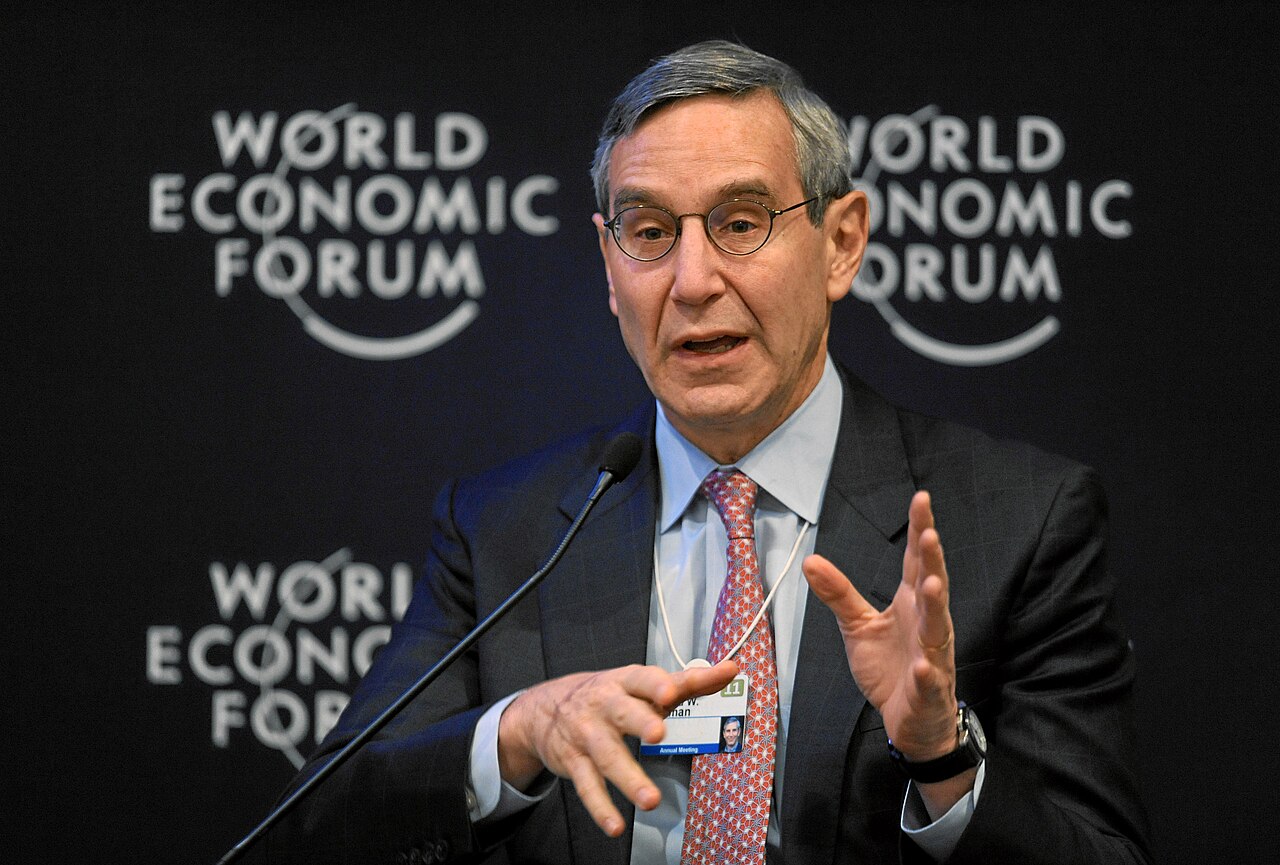
The survey that escaped the marketing department
The project most closely attached to Richard's name began not in a boardroom but in the tear gas and broken windows of Seattle. After anti-globalization protesters disrupted the World Trade Organization meeting in 1999, Edelman wanted to understand the new authority of nongovernmental organizations. How did people rank NGOs beside business, government, and media? The first survey produced a surprise: NGOs were the most trusted institution across much of the sample.
Instead of treating the finding as a curiosity, the firm repeated the research. The Edelman Trust Barometer became an annual ritual, expanding across markets and accumulating a longitudinal portrait of institutional confidence. It also gave a communications agency something every consultancy covets: an original lens through which to interpret the year.
The vocabulary changed with the mood. Fear became polarization. Polarization hardened into grievance. The 2026 report introduced “insularity,” a retreat toward people who share one's values, background, methods, and information sources. Seven in ten respondents said they were unwilling or hesitant to trust someone different along one or more of those lines. Only 39 percent consumed news from a differing political viewpoint at least weekly. Optimism that the next generation will be better off fell to 32 percent globally.
The circle is getting smaller.
Familiar people gain confidence while institutions struggle to persuade across differences. Edelman's answer is not a better slogan. It is useful performance, explained plainly.
The Barometer is research and, unmistakably, positioning. It places trust at the center of Edelman's commercial offer. Yet its endurance matters. Twenty-six annual editions force a kind of accountability: the claim must meet new data each January. The findings have not handed business an uncomplicated victory. In 2026, business remained the only institution viewed globally as both competent and ethical, but CEOs were also expected to do more than wait for political weather to improve.
Richard's prescription is deliberately practical. Companies should work where their capabilities and public needs overlap: affordable products, sound jobs, reskilling, honest explanations of innovation. Employers, trusted by 78 percent of employees in the 2026 study, can create contact among people who would otherwise remain in separate social and informational rooms. The office, of all places, becomes a small civic experiment.
Earned attention, newly literal
Edelman has published his 6 A.M. blog weekly since 2004, an executive habit somewhere between thought leadership and a public notebook. The posts move from tributes and family memories to media economics, geopolitics, creators, and AI. Their regularity fits the personality he describes elsewhere: curious, restless, more comfortable acting and revising than waiting for perfect conditions.
His current argument is that generative search has made the old PR distinction between paid and earned attention newly consequential. Large language models do not merely display a shelf of blue links. They synthesize an answer. Richard believes strong reporting, credible creator work, and useful owned material will increasingly determine which brands appear in that answer. His phrase for the moment is “the Golden Age of Earned.” Advertising can purchase exposure. It cannot purchase the same kind of corroboration.
He is not breezy about AI. Edelman's own polling shows sharp gaps by country, income, age, and industry. The people who expect automation to pass them by will not be soothed by executive enthusiasm. His communications brief is almost stubbornly basic: explain how it works, why it helps, what it costs, and whether the exchange is fair. Mystery is excellent for magicians and a poor operating model for consequential technology.
“In short, you cannot buy it, you must earn it.”Richard Edelman on credibility in generative search
The inheritance he means to leave
Richard's three children now work in the business. He has written that family members must earn their way, with no promises absent performance and leadership. This is the delicate loop in his story. Dan once needed a reason not to sell and asked his son for a year. Richard now wants to pass independence forward without confusing inheritance for entitlement.
His parents remain present in his telling. Dan supplied standards, urgency, and an unshakable belief in public relations. Ruth supplied social courage. Richard likes the story of his mother marching up to Henry Kissinger, charming him, and bringing him over to meet “my brilliant husband.” It is networking reduced to its most human form: notice someone, cross the room, make the connection.
Richard still takes the subway to work and has said he flies coach between New York and Chicago. Such details are irresistible in CEO profiles because thrift performs character so efficiently. More revealing is the continuity of his questions. Who deserves trust? What must an institution do to keep it? How can a family company get larger without surrendering the reason it stayed private?
There is no final score for any of them. Trust is inconvenient that way. It compounds slowly, vanishes quickly, and refuses to sit still for a photograph. Richard Edelman has spent nearly half a century turning that inconvenience into a management practice, a research franchise, and an annual appointment with the uneasy state of the world. The one-year bargain endures because it never really became comfortable.