Renting a home has a peculiar talent for turning adults into unpaid clerks. The renter repeats an address history. The agent hunts for a missing attachment. The landlord squints at a credit report while wondering whether the fee, the form, or the question is legal in that ZIP code. RentSpree began in 2016 by attacking this paper chase with a reusable online application and tenant screening. Ten years later, the Seattle company is making a much more ambitious claim: the application is not a document. It is the opening move in a relationship among renter, agent, landlord, data provider, and money.
That reframing explains almost everything RentSpree has built. A renter can apply and authorize screening. An agent or landlord can review credit, background, eviction, income, and reference information, subject to local rules. A property can be listed across consumer sites. A lease can be signed. Rent can move by ACH or card. On-time payments can be reported to TransUnion. The owner can track performance and, as of 2026, route rental cash into a dedicated interest-earning account. What looked like a form has become a spine.
The wedge was a form nobody loved
Michael Lucarelli and Paul Sirisuphang met as MBA students at Pepperdine. Their founding story is refreshingly un-mythic: while renting in Los Angeles, they ran into repetitive applications, paperwork, and slow coordination. They raised $120,000 from friends and family and incorporated RentSpree in 2016. The early product promised a universal application that could be used for multiple properties and paired with screening information.
The company did not need to persuade people that renting was important. It needed to persuade real estate professionals to change a habit. Its answer was to place the new workflow inside systems those professionals already opened. RentSpree pursued MLSs, Realtor associations, brokerages, and property technology platforms. By 2021, it said its partnerships had helped 100,000 agents complete 500,000 rental transactions. By 2026, the reported network exceeded 300 partners and the platform served more than four million users.

This is the first useful thing to steal. Most software founders say they want distribution, then buy clicks and hope a habit appears. RentSpree integrated into the workflow’s point of decision. An MLS listing can produce an application link; a member can enter through single sign-on; a screening request can begin without a detour into an unfamiliar stack. The company did not eliminate customer acquisition, but it recruited institutions that had already assembled the customers.
“Rentals continue to represent one of the most underutilized revenue streams in today’s market.”Michael Lucarelli, CEO and co-founder
Free at the door, paid at the moment of intent
RentSpree’s business model is less mysterious than the rental fee sheet taped to an apartment lobby. Accounts, listings, applications, and several core tools are free. Money enters when somebody wants a report, a premium workflow, or a payment rail. Public pricing lists a standard screening report at $39.99 and a comprehensive report with bank-verified income and reference checks at $49.99. The landlord or agent chooses who pays where local law allows.
Rent collection adds a $3 fee per recurring payment for the receiving landlord, waived with Landlord PRO. ACH is free for the tenant; card payments carry a 3 percent tenant fee. Optional subscriptions add better economics and deeper tools. Landlord PRO bundles waived ACH fees with bookkeeping, financial reporting, lease signatures, and support. RentSpree PRO targets agents and power users with verifications, document requests, profiles, and reviews. Enterprise integrations and MLS packages add a business-to-business layer whose contract terms are not public.
The design is a classic vertical-software move: keep the start cheap, monetize a high-intent transaction, then sell convenience around the repeated work. It works because screening is urgent. Nobody orders a tenant report for entertainment. Each request arrives with a property, an applicant, and a decision attached.
What changed their minds
The original reusable application was a wedge, not a complete rental life. The public product arc suggests the first thesis did not so much fail as prove too narrow. Once applications and screening were digital, customers still had to leave for pricing, signatures, insurance, payments, and records. In a 2024 anniversary interview, Lucarelli said launching rent payments exposed how many landlords and renters lacked a secure and flexible alternative to paper checks. The dashboard showed usage; ordinary acquaintances telling him RentSpree helped them find a home showed the human result.
Capital accelerated the widening. A $2.3 million seed round in 2020 was followed by an $8 million Series A in 2021, led by 645 Ventures, and a $17.3 million Series B in 2022, led by Green Visor Capital. Total reported funding reached roughly $27.7 million. The 2021 round explicitly supported API-first integrations and a fuller journey for renters, owners, and agents. The 2022 round added strategic investors from the real estate ecosystem, including the California Association of Realtors and Venture MLS.
The MLS is the moat-shaped object
RentSpree competes with screening services such as TransUnion SmartMove, landlord tools such as Avail, TurboTenant, RentRedi, and TenantCloud, and larger property-management suites such as Buildium, DoorLoop, and AppFolio. Individual features are reproducible. The harder object to reproduce is placement across a network of MLSs, associations, and brokerages, plus the permissions, data relationships, and training that make those integrations useful.
RentEdge makes that bet explicit. Launched in 2025, it is a modular platform for MLS partners: Screen generates application links; Insights surfaces rental data; Connect finds prospects; Distribute syndicates listings; Nurture keeps agents in touch after a deal; Academy teaches the rental business. Embedded widgets begin inside the MLS interface. By February 2026, RentSpree said seven MLSs had signed on, including an expanded agreement with California Regional MLS. In May, FMLS launched Nurture, pushing the relationship beyond one commission and toward a renter who may later move, buy, or become a landlord.
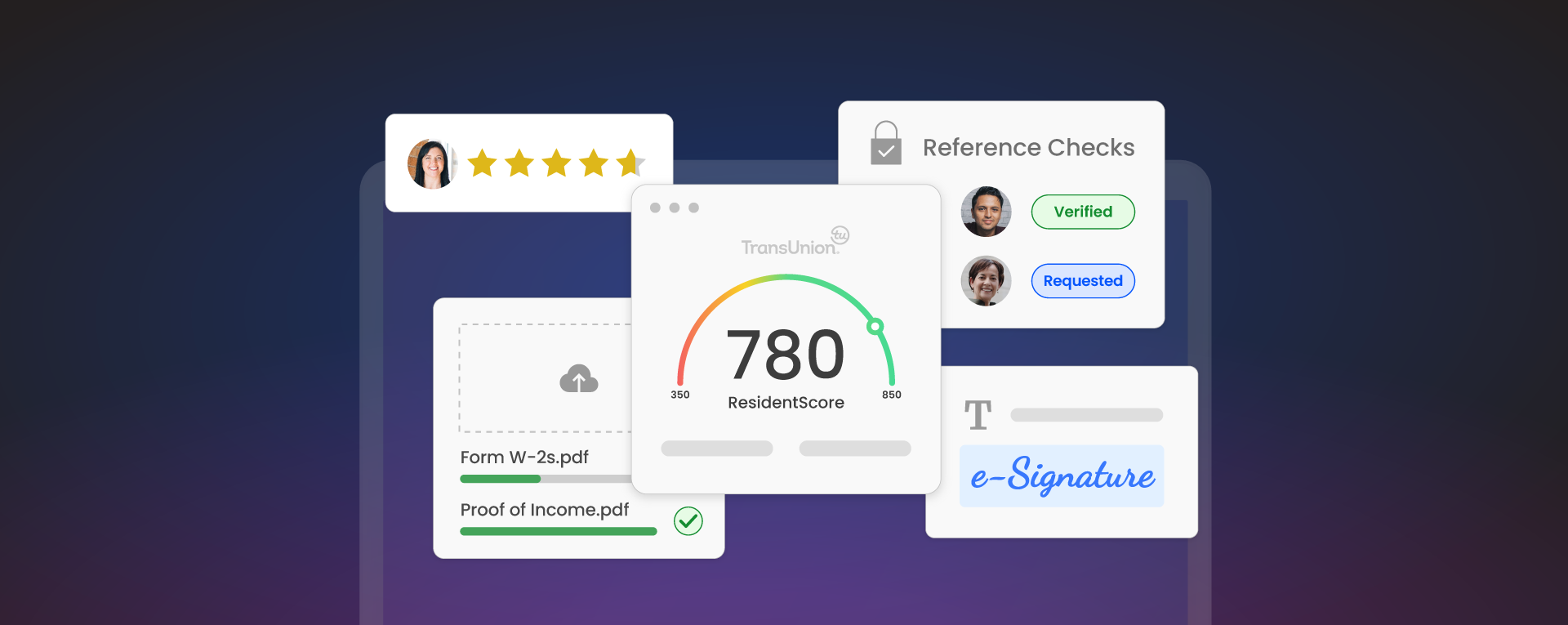
The consumer side has its own network logic. A 2025 Realtor.com partnership took RentSpree-created listings to nine syndication sites with a reported potential reach near 30 million consumers. Other named outlets included Redfin, Rent., Zumper, and ApartmentGuide. The listing attracts an applicant; the applicant creates screening demand; a signed renter creates payment volume. Each product can feed the next without requiring a fresh customer from scratch.
Then the rent became a balance sheet
The sharpest strategic turn arrived in January 2026. RentSpree launched dedicated, interest-earning accounts for small landlords, powered through embedded-finance company Unit and an FDIC-insured partner bank. RentSpree said its platform had already managed more than $250 million in rent. The new product can separate rental funds from personal money, associate transactions with a property, show cash flow, and offer up to 2.75 percent annual percentage yield under stated conditions.
That is how proptech becomes fintech: not by stapling a debit card to an app, but by following money already moving through a trusted workflow. A landlord who collects rent in RentSpree has less reason to export transactions, reconcile them in another tool, and maintain an unrelated account. The company gets a longer relationship than a once-per-vacancy screening report. The landlord gets fewer browser tabs. Both sides are making a retention bet.
“No longer do mom-and-pop landlords have to juggle complex systems.”Michael Lucarelli on the 2026 banking launch
Where the playbook breaks
Rental software cannot wish away rental law. Screening fees are capped in several jurisdictions. Massachusetts generally bars landlords from charging applicants a screening fee; New York caps it at $20. Some places restrict when background information can appear, and eviction records are unavailable through the product in certain states. Screening reports expire after 30 days under TransUnion rules. Fair-housing requirements demand consistent criteria. Portability sounds elegant until a report ages out, a market requires a different form, or the next landlord wants different data.
The model also fits small landlords and agent-led rentals better than every possible operator. A large property manager with accounting, maintenance, leasing, and resident systems deeply installed may prefer a full enterprise suite or a point solution connected to its existing stack. An MLS partnership is powerful only where agents meaningfully participate in rentals. Free entry can attract volume, but the economics depend on enough users reaching paid screening, payment, subscription, or partner moments.
Trust is the other condition. RentSpree is SOC 2 Type II certified, says it encrypts application data, and routes payments through Stripe without storing payment details itself. Those controls matter because the product sits at an unusually intimate intersection: where someone lives, what they earn, whether they have been evicted, and how money changes hands. One security or compliance failure would not be a normal software bug. It would strike the premise of the product.
What builders can copy
- Start with the high-friction action that already has urgency, a buyer, and a deadline.
- Borrow distribution by embedding inside the system customers already use.
- Keep the entry workflow easy, then charge when verified data, speed, or money movement creates obvious value.
- Expand around the same object. RentSpree kept the property, renter, and landlord at the center as it added products.
- Treat regulation as product architecture. A national workflow must still bend locally.
A platform built one annoyance at a time
RentSpree’s public culture values include candid respect, customer obsession, fast learning, decisive action, disagreement followed by commitment, and high standards. There is a tidy correspondence between those words and the company’s decade: start with a repetitive annoyance, let customers reveal the next one, and keep moving sideways until the pieces form a system. The company made the Inc. 5000 four years running from 2022 through 2025, even as its rank moved from No. 625 to No. 2,006. That is growth, not magic.
The remaining question is whether RentSpree can become the default rental infrastructure without becoming another overstuffed dashboard. Its advantage is that the jobs connect naturally. Its danger is that listings, screening, payments, banking, and relationship marketing each have specialists with deeper products. The company’s answer is proximity: be present at the moment an agent lists, a renter applies, and a landlord gets paid.
The original insight still does the heavy lifting. People do not wake up hoping to complete a rental application. They want a home, a tenant, or a commission. RentSpree’s best product decision was to notice the form standing in everyone’s way. Its next decade depends on whether removing that form earned permission to manage everything that happens after it.