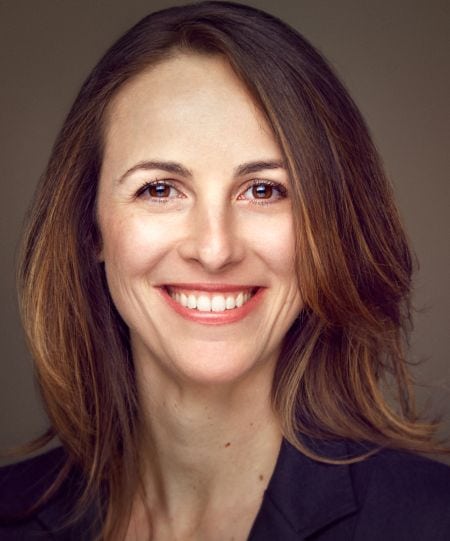
The Investor Who
Showed Up Early
There is a specific moment in every startup's life when the product works, the customers are real, and everything is about to fall apart anyway. The founding team is too small, the org structure hasn't been invented yet, and the board isn't sure whether to add headcount or stay lean. Most investors wait until after that moment to write a check. Renata Quintini built a firm around showing up during it.
She calls it the Supercritical Stage - the phase between product-market fit and full-scale growth, when companies have roughly 8 to 15 employees and are transitioning from being a product to becoming a company. The vocabulary is new. The insight behind it isn't. Quintini has been operating this thesis since 2011, long before she had a name for it.
"When I meet a founder, I always want to know where they're coming from, what they see that I don't see. I want to put my head in their world."
Quintini grew up in Rio de Janeiro, the daughter of a neuroscientist mother and an entrepreneur father. She earned a law degree at Universidade Federal do Rio de Janeiro, then worked as a corporate lawyer in Brazil during the country's first internet boom - representing venture firms investing in early e-commerce. That is where she learned how venture capital works before she was ever inside a fund.
In 2004, she moved to the United States on an LL.M at Stanford Law School. The plan was law. What happened instead was an MBA at Stanford's Graduate School of Business, a summer at J.P. Morgan, and a job managing private equity and venture fund selection for Stanford's $20B+ endowment. She left the endowment in 2011 to join Felicis Ventures as a General Partner - one of the firm's earliest.
Her first investment at Felicis was Baby.com.br - a Brazilian e-commerce startup. A nod to her roots, yes, but also a signal of her pattern: she was looking for things that help people live better, in markets that hadn't yet figured themselves out. Over six years at Felicis, the portfolio expanded to include Dollar Shave Club (acquired by Unilever for $1B), Cruise Automation (acquired by GM for $1B), Bonobos (acquired by Walmart), Warby Parker (NYSE: WRBY), Wise (LSE: WISE), MasterClass, Glossier, Planet, and MetroMile. Companies that now define how people shave, drive, dress, send money, and learn.
In 2017, she joined Lux Capital as a Partner when the firm closed its fifth fund at $400M. Her thesis there: investments that improve quality of life - across health, food, longevity, cognition, and creative computing. She published an essay announcing the move called "In Pursuit of the Future," which reads less like a press release and more like a personal manifesto. That kind of candor is characteristic.
Three years later, she co-founded Renegade Partners with Roseanne Wincek, a former partner at IVP. The two had met through Stanford's network around 2011 and reconnected through All Raise - the organization Quintini helped found to expand diversity in venture capital. The fund raised approximately $100M in its first close. In spring 2024, Renegade closed Fund II at $128M, bringing total assets under management to $228M.
"Our Goldilocks fund size gives us flexibility to write checks that make sense for companies we invest in, while maximizing chances for stellar returns."
At Renegade, Quintini sits on the boards of 80% of portfolio companies. Check sizes range from $1M to $10M. She uses decision-science scorecards to evaluate investments and deploys operating partners specifically to help founders build out talent - the single most common thing that breaks companies at the Supercritical Stage.
The investment criteria she applies are specific and repeatable: Is there a genuine "why now"? Is there a platform shift or scientific discovery enabling this? Is it feasible within VC return timelines? Does the business model work? And - the one she returns to most often - is this a founder she wants to be in business with for many years?
Quintini holds a black belt in karate and won her state championship three times. She plays Bossa Nova and jazz guitar, has been learning drums, and studies music theory - three hobbies that circle back to the same discipline: practice at the edge of your ability until it becomes natural. She became a US citizen in 2021, seventeen years after arriving on an LL.M visa. She holds a CFA charter alongside her law degree and MBA - a credential combination rare enough to warrant a second look at any resume.
She serves on the board of the National Venture Capital Association, is a trustee of the Stanford Athletics Department Venture Fund, and was a founding member of All Raise - where she has been vocal about the structural barriers that keep women and underrepresented investors out of the rooms where checks get written.
The SF Examiner profiled her in October 2024 under the headline "How Renata Quintini proved herself as VC industry exception." The framing is accurate. She is one of the few women who runs her own venture fund - not as a partner at someone else's table, but as the person who set the table.
When asked about leadership, she names Martine Rothblatt - the entrepreneur, lawyer, transhumanist, and founder of Sirius XM and United Therapeutics. It is a specific and revealing choice: someone who crossed multiple fields, built category-defining companies, and refused to be legible to conventional expectations. That's not an accident.
What Quintini has built across two decades is a track record with a distinctive shape. She doesn't chase obvious winners after the fact. She finds the companies when they're fragile, writes the check, takes the board seat, and stays. The $40B in portfolio exits didn't happen because she got lucky. It happened because she kept showing up early.
How She Operates
"I'd like to spend my days in search of things that help us live well."
"Think a lot about how you can make the most of what you got, and be deliberate about that."
"It's about delivering returns consistently - you always have to think about whether this is someone you want to be in business with for many years."
"Stay grounded and surround yourself with people who'll up your game but will also call your BS."