Breaking Ren Riley promoted to General Partner at Fin Capital - January 2023 Fin Capital manages $800M+ in B2B fintech investments Circle IPO raises $1.05B with 167% first-day gain - June 2025 Fin Capital backs repeat founders only - pre-seed through IPO 25+ years in financial services. 20+ years in venture capital Fin Capital offices: San Francisco, Los Angeles, London, Miami, New York Ren Riley featured on Category Visionaries "Funding the Future" podcast - August 2024 Investment sweet spot: $2M per deal, range $250K-$50M Ren Riley promoted to General Partner at Fin Capital - January 2023 Fin Capital manages $800M+ in B2B fintech investments Circle IPO raises $1.05B with 167% first-day gain - June 2025 Fin Capital backs repeat founders only - pre-seed through IPO 25+ years in financial services. 20+ years in venture capital Fin Capital offices: San Francisco, Los Angeles, London, Miami, New York Ren Riley featured on Category Visionaries "Funding the Future" podcast - August 2024 Investment sweet spot: $2M per deal, range $250K-$50M

General Partner • Fin Capital • San Francisco

Ren
Riley

Venture Capital • B2B Fintech • 20+ Years in VC

He backs only founders who've done it before. No first-timers, no exceptions. At Fin Capital he writes checks from $250K to $50M into the seams of global financial infrastructure - the unglamorous, load-bearing software that makes money move.

$800M+ AUM at Fin Capital
25+ Years in Fin. Services
8 B2B Fintech Sub-sectors
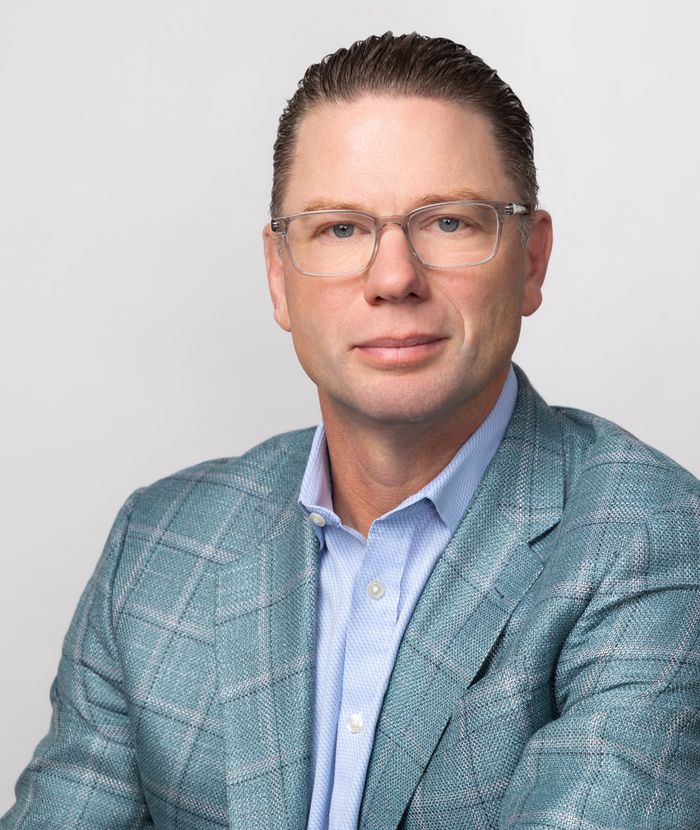
Ren Riley, General Partner at Fin Capital

The Cartographer of Fintech's Invisible Infrastructure

Start at the beginning: Robertson Stephens, San Francisco, the late 1990s. The tech bubble is inflating in real time, and a young Dartmouth Government major is watching IPOs get priced and M&A deals get done in what is arguably the most electric financial environment of the 20th century. Ren Riley was there not as an observer but as a participant - a senior associate in corporate finance, doing the structural work on public and private equity offerings as the city rewrote the rules of capital formation.

What that era taught him, apparently, was that the story is always in the infrastructure. Not the hot app, not the viral moment - the pipes, the rails, the back-office software that nobody notices until it breaks. That instinct would define 25 years of investing career to follow.

In 1999, Riley joined Oak Investment Partners, a multi-stage firm that at the time had a sharp focus on technology. Over the next 16 years, including a decade as General Partner, he built a track record across internet, mobile, enterprise software, and - before most Wall Street types had sorted out the distinction - fintech. When he made GP in 2006, "fintech" wasn't yet a category on anyone's deck. By the time he transitioned to Venture Partner in 2015, it had become its own universe.

The next chapter played out with the kind of intentional detour only someone with deep conviction makes. Riley went back to Robertson Stephens - the same firm where he'd started his career - this time as Partner and CEO of its alternative assets arm, overseeing venture capital, private equity, and co-branded fund efforts. Then, in 2019, he co-founded Enclave Liquidity Partners, a private equity firm built entirely around solving one specific problem the VC industry had mostly ignored: founders, executives, and shareholders sitting on paper wealth in late-stage private companies with no exit in sight. Enclave gave them liquidity before the IPO window opened. It was a product designed by someone who had watched enough cycles to know how long that window could stay closed.

By November 2020, Riley joined Fin Capital as an Investment Partner. In January 2023, he was promoted to General Partner. The firm he joined is unusual in the VC world for the specificity of its focus: B2B fintech only, structured across 8 named sub-sectors, investing from pre-seed through IPO, and maintaining one hard rule - they back repeat founders, period. Riley didn't invent this thesis, but he executes it with the authority that comes from 20 years of watching which bets survive economic cycles and which ones were just riding the tide.

His investment view on the current market is direct: the 1,500+ private unicorns still waiting for exits need to think beyond IPOs. Mergers and PE buyouts aren't a consolation prize - they're the rational path. Resourcefulness and consolidation beat waiting for a window that may not reopen on anyone's preferred timeline. For someone who co-founded a firm specifically to solve the private-company liquidity problem, this is less a prediction than pattern recognition.
"Fin Capital only backs repeat founders."
- Ren Riley, Category Visionaries Podcast, August 2024

Eight Sectors, One Rule, No First-Timers

Fin Capital operates with unusual specificity for a VC firm its size. The portfolio is divided into 8 named B2B fintech sub-sectors - not fuzzy thematic categories, but operational definitions that determine deal flow, due diligence, and syndication strategy.

Fin Capital's 8 B2B Fintech Sub-sectors

01 Enterprise AI Enablement
02 BankTech
03 B2B Payments
04 CFO Tech Stack
05 Asset / Wealth Management & Capital Markets
06 RiskTech & Cyber
07 Vertical Fintech
08 InsurTech

Repeat Founders Only

Fin Capital's single non-negotiable: every portfolio founder has done it before. Experience navigating the hard parts isn't a nice-to-have - it's the filter.

Full Lifecycle Coverage

Pre-seed through IPO - Riley's firm doesn't hand off at Series B. The goal is to stay in the relationship through the full arc of company building.

Global Reach, Sector Depth

Offices in San Francisco, LA, London, Miami, and New York. The firm's sector specialization creates deal flow advantages across geographies that generalist funds can't match.

Calibrated Deal Size

A $2M investment sweet spot in a world of billion-dollar funds is a deliberate choice. It keeps Fin Capital relevant to early-stage companies while maintaining meaningful ownership stakes.

Three Decades, Five Firms, One Throughline

1992 - 1996
Dartmouth College BA in Government. A political science degree for someone who would spend his career studying the rules that govern how money moves.
1996 - 1999
Robertson Stephens - Senior Associate Corporate finance division. Public and private equity offerings, M&A advisory. Front-row seat to the late-1990s San Francisco technology wave.
1999 - 2006
Oak Investment Partners - Investor Joined during the tech crash. Built a multi-stage investing practice across internet, mobile, and enterprise software through one of the most volatile decades in financial markets.
2006 - 2015
Oak Investment Partners - General Partner A decade as GP, including early fintech bets and international expansion. Served on boards of multiple private companies. Backed Circle before "crypto" was mainstream vocabulary.
2015 - 2019
Robertson Stephens - Partner & CEO Returned to his starting point to lead alternative assets: VC, PE, and co-branded fund structures. Transitioned to Venture Partner at Oak in parallel.
2019 - 2022
Enclave Liquidity Partners - Co-founder & Managing Director Built a PE firm from scratch to provide liquidity to late-stage private company stakeholders. Addressed a market gap that traditional VC structures couldn't reach.
Nov 2020 - Jan 2023
Fin Capital - Investment Partner Joined the B2B fintech-focused fund, bringing Oak-era sector expertise to a more concentrated, stage-agnostic strategy.
January 2023 - Present
Fin Capital - General Partner Promoted to GP. Sources and leads primary and co-investment opportunities across Fin Capital's 8 B2B fintech sub-sectors globally.

What He's Done

  • 1
    Promoted to General Partner at Fin Capital in January 2023 after joining as Investment Partner in November 2020 - recognized for dealflow sourcing and sector depth in B2B fintech.
  • 2
    Backed Circle at Oak Investment Partners and continued the investment at Fin Capital - through to the June 2025 IPO that raised $1.05B with a 167% first-day gain on the NYSE.
  • 3
    Spent 16 years at Oak Investment Partners, rising from investor to General Partner (2006) - one of the longer GP tenures at a single firm in the San Francisco VC ecosystem.
  • 4
    Co-founded Enclave Liquidity Partners in 2019, a private equity firm purpose-built to solve the illiquidity problem for late-stage private company stakeholders.
  • 5
    Served as Partner and CEO at Robertson Stephens - two decades after starting his career there as a junior associate, completing one of the more unusual career loops in SF finance.
  • 6
    Featured on the Category Visionaries "Funding the Future" podcast (August 2024) discussing the VC market cycle, IPO window dynamics, and Fin Capital's repeat-founder thesis.
  • 7
    Spoke at Bank Automation Summit Fall 2022 on the future of banking technology investment, valuation trends, and 2023 outlook for bank-tech collaboration.
  • 8
    Member of the Duke Engineering FinTech Advisory Board, contributing to the development of the next generation of fintech practitioners and researchers.
"Beyond IPOs, mergers and private equity buyouts represent viable alternatives. Resourcefulness and potential consolidation are the key themes in the current market environment."
- Ren Riley, on the 1,500+ private unicorns still awaiting exits

The Long Arc of a Fintech Investor

There's a particular kind of credibility that comes from longevity in a sector. Ren Riley was investing in financial technology before the word "fintech" had entered common usage. When he joined Oak Investment Partners in 1999, the internet was still primarily a consumer phenomenon, and the idea that software would fundamentally restructure banking infrastructure was a minority view. He held that view anyway.

What distinguishes Fin Capital's approach from the generalist fintech funds that proliferated in the 2010s is taxonomic precision. The 8 sub-sectors aren't marketing language - they represent genuinely distinct competitive dynamics, customer types, and regulatory environments. Enterprise AI Enablement is not the same market as InsurTech, even if both involve software and financial data. Fin Capital's ability to source deals in all 8 simultaneously is a structural advantage most specialists don't have.

Riley's repeat-founder rule reflects something he observed over two decades: the first company teaches you things that can't be simulated. How to build a sales team from zero. How to survive a missed quarter. How to talk to a board when the numbers are wrong. First-time founders often learn these lessons at their investors' expense. Repeat founders arrive already holding that tuition.

The Enclave Liquidity Partners chapter is worth dwelling on. Most venture capitalists, when they see a market problem, write a memo about it. Riley built a firm. Enclave targeted a specific friction: late-stage private companies with long timelines to exit and stakeholders - often founders who'd spent a decade building - who needed access to their own wealth. It was a practical, structural solution to a problem that most of the industry preferred to acknowledge abstractly.

1,500 Unicorns, One Exit Question

On the Category Visionaries podcast in August 2024, Riley articulated a view on the private market exit problem that's become something of a consensus among experienced investors but is still underweighted in founder circles: for most of the 1,500+ private unicorns currently sitting on paper valuations, the IPO window is not the answer. The public markets don't absorb that volume of new issuance efficiently, and many of these companies were valued in a zero-interest-rate environment that no longer exists.

His alternative: M&A and PE buyouts. These aren't consolation prizes - they're increasingly the primary exit mechanism for growth-stage companies. It requires a different set of skills from founders: comfort with strategic conversations, willingness to engage with financial buyers, and clarity about what the company is actually worth in a transaction context versus a fundraising context.

The Circle IPO in June 2025 - a company Riley backed across two firms and nearly two decades - was a counterexample that proved the rule: with a business like Circle's, the IPO market can still work. But Circle had the revenue scale, the regulatory standing, and the narrative clarity to carry it off. Most private unicorns don't have all three.

Riley's sector lens on the current environment: Enterprise AI Enablement and RiskTech are the two sub-sectors generating the most durable deal flow. AI in financial services is past the hype stage and into the deployment stage - banks and financial institutions are buying tools that reduce operational costs and manage compliance burden simultaneously. RiskTech benefits from the same dynamic: regulatory complexity keeps increasing, and technology that reduces the cost of compliance has a structural tailwind that doesn't depend on interest rates or market sentiment.

The Details Worth Knowing

Started his career at Robertson Stephens in the 1990s. Came back two decades later as CEO. Not many people in finance get to run the firm they learned the trade at.

Dartmouth Government major who ended up deconstructing global financial infrastructure for a living. The Government degree, it turns out, teaches you how systems of rules work - which is exactly what fintech regulation is.

Co-founded a firm to solve a problem that most VCs preferred to just live with: founders stuck in late-stage companies with no liquidity. Enclave Liquidity Partners was a product the VC industry built for itself.

The Twitter handle @RenFinCap says everything about his approach: short, precise, no excess. He didn't need a personal brand handle - his professional identity is the brand.

Fin Capital's $2M sweet spot is a studied choice. In a world of mega-funds writing $50M minimum checks, the ability to lead a $2M round keeps you relevant to the companies that actually need conviction capital, not just big numbers.

Has been investing in fintech since before it was a category. The Oak Investment Partners era predates most of the "fintech is eating the world" narrative by nearly a decade.