The first phone was a Motorola flip. Ranjan R Reddy bought it in his sophomore year of college, followed it with a Samsung, and developed the sort of attachment to mobile devices that usually ends in an expensive drawer. In his case, it also led to companies. The little object that let him make a call became a way to collect a payment, then a way to ask whether the person making it could be trusted.
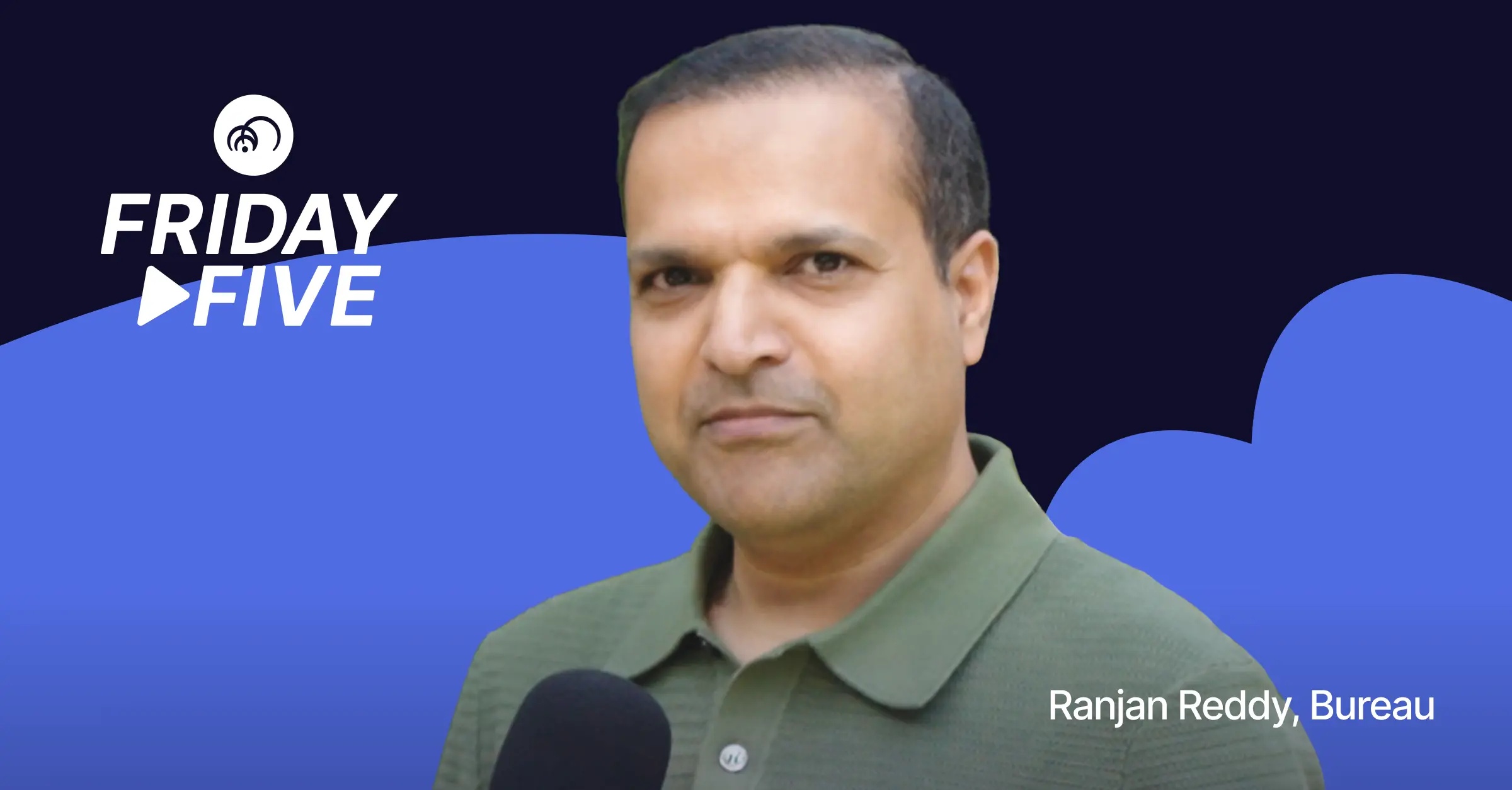
Reddy grew up in India and built a working life across Asia, Europe and the United States. Now based in San Francisco, he runs Bureau, which he founded in 2020. Its business sits inside the moment when an app must decide whether to welcome you, question you or quietly shut the door. For an honest customer, the ideal encounter is uneventful. A little boredom can be an excellent product.
His career makes more sense when followed through its problems than through its job titles. At Qubecell, the problem was getting a payment through. At Bureau, it is deciding what should be allowed through with it. Between those businesses lies a decade of learning how much a phone can reveal, and how much it can conceal.
His preparation included a Bachelor of Science in mass media and business management at Concordia College in Moorhead, Minnesota, and study at Harvard Business School in 2010-2011. His early roles included content and communication at Star TV, followed by Times Internet, Arena Mobile and Neomobile. This was a route through media and mobile businesses before the identity company. It helps explain why a 2022 conversation with The Startup Operator made room for the experience of being a nontechnical founder in deep technology. Building the product was one question; explaining the mission, choosing advice and turning an idea into a company were others on the agenda. The work required him to connect a technical proposition with the people who would use and pay for it.
A phone bill becomes a business
In 2012, Reddy founded Qubecell in Mumbai. The idea was carrier billing: let people pay for digital goods through their mobile accounts. Blume, one of its investors, describes a business that connected to telecom operators and supported purchases and subscriptions at different prices. It also offered merchants analytics based on information such as devices, networks and customer behavior. Even then, payment and context were traveling together.
India offered an obvious opening for a service built around the phone. Qubecell could assemble local carrier relationships and help merchants reach their customers. International partners brought another part of the equation: merchants outside India who wanted access to that market. The company was building a bridge, and bridges tend to interest the people already moving traffic.
Boku began integrating with Qubecell as a partner in June 2013. The discussion turned toward an acquisition. By November, Reddy said more than 40 merchants used Qubecell and two investment term sheets worth $3 million were available. He chose Boku’s offer. He described the deal as small compared with transactions making headlines and said he was happy with it. The price remained undisclosed.
There was little theatrical finality in his account of the sale. He expected the same work to continue: strengthen the technology team, reach more merchants and expand across nearby markets. Qubecell’s employees joined Boku, and he became part of its Asian leadership. A change in ownership had brought a larger set of relationships to an existing plan.
“Eventually I would like to go back to entrepreneurship.”
Ranjan R Reddy, November 2013
That remark, made just after the deal, left a door open. Reddy subsequently held senior roles at Boku, including Chief Business Officer and General Manager of Boku Identity, which was later acquired by Twilio. The progression brought identity closer to the center of his work. By 2020, the return to founding had a name: Bureau.
Mobile carrier billing
A wider payments network
Identity and digital risk
Capital for the next stage
Seven hundred accounts. Three devices.
A case Reddy recounted in 2022 gives the new business a tangible shape. A fintech app saw 700 accounts created within a few hours. Bureau’s software connected them to three devices in Assam. The accounts began applying for loans of ₹5,000 to ₹10,000 each. Separately, they resembled a crowd. Together, they looked like a small operation wearing a crowd’s clothes.
The device count changed the meaning of the account count. That is the appeal of connecting signals: a company can learn something from relationships that an individual application cannot explain. Reddy’s point was that the online persona needed examination alongside the official identity. A name and a document were a beginning. What the customer actually did supplied another part of the picture.
For a lender, the practical question is immediate. Which application gets approved? Which needs another check? Who has to wait? Those choices also affect real customers who have done nothing wrong. A system that treats every unfamiliar person as an emergency will accumulate a rather lonely customer base. Reddy’s work lives inside that awkward trade-off.
The matchmaker and the risk manager
Banking is only one place where a convincing identity matters. In April 2023, Reddy described Bureau’s work with Bharat Matrimony. The platform used a liveness check to authenticate a selfie and compare it with an identity document. The purpose was straightforward: establish that the person presenting the document was the person it described. Courtship has always involved judgment; the internet has added an onboarding department.
The example broadens the stakes of his business. An identity problem can become a financial loss, a fake profile or an account that should never have opened. Reddy argued for real-time monitoring and a more integrated approach across the customer relationship. At that point, he said nearly 100 businesses relied on Bureau and described a network of more than 50 million verified identities.
Those were dated company claims, rather than a permanent description of scale. What matters for his story is the range of settings in which the same question returned. A lender and a matchmaking service have different products and different anxieties. Both need some confidence that the person arriving through a screen is who they appear to be.
A round of funding, a longer list of obligations
In December 2024, Bureau announced a $30 million Series B led by Sorenson Capital, with PayPal Ventures and existing investors participating. Reported cumulative funding reached $50.5 million. Reddy said the customer base had grown to 150, mostly large enterprises, and that the company had entered five new markets. The planned uses of the money included products, hiring, sales and international expansion.
PayPal Ventures named customers including Kotak Mahindra Bank, Tata Capital, Rapido and Zepto. Its investment account described Bureau’s use of link analysis, identity graphs and behavioral information, and reported more than 500 million identities verified since inception. These were businesses with different kinds of transactions, brought together by the need to evaluate the person on the other side.
The money marked a new stage in a company Reddy had already been explaining in fairly practical terms. Asked about the path to profitability in 2022, he put customer value first and careful cash management alongside it. His phrasing had the merit of giving everyone a job to do: “Delivering value, and delighting customers is the first nut to crack.”
He also emphasized research, hiring and collaboration with customers. Fraud prevention keeps supplying fresh work because the people being detected can change their approach. A previous success cannot settle the next decision. For a founder, that creates a demanding promise: the customer is buying continued usefulness, long after the first demonstration has ended.
The assumption he gave up
By September 2026, Reddy was discussing an assumption Bureau had outgrown. The company had begun with a fraud-only focus. He had expected a point solution to suffice. Customers’ priorities complicated that view: compliance often needed attention first, and separate tools could leave closely related risks disconnected.
He now argued for bringing fraud, compliance, credit and security closer together, and for adding intelligence to software buyers already had. The change is revealing. It acknowledges that a founder’s first account of the problem may need revision once customers explain the order in which they can actually buy a solution. A fine product still has to survive a budget meeting.
Leave the music to the humans
The same conversation offered a less expected preference. Asked for a small conviction he would defend, Reddy doubted that AI had solved creativity. He expected human-made music and films to retain an advantage for a long time. It is a useful detail about someone whose work involves machine judgment: enthusiasm for a technology need not extend to every use of it.
His interest in access has older roots. Serving as a juror for the 2015 mBillionth Awards, he wrote about mobile innovation and hoped India would one day recognize a right to the internet. He wanted promising ideas to receive practical help: skills, experience, networks and funds. Recognition alone would only begin the work.
That concern connects the early payments business to the later trust business. Getting more people into a digital service creates possibilities. Keeping the service dependable helps those possibilities last. Across Reddy’s career, the phone has become both an entrance and a source of evidence. The difficult part is deciding when it should open the door.
His first Motorola could fold shut with a reassuring click. The questions that followed it have proved harder to close.