A founder’s biography usually finds room for the money. Ralph Passarella’s has plenty: $30 million, then $220 million, then another $220 million. But tucked into his public Medium biography is a smaller declaration, with rather less financial engineering: “Always repping Loretto, TN.” A place name, a little loyalty, five words that survive perfectly well without a valuation attached.
Passarella is associated with Boston, where he helped build Reify Health with Michael Lin. His career also reaches into education software and a nonprofit supporting young basketball players in Cameroon. Follow those connections and a recognizable subject begins to emerge: the practical arrangements that let people participate, communicate, and get work done. The grand idea gets the invitation. The arrangements have to book the room.
The early Reify story offers a useful starting point. Passarella and Lin founded the company in 2012. In a 2021 interview, Passarella described spending the first three years talking to people to understand why their work was so difficult to organize. Three years is an awkward amount of time for a neat origin myth. It is long enough for listening to become a substantial part of the job.
Three years before the answer
That interval changes the pace of the story. The familiar version of entrepreneurship moves briskly from insight to product to investment. Here, the opening act consists of conversations. The founders were trying to understand an operating problem before settling on the machinery they would build around it. There is no need to turn those conversations into a cinematic scene. Their duration is revealing enough.
By 2015, Reify had launched two initiatives that became Care Access and StudyTeam. One developed an operating network; the other put separate teams’ workflows onto a common software platform. The company eventually gave these efforts distinct business identities. The pairing matters to Passarella’s career because it placed software development alongside the organizational work required to make that software useful.
this sounds obvious and simple, but is really hard to do!Ralph Passarella & Michael Lin · company letter, 2022
In their September 2022 letter explaining the OneStudyTeam name, the founders placed that parenthetical admission beside the idea of a shared platform. The exclamation mark earns its keep. People can agree on a goal while remaining separated by the systems they use to pursue it. A platform has to fit into the day’s work before anyone benefits from its larger promise.
The same letter described an ambition to add functionality without continually adding more work for users. It is an unusually concrete standard for a technology business. A new feature may look impressive in a presentation and still leave somebody with another password to remember. Passarella and Lin were making the case for an organization whose usefulness would be felt in the ordinary experience of doing a job.

A shared system also asks people to trust that their effort will be useful to someone else. If the person entering information sees only extra work, the connection is fragile. That is why the operating detail matters in this story. The software promise depends on an everyday exchange: a useful task completed here becomes useful information somewhere else.
An education company in the middle
There is an instructive detour in this biography. Passarella also co-founded Signal Vine, an education technology company spun out of Reify. Its subject was the administrative side of higher education: helping institutions and students stay in touch. A June 2014 SEC filing names Ralph Joseph Passarella as a director of the company. Brian Kathman is listed as its chief executive.
A student can have the intention to continue and still need the right information at the right time. Signal Vine built around text messaging, bringing personalized conversations into institutional communication. The medium was familiar. The organizational challenge was to make those conversations manageable for staff and relevant to the person receiving them. There are few more economical ways of testing relevance than asking whether somebody replies.
Modern Campus announced its acquisition of Signal Vine on January 12, 2022. Its description of the product combined one-to-one messages, institutional data, event-triggered communication, and automated handling of common questions. The acquisition announcement reported more than 50 million student interactions. That is a measure of activity, rather than a head count of students, and it gives a sense of the work the platform had accumulated.
Signal Vine widens the frame around Passarella. His entrepreneurial record includes a business whose value depended on helping an institution communicate through a channel people already used. Seen alongside the shared-platform work at Reify, it suggests a recurring interest in the spaces between organizations and individuals. That is a reading of the career, rather than a claim about a private philosophy. The businesses themselves supply the connection.
The numbers arrive in a hurry
Sierra Ventures led Reify’s Series A in December 2018. When the firm later described meeting Passarella and Lin, it emphasized their understanding of the different groups their product needed to serve. The observation offers a bridge back to those early conversations. By the time an investor encountered the company, the founders had spent years learning the working environment they wanted to change.
In August 2020, Reify announced a $30 million Series B led by Battery Ventures, with previous investors participating. A year later came a $220 million Series C led by Coatue. The reported valuation at that point was $2.2 billion. In April 2022, another $220 million round followed, this time a Series D co-led by Altimeter Capital and Coatue. The announcement put the company’s valuation above $4.8 billion.
The sequence is striking because of its compression. The two $220 million rounds were announced less than a year apart. They brought a different scale of resources and expectations to a company that had begun a decade earlier. Passarella was publicly identified as Reify’s CEO in those announcements. By then, the founder who had spent years asking questions was leading an enterprise with several major investment firms behind it.
Then came a harder date. In December 2022, OneStudyTeam cut 160 jobs, approximately a quarter of its workforce. The company attributed the restructuring to a period of rapid growth and hiring. For the people affected, the event was an employment decision with immediate consequences. It belongs beside the financing milestones in any account of the business Passarella helped build.
Those two kinds of event resist being squeezed into one cheerful growth curve. An investor valuation records the terms and expectations of a particular financing. A staffing decision concerns the organization that must operate afterward. Putting the dates together gives the founder story some necessary weight: the work includes expanding a company and adjusting its structure, with other people’s working lives involved in both.
For a reader following the founder, the distinction helps keep the chronology honest. Money raised measures one event. Jobs removed measures another. Neither number supplies the full experience of building or working inside the company. The dates keep both visible, without pretending that the earlier announcement predicted the later decision or that the later decision explains everything that preceded it.
A different sort of team sheet
Passarella’s connection to basketball leads to another kind of organization. VisionC lists him among its volunteers and advisors, responsible for operations and fundraising. The nonprofit was founded by Steve Tchiengang, a Vanderbilt graduate who grew up in Douala, Cameroon. Passarella is a Vanderbilt graduate too. The team also includes former Vanderbilt player and NBA champion Festus Ezeli.
The title is plain enough to pass unnoticed. Operations and fundraising cover the practical support that allows a program to continue. Passarella brings company-building experience to that assignment. Here, the setting is a youth basketball organization, with a local team and a purpose that extends beyond the game. A useful profile should leave room for that work alongside the companies and capital.
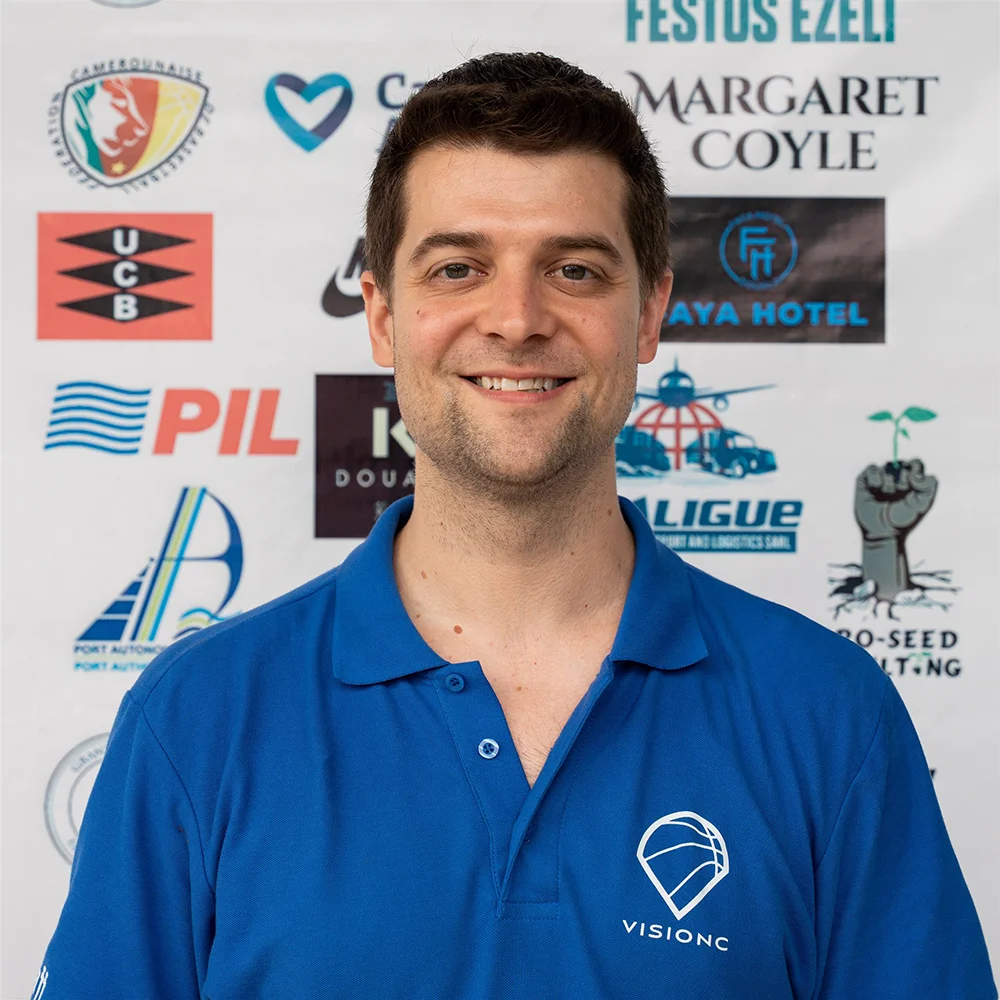
VisionC’s camp program in Douala brings together boys and girls for a free five-day overnight experience, with meals, housing, and gear included. It also runs an under-20 tournament and a clinic for coaches. Its first camp was held in 2022. These are specific organizational commitments: accommodation, equipment, people, and a schedule that must work when everyone arrives.
The organization also aims to develop educational and employment opportunities around its programs. Those aspirations belong to VisionC as a whole. Passarella’s contribution is named in the supporting work. There is something appealingly literal about the connection to his business career: teams need ways to work together, and somebody has to attend to the arrangements that make the teamwork possible.
The organization keeps moving
The corporate story has continued to change. On August 17, 2026, Care Access announced the transition to StudyTeam by Care Access. The OneStudyTeam brand would gradually retire. The announcement said the platform and the people behind it would continue, while the product moved into closer alignment with the wider organization. Another name on the timeline; more coordination behind it.
Passarella’s career can be read through those changes of scale and setting. Loretto appears in a brief personal allegiance. Boston anchors his professional profile. Signal Vine adds the education business. Douala brings in a volunteer assignment. None of these details requires a myth of the solitary founder. They put him among collaborators, users, institutions, and teams, where most of the consequential work takes place.
The funding rounds remain part of the account, as do the difficult staffing decisions and the changing company names. But the years before the money, the second business, and the volunteer title keep the picture human. Passarella’s story returns to an ordinary question with a long working life: once people agree that something should happen, who is going to help them get it done?