Raj Kamal has seen a transfer from euros to Nigerian naira rejected by a correspondent bank four days after it was sent. Four days is an awkward unit of measurement for money. It is long enough for a supplier to grow impatient, short enough for everyone involved to insist that the process is still proceeding, and quite sufficient to make the word “instant” sound like a joke told in another room.
He also has a smaller complaint. When someone promises settlement in two or three days, what time on the appointed day do they mean? Nine in the morning? Three in the afternoon? His question sounds fussy until you remember that somebody is waiting to pay somebody else. Precision becomes a courtesy when the thing being delayed belongs to another person.
Today, Kamal is the Dubai-based founder and CEO of TransFi. He is trying to make international payments more predictable through stablecoins and local payment networks. His route here passed through government, consulting, investing and holiday rentals. That is a considerable collection of desks from which to observe how promises become operations.
A district magistrate before a founder
Before blockchain entered the picture, there was the Indian Administrative Service. Kamal served in the IAS from 1994 to 2002, including as a district magistrate and as a budget director in the finance department in Madhya Pradesh and Chhattisgarh. His early professional responsibilities belonged to the machinery of public administration, with its budgets, jurisdictions and institutional obligations.
He had studied mechanical engineering at IIT Bombay, attending from 1988 to 1992. Management studies at the Indian School of Business followed in 2002–2003. In 2017, he added INSEAD’s Certificate in Corporate Governance. Engineering, administration, management and governance make an unusually literal syllabus for someone whose eventual business would have to connect technology with institutions.
There is no need to give every career a secret destiny. These jobs were different jobs. Yet the sequence is useful when considering the founder he became. Cross-border payments demand attention to both a technical system and the organisations permitted to operate it. An elegant route on a diagram still has to survive a jurisdiction.
- 1994–2002Indian Administrative Service
- 2015Payments strategy at PayU
- 2020CEO, OYO Vacation Homes
- 2022Founded TransFi
The smartphone was already in the story
At McKinsey, Kamal became a partner and led the payments practice across Asia Pacific, based in Singapore. He subsequently moved into investments and mergers and acquisitions at Naspers/Prosus. In 2015, that work introduced him to blockchain and crypto. Stablecoins would eventually give him a practical way to connect this interest with his existing payments experience.
His thinking about emerging markets was already visible that year. At PayU, where he headed strategy, M&A and special projects across markets including Eastern Europe, India, Latin America and Africa, he spoke about people moving from cash to smartphones. He expected the phone to become central to payments.
He also made a point that remains relevant to his later business: merchants and customers are served better when providers understand local markets. International ambition and local familiarity appeared together in his thinking well before TransFi. The phone could travel everywhere. The way somebody used it to pay would still depend on where they lived.
That combination gives his later interest in stablecoins a longer history. His subject has been how people transact, through changing technologies. In 2015 the smartphone occupied the foreground. A decade later, the discussion includes a digital settlement instrument behind the transaction. The customer’s concern remains considerably easier to express: will this payment work?
A detour through holiday homes
In January 2020, OYO Vacation Homes announced Kamal’s appointment as chief operating officer for Europe and the UK. He arrived from PayU, where he had been global head of investments. By the end of June, he was taking over as CEO from Tobias Wann, who remained a special adviser.
Vacation homes look like a detour on a payments résumé. They also put an executive in charge of a business where the product is delivered through a dispersed collection of properties and local operations. Whatever the attractions of a central platform, the customer’s experience happens at a particular address.
His later work returned to money, but with the responsibility of a founder. In 2022 he established TransFi, a US-incorporated business using stablecoins in cross-border transfers. The business serves institutions and companies with transactions between fiat currencies and stablecoins, as well as transfers between fiat currencies. The digital asset can be a bridge along the journey.
In its early product history, TransFi acquired a virtual exchange operator licence in Lithuania in March 2023 and launched Ramp that June. A single API followed in September 2024. Those milestones describe the less cinematic portion of founding a financial company: obtain permission, launch a working product, make the connections easier for customers to use.
The map changed once he started building
Founding TransFi changed some of Kamal’s assumptions. He had expected the main opportunity to involve flows between developed and emerging markets. Operating the company brought other routes into focus: Latin America to Asia, South Asia to China, Africa to China and the Middle East to Asia. Businesses on those routes faced familiar costs and uncertainty.
The destinations changed too. He had pictured stablecoins principally as the middle step between two ordinary currencies. Some employees and freelancers wanted to receive stablecoins themselves. Some businesses wanted to use them to pay. A bridge, it turned out, could also be somewhere people chose to stop.
These are useful admissions from someone who had already worked as a consultant and investor. A founder can begin with extensive experience and still meet customers who rearrange the map. The value of experience then depends partly on being willing to revise it.
In Africa, he was surprised by the scale of technology talent earning money through freelance work and international payroll. Remittances had been his more familiar starting point. The continent’s role as a provider of digital services widened his view of what cross-border payments needed to support.
At the other end, someone needs local money
Kamal’s argument about African payments begins with respect for what already works. Familiar mobile wallets and local cash-in and cash-out networks matter. He sees stablecoin infrastructure strengthening the connections between these systems and global commerce. A customer should be able to keep using a payment method they recognise.
He describes the difficult part as making the value usable in everyday transactions. A business receiving funds on a blockchain still needs a dependable way to obtain the local currency required by its suppliers or staff. The international settlement and the local payout have to work together.
There is an almost domestic quality to this ambition. The machinery can be sophisticated, but success arrives in the account or wallet someone actually uses. The recipient should not have to become an amateur payments engineer to understand whether they have been paid.
In his own writing, Kamal has returned to this final stretch of the journey: banking relationships, local approvals and the work required to connect digital dollars with daily financial life. These subjects have less glamour than a new blockchain. They have rather more bearing on whether the supplier receives the money.
“Number one is regulatory clarity across every market.”
Raj Kamal, September 2026
Two kinds of capital
In March 2026, TransFi announced a $19.2 million financing led by Turing Financial Group. The total combined $14.2 million in Series A equity with a $5 million committed liquidity facility. The distinction is revealing: the money to develop a payments business and the liquidity needed to support its operations serve different purposes.
$14.2mSeries A equity
$5mCommitted liquidity facility
The company said the financing would support expansion, licensing, its liquidity network and enterprise customer acquisition. It projected roughly $5 billion in processed transaction volume for FY2026, based on its pipeline and anticipated business conversions. That figure was an ambition expressed in a forecast.
By August, TransFi reported that it had processed more than $1 billion in transaction volume. It also announced JARVIS, a compliance intelligence platform designed to consolidate customer and transaction information for its compliance, risk and operations teams. The platform prepares risk views and investigation material; final decisions remain with the compliance team.
The operational detail matters to Kamal’s story. A company built to improve payment speed still has decisions that require human responsibility. Software can gather and organise the evidence. The company remains accountable for deciding what to do with it.
The destination is an ordinary Tuesday
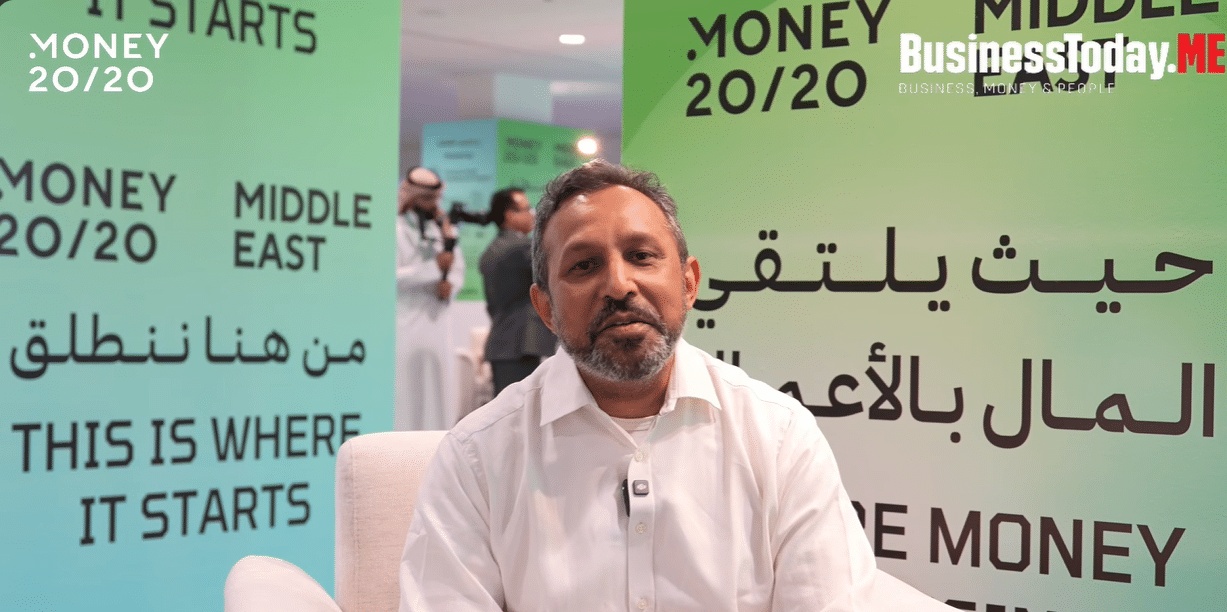
By October 2026, Kamal was discussing stablecoins, AI and payments at Money20/20 Middle East. Saudi Arabia was a market of interest because of its remittance activity, and he was exploring relationships with payment providers, banks and financial institutions. His public agenda remained close to the practical business of making connections.
He also recognises limits to the case for stablecoins. For very large wholesale transfers, banks’ ability to net positions and extend intraday credit can offer advantages over fully funded digital transfers. The useful comparison depends on the payment being made. A fast rail has to earn its place in the whole transaction.
That leaves Kamal with a demanding aspiration: international payments that are easier to use, less expensive and more predictable for businesses and individuals in emerging markets. The career behind it is unusual. The desired experience is deliberately ordinary. Somebody sends money. Somebody else receives it, knows when it arrived, and gets on with the day.