The modern hospital has a peculiar boundary. Its walls end at the sliding doors, but its financial exposure does not. A patient leaves after a hip repair, spinal fusion, bypass, bowel operation, or joint replacement. Then the patient enters a loose republic of rehab centers, home-health agencies, primary-care offices, relatives, pill boxes, unanswered phones, and good intentions. Under Medicare's Transforming Episode Accountability Model, the hospital remains accountable for the cost and quality of that journey for 30 days after discharge.
- Rainfall Health tracks hospital episodes from surgery through the post-discharge window.
- Its software combines compliance, reimbursement modeling, care coordination, and quality reporting.
- The wedge is narrow: mandatory Medicare payment programs, especially CMS TEAM.
- The company says its economics are aligned with customer success, though public pricing is not disclosed.
This is the opening Rainfall Health has chosen. The San Francisco company does not promise to diagnose every disease or replace the electronic health record. It offers something more prosaic and, to a chief financial officer, possibly more charming: a way to see whether hundreds of separate acts of care are adding up to a good recovery and an acceptable Medicare bill.
A federal rule creates a software category
TEAM began on January 1, 2026 and runs through 2030. CMS gives participating acute-care hospitals target prices for five surgical episode categories. Medicare still pays individual claims in the usual way. Later, actual spending is compared with the target and adjusted for quality. Spend less while meeting the standards and a hospital may earn money. Spend more and, depending on its track and the performance year, it may owe money back.
The federal program exists because fee-for-service care is excellent at producing invoices and less reliable at producing continuity. The surgeon, hospital, nursing facility, therapist, and family may all be competent. They may also be looking at different systems. TEAM changes the party responsible for that fragmentation. The hospital becomes the owner of an episode it cannot entirely control.
Rainfall's platform sits in that gap. It ingests clinical and administrative data through familiar hospital integration methods, identifies the episode, follows cost and quality signals, coordinates tasks, documents compliance, and presents the result to clinical and financial teams. Its six-step R.A.I.N. Compliant framework moves from readiness assessment and audit through data modeling, implementation, and continuous monitoring. The acronym means Referral Accountability for Integrated Networks, which is corporate nomenclature with the rare virtue of describing the job.
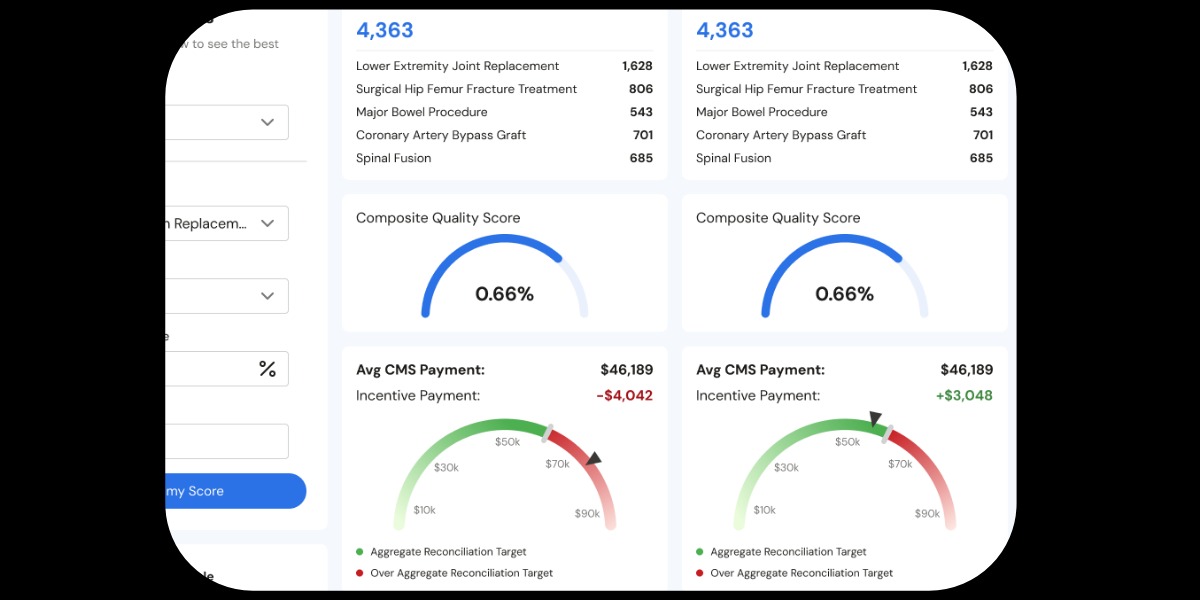
The clever bit is the narrowing
Rainfall did not begin here. Founded by Ahmed "Eddie" Qureshi in 2019, the company was first known as Valorant Health. Its field was broad: virtual care, behavioral health, referrals, and access for rural and underserved communities. When it adopted the Rainfall name in February 2024, it said its network included more than 6,000 providers and that care managers could connect patients to care within 24 hours.
The origin was personal. Qureshi's mother and grandmother were physicians serving rural communities. He has said that watching people seek care at the family doorstep stayed with him. His formulation remains the company's moral center: “Where someone lives should not dictate access to quality healthcare or life expectancy.”
The company began by asking how to bring care to places the system overlooked. It found a business by asking who pays when the handoff goes wrong.The pivot in one sentence
The shift toward TEAM looks less like an abandonment of that mission than a lesson in commercial geometry. “Improve rural access” is a vast circle. “Prepare mandated hospitals for one payment model by January 2026” is a point. A point gives engineers a specification, salespeople a deadline, and hospital executives a budget line. Regulation supplied the urgency that worthy intentions rarely do.
What the customer is actually buying
Rainfall sells to hospitals and medical groups, but the customer is really a committee: the CFO watching reconciliation risk, the compliance officer reading federal language, the CMIO guarding integration, the nurse coordinating discharge, and the executive responsible when those people fail to share a picture. The platform's advantage is not that each feature is unprecedented. Hospitals can buy analytics, consultants, care-management software, EHR reports, and revenue-cycle tools elsewhere. Rainfall packages those functions around a single mandatory clock.
EHR events, claims, quality measures, referrals, patient progress, post-acute activity.
Episode attribution, risk signals, workflows, documentation, forecasts, coordination.
Who needs attention, where cost is drifting, what is missing, what Medicare may pay.
The company also claims a performance-aligned business model: it describes itself as sharing financial risk and getting paid when hospital partners succeed. Contract prices, formulas, minimum fees, and implementation costs are not public. That omission matters to any buyer comparing a shared-savings promise with a conventional subscription. Still, the posture is shrewd. Hospitals have endured enough software that invoices faithfully while outcomes wander off.
In February 2026, Two Bear Capital led a $15 million Series A. The money was earmarked for AI engineering and customer support. Rainfall later announced that Mayo Clinic in Jacksonville would implement the platform for TEAM-related coordination and compliance. In September it added HNI Healthcare, Goldfinch Health, and LainaHealth to its partner ecosystem, extending the offer into clinical staffing, surgical recovery, nurse navigation, and virtual physical therapy.
Where the machine should stop
Rainfall speaks of AI, but its more credible language is about leverage. Hospital data arrive in inconsistent formats and clinicians already drown in documentation. Generative systems can normalize information, draft routine material, surface missing steps, and keep a coordinator on top of a larger patient panel. They should not quietly make discharge or treatment decisions. Rainfall's public position is human-in-the-loop, with clinicians and operational staff retaining judgment.
That boundary is not merely ethical. It is practical. A prediction has little value when a hospital lacks a home-health partner, a patient cannot climb the stairs, or a rural facility has one coordinator doing the work of four. Software can expose the broken link. It cannot conjure local capacity. Rainfall therefore pairs the product with implementation, care coordination, an advisory committee of health-system leaders, and a growing service-provider network.
What another operator can borrow
- Start with a deadline customers cannot postpone.
- Choose one costly handoff instead of promising to repair an entire industry.
- Translate policy into a workflow, not another white paper.
- Connect clinical behavior to a number the buyer already watches.
- Keep humans responsible where context changes the answer.
The conditions have to be right. Rainfall's approach depends on accessible hospital data, workable EHR connections, engaged clinical leadership, a post-acute network able to respond, and enough episode volume for savings to exceed the cost and disruption of implementation. It is less persuasive for hospitals outside the model, facilities with weak digital infrastructure, or teams that want a passive reporting tool. If payment rules change, the product must travel with them. The company is already discussing CJR-X, the nationwide joint-replacement model scheduled for 2028, which suggests Rainfall understands that a policy wedge is powerful only if it becomes a policy portfolio.
There is a delicious bureaucratic irony here. A federal program famous for acronyms may improve care by forcing everyone to notice the human interval after discharge. Rainfall's wager is that the interval can be made legible: one patient, one episode, one shared account of what happened. The software does not make the hospital boundary disappear. It merely draws the boundary where the patient actually lives.
Continue exploring