On Thursday afternoon, Rafael Broshi’s team received the requirements. By Monday, a large enterprise wanted another version of their software. Notch had joined the competition late. Six or seven people worked on the proof of concept; they spent two nights sleeping at the office. Then the conversation changed. The additional contender looked capable of winning.
Broshi remembers that second iteration as the moment something clicked. The eventual prize was a four-year, seven-figure contract. What mattered to him was that the product already suited the buyer. The team had prepared for a demanding test rather than invented an entirely different business to pass it.
“Winning an enterprise contract is the easiest part of working with an enterprise.”
Rafael Broshi
That is a splendidly inconvenient observation for anyone hoping to celebrate and go home. The sale puts you on the hook. The customer expects the thing to work.
Before the insurance policy
Broshi’s route to that office weekend ran through military service, product work and finance. He served for nearly a decade in the Israeli military. Later came a startup and a hedge fund. In a conversation about his career, he described the analyst’s life in terms familiar to anyone who has spent too long inside a spreadsheet: sixteen-hour days in Excel.
The variety matters more than the sequence. Product management puts someone between what a team can build and what a customer needs. An analyst has to make a case for committing money. Running a company eventually requires both conversations, often before lunch. Broshi’s public account of leaving finance carries a simpler motive: he wanted to start something of his own.
He left the hedge fund around June 2020. A question about insurance caught his attention after a cyberattack on an insurer. Large organizations had ways to protect themselves. What happened to the smaller business whose most valuable asset lived behind somebody else’s login screen?
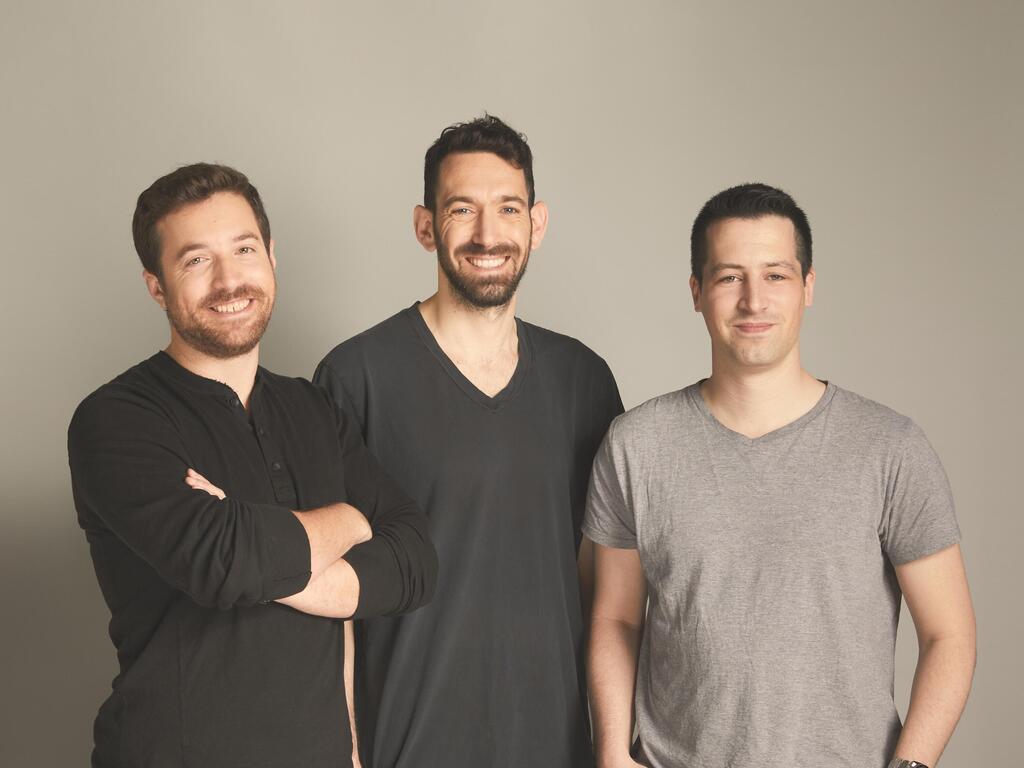
With friends Yuval Peled and Elool Jacoby, he began exploring that problem. A creator’s account could be a source of income. A shop’s social profile could bring in its next customer. Losing access could interrupt an actual business, however frivolous the surrounding feed appeared. The founders were looking at the till behind the photographs.
The storefront was somebody else’s account
Notch was founded in May 2021. Its original proposition was insurance for digital assets, including social media accounts. In 2022, Broshi was explaining the product to the people whose work it was meant to protect. Creators were the initial audience, but he also talked about ordinary small businesses: a hairdresser using Instagram to attract customers was part of the picture.
That example gives the early idea its human scale. The concern was a business losing the channel through which customers found it. A follower count could look like vanity from outside and function like a shop window from within.
There was considerable work behind making that concern insurable. The founders operated an MGA, a managing general agent, with carrier backing. Notch’s own history describes a launch across 47 states and a partnership with Hartford Steam Boiler and Munich Re. Insurance meant permissions, documentation and obligations to policyholders. Those requirements would outlast the original product.
The awkward part was demand. Broshi has since spoken openly about a product that people admired but that failed to find its market. It is an uncomfortable distinction for a founder: an idea can survive every friendly conversation and still lose when someone has to buy it. Approval is remarkably easy to give away.
The useful thing in the back room
Inside the insurance operation, another problem was becoming harder to ignore. Serving more policyholders required work. The team wanted software that could handle that work without making every increase in business an increase in staffing. Existing AI tools did not meet the standard they wanted for completing regulated workflows.
So they built an internal system. Its job included structured execution, permissions, validation and escalation when information or policy was unclear. The system had to do more than produce a plausible answer. It needed boundaries around what happened next.
That internal tool became the foundation of the current Notch. The founders retired the insurance operation and concentrated on software for other organizations. It was an unusual inheritance: the first business left the second a working problem, operational experience and a set of requirements that a demonstration alone could easily overlook.
The financing followed that change of purpose. Broshi’s March 2026 account put the earlier capital at roughly $7 million for insurance and $8 million for the new direction in 2024. The subsequent $30 million Series A brought total funding to $45 million. Headline led the round, joined by Illuminate Financial, Jibe Ventures, Lightspeed Venture Partners and Phoenix Insurance’s investment arm.
He described the next priorities as expansion in the United States and further development of the platform. The ambition had moved from protecting a particular digital asset to becoming infrastructure for the organizations that handle regulated work. The starting point remained the same practical irritation: people spending too much time getting routine work through the system.
Permission is part of the product
Broshi’s writing returns to a relationship he knows from insurance. A carrier delegates authority to an MGA. The agent can act within agreed limits, and must be able to show that it stayed within them. Authority comes with a boundary and a record.
That experience gives his thinking about AI an unusually administrative center of gravity. A system’s abilities are only part of the question. Someone must decide what it may touch, when it may act and when a person must take over. Somebody else may later need to reconstruct the decision.
In his October essay about delegated authority, Broshi argues that this demand for evidence predates AI. The new opportunity is to produce the record continuously, while the work happens, rather than reconstruct it during an audit. Anyone who has searched an old email chain for the reason behind a decision can appreciate the attraction.
His September writing makes a related argument about industry conferences. Capability attracts attention; accountability gets a quieter conversation. Broshi wants the two discussed together. He urges buyers to ask what happens when an agent gets something wrong, who approves changes to its instructions and whether the reasoning can be examined later. These are useful questions to bring to a sales meeting, including his own.
There is a dry consistency here. The founder who discovered that admiration did not establish demand now asks whether an impressive demonstration establishes usefulness. His concern is what happens after everyone has left the room.
Which data, actions and decisions are permitted?
Route unclear cases to a person.
Make the action and its reasoning reviewable.
The cost of keeping a system inside the lines
A webinar question prompted Broshi to write a longer explanation of guardrails. His answer was concrete enough to include the bill: roughly 10% to 15% of Notch’s costs with clients, he said, went toward them. Keeping a system within bounds takes resources.
He breaks that work into five parts. Controls need to fit geography and line of business. Rules must restrict the data and workflows an agent can access. Usage needs cost limits. Testing belongs in separate environments. Evaluations must continue after launch. A system that passed yesterday’s checks still needs checking tomorrow.
This is where his story becomes less like a conventional account of a founder having an idea and more like an account of learning to operate one. The details are not especially glamorous. Their appeal is that the customer can live with the result.
In another conversation, with Joshua Hollander, he explained how a single intake conversation could involve fifteen to twenty narrowly assigned subagents. Each handles a specific question or task. The intention is to make the work easier to inspect and the actions easier to explain. Fluent conversation can conceal many small decisions; his architectural answer is to give those decisions more explicit owners.
The share of Notch’s costs with clients that Broshi says goes toward guardrails.
The person still holding the judgment
Broshi’s commercial thinking also leaves plenty of room for people. In his conversation with The SaaS CFO, early customer acquisition came back to relationships, referrals and credibility. A buyer with a limited capacity to evaluate vendors needs reasons to invite a small company into the room. A reference can get a hearing that a feature list cannot.
The same discussion addressed outcome-based pricing. Measuring software against the results a customer already expects from work gives the sales conversation a concrete subject. It also makes the vendor answer a less comfortable question than whether its technology is interesting: what did it actually accomplish?
By September 2026, Broshi was discussing another boundary in a PropertyCasualty360 webinar: where AI ends and human judgment leads. Afterwards, he described a broker asking whether their jobs were safe. His answer emphasized reducing the work that consumes time while leaving judgment with the people responsible for it.
His suggested starting point was modest: useful internal tasks with low risk, reviewed by the people doing the work. There is patience in that advice. The customer is allowed to learn before expanding the system’s remit.
The arc of Broshi’s company gives those arguments some bite. He began with a new insurance proposition and found a more workable business in the tools needed to operate it. Now his ambition depends on fitting into institutions that already have responsibilities, rules and customers of their own. For all the excitement surrounding AI, his recurring questions sound like those of someone preparing to hand over the keys: what are you allowed to do, and can you show me what you did?
Continue the conversation
Read Broshi’s writing, hear the longer interviews or follow his public updates.
Notch’s website ↗Rafael Broshi on LinkedIn ↗Rafael Broshi on X ↗Working Inside Someone Else’s Authority ↗Five layers of AI guardrails ↗Watch: Insurtech Leadership Podcast ↗Listen: The Product Market Fit Show ↗Listen: The SaaS CFO ↗Notch’s March 2026 funding announcement ↗