The question was almost rude. Google had voice AI. So did Amazon and Microsoft. Why should a smaller company survive? When R136 Ventures examined Deepgram, partner Ratan Manehani worried that a lead in speed and accuracy might last only eighteen to twenty-four months. A good benchmark, after all, is an invitation for someone else to beat it.
- Backs B2B software, fintech and AI companies after the earliest experiments.
- Pairs investment with help on hiring, selling and expansion.
- Looks for evidence that customers will stay when competitors catch up.
Then the team spoke to customers. These enterprises had configured deployments, adapted systems and accumulated work around Deepgram’s software. Replacing it meant unwinding that work. The investment case became less dependent on winning the next benchmark. There was a business relationship to understand.
“Then what changed our mind was the customer evidence.”
Ratan Manehani · The Deepgram investment memo
That decision offers a useful introduction to R136. The Silicon Valley investor concentrates on companies that have moved beyond the question of whether somebody wants their product. Its preferred puzzle is what happens when people do.
01 / The company after the product
A startup can sell software before it learns to manage a sales organization. It can attract engineers before it learns to coordinate them. Success creates its own queue of unfinished jobs. R136’s pitch is that investors who have operated large organizations can recognize some of those jobs before they become expensive surprises.
Victor Orlovski came through software engineering and senior banking technology roles. Alongside him, the firm lists Yacov Nachmanovich as a founder and managing partner. Tom Dennedy, its partner and chief operating officer, previously worked at Artiman Ventures and Telesoft Partners. This is a team selling accumulated operating judgment alongside capital.
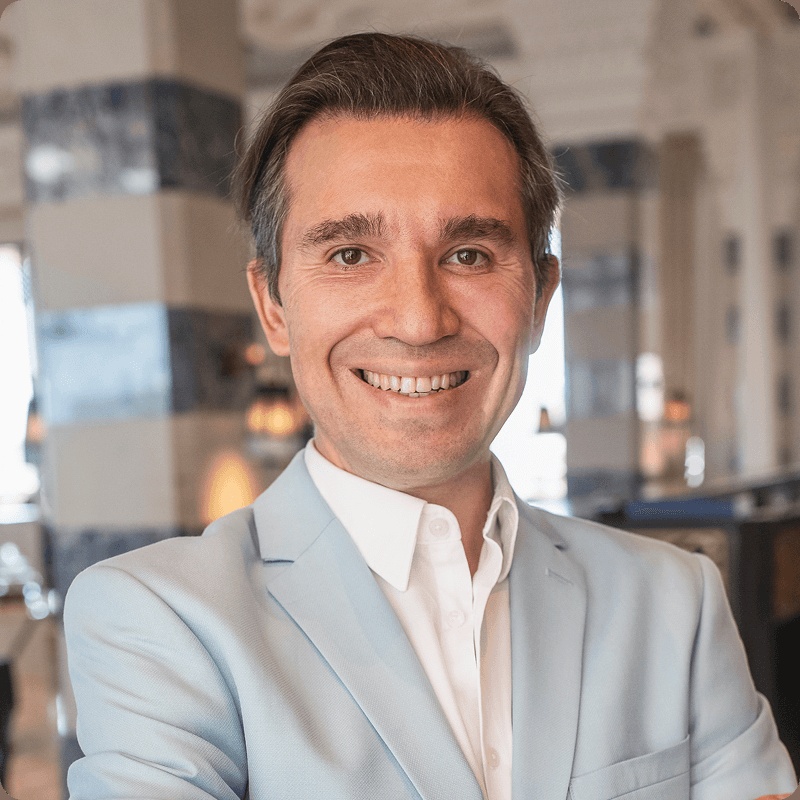
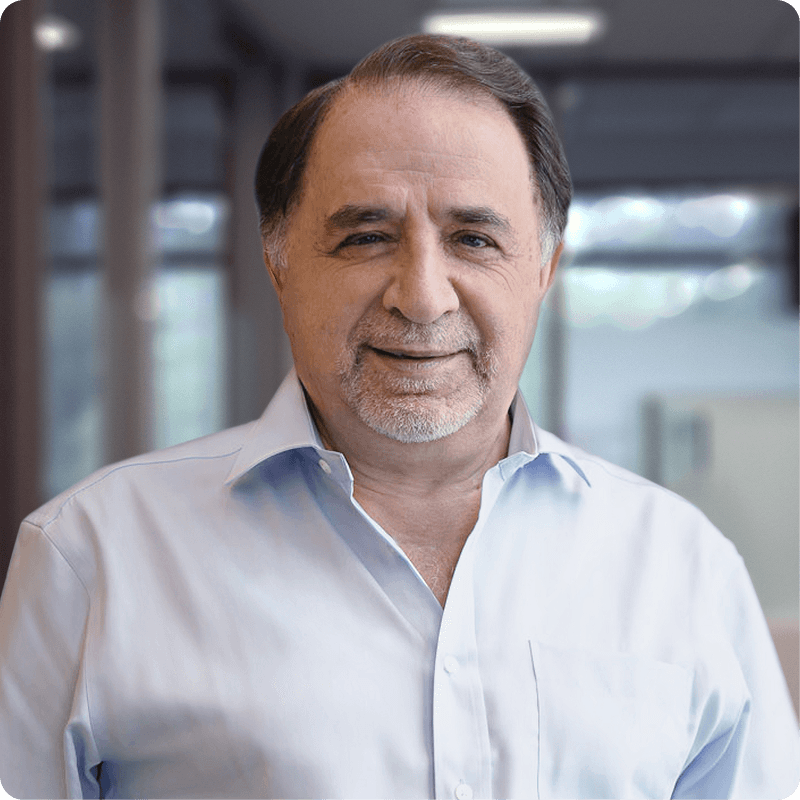
There is a wrinkle in its history. Orlovski’s professional biography dates Fort Ross Ventures to 2015 and R136 Ventures to 2023. R136’s public materials describe an investment history reaching back to 2015. Reading those dates together matters: the experience predates the current firm’s name.
02 / A menu board makes the case
Consider Dynamic Yield, part of that historical portfolio. It made personalization software. In March 2019, McDonald’s announced an agreement to acquire it, describing digital drive-through menus that could respond to weather, restaurant traffic and what a customer had already ordered. Enterprise software had found a very physical sales counter.
The detail matters because it gives “B2B” some texture. A buyer did not need an abstract demonstration of clever technology. It had ordering decisions to improve across restaurants. McDonald’s had already tested the system in US locations in 2018.
In December 2021, McDonald’s and Mastercard announced another transaction: Mastercard would acquire Dynamic Yield. Their announcement said the company had doubled revenue under McDonald’s ownership and broadened its customer base. The same technology could travel through different distribution networks. That is a more instructive story than an acquisition logo by itself.
The portfolio also includes financial businesses such as eToro and Airwallex. eToro priced its Nasdaq offering at $52 a share in May 2025. These examples locate R136 between enterprise software and financial technology, where commercial adoption often involves institutions with complicated buying habits.
Rookout offers a different example. Its tools helped developers debug software while it was running in production. Dynatrace announced an acquisition agreement in July 2023 and completed the purchase that August. Its quarterly filing put preliminary consideration at $33.5 million. Here the attraction was a specific capability that could become part of an established software platform. A portfolio can contain several routes to an exit.
03 / Put a number on the next step
R136 publishes two investment ranges: $2 million to $10 million for late Series A through Series B, and $10 million to $20 million for Series C and beyond. Its core markets are the United States and Israel, with opportunities elsewhere, including Europe, Latin America and the Middle East.
Late Series A through Series B
Deepgram’s January 2026 financing shows why the units matter. The company announced a $130 million Series C at a $1.3 billion valuation. Those figures describe the entire round and the company’s valuation. Neither should be mistaken for the amount R136 invested.
For founders, the practical offer includes work on product strategy, organization design, recruiting and financial planning. Overseas expansion can involve introductions to corporate customers and investors in the Middle East. The relevant question for a founder is specific: which introduction, which hire, which operating decision would move the business forward?
Capital comes from limited partners through private funds. In November 2025, R136 announced the final close of its third fund, with more than fifty global investors participating. Orlovski’s subsequent note reported over $500 million under management. That measures assets managed across the firm; it does not tell a founder the size of that newly closed fund.
04 / Listen before the pitch
R136’s search process supplies a practical lesson for people who will never raise venture capital. Orlovski has described combining investment databases with Gartner, Capterra and G2. Customer reviews can reveal a company gaining traction before its fundraising campaign makes it conspicuous.
Looking early also buys time to observe founders. A polished presentation compresses a company into an afternoon. A relationship can reveal how its team responds to a missed target, a product change or an awkward question. R136 says its process weighs people and team dynamics alongside financial measures.
There are limits to this approach. In a January 2025 interview, Orlovski described 2022 and 2023 as difficult years for portfolio companies. Operating experience does not suspend financing conditions. Nor does a useful introduction remove a country’s regulatory requirements. A startup still searching for dependable demand has a different problem from the scaling companies R136 targets.
A founder can turn that into an investor interview. Bring a concrete bottleneck: an enterprise sales cycle, an engineering management gap or a market-entry decision. Ask who will work on it and how progress will be judged. The usefulness of operating help becomes much easier to evaluate once the work has a name.
The Deepgram decision brings the argument back to something readers can copy. Ask customers what replacement would involve. Find the configuration, training and daily habits behind the purchase. Then ask whether the next investment strengthens those relationships. A company becomes easier to understand when you stop admiring its demo and start examining the work surrounding it.