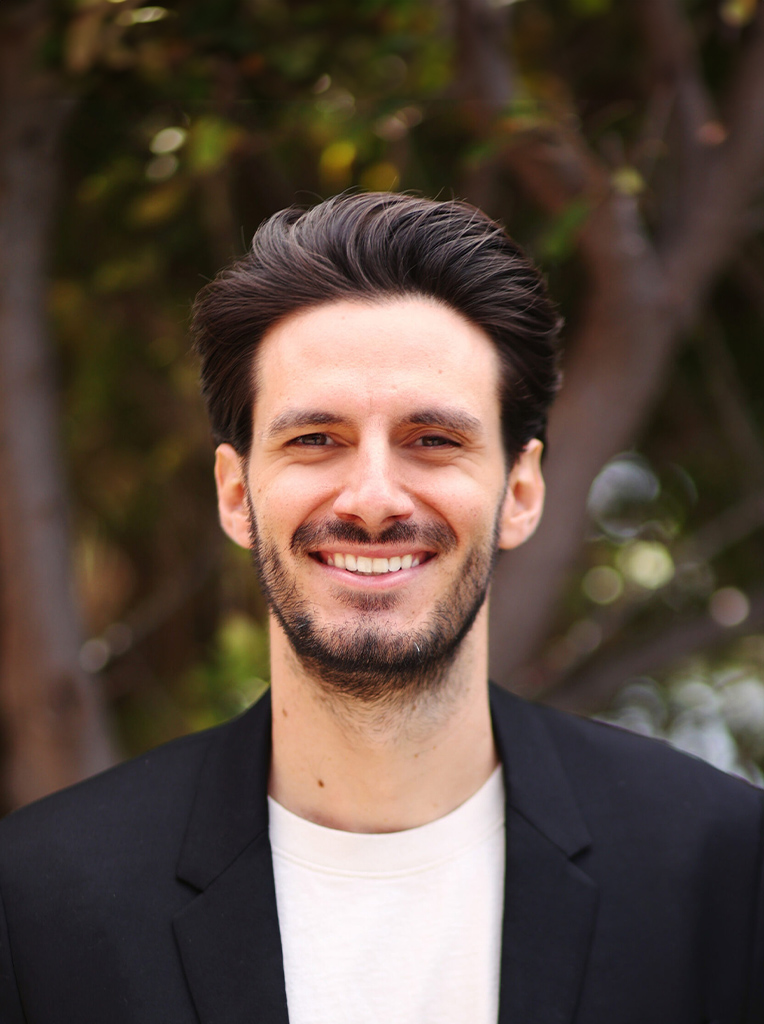
Quentin Perrot runs product for a piece of software that a health minister in a country you have probably never worked in opens at seven in the morning to see whether last night's malaria cases showed up in the district reports. This is a specific job. It is not the job that Silicon Valley tends to feature on podcasts. Perrot is the Chief Product Officer of Zenysis Technologies, a Y Combinator-backed company (batch W16) whose customers are governments on four continents and whose flagship product, Harmony, is open source. He has held the CPO title since 2023. He has been at the company since 2017, when he joined as a Product Manager and the org chart above him was much taller.
"Digital public goods are how we address the critical challenge of data fragmentation."
Data fragmentation is the polite phrase. The impolite version is that most ministries of health run on a dozen incompatible systems - one for HIV, one for supply chain, one for laboratory results, one that a partner NGO installed in 2014 and never handed off - and reconciling them is somebody's full-time job with a spreadsheet. Zenysis sells the argument that this should not be somebody's full-time job with a spreadsheet. Perrot is the person who decides, quarter by quarter, which piece of that argument becomes software.
He is, on paper, a product manager. In practice, product management at Zenysis is closer to civil engineering. The buyers are procurement offices. The end users are epidemiologists and district health officers. The competitors are, generously, PDF exports and, less generously, nothing at all. There is no viral loop. There is no growth hack. There is a health emergency, and then there is a dashboard that either works or doesn't, and Perrot's team is responsible for the difference.
What is unusual about Perrot is not the job. It is the fit. He grew up international - his secondary school was St. Mary's International School, an IB program - then went to Stanford twice, first for a B.S. in Symbolic Systems and then for an M.S. in Computer Science. Symbolic Systems is Stanford's famous "how the mind works" major: a mash-up of linguistics, philosophy, computer science, and cognitive psychology that produced, among others, Marissa Mayer and Reid Hoffman. It is arguably the correct educational preparation for a person whose future job will involve modeling how ministries of health think about their own data.
He has lived and worked in six countries. Zenysis's customers are on four continents. That is not a coincidence.
His first two product internships previewed the eventual pivot without spelling it out. In 2015 he was a Product Intern at Rakuten, the Japanese e-commerce giant. In 2016 he was at Livongo, the US consumer health-tech company that would later go public in one of the more consequential digital-health IPOs of that era. Neither role, taken by itself, obviously points to global-health data infrastructure. Taken together they suggest a person triangulating - Japan plus consumer health plus a Stanford CS degree plus an interest in what a piece of software actually does for someone at the other end of it.
He joined Zenysis in 2017, when the company was small enough that a Product Manager could shape a lot of the road. Zenysis had come out of Y Combinator the year before, in the W16 batch. Its thesis, then and now, was that governments in low- and middle-income countries had oceans of health data and no good way to see it, and that fixing this was both a good business and a good thing. Between 2017 and 2023 Perrot moved through the standard rungs - PM, Senior PM, Director of Product - and the company moved through the standard funding rungs, raising a total of about $22 million across a Series A and, in 2022, a $13.3 million Series B.
Then in 2023 he became CPO. Continuity hire; internal promotion; the CPO who has been in the room since the road map was a shared Google Doc. There is a particular kind of executive who is credible precisely because they have never had to be introduced to their own customers. Perrot is that kind of executive.
The product itself is worth understanding for a moment. Harmony is Zenysis's data integration platform, and Perrot has spoken publicly about it - notably at the DHIS2 Symposium, where he presented on how Harmony can seamlessly connect DHIS2 instances (DHIS2 being the open-source health management information system used by about 80 countries) with other data sources. The technical description is boring. The consequence is not. A health minister who can look at one dashboard instead of eleven is a health minister who can make different decisions. This is Zenysis's argument. It is Perrot's job to keep making it true in software.
He also does the thing that CPOs at mission-driven companies must do, which is talk about mission without making it sound like a slogan. He is on record framing Zenysis's work in the language of "digital public goods" - the increasingly load-bearing category of open-source, publicly-owned software that lots of governments think they should be building on top of, without necessarily agreeing on who pays for the maintenance. Zenysis's bet is that a specific kind of company - not a pure NGO, not a pure vendor - can build and maintain those goods and be paid by governments and funders to do so. Perrot's product roadmap is that bet, expressed as a Jira backlog.
What is he like? The paper trail is thin, on purpose. He is not a Twitter personality. There is a Zenysis Twitter handle in the record, no personal Twitter of note. His LinkedIn is a résumé, not a broadcast. He describes himself, in the small amount of public self-description available, as a "citizen of the world" who has lived and worked in six countries - which is either the least specific thing a person can say about themselves or, in the context of Zenysis's customer base, the single most specific credential he could claim.
Six countries. Four continents served. Two Stanford degrees. Seven years in one job. One promotion to the C-suite. The numbers are neat. The work isn't.
"There is no glory in data integration. There is only the moment a health minister sees, for the first time, every clinic on one screen."
Zenysis is headquartered in the Bay Area - Daly City, technically. Perrot lives in New York. This is not accidental either. Product leaders at global-health companies tend to end up in the city with the most flights to everywhere. Zenysis has about 31 employees on paper, punches vastly above its weight in customer count, and continues to grow into the space that funders like the Global Fund, Gavi, and various national governments increasingly need someone to fill: the maintainer role for the plumbing.
The consumer-tech version of Perrot's career would have him leaving now to found something. The version he is actually running has him staying. The road is long. The customers are governments. The metric is whether the dashboards get used. On this evidence, they do.