Insurance renewal work has all the ingredients of a software founder's nightmare and an operator's recurring Tuesday. The useful information is split between an agency management system, declaration pages, carrier portals, underwriting manuals and somebody's practiced instinct. A premium jumps 20 percent. A coverage disappears. A client who has heard nothing starts shopping. The account manager opens another tab, then another, and begins comparing fine print while the phone is already ringing.
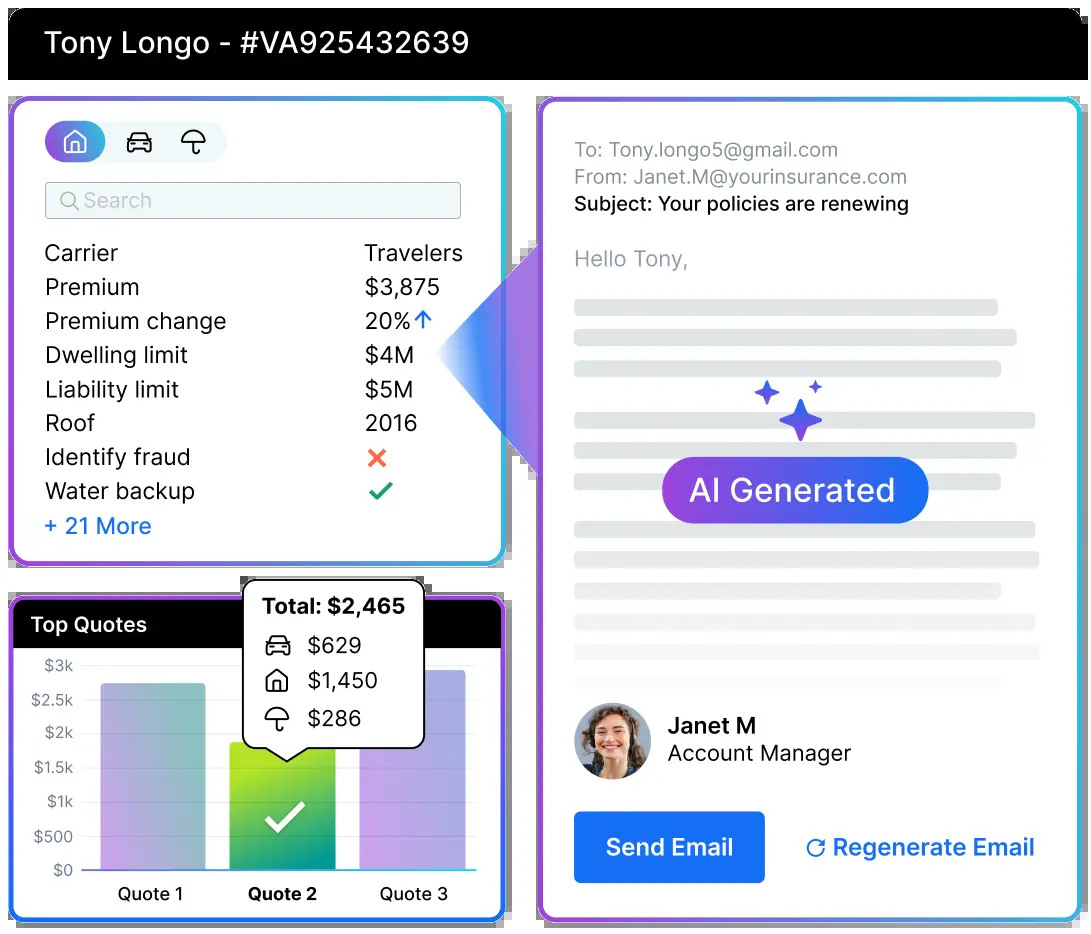
Quandri built a company around that desk. Its software retrieves the current and renewing personal-lines policy, compares the two, identifies changes and gaps, ranks which accounts need attention, initiates competitive quotes when configured rules fire, drafts a specific renewal email and saves the activity back to the agency's system. The human agent reviews, decides and talks to the client. The machine does the clerical prelude.
That boundary matters. Quandri is not selling a chatbot that knows a few insurance words. It is selling an operating workflow for home and auto renewals. The company says it checks more than two million policies annually and, by April 2026, served hundreds of agencies and brokerages across North America.
01 / The useful retreat
They started broad. Customers pulled them into the weeds.
Brothers Jackson and Jamieson Fregeau founded Quandri in 2021. Jackson had been building bots to remove repetitive data entry at an earlier company; Jamieson brought technical experience from hardware businesses. Their first hypothesis was wider than insurance: robotic process automation could handle repetitive work across industries.
The weakness in the horizontal pitch soon appeared. Traditional RPA gave customers a capable kit, then asked them to configure it, maintain brittle rules and supply technical staff. In other words, the buyer paid for possibility and inherited a project. After working with prospective insurance customers, the brothers found an industry with abundant repetition, siloed data and little new back-office tooling. They narrowed.
There is no public story of a spectacular first product exploding on launch. The first thing that failed was subtler: the generalist framing. A tool that could automate many things forced customers to decide what to build. Quandri changed its mind about where the value lived. It began prebuilding the worker, first as bots for discrete brokerage chores and then as a platform centered on renewals.
“The first thing that failed was the idea that possibility itself was the product.”YesPress analysis
By 2023, Quandri sold digital workers including Renewal Reviewer, Download Director and a file-naming tool that rescued documents from names resembling accidental keyboard smashes. The joke contains the strategy: win by understanding the grubby edge cases. In September 2024, the company introduced its Renewal Intelligence Platform. Policy Checking became the analysis layer. Requoting moved the product from observation to action. Connect, launched in March 2025, turned policy details into client-specific renewal emails.
02 / The product beneath the pitch
The moat is a rulebook with fingerprints on it
Insurance policies are not merely long. They are locally weird. Quandri says it has ingested more than 10,000 carrier documents - policy wording, underwriting guides, rate filings and coverage mandates. Its knowledge base gives examples that feel almost comic until they affect a claim: mine-subsidence rules in particular Illinois counties, sinkhole proximity in Florida, an earthquake exclusion on one side of a Boston street.
That domain layer distinguishes the company from a general large-language-model workflow. Most tools can extract a number from a PDF. Fewer know whether the number is surprising for this carrier, this jurisdiction, this policy type and this renewal. Quandri combines management-system data with policy documents, applies carrier-specific logic, and places the result inside the account manager's existing day.
The integration story is equally important. Quandri began its renewal platform around Applied Epic and announced a certified integration in January 2025. In April 2026 it added Vertafore AMS360 and HawkSoft. Those systems are not decorative logos on an integration page. They are where the customer record lives, where an activity must appear and where the finished communication needs to return. If automation creates a second place to check, it has created work.
The product is deliberately narrow. Public documentation says renewal reviews cover personal property and auto lines, not farm, marine or commercial policies. Supported carriers vary, and Quandri says a typical customer's processing coverage averages about 90 percent rather than 100 percent. The exclusions make the promise more believable. Vertical software wins by knowing what it should not pretend to know.
03 / The money
What does it cost? The website makes you ask.
Quandri sells enterprise SaaS through a demo and custom quote. It does not publish dollar pricing. A buyer should ask for annual cost at today's policy count, the cost at a three-year volume projection, implementation requirements, carrier coverage and which steps still need people. “Contact sales” is not a useful budget, but it signals that book size, configuration and workflow scope shape the contract.
The public evidence for value comes mostly from Quandri's own customer studies, so it should be read as reported outcomes, not a guarantee. Vienneau Insurance says the platform analyzes more than 16,000 renewals per month, saves 6,000 hours a year and has delivered 85.3 percent ROI. Blue Ridge Risk Partners reports a 1.5 percent retention increase, 21 percent fewer cancellations and a reduction in requoting work from as much as 90 minutes to about five minutes of reviewing options. McFarlan Rowlands reports a 350 percent return and the redeployment of 5.5 full-time positions.
The business logic is straightforward. An agency already pays for renewal labor, missed outreach and preventable errors. Quandri tries to convert part of that variable workload into software spend, then justify itself through hours returned, policies touched, retention and cross-sell opportunities. Its customers include independent agencies and larger groups such as BrokerLink, Western Financial Group, HomeServices Insurance and Blue Ridge.
Investors followed the narrowing. Quandri announced C$2 million in seed financing, then an US$8.5 million Series A led by FUSE in 2023. A US$12 million extension led by Framework Venture Partners with Intact Ventures participating arrived in 2025, taking disclosed funding above US$20 million; Quandri now displays US$22 million. Between the 2023 and 2025 rounds, the company said revenue grew 15-fold, customers passed 100 and headcount reached 75. It did not disclose revenue or valuation.
04 / The human operating system
A crew, not a family - and a workflow, not magic
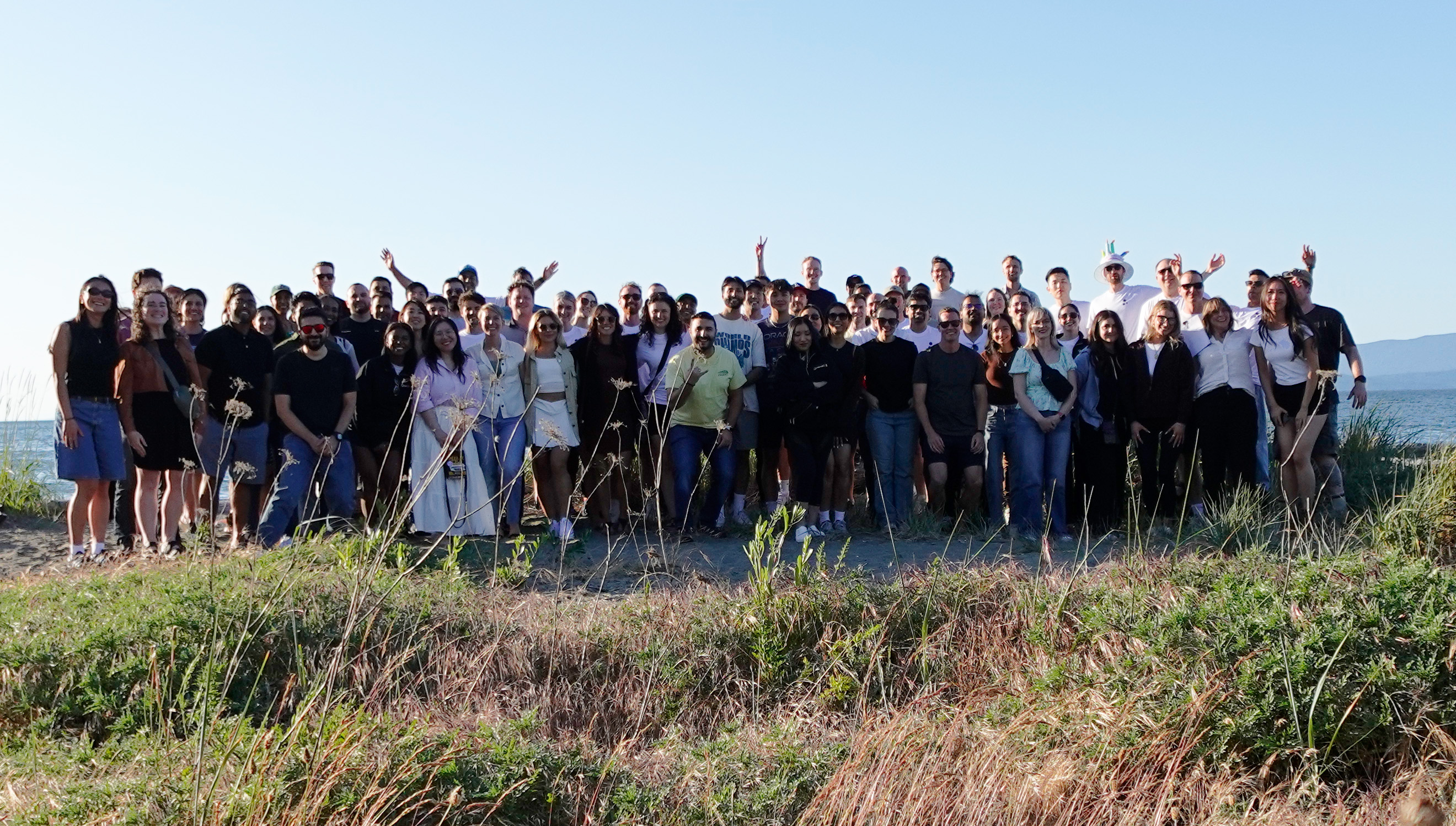
Quandri calls employees “Quandronauts” and says the company is a crew, not a family. The published principles are customer focus, urgency, curiosity, execution, ownership and simplicity. The language is playful; the operating demands are not. Insurance automation must survive source-data gaps, browser changes, carrier exceptions and the consequences of a bad recommendation.
The customer's culture matters too. Blue Ridge reorganized its personal-lines department into carrier pods with clear client and service roles before embedding Quandri. That detail is easy to miss beside the retention chart. Software lands better when the surrounding job design is ready. An agency cannot buy proactive service while rewarding only reactive queue-clearing.
What a reader can copy
Start with a frequent, expensive moment tied to a business metric. Learn its exceptions. Integrate with the system of record. Automate the full clerical loop, not one clever middle step. Keep humans where judgment and accountability live. Then measure time returned, coverage of the workflow and business outcomes.
The sequence is more useful than the slogan “vertical AI.” Quandri did not begin by promising an autonomous insurance employee. It entered through repetitive chores, concentrated on renewals, added analysis, then requoting, then communication. Each release occupied the next adjacent step and made the platform harder to replace without asking the model to outrun the workflow.
05 / Where it breaks
This playbook needs repetition, rules and reachable data
Quandri is a strong fit when an agency has a large personal-lines book, supported management software, recurring renewal volume and too little capacity for proactive review. It is weaker when most revenue comes from complex commercial, farm or marine risks; when essential carriers are unsupported; when source records are unreliable; or when each account follows a bespoke process that resists standard triggers.
Likely fit
High-volume home and auto renewals, supported AMS, consistent rules, measurable labor pressure, and managers willing to redesign roles around exceptions.
Likely friction
Commercial-heavy books, poor source data, uncommon carriers, low volume, unclear ownership, or a team expecting unsupervised advice from day one.
It also fails if the buyer confuses automation with abdication. Quandri can surface a coverage gap and prepare language, but the licensed professional remains responsible for reviewing the account and advising the client. A faster bad process is still bad. Agencies need exception queues, quality checks, permissions and a clear answer to who owns the final send.
The competitive market includes manual teams, outsourced processing, in-house automation and features from agency management and client-engagement vendors. Quandri's answer is depth: it is not trying to automate every department. That position can be powerful, but it creates a permanent product test. The company must stay better at renewals than both broad AI platforms moving downmarket and incumbent systems adding features upward.
Recent moves show the wedge expanding without leaving the desk. U.S. requoting launched in October 2025. AMS360 and HawkSoft integrations widened distribution in April 2026. The company also began publishing a P&C Index from the policy data moving through its platform. That is a plausible next layer: operational software becomes a source of market intelligence, provided privacy, aggregation and trust keep pace.
Quandri's story is not that AI finally discovered insurance. It is that two founders paid attention to where the work stalled, accepted a smaller initial market definition and kept following the renewal until the job was complete. The desk was ignored because it was messy. The mess became the map.
Keep exploring