At a hospital, the most expensive worker may be the one nobody noticed was available. A manager has a shift to fill. Somewhere else in the system, a qualified nurse wants an extra day. Between them sit separate schedules, vendor lists, credentials and spreadsheets. An outside agency can answer the phone faster than those systems can answer one simple question: who is already here?
Prolucent, a Dallas company founded by healthcare technology entrepreneur Bruce Springer, built its business around that question. Its LiquidCompass platform gives health systems a way to manage internal flexible workers and outside contract agencies together. The company also sells recruiting tools, market data and managed services. None of those pieces creates a nurse. Together, they can change the order in which a hospital looks for one.
- The customer: health systems trying to hire permanent staff and cover temporary gaps.
- The product: LiquidCompass connects recruitment, internal pools, outside agencies and labor analytics.
- The telling example: Northwell Health adopted VMS+ across 21 hospitals, then its investment arm backed Prolucent.
- The constraint: the software depends on a real internal pool, clean workforce data and a hospital willing to change its staffing process.
The first crack was the handoff
When Prolucent launched publicly in 2020, it acquired LiquidCompass, a healthcare jobs marketplace and recruitment platform. Springer described the prevailing system as fragmented: recruiting and staffing lived in different applications, creating duplicate work and a poor experience for candidates. The acquisition supplied a front door for finding people. The company then widened the problem from finding applicants to using a whole workforce.
That expansion matters. A permanent hire, a per diem nurse from an internal pool and a traveling clinician from an agency can all answer a staffing need, but they arrive through different budgets and processes. Traditional vendor management software is good at controlling the outside agency lane. Prolucent's VMS+ adds the internal lane to the same set of orders, credentials, compliance checks, invoices and reports. Its pitch is to let the health system choose from the complete menu before placing an expensive order.
One request / three decisions
This is the proposed workflow, not a published measure of savings.
The distinction from an agency-run managed service is financial as well as technical. If the firm administering the process also sells its own clinicians, the hospital must ask whose labor is being favored. Prolucent describes its program as vendor-neutral: it manages suppliers without positioning its own agency staff as the default. Neutrality is a contract and operating choice, of course, not a magic property of software. A buyer still needs to inspect rates, fill order and reporting.
Northwell had already built the agency
The cleanest example is Northwell Health's FlexStaff. Northwell launched that internal staffing agency in 2014, years before Prolucent entered the arrangement. In 2023, the health system selected Prolucent's VMS+ to put FlexStaff and outside agencies on one platform across 21 hospitals. That detail is easy to miss: Prolucent did not dream up the internal agency. It gave an existing one a common operating surface with external labor.
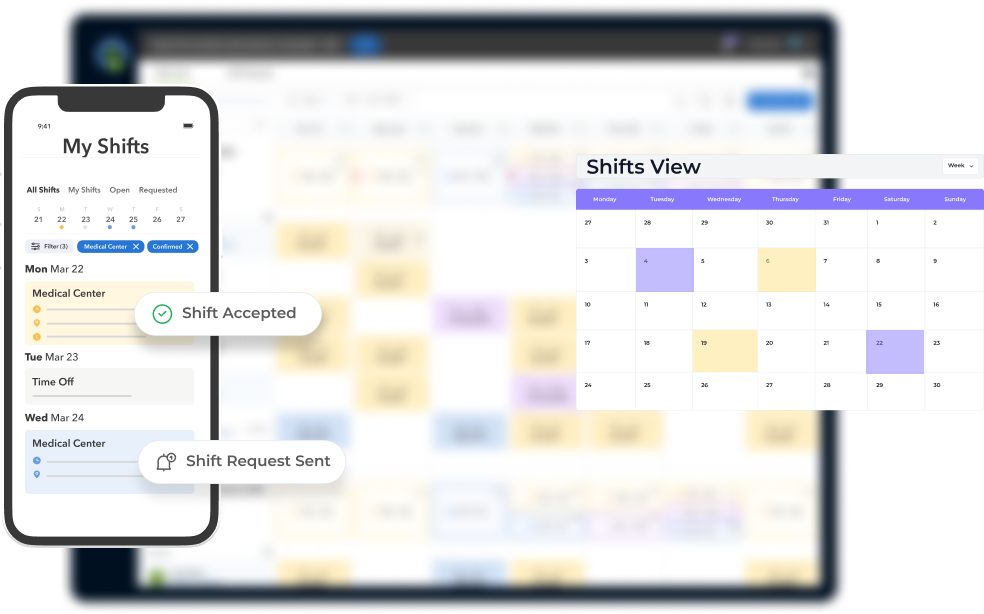
The software covers the less glamorous parts of temporary work: an order goes out, a worker is matched, credentials are checked, compliance is recorded, and an invoice is eventually paid. A dashboard can show managers which labor they used and what it cost. Carolyn Doyle, who leads FlexStaff, put the benefit plainly: “Our technology partner Prolucent has given us a single platform that manages our internal and external agency in one space.” The sentence is less exciting than a claim to reinvent staffing. It is also more useful.

In October 2024, Northwell Holdings, the health system's investment arm, invested in Prolucent in an extension of its Series A financing. Customer becoming investor is stronger evidence of a relationship than a testimonial alone. It is not a disclosed return-on-investment calculation. Prolucent has not published a contract price or a Northwell savings figure that isolates its own contribution, and Northwell's internal staffing operation predates it by nearly a decade.
A job board grew a back office
LiquidCompass is now a suite. Its Talent Digital Front Door upgrades a hospital's career site and job search, distributes openings and engages applicants while connecting to an existing applicant tracking system. The Flexible Workforce Platform, also called VMS+, manages internal pools and external contingent labor. Market Console supplies employment data and benchmarks. Prolucent offers vendor-neutral managed services and consulting around the technology.
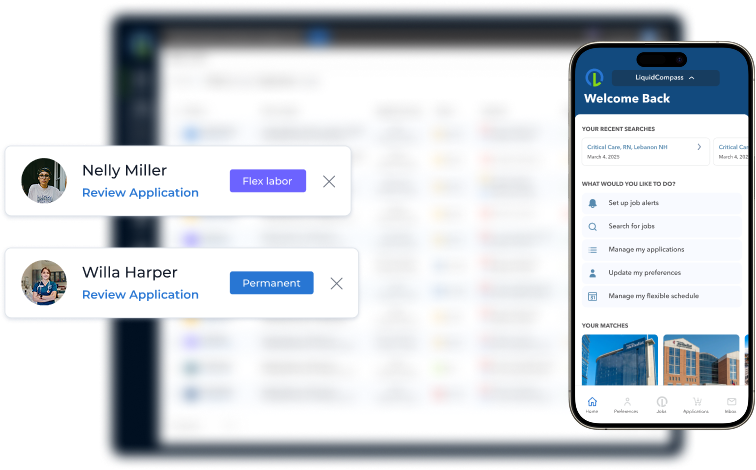
This collection gives Prolucent a place between recruiting software and workforce management. It is also why integration matters. The company says its tools connect to existing applicant tracking, scheduling and workforce systems; its 2023 partnership with UKG was designed to move schedule and worker data into LiquidCompass workflows. For a hospital that already bought a major HR system, the appeal is improving the missing handoffs without replacing the whole stack.
Houston Methodist provides another concrete test. In 2024 it chose Prolucent's VMS+ and vendor-neutral managed services for a systemwide program covering eight hospitals and clinics. The announced design put internal and external flexible labor on one platform. Dartmouth Health is cited by Prolucent for recruiting and workforce work. These are named health-system relationships, not a public count of all customers or proof that every implementation follows the same pattern.
The price is a conversation
Prolucent sells enterprise software and managed workforce services to healthcare organizations. Its website invites buyers to request a demo and does not post a price list. That leaves the direct answer to “what did it cost?” with the buyer's contract. An honest comparison would add software fees, implementation work and managed-service charges, then set them against agency spending, internal pool utilization, vacancy time and administrative labor. A cheap subscription can be costly if orders still run through spreadsheets; an expensive deployment can pay for itself if it changes who fills the shifts. Neither result is automatic.
The company raised an $11.5 million Series A in 2021, followed by a reported $4 million investment from A1 Health Ventures in 2023 and Northwell's undisclosed strategic investment in 2024. In May 2025, Staci Roberts became CEO. Springer stayed on the board as an adviser. The leadership change arrived after Prolucent had moved well beyond its initial marketplace acquisition and into large health-system operations.
What another hospital can borrow
The reusable idea is more modest than buying a platform: draw the whole path from a vacancy to an accepted shift, including the point where an internal worker could have been considered. Ask whether internal pools, outside suppliers and permanent recruiting share any data. Make the next choice visible to a manager before the urgent phone call goes out. Then measure fill time, the share of shifts covered internally, agency rates and compliance exceptions over time.
There are conditions. A hospital with no internal flexible pool has little to prioritize. A weak credential file or stale schedule can make a beautiful dashboard misleading. And no software settles the harder choices about pay, flexibility and whether workers actually want the shifts on offer. Prolucent's thesis works best when management is prepared to change the staffing rules as well as the screen. The wit of it is that the expensive part of labor often starts with something ordinary: failing to see the people you already have.