If your working day involves two versions of a services agreement, seventeen tracked comments, and a partner asking whether the indemnity is “market,” Spellbook has designed its pitch around your desk. The software sits inside Microsoft Word and Google Docs, reads the contract already open, and offers a first pass: issues, redlines, missing clauses, summaries, and answers tied back to source text. Its newer Associate workspace handles several documents at once. The point is practical. Lawyers can stay close to the file instead of hauling confidential language through a general chatbot and repairing the formatting afterward.
That makes Spellbook a practical option for commercial lawyers who spend real hours drafting and reviewing contracts: solos without a junior bench, boutiques trying to keep fees sensible, and in-house teams with more deals than hands. Litigators seeking case-law research should look elsewhere first. Legal operations teams wanting a mature, deeply configured contract lifecycle system should compare it with Ironclad and similar platforms. Spellbook fits when the job begins, “Open this agreement and tell me what needs work.”
The sharp end of the wedge was Word
The company began as Rally in 2018 or 2019, depending on which company chronology you use. The founding trio was computer engineer Scott Stevenson, lawyer Daniel Di Maria, and experience designer Matt Mayers. Stevenson has told a memorable origin story: his earlier musical-instrument startup spent roughly half a small angel round on incorporation, shares, and a design patent before shipping a product. Di Maria, meanwhile, knew the practitioner’s half of the annoyance: long days splicing and revising documents in Word.
Rally initially built document automation. The team then treated large language models as a way to assist the more bespoke work that templates could not cover. Spellbook launched in September 2022, before ChatGPT made generative AI dinner-table conversation. According to Stevenson’s 2024 podcast interview, it began as an idea for generating leads for Rally. Customers preferred the side project. Rally adopted the Spellbook name in 2023.
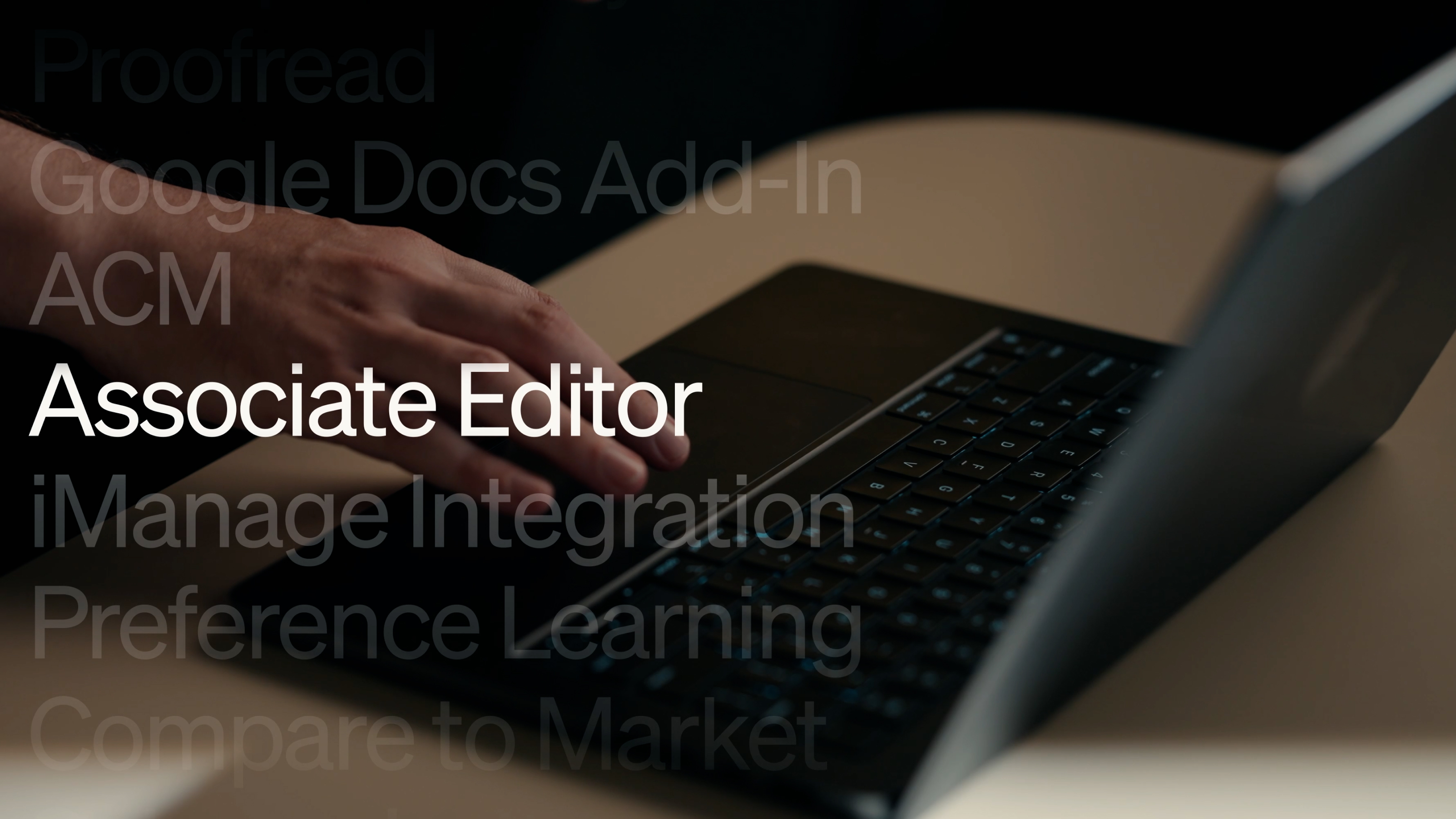
Its early restraint was a product decision, not a lack of ambition. Contracts are revision-heavy. A lawyer usually starts from a precedent and needs to preserve defined terms, numbering, tables, comments, and the evidence of every change. Spellbook’s GPT-5 announcement even dwelled on “surgical” edits: changing only the necessary words instead of striking and re-adding a whole paragraph. That dull-sounding detail is exactly where trust is won.
“I still review everything.”A lawyer describing their Spellbook workflow on Reddit
What you can actually hand it
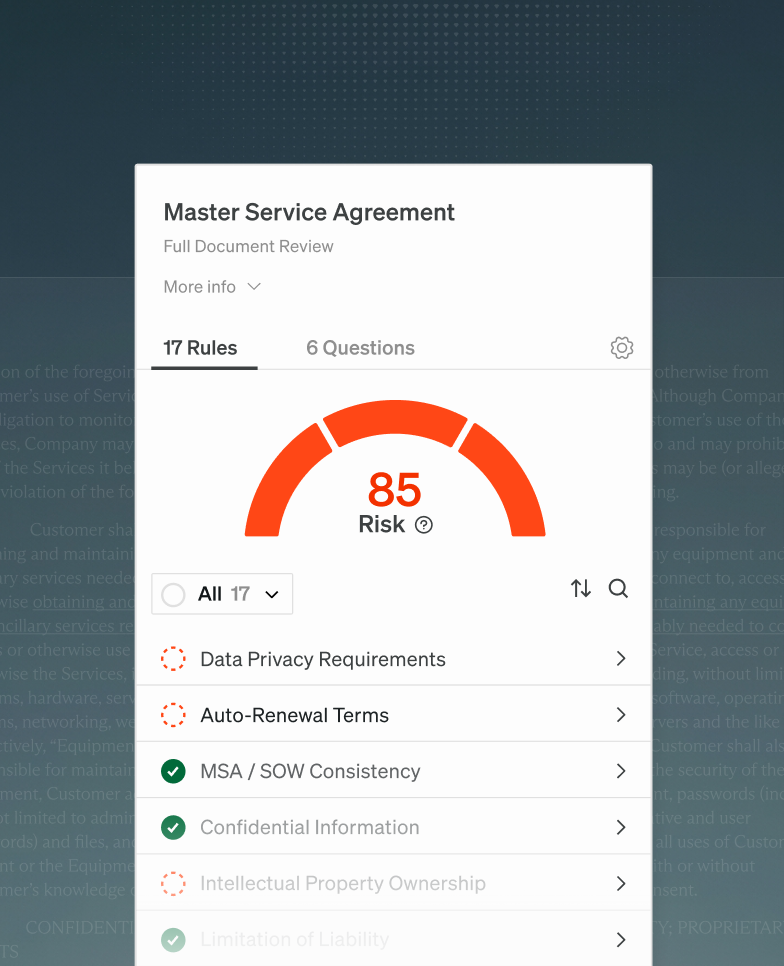
Review scans from the chosen party’s perspective, flags risk, and proposes revisions. A lighter pass can catch proofreading issues; a custom review can follow specific instructions. Playbooks make the process institutional: rules, fallback positions, questions, and preferred language can travel from one matter to the next. Each suggestion remains something a lawyer can edit, regenerate, accept, or reject.
Draft creates a clause or a full document and can pull precedent language from a private Library. Ask answers questions about the open text, highlighted text, uploaded references, the firm’s library, the web, or curated legal sources. The useful bit is citation behavior: numbered links take the user to the passage behind an answer. A citation proves where the system looked. It does not prove the legal conclusion is right.
Compare to Market is Spellbook’s attempt to answer the partner’s favorite question with data. Its 2026 State of Contracts report drew anonymous aggregate statistics from hundreds of thousands of agreements and catalogued more than 270 clause benchmarks across 13 agreement types. In the product, market comparisons can add industry, geography, and agreement context to a negotiation. That is more defensible than “this feels aggressive,” though buyers should ask precisely how relevant comparison sets are chosen.
Associate, launched in 2024, broadens the unit of work from one document to a matter. It can revise a financing package from a term sheet, assemble employment documents, cross-check a document set, or inspect a data room under supervision. In August 2026, Spellbook added a document editor inside Associate, so users can review comments, accept redlines, and make manual corrections without bouncing the file back to Word.
| Need | Start here | What to verify in a pilot |
|---|---|---|
| Routine counterparty paper | Review + Playbook | Missed issues, noisy flags, party perspective, tracked-change cleanliness |
| Clause or first draft | Draft + Library | Defined-term discipline, house style, citations, invented assumptions |
| Several related documents | Associate | Cross-document consistency, tables, schedules, and completeness |
| Negotiation position | Compare to Market | Sample size, jurisdiction, deal type, and relevance of the benchmark |
| Contract operations | ACM | Intake coverage, approvals, repository migration, alerts, and integrations |
The bigger bet: contracts that keep working
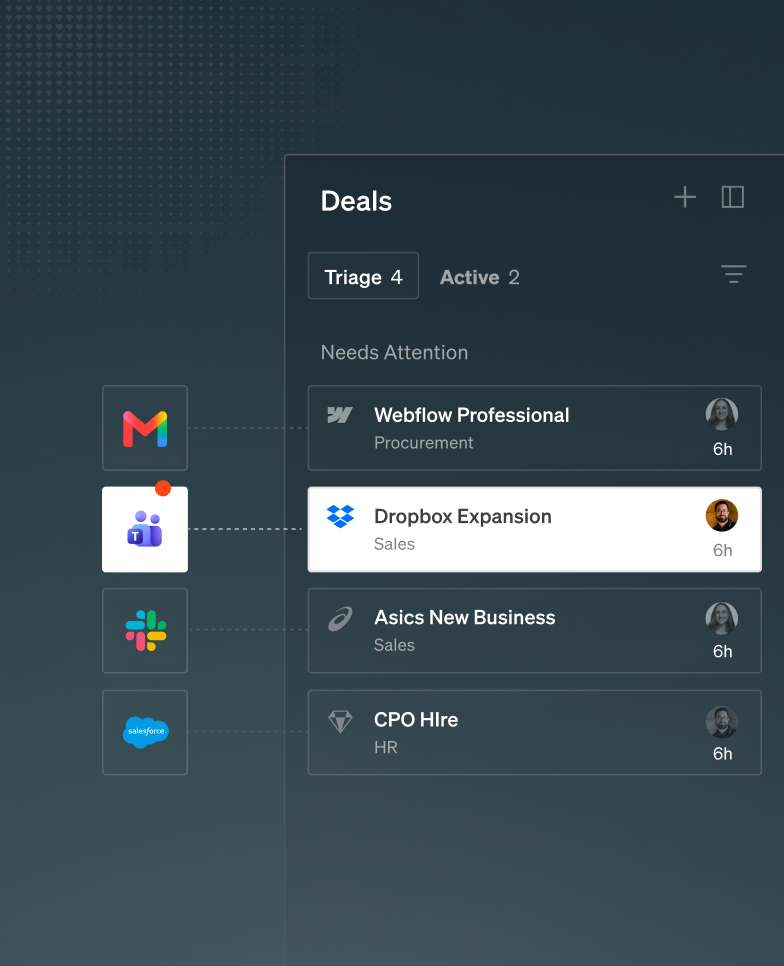
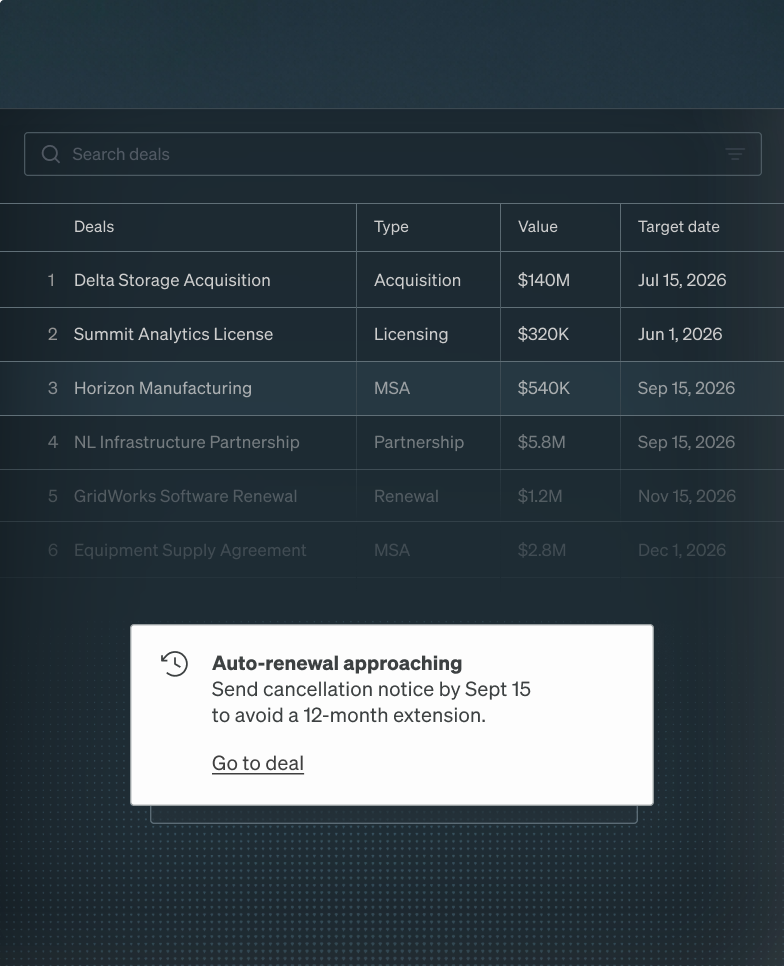
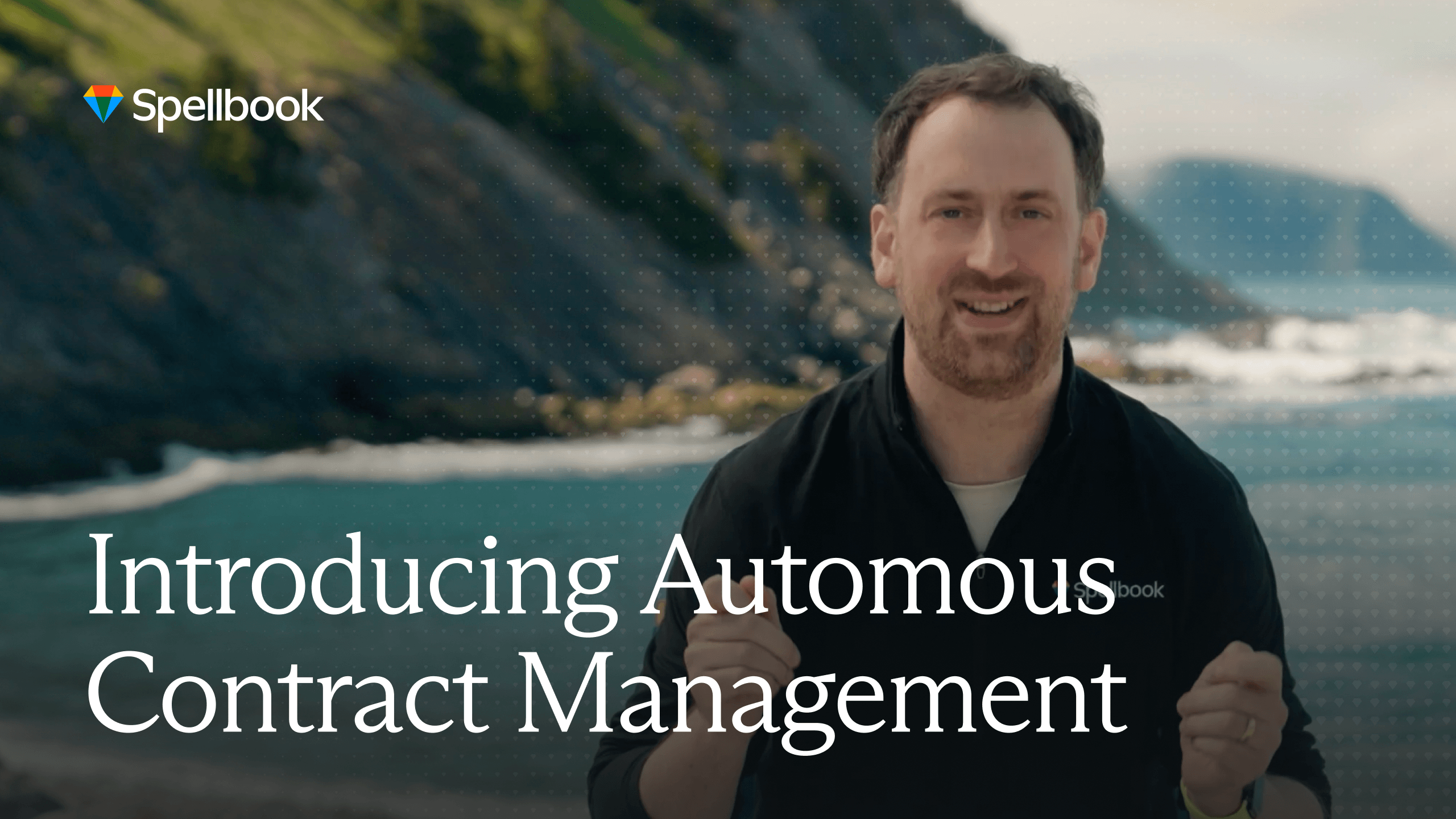
In June 2026, Spellbook introduced Autonomous Contract Management, or ACM. The pitch extends from drafting into intake, negotiation, storage, search, renewals, and new-risk monitoring. Contracts can arrive from email, Slack, Salesforce, and other channels; receive an automated first-pass diagnostic; move through a deal workspace; and remain searchable after signature. Spellbook began rolling ACM out to selected teams, so buyers should treat it as a developing product rather than assume every promised workflow is already standard.
The direction changes the competitive set. Harvey and Legora offer broad legal AI workspaces. CoCounsel and Lexis+ AI carry heavyweight research pedigrees. LegalOn and Ivo focus hard on contract review. Ironclad is an established CLM. Luminance works across large document collections and diligence. Spellbook’s distinction has been contract work close to the document, but ACM asks it to become the operating layer around that document too.
Editorial fit check · ten is a close match
About those bars: They are our qualitative buyer-fit judgments, not laboratory scores. Spellbook does not publish standard dollar pricing, and it should not be selected as a substitute for a primary-law research service without a separate evaluation.
Customers like the time. Review sites disagree.
Spellbook’s own customer stories contain concrete workflows. Dropbox says a roughly ten-person commercial legal group handles more than 200 contracts in a typical month. Team members describe building an NDA playbook from an uploaded form in minutes, cutting table-formatting jobs from 15 or 20 minutes to seconds, and keeping unfamiliar matters in-house. John Walker, who leads the group, says Spellbook helped the team reach industry insights on an expedited agreement instead of calling outside counsel.
Third-party sentiment is messier, which is useful. G2 showed a 4.7 out of 5 average across 29 reviews when checked for this guide. A June 2026 verified legal-services reviewer praised its ability to turn thoughts into a client-ready outline and improve document review. On Reddit, one law-firm buyer returned to say their firm “LOVES it,” while stressing that every redline still gets accepted or rejected by a person.
Trustpilot told a colder story: 2.7 out of 5 from ten reviews, with complaints about output quality and support alongside older praise. The samples are small, the collection methods differ, and neither score predicts your documents. Together they do suggest the sane purchasing method: run a controlled trial on familiar material, score the misses, and involve the skeptical reviewer early.
Price, privacy, and the pilot that matters
Current pricing is custom and based on licensed team members. The public page offers a seven-day trial, possible extended trials for larger organizations, and free access through academic partnerships, but no standard dollar amounts. Lack of a sticker price adds procurement friction. Ask for the complete annual cost, minimum seats, included Associate or ACM usage, implementation help, renewal terms, model limits, and charges for integrations or playbook services.
On security, Spellbook says it is SOC 2 Type II certified, encrypts data in transit and at rest, and has zero-data-retention agreements with OpenAI and Anthropic. It says customer contracts are not used to train those providers’ models. The iManage connector carries existing permissions and ethical walls into Spellbook. Those are meaningful controls, but a legal buyer still needs the current data-processing agreement, subprocessors, hosting regions, retention settings, incident terms, and access controls reviewed against client obligations.
For the pilot, choose five ugly files: a clean house template, heavily negotiated counterparty paper, a long agreement with tables and schedules, a document outside the team’s usual industry, and a related set with deliberate inconsistencies. Build one small playbook. Record issue recall, false alarms, redline quality, formatting damage, time to usable draft, and how often reviewers cannot trace an answer. Compare the same tasks with your current process and one serious competitor. Do not use a polished vendor demo file as evidence.
The verdict
Spellbook earns a trial for transactional teams whose work lives in contracts, especially when Word or Google Docs is the center of gravity and institutional playbooks are waiting to escape somebody’s head. Its document-native editing, cited answers, and multi-document workflow form a coherent kit. Buyers who mainly need case research, transparent self-serve pricing, or a proven enterprise CLM should compare wider. The final decision belongs to your own redlines, measured on your own worst documents, with a lawyer checking every result.