SiteGPT is for the company whose customers keep asking questions answered three clicks away. Feed it a website, sitemap, help center, video transcript, cloud drive, or stack of documents, and it turns that material into a chatbot people can question in plain language. The pitch sounds almost too tidy. The useful part is not the chat bubble. It is the loop behind it: answer routine questions, reveal what visitors cannot find, collect the promising ones, and get out of a human's way when the machine reaches its limit.
That makes the best buyer easy to recognize. A small SaaS support team with a thick knowledge base is a fit. So is an online store with repetitive pre-sale questions, an agency managing bots for clients, or a service business that loses leads after hours. A three-page portfolio with six chats a month should keep its wallet closed. SiteGPT begins at $59 per month when billed monthly, so convenience alone is a weak reason to subscribe. The bot needs to save measurable support time, catch revenue, or teach you something useful about confused visitors.
A weekend project catches a very large wave
Founder Bhanu Teja Pachipulusu was already running Feather, a product that turns Notion pages into blogs, when the early-2023 generative AI rush arrived. The first thought was narrow: give Feather customers a chatbot for their blogs. Then came the useful widening of the lens. If a bot could read a blog, it could read any site. His brother and eventual co-founder Sai Dheeraj Pachipulusu has described SiteGPT as a weekend project born from that switch. The name required no brainstorming retreat. It meant GPT for your site.
The timing was indecently good. Pachipulusu told Mixergy that the launch reached $10,000 in monthly recurring revenue within a month. His public account says the launch post spread on X, Hacker News picked it up, and Product Hunt named it product of the day. There was also a hangover: early curiosity brought churn along with customers. That history matters because the current product looks like the work that followed the confetti. SiteGPT has grown from URL-in, chatbot-out novelty into a support platform with an inbox, analytics, integrations, content synchronization, security paperwork, and developer interfaces.
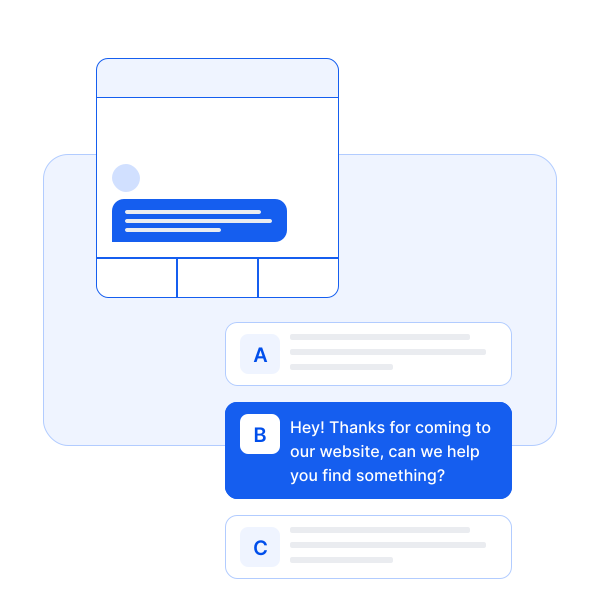
What actually happens after you paste the URL
Feed it
Add a page, sitemap, YouTube source, file, or connected content library.
Shape it
Set the personality, prompts, appearance, lead form, and boundaries.
Watch it
Embed the widget, inspect conversations, patch gaps, and take over when needed.
Training sources are unusually broad for a product that still sells simplicity. SiteGPT can crawl links and sitemaps, use YouTube transcripts, accept common text-based formats, and connect to Notion, Google Drive, Dropbox, OneDrive, Box, and GitHub. Training usually takes a few minutes, according to its documentation. One billing wrinkle deserves a highlighter: a “page” means 2,500 cleaned characters of source material. A long URL can therefore consume several pages of quota, while a short one may use less than the word suggests.
Once trained, the bot can live behind a direct link or an embedded widget. You can give visitors quick prompts, make different starters appear on different paths, hide the widget from checkout, and restrict copied embed code to approved domains. Automatic refresh runs monthly on Growth, weekly on Scale, and daily on Enterprise; every plan permits manual refresh. This is operationally important. A beautifully trained bot that quotes last quarter's return policy is a small, articulate liability.
The chatbot is the front door. The real product is the maintenance loop behind it.YesPress verdict
The handoff is where grown-up software begins
Support automation tends to be demonstrated with polite questions that have neat answers. Real customers arrive with broken invoices, vague screenshots, and the emotional temperature of a kettle. SiteGPT's stronger idea is to admit this. Visitors can escalate, teammates can take over a live thread, and the AI stays quiet until a human releases it. Marking a conversation resolved closes it across the widget, integrations, and APIs. The transcript remains the shared memory rather than forcing the customer to begin again.
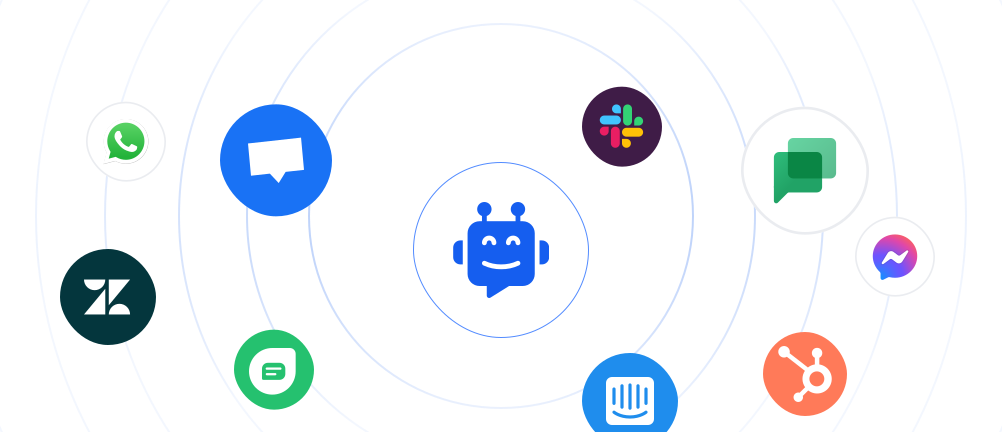
The inbox is also available through an iOS app with push notifications. Slack, Zendesk, Crisp, Messenger, Google Chat, Freshdesk Messaging, Zoho SalesIQ, and Zapier extend the workflow. Zapier exposes events for new messages, leads, and escalations, which can become CRM records, support tickets, alerts, or follow-up tasks. Scale adds SiteGPT as an AI agent inside Zendesk Messaging. For a buyer, these pipes may matter more than minor differences in answer style. A bot that cannot reach the system where the team already works creates a second queue, and second queues become digital cupboards.
The buyer's map: useful, optional, expensive
| Need | SiteGPT answer | Buyer's note |
|---|---|---|
| Repeat support questions | Content-trained answers with source-grounded material | Strong fit when the documentation is current and specific |
| Sales after hours | Lead forms, conversational qualification, webhooks | Measure qualified leads, not raw chat count |
| Human safety net | Escalation, takeover, release, resolve, shared transcript | Test routing and response ownership before launch |
| Several client brands | Agency program, white label, resource reassignment | Agency program starts with a $500 monthly commitment |
| Custom automation | REST API, SDKs, CLI, MCP, webhooks | API access starts on Growth |
Pricing divides cleanly by operational ambition. Starter is $59 monthly for one bot, one member, 1,000 content pages, and up to 4,000 GPT-4.1-mini messages or 400 GPT-4.1 messages. Growth is $129 for two bots, four members, integrations, API access, advanced analytics, and monthly auto-refresh. Scale is $429 for three bots, ten members, weekly refresh, daily sitemap scans, webhooks, AI conversation insights, and the Zendesk agent. Enterprise is quoted. Annual billing lowers the effective monthly price, while removing SiteGPT branding and buying another 5,000-message pack each add $59 per month.
The model arithmetic can surprise people. SiteGPT currently lists GPT-4.1-mini and GPT-4.1, with the full model counted at ten times the cost per message. A “message” includes the visitor's question and the AI's response. Buyers can mix models, which is welcome, but should model a real month rather than stare at the largest quota number. Ten thousand mini messages and one thousand full-model messages describe the same Growth allowance at opposite ends of the slider.
Reviews say “easy”; reality asks “maintained?”
The official site displays a 4.8 out of 5 G2 rating. Product Hunt's product page shows 4.1 from 12 reviews and summarizes praise for setup, accurate answers, brand customization, and integrations. Its criticism is more instructive. One early reviewer said visitors ignored the generic bot icon; another wanted a trial before trusting the bot with private material. SiteGPT has since added extensive appearance controls, auto-open behavior, and a seven-day trial, although that trial requires a card. Product Hunt's summary also flags reports involving billing, account access, and support handoff. Those reports are a reason to test the full path, not merely the demo answer box.
A responsible trial should be mildly cruel. Give the bot five awkward questions copied from real tickets. Include an answer hidden in a PDF, one policy that changed recently, an ambiguous pricing question, a request that should trigger a person, and a question your documentation genuinely does not answer. Check the citations or source behavior, inspect the transcript, take over from a phone, and verify the lead or ticket arrives in its destination. Then update the source and time the refresh. A smooth “What do you sell?” answer proves very little.
A chatbot that now speaks fluent developer
SiteGPT's August 2026 release pushed well beyond the no-code audience. The company shipped official TypeScript, Python, and Go SDKs for API v2, expanded its MCP server from three tools to seventeen, added a command-line interface, exposed analytics programmatically, and published an A2A endpoint that other agents can query. Every public marketing page now has a markdown twin for machine readers. AgentID sign-in even lets an AI agent create a regular SiteGPT account with a verified identity.
This agent-friendly layer is ambitious, perhaps more ambitious than many support managers presently need. It does give technical teams clean exits from the dashboard. SiteGPT's publicly shared stack includes React, Remix, Tailwind CSS, Cloudflare infrastructure, Vercel, Prisma with PostgreSQL, Pinecone, Upstash, SourceSync, Firecrawl, Paddle, PostHog, and Mintlify. The architecture is less relevant than the behavior it enables: structured errors, guarded deletion, scoped access, and multiple ways to automate the same customer-support system.
Who should buy it?
Choose SiteGPT when repeated questions already cost money, your answers live in maintainable source material, and your team values a clean human handoff. Trial it carefully if integrations, multilingual support, or agent-operated workflows are central. Skip it for a low-traffic brochure site, a messy knowledge base nobody owns, or any business hoping the bot will invent support policy on the fly.
The most useful SiteGPT dashboard may eventually be the one that embarrasses your documentation. Unanswered questions, repeated topics, and abandoned conversations form a blunt editorial brief: customers cannot find this, do not understand that, and keep asking about the other thing. Fixing those gaps improves the bot and the website at once. That is a healthier promise than “replace your support team,” and it fits what SiteGPT has become. The machine handles the known material. People keep the difficult cases, the judgment calls, and the kettle.