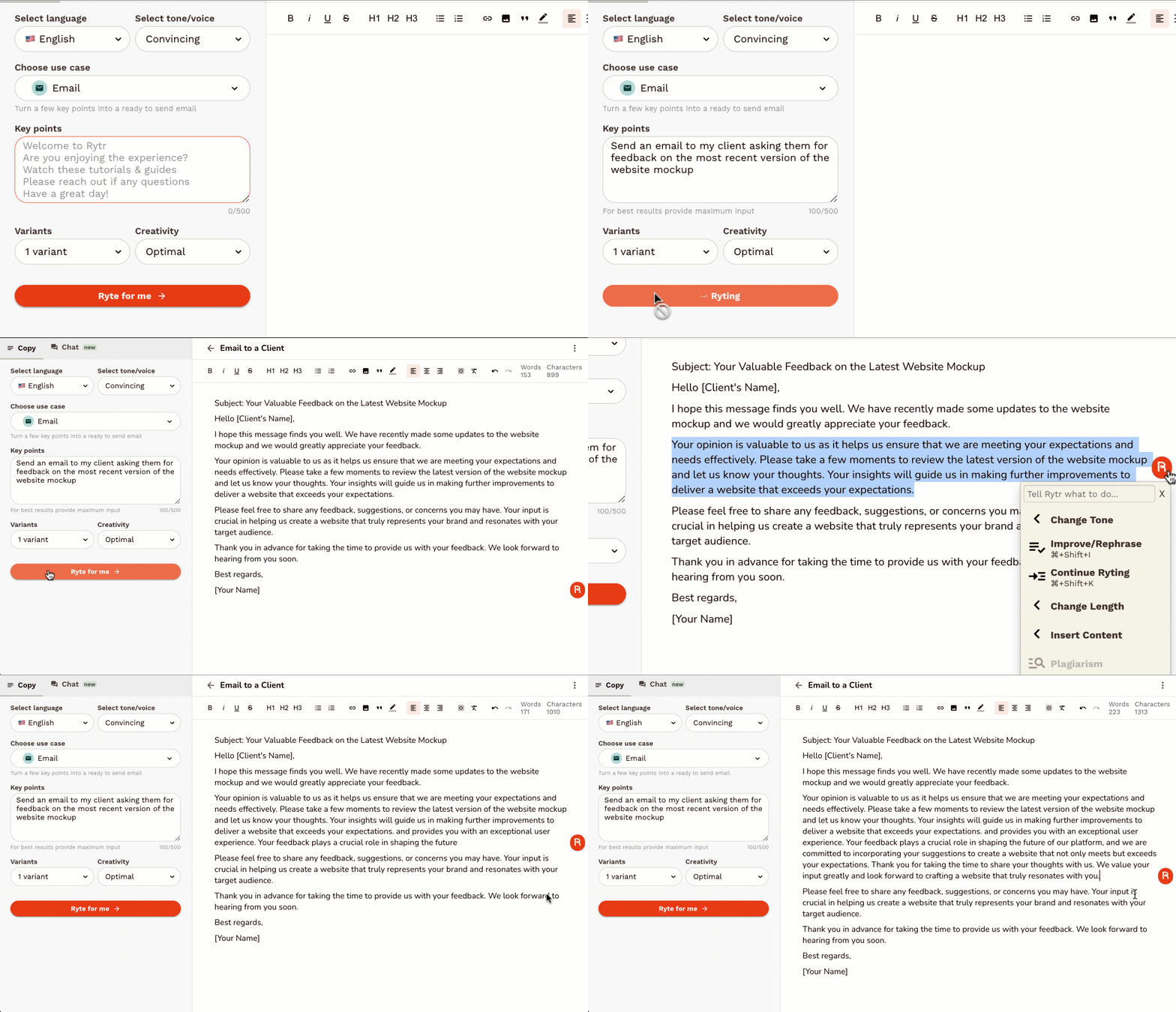
Rytr is for the person staring at a white rectangle at 9:04 a.m., with a product launch at noon and precisely zero usable subject lines. It does not arrive carrying a grand theory of creativity. It arrives with a dropdown. Pick “email,” choose a tone, add context, ask for variants, and the cursor finally has company. That modest promise explains both Rytr’s appeal and its limits. It is a fast drafting appliance for repeatable writing jobs, not a substitute for reporting, taste, or knowing why anyone should care.
The fit is sharpest for solo founders, ecommerce operators, freelancers, students, social managers, and small marketing teams. If your week contains thirty captions, ten product blurbs, six reply emails, and a homepage button that still says “Learn More,” Rytr can turn the pile into editable clay. If your work requires current research, traceable sources, shared brand knowledge, legal precision, or a 5,000-word article ready to publish, its simplicity becomes a ceiling.
The original job was momentum
Abhimanyu “Abhi” Godara came to Rytr after strategy consulting, early-stage investing, and years around startups. In a 2023 interview, he described content production as a recurring pain for small teams: they needed marketing copy but often lacked the budget, time, or specialist skill to make it. GPT-3 made a focused writing product possible. Work began in March 2021, and Rytr launched publicly the next month.
The founding decision that still shapes the product was to hide prompt engineering behind forms. Instead of demanding that a beginner become an amateur model whisperer, Rytr asks what you are writing, for whom, in which tone, and with what raw material. It pre-formats the request, post-formats the response, and returns a few options. In 2022, after the service had passed two million users, Copysmith acquired Rytr and SEO writing product Frase. Rytr now sits in Copysmith’s portfolio beside Frase and ecommerce copy platform Describely.
“It’s not meant to write novels end to end.”Abhi Godara, describing AI’s useful boundaries in a 2023 interview
That sentence is unusually useful product guidance. Rytr works better as an accelerator than an author. Ask it for five openings, three tones, a shorter version, or a clean bridge between two thoughts. Give it concrete nouns, customer language, constraints, and facts you already trust. Then assemble the good fragments. A vague prompt gets you the linguistic equivalent of hotel art: tidy, familiar, and hard to remember.
What the little machine actually does
Templates with bumpers
Email, AIDA copy, captions, calls to action, SEO titles, paragraphs, product descriptions, story ideas, and dozens more. The structure reduces setup time.
Tools at the selection
Highlight text to continue, expand, shorten, improve, rephrase, or autocomplete it. This is the part people can fold into an existing draft.
A sample becomes a tone
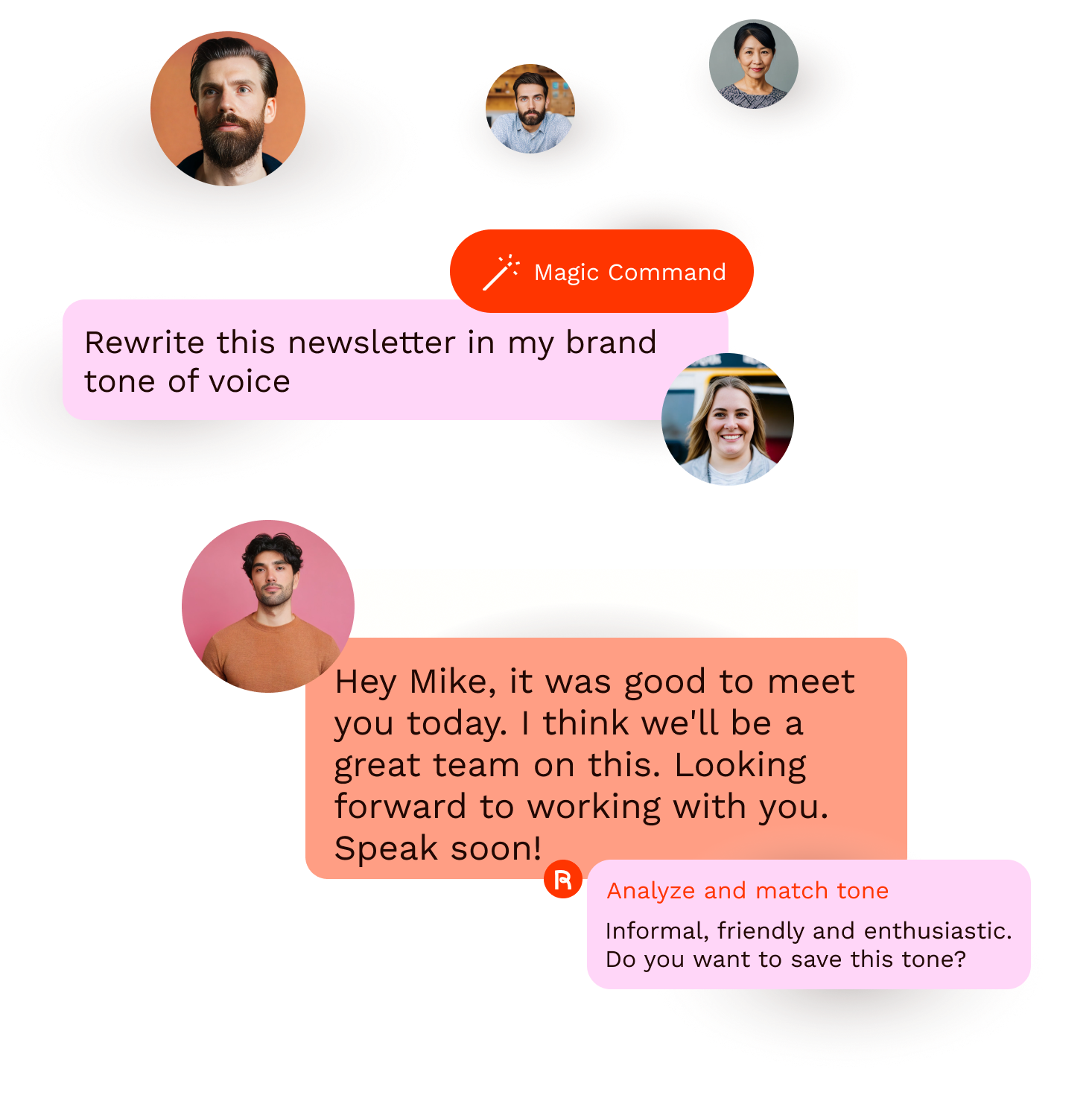
My Voice studies writing you provide and creates a reusable style. Unlimited includes one personal voice; Premium includes several.
The Chrome sidekick
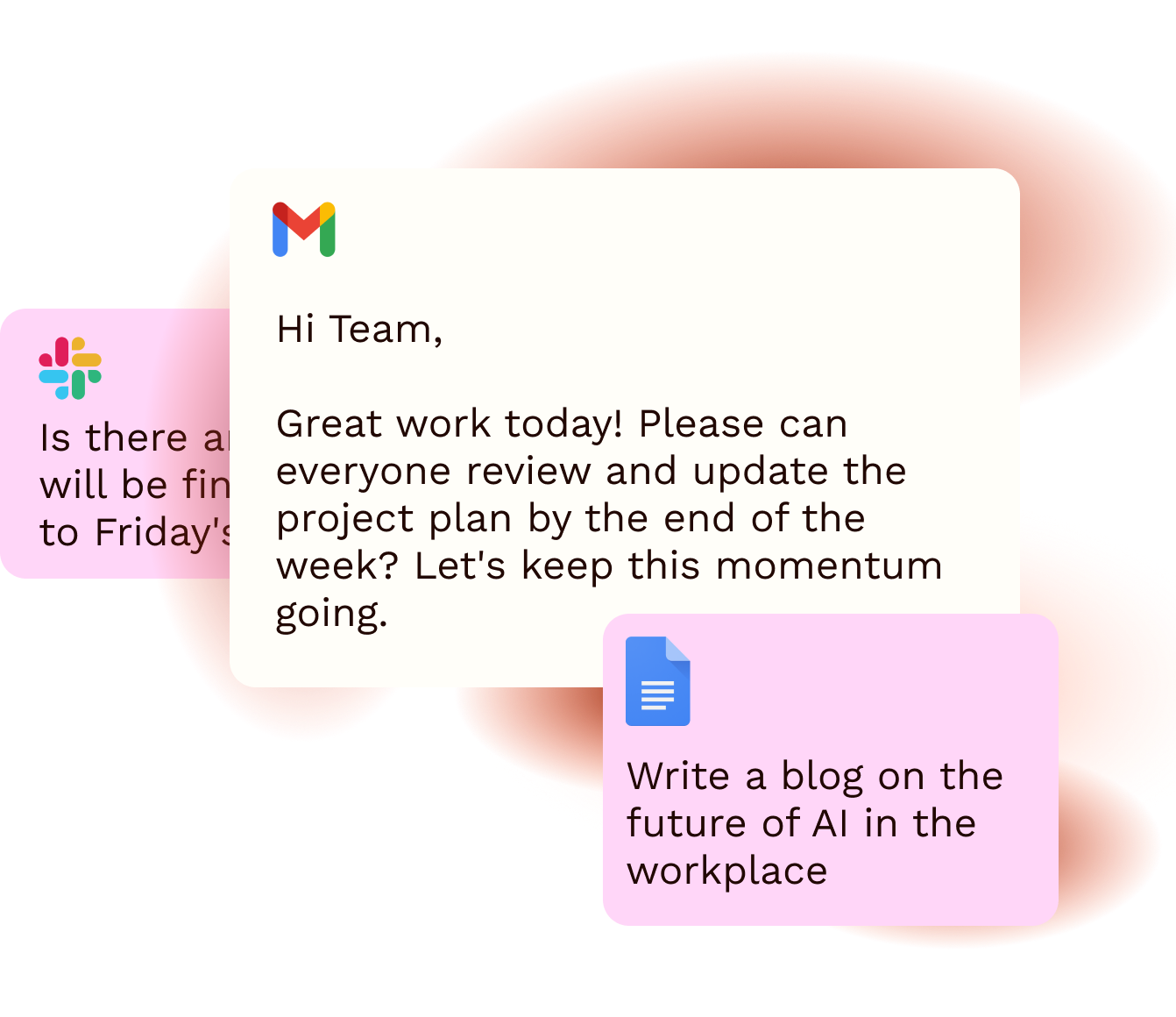
The extension brings generation and editing into browser text fields, useful when a reply or post is too small to justify opening another workspace.
Copyscape inside
Paid users can run plagiarism checks without leaving the editor. It detects matching copy; it does not certify accuracy, originality of thought, or good judgment.
An API for your own workflow
Developers can add generation with voice, tone, and language controls. Rytr advertises 10,000 starter credits and pay-as-you-go pricing.
Language access needs a footnote. The current pricing table says Premium supports more than 35 languages, while current feature pages use “30+” and “40+” in different places. Free and Unlimited accounts choose one language, with the help center saying that choice can be changed monthly; Premium opens the broader set. The exact count matters less than checking that your target language is available before paying.
A price ladder without a board meeting
Rytr’s cleanest competitive argument is the invoice. The free plan gives 10,000 characters each month, 40-plus use cases, 20-plus tones, and the Chrome extension without a credit card. That is enough for a proper audition, though “characters” disappear faster than “words.” Unlimited costs $7.50 per month when billed yearly and adds unlimited generation, one personalized voice, and 50 plagiarism checks a month. Premium is $24.16 on annual billing, aimed at freelancers juggling brands, with multiple voices, wider language access, larger inputs, and 100 checks.
| Plan | Best for | Useful limit | Watch for |
|---|---|---|---|
| Free | Testing, occasional blurbs | 10K characters/month | No voice match or plagiarism checks |
| Unlimited | One-person daily drafting | Unlimited generation; 1 voice | Only one chosen language |
| Premium | Freelancers with several clients | Multiple voices; 35+ languages | Still not a team knowledge system |
Monthly prices are higher, and annual billing is a twelve-month commitment. Read the cancellation and refund terms before upgrading. Several recent Trustpilot complaints focus less on writing quality than on renewal, refund, support, or account-deletion friction. Reviews are individual accounts, not court findings, but a sensible buyer sets a renewal reminder and tests the free tier first.
What reviewers like - and what survives the honeymoon
The broad signal is positive. G2 listed Rytr at 4.7 out of 5 from 820 reviews in July 2026, with most reviewers coming from small businesses. Users repeatedly praise quick setup, the ready-made templates, multiple variants, and the ability to get a rough draft moving. A July 2026 health-content reviewer described using it for articles, patient FAQs, emails, and social posts, while stressing that she still checks everything herself. That last habit is the difference between assistance and abdication.
Criticism is consistent too. Longer output can repeat itself, settle into generic phrasing, or introduce facts that were never supplied. A detailed 2025 Trustpilot review liked Rytr for email and short-form work but noted repetition and weak customization in longer content. On Reddit, users tend to position it as a commercial writing helper rather than an academic or specialist research tool. The reviews point to the same boundary the founder described: use Rytr to propose language, not to establish truth.
Godara discussed GPT-3 and transformer models in 2023, plus Rytr’s own prompting and formatting layer. Rytr does not currently publish the provider or version of its foundation model. Anyone naming a “latest Rytr model” is guessing unless the company documents it.
The awkward chapter in the clips file
In September 2024, the U.S. Federal Trade Commission alleged that Rytr’s former testimonial-and-review generator could produce detailed consumer reviews containing material claims absent from a user’s input. A final consent order followed in December 2024. Two commissioners dissented. Then the record changed: on December 22, 2025, the FTC reopened the matter and set the order aside, saying the complaint did not satisfy the legal requirements of the FTC Act and that the order burdened AI innovation. Both events belong in the story; presenting only one leaves readers with a frozen headline instead of the current status.
The practical lesson remains wonderfully dull: never publish a first-person product experience you did not have. A plagiarism checker cannot detect invented experience, and fluent sentences do not become evidence through good punctuation. Rytr’s terms place responsibility for generated content on the user. Keep facts in the prompt, verify the result, and treat claims involving health, law, finance, safety, or real people as a separate research task.
Rytr or somebody else?
| Need | Start here | Why |
|---|---|---|
| Cheap short-form variants | Rytr | Low annual price, templates, tones, fast editing |
| Open-ended research and conversation | ChatGPT or Claude | Broader reasoning, files, and research workflows |
| Enterprise brand operations | Jasper or Copy.ai | More governance, knowledge, and team workflow |
| Search-led content briefs | Frase or Writesonic | SERP and optimization features are central |
| Fiction craft | Sudowrite | Purpose-built story and narrative controls |
| Sentence-level polish | Grammarly or QuillBot | Editing is the primary experience |
Rytr wins when the task is common, the stakes are modest, and the desired output is short enough to inspect at a glance. It loses when a team needs sources, permissions, a shared product brain, workflow automation across departments, or confidence that every claim came from somewhere real. The API creates room for custom workflows, but buyers should price and test that separately from the subscription plans.
The five-minute trial that tells you plenty
Bring three real tasks to the free account. First, feed it an email you already wrote and ask for shorter versions in two tones. Second, paste a product description with verified facts and request five social captions. Third, give it a paragraph in your natural voice and test the improve, expand, and rephrase controls. Score the results on factual obedience, edit distance, voice, and repetition. Do not ask whether the output is “good.” Ask how many minutes it saves after correction.
If the drafts need only trimming, Unlimited is easy to justify for a regular solo user. If you switch among client voices or languages, Premium is the relevant trial. If you spend longer repairing generic copy than writing from scratch, walk away. There is no virtue in forcing a cheap tool into an expensive workflow.
The verdict
Rytr is a compact first-draft machine with a sensible interface and a price that makes experimentation painless. Its best feature is not a magical model; it is the reduction of a fuzzy writing task into a few answerable fields. Use it for momentum, options, and small edits. Keep research, accountability, and the final sentence for yourself.