Madgicx is for the person who opens Meta Ads Manager before breakfast, finds seven small fires, and loses the morning deciding which one deserves water. It sits above Facebook and Instagram campaigns as a second control room: reading performance, suggesting changes, helping produce the next batch of creative, launching ads, and turning results into a report that a client or founder can understand. For an e-commerce team or agency with real spend and recurring work, that is a persuasive bundle. For someone boosting two posts a month, it is a cockpit parked in a bicycle shed.
The useful question is not whether Madgicx has AI. Every marketing homepage now appears to have adopted one. The useful question is which chores disappear. Here, the list is concrete: daily account audits, budget and audience checks, creative fatigue monitoring, variation production, bulk launching, and cross-channel reporting. The operator still decides what the campaign is trying to prove. Madgicx tries to shorten the distance between noticing a problem and doing something about it.
Why this exists: Ads Manager is a job, not a tab
Co-founders Yahav Hartman and Idan Beker started Madgicx in 2018. The early pitch was a full-stack Facebook advertising platform: audience creation, automated rules, campaign management, performance analysis, and reporting. Its May 2019 Product Hunt appearance placed fifth that day. The vocabulary has changed since then. “AI audience” became “AI Marketer,” a super app became an AI ads manager, and the company now talks about a long road toward “Advertising General Intelligence.” The underlying grievance has stayed wonderfully mundane: Meta gives advertisers an enormous machine and plenty of numbers, but the work of deciding what to look at next remains exhausting.
Madgicx attacks that problem in three lanes. Optimization finds the work. The creative suite makes fresh material to test. Analytics tells the story afterward. It is strongest when those lanes feed one another: a tired creative is identified, a variation is made, the new ad is launched, and the result returns to the same reporting layer. Buying only one lane makes the all-in-one argument less compelling.
The daily loop, minus the dashboard spelunking
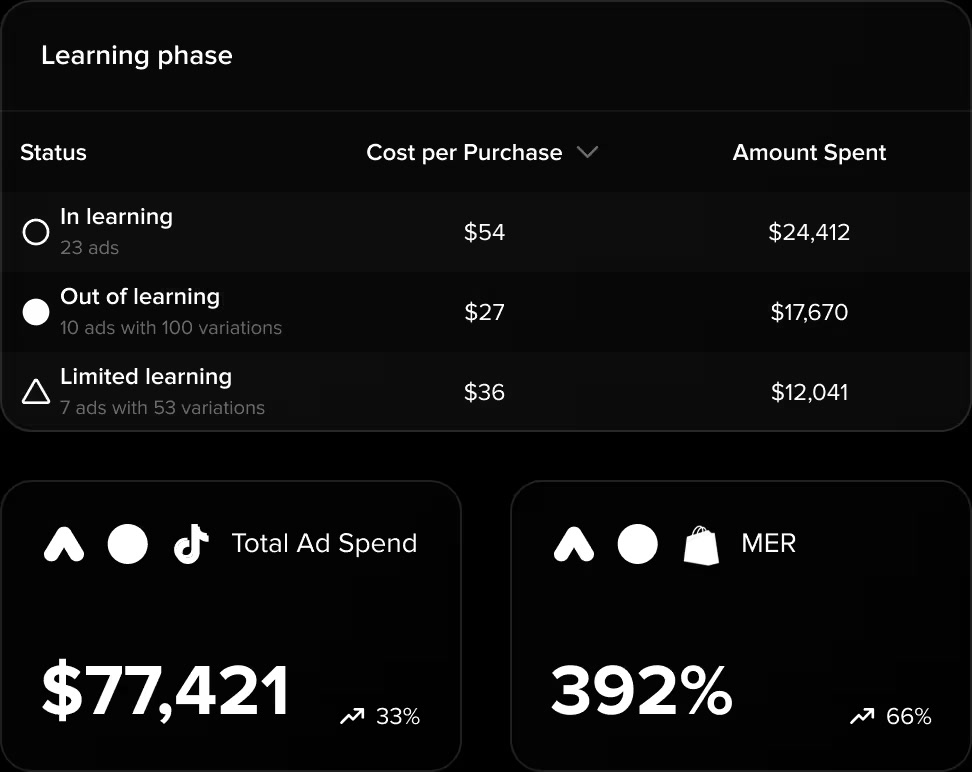
AI Marketer audits a connected Meta account each day and presents prioritized recommendations. Madgicx describes the product as transparent and approval-led: you inspect an opportunity, then implement the action you want. That is the sensible way to begin. A budget increase can be technically valid and strategically daft if inventory is late, margins changed, or a promotion ends tomorrow. Software sees the account. You see the business.
The newer trick is Madgicx MCP. MCP is a standard that lets compatible AI assistants connect to outside services. After an OAuth login, Madgicx says an assistant such as Claude or ChatGPT can pull live campaign performance, run an audit, pause an underperforming ad, adjust a budget, or rename an ad set. The interesting part is action, not chat. A natural-language report is pleasant; closing the gap between diagnosis and an approved campaign change is operationally useful. Because the connection uses Madgicx’s official API access rather than clicking through the browser, it also avoids the brittle behavior of screen-scraping agents.
Creative production gets a conveyor belt
The AI Ad Hub begins with research. Its library can be searched by industry, format, creative concept, platform, language, and aspect ratio. Teams can save examples to boards and follow brands, then generate a similar direction or start with a prompt, existing asset, or prior winner. An image editor handles overlays, object removal, repositioning, and brand assets. Finished variations can move directly into launch instead of making the usual pilgrimage from inspiration tab to design tool to downloads folder to Ads Manager.
This is less romantic than the phrase “AI Creative Director,” but more useful. Performance creative runs on volume and disciplined variation. The hub gives a small team a repeatable production line. It does not confer taste. A hundred efficient variations of a muddled proposition remain a hundred muddled ads. The best user arrives with a clear offer, brand constraints, and a testing question, then uses Madgicx to make and measure the permutations.
Reporting is broad; management is Meta-first
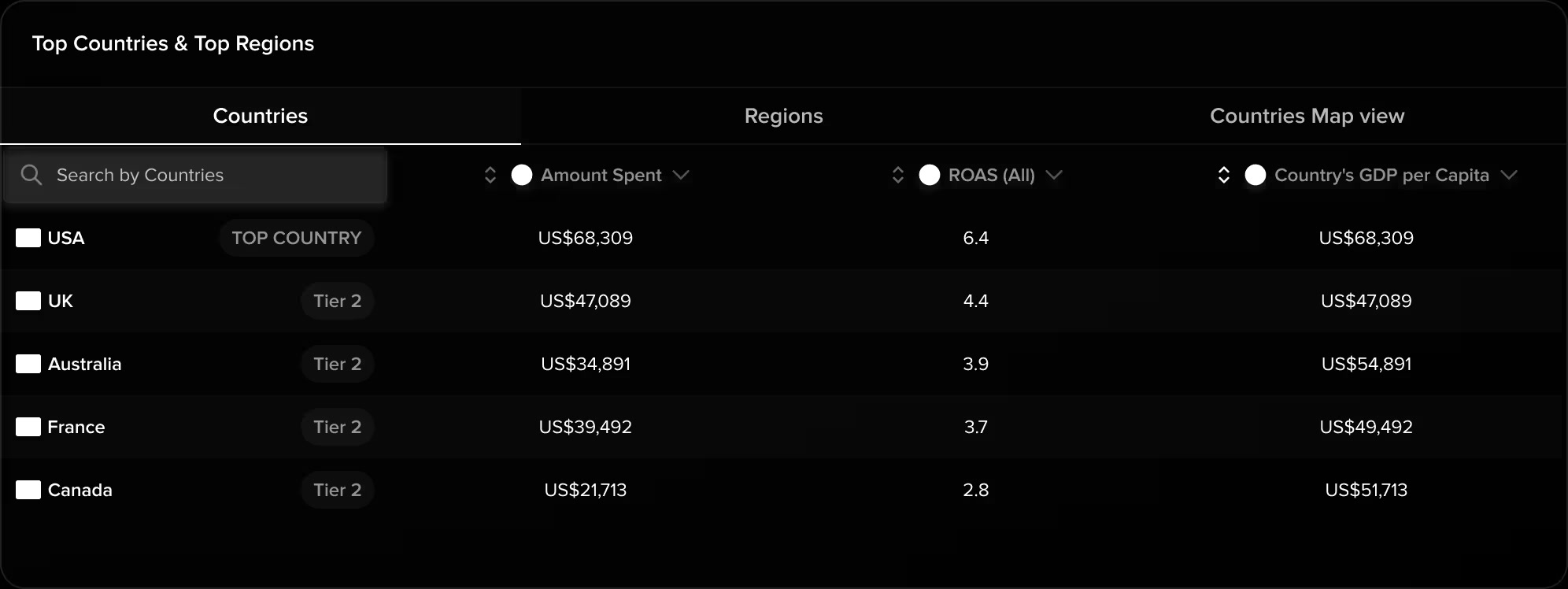
One-Click Report pulls data from Meta, Google Ads, TikTok, GA4, Shopify, and Klaviyo into live dashboards. Agencies can use templates, build custom reports with a drag-and-drop editor, share links, download results, and apply white-label presentation. The Business Dashboard adds ROAS, revenue, and blended metrics. Tracking Pro, a separate paid add-on, offers first-party server-to-server Meta conversion tracking and enhanced conversions.
One distinction prevents disappointment: broad reporting does not mean broad ad management. Madgicx’s own help material says it does not manage Google Ads. Its optimization, automation, and execution heart remains Meta. If your budget is evenly split across search, TikTok, retail media, and LinkedIn, a genuinely cross-network platform deserves a look. If Facebook and Instagram are the engine and everything else needs to appear in the same report, the arrangement makes more sense.
| Need | Madgicx fit | Also compare |
|---|---|---|
| Meta rules and optimization | Core strength: daily recommendations, automations, bulk actions | Revealbot, Smartly.io |
| Creative analytics | Integrated analysis, fatigue signals, generation and launch | Motion, Atria |
| AI creative generation | Research-to-variation workflow inside the ad platform | AdCreative.ai, Omneky, Creatify |
| E-commerce attribution | Dashboards plus optional first-party Meta tracking | Triple Whale |
| True cross-network management | Limited: reporting is broader than execution | Smartly.io or network-specific tools |
The price is a conversation, not a sticker
Madgicx advertises a seven-day trial. The flagship Pro Complete plan scales by monthly Meta ad spend, but the main pricing page currently tells visitors to see the exact number inside the app. Its own public material is inconsistent: an Academy plan guide says prices start at $99 per month, while newer product and MCP pages cite entry access from $45 per month. Tracking Pro is listed at $49 per month for each connected account. Treat every public starting price as a lead, not a quote. The checkout screen is the source that matters for your account, tier, billing term, and add-ons.
That warning has teeth. G2’s record is strong, with a 4.6 out of 5 score from 210 reviews at the time of checking; its summary praises clear insights and automation while flagging a learning curve and expense. Trustpilot and several Reddit threads tell a much rougher story, repeatedly alleging unexpected charges after trials, annual rather than expected monthly billing, and refused refunds. These are user reports, not adjudicated findings. Their repetition is enough to make careful checkout hygiene part of any responsible recommendation.
Your seven-day trial, with adult supervision
- Screenshot the selected plan, billing interval, renewal total, renewal date, and refund language before confirming.
- Connect one representative account. Check whether the recommendations reveal anything your normal review missed.
- Build one client-ready report and one controlled creative test. Time both jobs against your current workflow.
- Start with approvals, not broad autonomy. Compare every suggested action with margin, stock, promotion, and attribution context.
- Set a calendar reminder at least 48 hours before renewal. If leaving, cancel in the product and keep the confirmation.
Who should invite it into the ad account?
Good fit: a Meta-heavy e-commerce brand producing regular creative tests; a small agency repeating audits and reports across several accounts; or a lean performance team whose senior buyer spends too much time on routine checks. The value rises with operational repetition. Saving fifteen minutes once is trivia. Saving it across ten accounts every morning is a salary line.
Poor fit: a new advertiser without a stable offer, a tiny local business casually boosting posts, or a team seeking equal-depth management across Google, TikTok, and Meta. Madgicx can help a new account make and launch creative without historical pixel data, but optimization becomes more meaningful once there is enough signal to interpret. No tool can automate its way around an offer people do not want.
There is also a temperament test. Madgicx rewards operators who like systems: naming conventions, clear KPIs, testing cadence, permissions, and rules. If the account changes direction on every call, automation merely helps the confusion travel faster. The platform’s best role is a vigilant junior media buyer with very quick hands and no knowledge of your warehouse. Give it rules, review its work, and keep commercial judgment upstairs.
The verdict
Madgicx earns attention by connecting tasks that are usually scattered: find the leak, make the variation, launch the test, and explain the result. Its AI Marketer and MCP connection make the product more than a reporting skin, while the creative and analytics tools give Meta-focused teams room to consolidate software.
The buying decision turns on three facts. Your advertising operation should be genuinely Meta-led. Your repetitive workload should be large enough to price the saved time. And you should enter the trial with the renewal terms documented. Meet those conditions and Madgicx can become a useful control room. Miss them and the clever cockpit is simply somewhere else to log in.