A pharmaceutical representative can arrive with the right information and still arrive at the wrong time. In a ProcDNA case study about frontline Hodgkin's lymphoma, physicians saw only a few relevant patients each year. A routine visit could miss a treatment decision by weeks. The commercial team had a calendar. What it needed was a clock connected to the patient's journey.
That small distinction explains a surprisingly large part of ProcDNA. The company works in the space between having information and doing something useful with it. Its raw materials include claims, physician profiles, research, sales records, and the software that keeps those records moving.
- Consulting, data engineering, and AI for life sciences teams.
- Auxo connects healthcare-professional profiles, activity, and networks.
- Nexora adds monitoring and decision support to existing data systems.
- The practical lesson: put an insight where someone can use it.
A consultancy with its sleeves rolled up
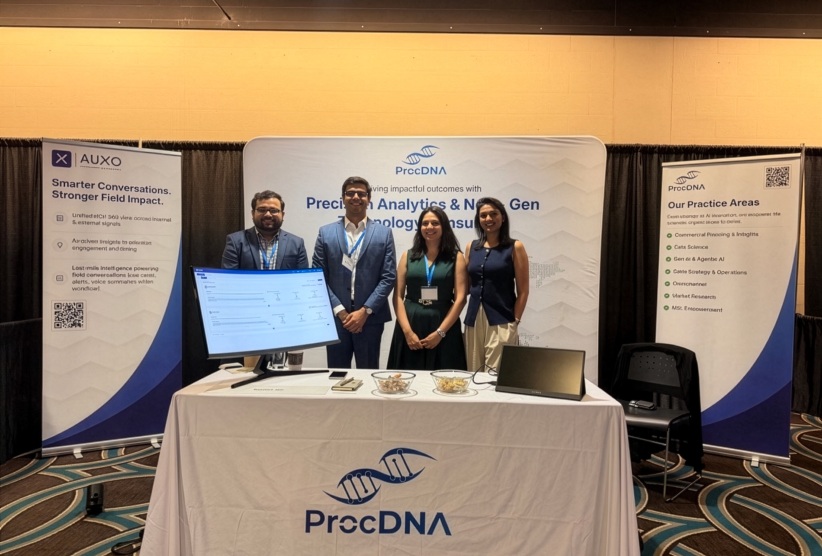
Founded by Ashish Agrawal and Harpreet Singh, ProcDNA describes its start as January 2020 and its financing as self-funded. Agrawal is CEO; Singh is co-founder. Its business spans commercial planning, market research, sales operations, medical affairs, and technology delivery. Think of the work behind a drug launch: forecasting demand, understanding access barriers, choosing which physicians to engage, and making the underlying data agree.
Its buyers are organizations, especially pharmaceutical and biotechnology businesses. The broader client mix includes medical devices and diagnostics. This is business infrastructure for people bringing therapies to market and supporting scientific engagement. The company currently reports more than 33 active clients and nine offices across the United States and India.
A commercial leader might use the firm to investigate prescription abandonment. A sales operations team might need territory planning or incentive compensation. A technology leader might need customer records reconciled across systems. Those are different assignments, but each depends on linking a business question to data that can actually answer it.
First, fix the timing
The lymphoma project began with an operational failure: outreach followed a general call schedule while treatment decisions followed patients. ProcDNA used weekly claims signals, including diagnoses, procedures, and prescriptions, to identify movement toward treatment. A predictive model ranked proximity to the decision window. Commercial and medical affairs teams checked whether the signals made clinical sense.
The delivery choice mattered. Recommendations appeared inside the client's existing field platform. Marketing received the same signals. Representatives could adjust their visits without learning another application, while digital outreach could follow a shared timetable.
ProcDNA reports that 40% of predicted alerts converted into therapy starts. Read that carefully: it is a company-reported result from one engagement, not proof that outreach caused those starts. The useful idea is the sequence: identify a meaningful event, validate its signals, then deliver the recommendation inside an existing routine.
Predicted alerts that converted into therapy starts in ProcDNA’s frontline Hodgkin’s lymphoma case study.
- 01ObserveWeekly claims patterns
- 02ValidateClinical + business context
- 03DeliverExisting field platform
The physician profile gets a voice
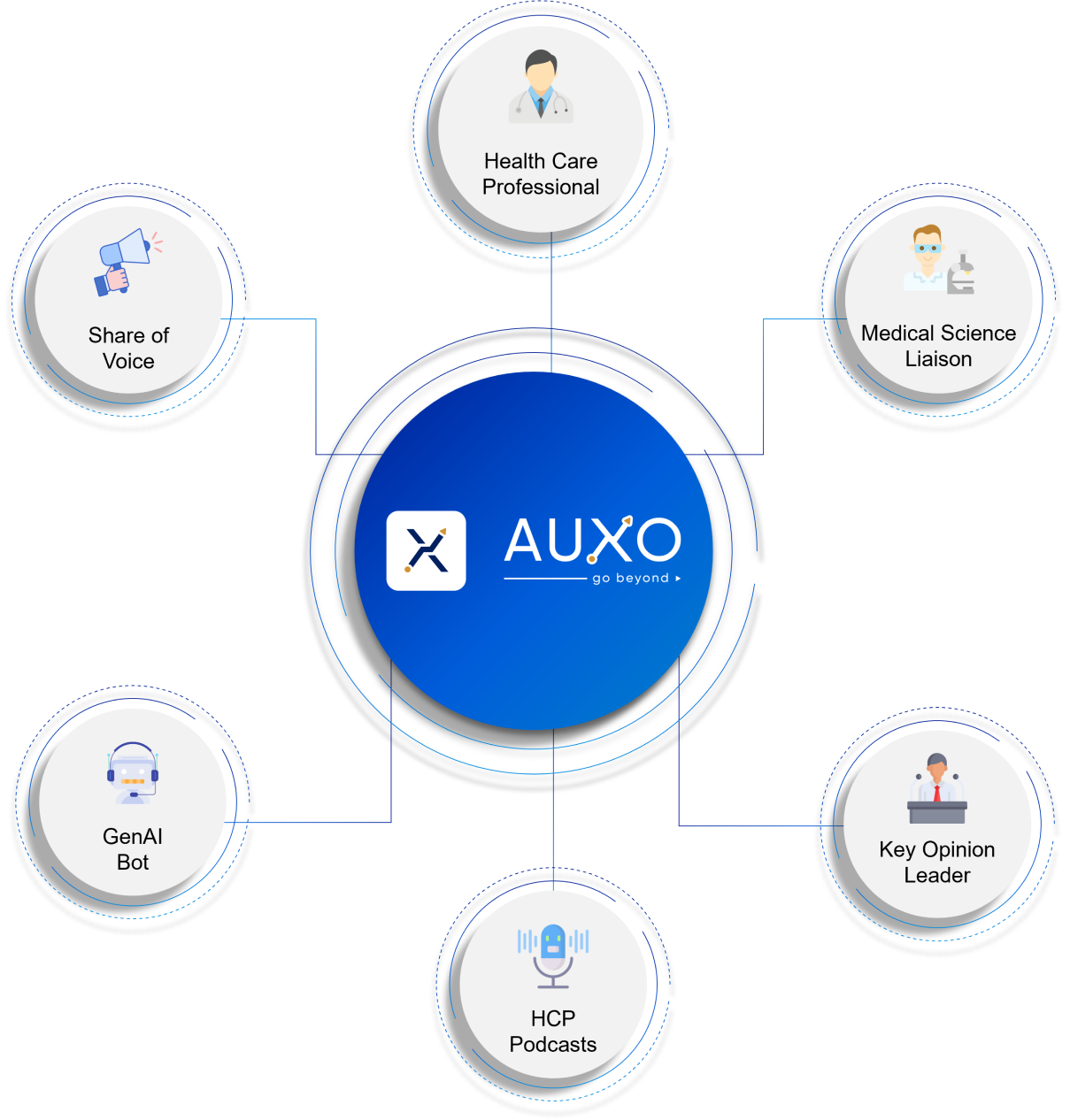
Auxo, ProcDNA's proprietary healthcare-professional intelligence product, tackles a related problem. A physician's scientific work, prescribing behavior, professional connections, and digital activity can sit in different places. Auxo brings those signals into consolidated profiles and supports opinion-leader identification, network mapping, and engagement recommendations.
But collecting the pieces leaves someone with the job of reading them. InsightO, an AI module within Auxo, prioritizes developments and turns them into short written and audio briefings. Its design recognizes an ordinary constraint: field teams travel. A useful update might need to be heard between appointments.
The case study describes checks for traceability and output quality, plus a small efficiency worth copying: when the underlying information has not changed, keep the existing summary. Generating more text is not automatically progress.
Before another dashboard, agree on the number
ProcDNA also works below the interface. Its technology services include CRM implementation, master data management, system integration, cloud operations, and continuing support. Those jobs sound less exciting than AI. They determine whether the AI has something dependable to read.
In a September 2026 article, ProcDNA describes reporting estates that accumulate around brands, functions, and local needs. Teams end up measuring similar things with different definitions. Deleting a few dashboards cannot fix disagreement about what a metric means. The proposed work starts with understanding who uses each report, which question it answers, and how its numbers are calculated.
Nexora extends that argument into a product. It is designed to monitor enterprise data, flag changes, explain drivers, and suggest actions. It sits alongside warehouses and BI tools, including Snowflake, Databricks, Power BI, and Tableau. The proposition is to make an existing reporting investment more useful by adding interpretation and monitoring.
“Too Many Dashboards, Not Enough Truth”
The title of ProcDNA’s September 2026 reporting article
The same people draw it and build it
Buyers comparing specialists such as ZS, Axtria, and Trinity will recognize the overlapping territory. Here is ProcDNA's positioning in a crowded market: combine life sciences knowledge with implementation responsibility. Its partnership page says the experts designing a solution also lead delivery. That matters to a buyer whose strategy can otherwise get lost between a presentation, an engineering backlog, and a separate support team.
The commercial model combines consulting engagements, implementation, managed services, and proprietary products sold through direct conversations and demos. The buying decision therefore involves scope as well as software: which data sources, which workflows, which integrations, and who keeps them working. A useful procurement brief would separate those obligations before comparing proposals.
There is outside evidence of momentum: Inc. ranked ProcDNA No. 621 on its 2024 Inc. 5000 list. Its August 2026 Bengaluru opening adds another delivery location. Neither fact proves a project will succeed. Both help explain why this specialist now has a wider footprint.
 Ashish Agrawal · Founder & CEO
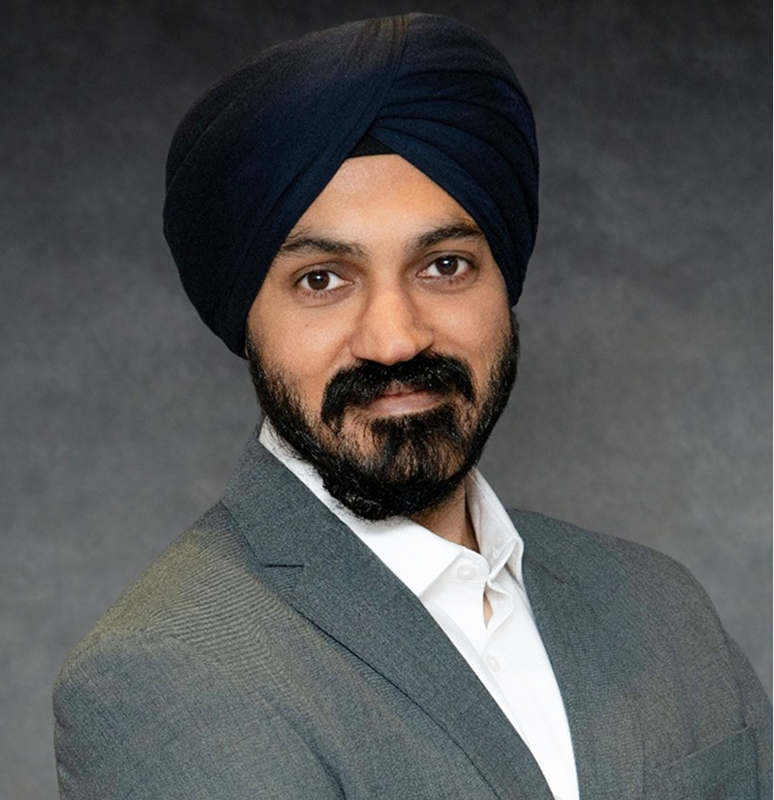 Harpreet Singh · Co-founder
Copy the habit, then choose the tool
The company's stated culture prizes curiosity, practical solutions, and close collaboration. Those ideas become more interesting when expressed as design choices: validate a model with domain experts, keep recommendations in familiar tools, reuse unchanged summaries, and settle metric definitions before multiplying reports.
For a prospective customer, the first exercise is simple. Choose one recurring decision. Name the person responsible. List the evidence that could change the decision, and the deadline after which that evidence loses value. Then ask ProcDNA to show that entire path in a demonstration.
This approach depends on usable data, permission to use it, clinical context where needed, and people willing to act on the result. Delayed claims can still mean a missed window. Conflicting definitions can still produce conflicting answers. A faster recommendation earns its place when the team can trust it and use it in time.