The problem arrived with the Texas heat. Prasad Reddy had taken charge of Twisted X, a boot company in Decatur, and the orders had slowed to a disconcerting trickle. He asked a sales representative what was happening. Summer, came the explanation. People weren’t buying boots. For a newcomer, this was useful information. For an engineer responsible for a business, it was also an invitation to ask another question: what were those people wearing instead?
A seasonal lull can acquire the dignity of a law of nature if it happens often enough. Reddy was prepared to accept the temperature. He was less inclined to accept a business that waited for the temperature to improve. Cowboys presumably had feet in July as well as January. A company making their footwear might profit from remembering that.
He decided Twisted X needed casual shoes. His sales representatives initially doubted the idea; they knew a market where boots were part of the customer’s identity. At a Denver trade show, however, retailers began taking an interest. Changing the assortment would take patience. Reddy had found a question worth pursuing, and a customer who might answer it differently from the company’s own people.
An engineer arrives with a family
Long before Texas, there was an Indian household in which education mattered and an engineering career offered a path beyond the family’s agricultural background. Reddy earned degrees in mathematics and engineering. In 1970, he left India with his wife, Sobha, and their newborn to continue his education in America. An ambition that might look tidy on a résumé had to accommodate the less tidy business of supporting a family.
At Ohio University, he completed his master’s degree in a year while working part-time. Statistics and quality control were among his interests. The speed had a practical purpose: he had responsibilities, and wanted to finish his studies promptly. The move was a family undertaking, with excitement about opportunity sitting alongside the pull of relatives at home.
His father’s example remained a reference point. Reddy remembers someone who treated people equally regardless of their place in society. He connects that lesson to the workplace, where different jobs should not become different measures of human worth. The CEO has a particular responsibility; everyone still belongs to the same team. His preferred instruction is pleasantly brief: “Let’s have fun.”
It is a modest phrase for a demanding business. Its usefulness lies in the expectation underneath it. A team should be able to work seriously without treating rank as a license to be unpleasant.
The cost of a pair
Reddy’s first sustained involvement in footwear came through the machinery behind the merchandise. He joined Wolverine Worldwide in 1971 as a systems analyst, working on the information that lets a manufacturer plan production and manage inventory. Tom Gleason became a mentor. Reddy moved into operations and eventually became group vice president of operations.
In 1987, he left for Freeman Shoe Company, joining an investor-backed acquisition. The attraction was independence. The complication was that investors did not all want the same thing. He subsequently led K-Swiss International, starting in 1992, before consulting and spending time on a volunteer temple-building project in Grand Rapids. His route to Texas passed through factories, corporate offices, and international markets.
When he examined Twisted X after its bankruptcy, he saw costs that could be changed. Handling a pair through an outside warehouse cost about $7; his comparison with standard industry practice was about $1.50. The difference offered a practical starting point. A brand can have customers and still lose money through the way it handles their orders.
The arithmetic gave him a place to begin. Product development gave the turnaround somewhere to go. A cheaper journey through the warehouse would mean little if the company kept making only the shoes customers wanted for part of the year.
The cowboy gets another choice
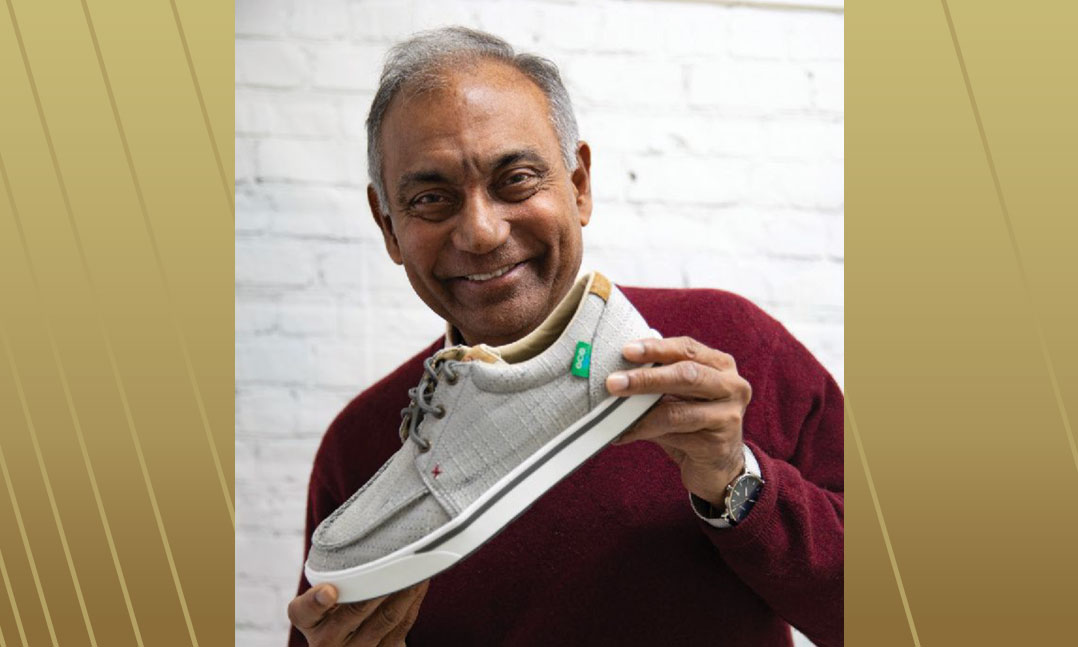
The Original Driving Moc came to market in 2010. Twisted X could now offer a customer something beyond a traditional cowboy boot, while keeping a connection to Western life. Over time, its range expanded across casual, outdoor, work, and Western categories, including footwear for children and infants. A customer’s wardrobe could be wider than the category that first brought the customer into the shop.
Comfort supplied a continuing product brief. Reddy described a schedule of new innovations every six months, with larger advances in comfort technology over longer intervals. That puts a different kind of pressure on a company than a seasonal color change. The next collection has to give someone a reason to try it on.
The Zero-X collection, introduced in 2021, used an interlocking double-stitching construction to remove the need for glue. The detail is characteristic of his interests: how something is assembled matters alongside how it looks. A shoe can carry its familiar visual cues while the work underneath changes.
There is a certain courtesy in that approach to tradition. Customers can keep the look they recognize and gain something useful. The boot does not need to announce every engineering decision made on its behalf.
A retailer gets a promise
Reddy’s willingness to change products sits alongside his attachment to retail relationships. Twisted X has continued to sell through partners, rather than using its own stores or website to compete for the transaction. In September 2026, its U.S. distribution reached about 3,600 retailers. Those relationships include national chains and independent shops.
The policy carries a tradeoff. Direct sales offer a manufacturer another way to capture margin. Reddy’s position is that a retail partner should be able to build a business around Twisted X without finding the supplier on the other side of the counter, chasing the same sale. “Retailers are our partners,” he says.
That is an unusually concrete way to define a word businesses use generously. The promise has to survive the moment when another channel looks attractive. For a shop deciding what to stock, that consistency is part of the product’s value.
A new casual shoe and a dependable supplier solve related problems. One gives the retailer something else to sell. The other gives the retailer a reason to keep investing in the relationship. Reddy’s decisions make more sense when the store remains in the picture.
“Retailers are our partners.”
Prasad Reddy
A bottle gets a second job
In 2017, Twisted X introduced ecoTWX, using fabric made from recycled plastic bottles. The materials agenda grew to include alternatives such as bamboo, cork, and rice husks. Reddy’s interest was practical as well as environmental: a new material creates another opportunity to improve how a shoe is made.
He has also been explicit about the commercial requirements. Customers still have to like the style and the comfort. The environmental story cannot be asked to excuse a product someone does not want to wear. In his account, the company absorbed added costs rather than treating those costs as the factory’s problem.
There is a generosity in his attitude toward wider adoption. If other footwear companies use such materials, the environmental benefit can grow beyond Twisted X. It also becomes easier for the supply base to develop. The aim is larger than keeping a useful idea inside one company.
He likes the evidence to be legible: “Quantifying is better than talk.” In April 2024, employees also gathered for the company’s third annual Earth Day cleanup in Decatur, while retailers joined related local activities. Litter in a fence is a small, stubborn problem. Someone still has to pick it up.
The welcome he kept
Reddy became an American citizen in 1980. After the ceremony, VFW Auxiliary members greeted him with a small flag and a copy of the Constitution. He remembered the encounter as a welcome into the country, and carried the thought that he might someday return the kindness.
Twisted X later supported VFW programs, including youth scholarships. By January 2022, the organization reported nearly $720,000 in donations from the company since 2015. The relationship included sponsorship of the Voice of Democracy and Patriot’s Pen essay competitions.
The distance between a small flag and a corporate donation is considerable. The connection between them is remarkably direct. Before there was a partnership to administer, there were people standing outside a ceremony, making someone feel included. Reddy retained the memory through changes of employer, country of work, and company ownership.
His giving also makes his account of business success more personal. The figures matter, but so does the answer to what the figures permit. A company’s resources can support the communities and relationships that helped make its life possible.
Still counting, still listening
In June 2025, EY named Reddy a Southwest Entrepreneur Of The Year award winner. The recognition came well into a career that began with systems analysis. He was still spending time with customers at events, gathering their opinions about what they liked and wanted to wear. Long experience had not removed the need to ask.
Supply problems continued to exercise the engineer. In a June 2025 interview, he described expanding inventory to six to eight months of supply and diversifying sourcing as trade conditions shifted. By September 2026, he was discussing renewed U.S. assembly and plans to increase domestic output. His explanation included shorter lead times and less capital tied up in inventory. Higher labor costs were one part of a longer calculation.
The latest product questions are equally ordinary. The EZ On collection addresses the business of getting a shoe on quickly; Reddy has discussed taking that technology into other categories. Each development starts with a small moment in someone’s day, much as the casual-shoe decision started with a summer when the orders stopped.
One of his favorite songs is the Carpenters’ We’ve Only Just Begun. It is an agreeable choice for an executive with more than five decades in footwear. The sentiment leaves him with work to do. Somewhere, a customer is about to explain what the next pair should be.
Follow the next step
- Twisted X website
- Prasad Reddy on LinkedIn
- His immigrant journey
- The September 2026 profile
- A career in footwear
- The summer sales question
- Materials and environmental decisions
- The 2021 product interview
- The VFW relationship
- The 2025 customer conversations
- The 2025 supply-chain interview
- U.S. assembly and inventory
- EZ On interview
- EY’s award announcement
- Earth Day in Decatur
- Watch: Prasad Reddy, Twisted X (VFW / Vimeo)