Pranav Raj S posted Chatwoot to Hacker News at midnight. Within an hour, it was on the front page. He stayed up until six in the morning as roughly 10,000 visitors arrived over six or seven hours. The software had spent about two years in a private repository. It had finally acquired the one feature every abandoned project needs: people who wanted it.
There is a temptation to read a founder’s career backwards. Start with the CEO title, add the accelerator and the funding, and make every earlier decision look like preparation. Pranav’s path resists that tidy arrangement. Chatwoot’s first attempt ended. The code remained. The audience for its second attempt arrived under different terms, after the team made it possible for others to run and change the software themselves.
Today, he lives in San Francisco and leads Chatwoot, an open-source customer support platform. His own account of becoming CEO is straightforward: he began as an engineer, worked on the product on the side, and took on the role as it grew. The title followed the work. That sequence helps explain a public voice that often sounds closer to a product note than a victory speech.
A second start, with the doors open
Chatwoot began in 2016 with Pranav, Nithin, Subin and Manoj trying ideas together. They built on weekends, working toward a support tool for social media. A Product Hunt launch happened unexpectedly. An interview with 500 Startups followed, although the team was not accepted. There were reasons to be encouraged. There was also a problem that encouraging feedback could not settle: people were leaving the product.
Customers wanted a broader suite. The team had more to build than the early momentum could sustain, and by the end of 2017, the project had shut down. A promising response and a durable business had turned out to be different things. For anyone who has ever praised a friend’s app without using it a second time, the distinction may feel uncomfortably familiar.
In 2019, Pranav and Nithin added live chat to the existing codebase. Sojan Jose joined the effort. Chatwoot became open source on August 14. Interest in self-hosted customer support gave the product another opening. This time, potential users could put it on their own infrastructure. The old work could be tested in a new relationship with its audience.
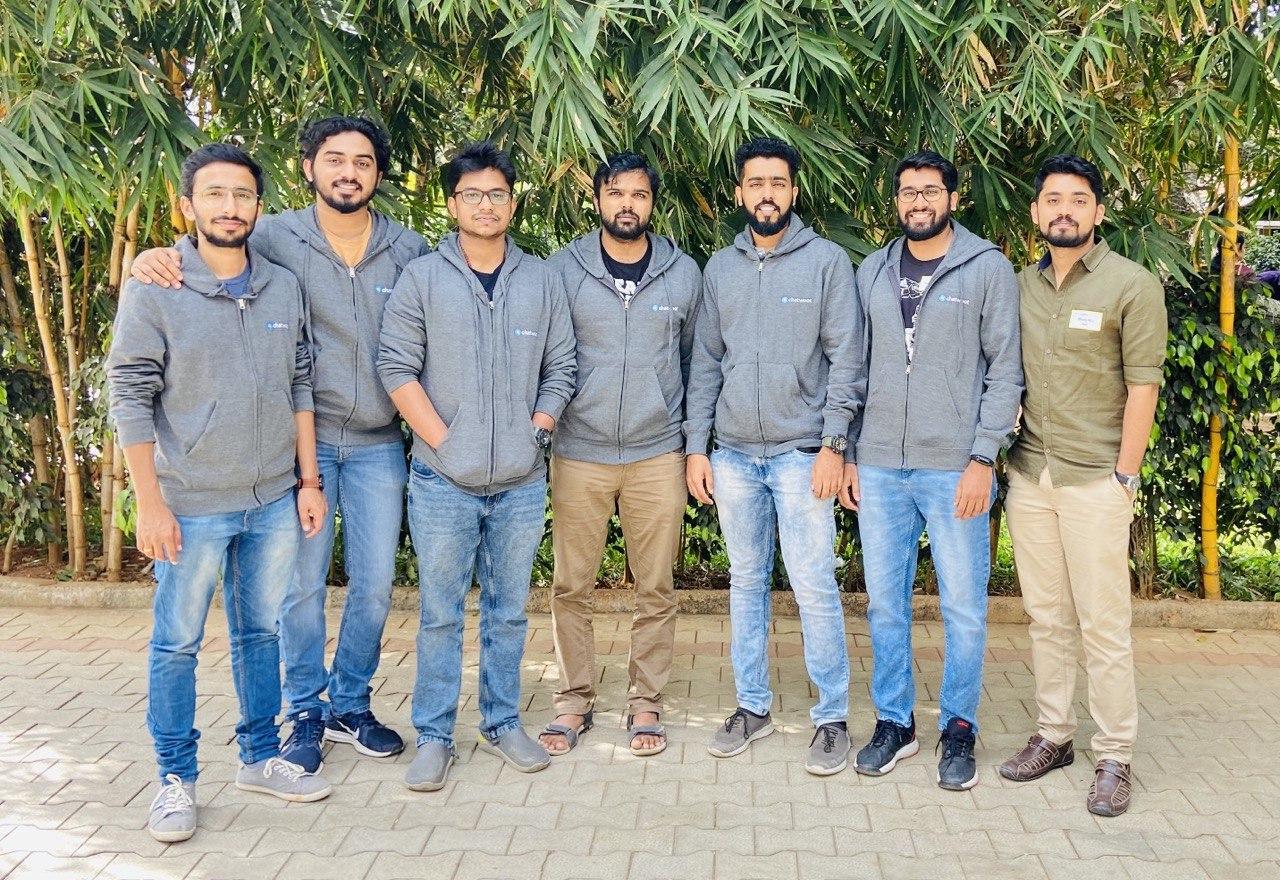
The people around Pranav matter to this story. Sojan brought experience as a previous Y Combinator founder. Nithin brought product design. The present-day team spans the United States and India, while the project’s contributors extend beyond the company. Its public team page reports more than 400 contributors. That is a different arrangement from a handful of people trying to keep a weekend project alive.
Open development changes who can join the conversation. A customer can become a contributor; a developer can try a deployment before contacting a sales team. Neither guarantees a business. Both give a useful idea more opportunities to encounter someone with a reason to keep using it. Chatwoot’s second start made those encounters possible.
An engineer before the title
Pranav studied Computer Science and Engineering at the College of Engineering, Trivandrum, from 2011 to 2015. His early project list has the busy variety of a student learning by making things: a QR-based event-management system, a browser extension for offline request handling, and an online Android application tool. The technologies included PHP, MySQL, Node.js and AngularJS. There was no shortage of occasions for a small error to become a long evening.
He dates the start of his engineering career to 2014. His subsequent employment included Sensomate Systems, Tracxn and BigBinary. Before Chatwoot became his company to lead, software was already his profession. That background places the later CEO role in context: he had spent years working on how applications behave before becoming responsible for how a business develops.
Around 2014, his first open-source contribution was a correction to SailsJS documentation. His introduction to free software had come earlier, through school computers switching to GNU/Linux and communities around college. The first contribution was modest enough to be useful immediately. A reader following the instructions would have one fewer mistake to trip over.
By 2021, his GitHub Satellite speaker biography described six years of frontend engineering and experience building complex interfaces with React and Vue. His session concerned UI and UX in open source. The subject fits a customer support product: people answering messages spend their working day inside the interface. Every confusing action gets another chance to be confusing tomorrow.
That makes design an operational concern. The agent needs to understand what belongs to them, what remains unanswered, and what happened before they entered the conversation. A developer may admire a clever implementation. The person using it at work needs the next step to be obvious. Pranav’s choice of speaking topic places that person in the picture.
The work after the applause
Chatwoot’s renewed interest became a development rhythm. Monthly releases followed the community response, a stable version arrived in July 2020, and the company incorporated in Delaware. The founders applied to Y Combinator late that year. They attended its Winter 2021 batch remotely, from January through March. The revived project now had a company, a schedule and an accelerator behind it.
After YC, Chatwoot raised a $1.6 million seed round. Backers included Goat Capital, Uncorrelated Ventures and Y Combinator, alongside angel investors. In his September 2021 update, Pranav put the financing beside two community milestones: 10,000 GitHub stars and a million downloads of the official Docker images. He also described the new release’s features. Money and software occupied the same page.
Those numbers measure different things. A star can express interest. A download can be one step toward trying software. Funding gives a company resources to continue. None tells the whole story of someone using the product successfully. Keeping the distinctions in view makes the later installation milestone more interesting than a larger numeral alone.
In May 2024, Pranav announced 50,000 self-hosted production installations. He described the practical difficulty of getting people to set up an application and keep it running. Chatwoot introduced a command-line tool, cwctl, to simplify maintenance and upgrades. The work involved logs, migrations and installation choices. These are unlikely to get anyone invited onto a magazine cover. They are excellent reasons for someone to keep a product.
His figures showed a first 10,000 installations over approximately 15 months, another nine months to reach 25,000, and eight more to reach 50,000. The same update marked the company’s 100th release that February. The headline number had a supporting cast of smaller, repeatable actions. A second chance still needs someone to ship the next version.
A printer in the workbench
Pranav’s personal website, Fuzzy Transform, gives the career some ordinary furniture. His tool list includes a Brother printer because he likes reading some blog posts on paper. In a business built around messages arriving through screens, a sheet of paper offers a pleasingly quiet delivery system. It has no unread badge and seldom asks for permission to send notifications.
His choices are specific. He prefers Apple’s trackpad to its mouse. He likes the sound of a Keychron K3 mechanical keyboard. He moved from Reflect to Obsidian because he wanted more room for longer writing, and uses Tuple for pair programming. The list describes tools in terms of what they do for his day. Preference is allowed to be as simple as a keyboard sounding good.
In December 2025, he wrote about returning to serious reading with Project Hail Mary. What caught his attention was the way a character and reader discover the situation together, through observations and small experiments. He also questioned whether the character’s selection for the central mission felt sufficiently earned. He read for enjoyment, but kept an eye on how the mechanism worked.
That is a useful detail in a profile full of software. A reading note lets us see what holds his attention when the object in front of him is a novel. The pleasure lies partly in figuring things out. His personal site ends with a Japanese proverb about falling seven times and standing up eight. The phrase suits a career with a restart in it, without making the restart sound inevitable.
The conversation keeps moving
On April 30, 2025, Pranav introduced Captain, Chatwoot’s AI agent. The launch described assistance for both sides of the support exchange: answering customer questions and helping agents draft replies or translate messages. It also included ways to identify recurring questions and retain useful customer details. The intended setting was the work support teams already had in front of them.
There is an appealingly unglamorous test for such features. Does the reply help? Does the translation make the exchange easier? Can the next agent find the context they need? A customer writing about a problem has little reason to admire the machinery separately from the answer. Pranav’s product announcements give the machinery tasks rather than a stage.
Voice arrived next. On June 16, 2026, he announced a beta supporting calls through Twilio and WhatsApp Calling. Agents could answer in the browser with earlier conversations and notes visible. Calls would join the conversation timeline, with details, recordings and transcripts. A different channel could become part of the same customer history.
“But we wanted to get the foundation right first.”
Pranav Raj S · introducing voice calls, June 2026
Pranav explained the timing in terms of sequence. Voice had been requested for years; the team first concentrated on text-based conversations and the workflows around them. His stated next steps included better routing, reporting and team controls. The announcement asked users to describe what worked and what confused them. The next version would need those answers.
The original Chatwoot struggled because customers wanted more than it could offer. The current product keeps broadening around the customer conversation. That does not erase the first attempt; it makes the distance travelled easier to see. Between the midnight launch and the latest call is a founder learning how much happens after someone says hello.
Continue the conversation
Pranav’s personal website · LinkedIn · Twitter / X · GitHub · Chatwoot
The 2020 interview · Chatwoot’s early history · The installation milestone · Captain’s launch · The voice-call announcement
WATCH PRANAV SPEAK