Jon Bloom remembers days in the operating room when the schedule seemed to contain a single procedure on repeat: amputations. As an anesthesiologist, he was helping people survive an operation that diabetes had made necessary. The unsettling part was how often the catastrophe had begun with something small - a warm patch, an ill-fitting shoe, a wound the patient could not feel.
Diabetic neuropathy can mute pain while poor circulation slows healing. A patient may keep walking on damaged tissue because the body’s ordinary alarm has gone quiet. By the time an ulcer is visible, the easy window for prevention may have closed. Treatment can mean months off one’s feet, repeated clinic visits, infection, hospitalization and, in the worst case, the loss of a limb. Podimetrics was built around a blunt question: what if the warning arrived while the skin was still intact?
The product was a habit before it was a mat
Bloom met mechanical engineer David Linders at the first MIT Hacking Medicine gathering in 2011. They had not known each other before the weekend. Linders had worked around amputees and had been considering the same neglected problem from an engineering angle. With Brian Petersen, Jeff Engler and other early teammates, they sketched a data-transmitting insole that could monitor pressure continuously. It won attention at the hackathon and at MIT’s entrepreneurship contests. It also carried the familiar smell of a first idea: technically appealing, behaviorally complicated.
The team talked to patients and clinicians and tested insoles, socks and shoes. Continuous monitoring sounded comprehensive, but feet are fussy. People own different shoes, change socks and do not reliably charge, pair or transfer a medical gadget every time they get dressed. The founders moved the sensing out of the shoe and into a fixed place in the home. An early mat had giant sensors, a circuit board poking out and enough electrical tape to make a safety officer blink. It was ugly. It answered the right question.
“Some days, I would spend the entire day doing nothing but amputations.”Jon Bloom, on the clinical experience behind Podimetrics
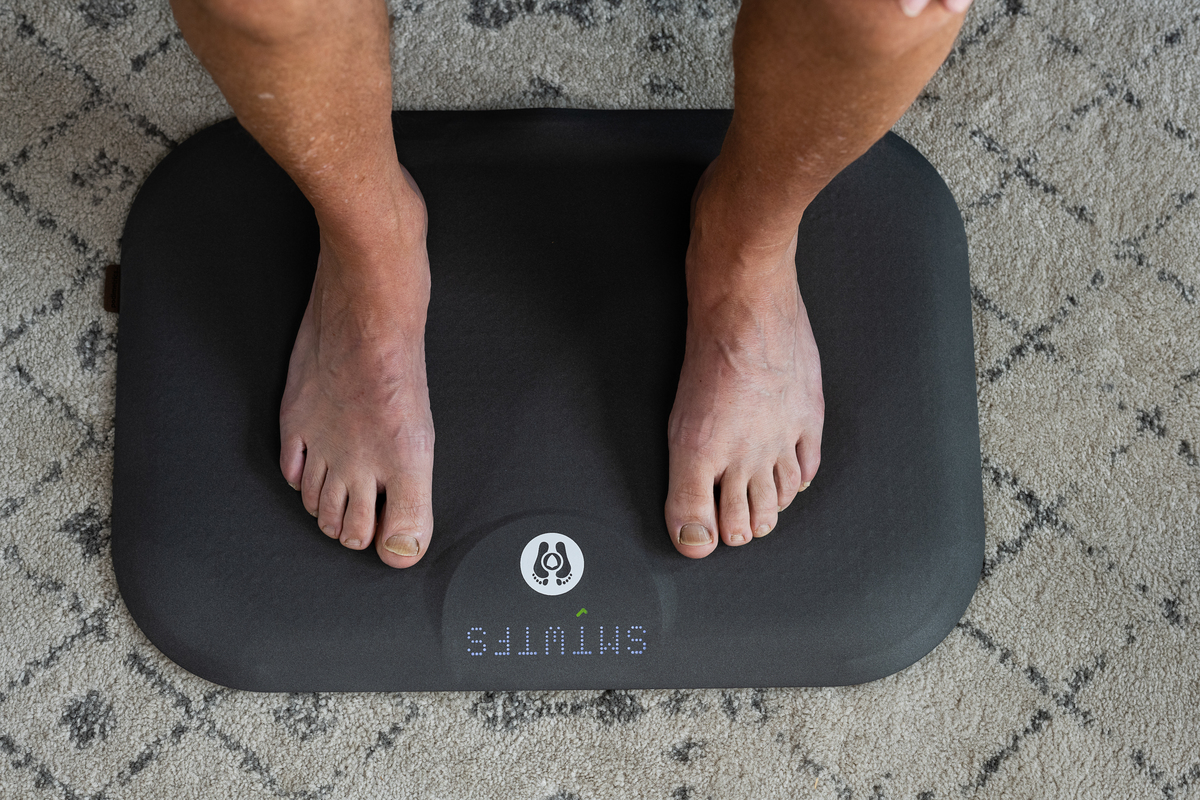
The commercial SmartMat asks a patient to stand barefoot for about 20 seconds once a day. Sensors build a temperature map of the soles. Cellular connectivity sends it automatically, without Wi-Fi, Bluetooth or a smartphone ritual. The system looks for asymmetry - a location on one foot running hotter than the corresponding location on the other. Inflammation raises temperature before tissue visibly breaks down, so heat can buy a clinician time.
The nurse is part of the machine
Calling Podimetrics a medical-device company is accurate in the way calling a restaurant an oven company is accurate. The hardware matters, but the service around it completes the meal. Podimetrics staff watch incoming data, support adherence, speak with patients and coordinate with existing providers. A temperature alert can lead to a request to reduce activity, check footwear, inspect the foot, arrange a visit or seek urgent help. The company does not replace the doctor. It stretches the doctor’s reach into the days between appointments.
That human layer also handles the awkward truth of preventive monitoring: sensitive systems produce alerts that do not all become ulcers. Early research showed that thresholds can be tuned. Greater sensitivity catches more developing problems but brings more false positives. In foot care, the consequence of a false alarm may be a phone call or a brief period of reduced walking, rather than an invasive biopsy. Still, alert burden is real. Podimetrics’ answer is operational - put a nurse between the signal and an already busy physician.
A 2017 study of high-risk patients reported 97 percent sensitivity for non-acute plantar ulcers at a defined temperature threshold, with a median warning of 37 days. The number is memorable; the conditions matter more. Performance depends on the threshold, the population and regular use. A later study found similar predictive accuracy for people with recent wounds or partial foot amputations, groups that might have seemed especially difficult to monitor. These are useful signals, not a promise that every scan prevents an amputation.
The condition hidden inside the claim
The mat creates time. A result requires someone to scan, someone to interpret the signal and someone with the authority and capacity to act. Remove any link and prevention becomes a dashboard.
Who pays when prevention works?
Podimetrics sells mainly to health plans and organizations that bear medical risk, including the Veterans Health Administration. The user is the person at home; the buyer is the institution exposed to the cost of an ulcer, emergency visit, hospital stay or amputation. A single amputation can cost a plan as much as $100,000, before rehabilitation and follow-on care. That alignment gives the company its economic engine. The customer can fund a device and a clinical service today in pursuit of a larger avoided cost tomorrow.
There is no public sticker price. Fees are negotiated with organizational customers, while self-pay pricing is supplied on request. The model is closer to an enterprise care program than a consumer gadget sale. Podimetrics has worked with national and regional health plans, Independence Blue Cross and the VA; it has also partnered with Arbital Health on value-based contracting. The VA relationship is especially important because many high-risk veterans live far from specialty care. A cellular mat turns distance from a clinic into a less decisive constraint.
The company raised a $45 million Series C led by D1 Capital Partners in 2022, after reporting $28.3 million in earlier funding, then secured $25 million in debt financing from CIBC Innovation Banking. It used the growth capital to build product and research teams, commercialize the program and expand nurse support. Public recognition followed: a top-five place in Fast Company’s 2024 medical-device list, No. 128 on Deloitte’s 2024 Technology Fast 500 and No. 530 on the 2025 Inc. 5000.
The foot was the wedge
In October 2025, Podimetrics launched SmartMat+. The new system keeps foot thermography and adds weight and postural stability. Sudden weight gain can be a sign of fluid retention associated with heart failure. Changes in balance can point to fall risk, a serious concern for people with neuropathy. A detachable screen shows scan results; a cellular link moves the measurements to the care team. Three signals now arrive through the same 20-second behavior.
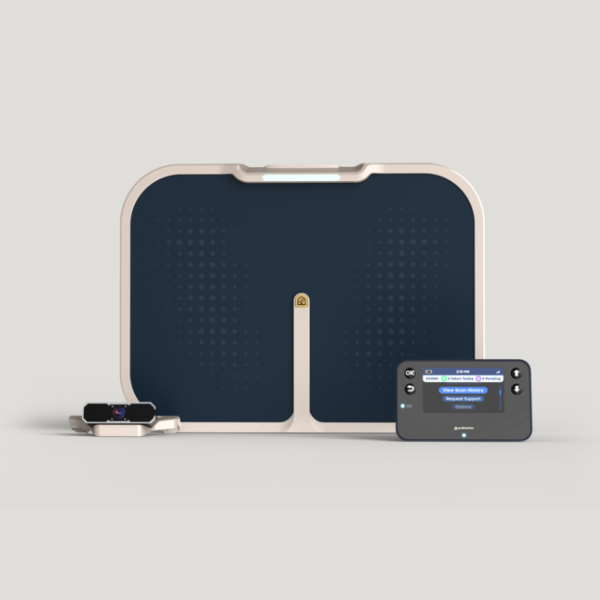
This is a sensible platform expansion because it does not ask the patient to learn another routine. The company earned a place in the home through one painful, expensive problem and is widening the clinical surface area of the same daily moment. A health-plan customer that reported a 50 percent reduction in amputations over the preceding year agreed to pilot SmartMat+ in late 2025. In May 2026, the product received a MedTech Breakthrough monitoring award. Those milestones show market interest; the broader weight and balance outcomes still need the same accumulation of evidence the original temperature program spent years building.
What a founder can steal
Podimetrics’ most reusable idea has nothing to do with feet. Start with a costly outcome that one buyer badly wants to avoid. Find an earlier signal. Compress the user’s job until it can survive a tired Tuesday morning. Move connectivity into the object. Then design the escalation path before celebrating the alert. This sequence turns sensing into care and care into an enterprise contract.
Make the sophisticated part invisible. The patient sees one place to stand, not thermography, thresholds, cellular transmission and workflow software.
Sell to the party carrying the downside. Avoided utilization is persuasive when the customer bears utilization risk.
Attach a human owner to ambiguous alerts. Clinical sensitivity without triage can simply move work downstream.
The model weakens with low-risk users, poor scan adherence, weak cellular coverage or a care system unable to respond.
It would not work everywhere. A low-risk population creates fewer preventable events and a weaker return. A fee-for-service provider may lose revenue when hospitalizations fall. A patient who cannot safely stand or sit with feet on the mat needs accommodation. A region without reliable cellular service breaks the automatic handoff. And an organization without clinical follow-up capacity has bought an unusually handsome alarm.

Podimetrics fits between medical hardware, virtual care and value-based health services. Siren offers temperature-sensing socks; Orpyx has developed pressure-sensing insoles; the cheapest alternative remains a mirror, a handheld thermometer and vigilant daily inspection. Podimetrics’ difference is the bundle: whole-foot sensing in a fixed home object, automatic connectivity and people who chase the signal. Its smartest move was accepting that a patient does not want a remarkable medical device. The patient wants to keep walking.