The invitation is only the beginning. A film premiere needs journalists, a festival needs paying audiences, and a new bar needs people who will return after opening night. Each can look busy in a photograph while leaving the underlying business problem untouched. Platform Media Group operates in that gap, helping clients turn something worth announcing into something people might actually notice, understand and attend.
PMG’s territory is broad enough to include independent movies, musicians, nonprofits and hospitality businesses. Its service list even makes room for axe-throwing venues. Yet there is a coherent idea underneath the variety: publicity works best when the story, the audience and the occasion belong together. A clever announcement sent to the wrong people is still the wrong announcement.
The Los Angeles agency sells public relations, marketing, content creation, consulting and event work. The distinctive part is how it combines an entertainment-oriented boutique with a wider network of service providers. A filmmaker can need specialist festival knowledge; a brand can need someone who understands a particular city. PMG’s proposition is that the same relationship can help organize both.
Thirty-three agencies, one practical question
On its Communications Partnership page, PMG describes a collective of 33 public relations agencies and marketing providers that it supervises. The listed locations include Austin, Atlanta, Toronto, San Francisco, Chicago, Los Angeles and New York. This is the company’s description of its network, rather than a count of offices owned by PMG.
The more interesting detail concerns money. Participating providers share an agreed service-fee structure. PMG gives the example of a Los Angeles client needing help in Nashville: the aim is to obtain local service at a locally appropriate price. That promise addresses an awkward agency problem. Expanding the map can otherwise mean adding travel, another introduction and another negotiation.
service providers
Local knowledge. An agreed fee structure. A broader range of services.
There is a historical thread here. A November 2010 announcement brought together PMG, Jennifer Gross’s Evolutionary Media Group and Matt Walker’s Period Media under The Communications Partnership. The agencies planned to retain their identities while sharing client and pitching opportunities. Today’s description extends that cooperative idea into services including advertising, publishing, events and film distribution.
A film has more than one opening night
PMG’s film offering follows several stages of a movie’s public life. It advertises unit publicity, festival submissions, festival PR, single-city and multi-city releases, and digital or home-video campaigns. Those stages require different material and timing. A production announcement introduces a project; a festival appearance gives it an occasion; a release asks viewers to choose it.
Its credits make the specialization tangible. Sundance’s 2022 press contact sheet lists Henry Eshelman and PMG for the shorts Hallelujah and The Panola Project. Its 2024 publicist listing describes work around the 25th-anniversary presentation of Slam, alongside a history involving films such as Alive Inside and Finding Fela!
The distinction between an agency’s history and a publicist’s career matters. That Sundance listing traces Eshelman and PMG’s combined festival experience to 1995, while the company gives 2006 as its founding year. The earlier date speaks to experience brought into the business. It should not quietly add eleven years to the company’s age.

The website for BOOM, the Sonics documentary, offers a particularly clean view of the division of labor. Eshelman is the publicity contact. Sonder Entertainment handles theatrical booking, and The Forge has the marketing contact. Three lines on a webpage reveal three distinct jobs. Getting a film discussed, getting it booked and supporting its market campaign are related responsibilities with different owners.
For a producer considering outside help, that is a useful distinction to copy. Identify the missing function before commissioning the campaign. A film that needs a screening arrangement has a different immediate problem from one that has screenings but little press interest. The title of the agency matters less than the scope of the assignment.
The room can be the story
PMG also works with festivals themselves. Its services cover press outreach, programming and special-jury creation, event planning and venue experiences. That gives the business two perspectives on the same gathering: the film trying to stand out inside a program and the organizer trying to give the whole program an identity.
In October 2025, the Coast Film & Music Festival’s slate announcement named PMG alongside K-Line Media Group as media contacts. The Laguna Beach event announced 16 features and 73 shorts for November 1-9. A slate that size presents an editorial task as well as a scheduling one: help someone see a reason to attend without asking them to absorb every title at once.
Program counts from the festival’s slate announcement. PMG was a listed media contact.
A 2017 post-premiere party for Blind provides a more playful example of the surroundings doing some work. Coverage of the Bagatelle New York event thanked PMG’s managing director and described a Foster Grant sunglasses booth alongside wine and water sponsors. The eyewear gave guests a physical connection to the film’s premise. The party had something a writer could describe beyond a guest list.
That is the practical appeal of entertainment marketing: a product can become part of an experience. The fit still has to make sense. A sponsor contributes more when guests can understand its place in the occasion, and a photograph becomes more useful when there is a story behind what it shows.
A publicist with an editor nearby
Founder and managing director Henry Eshelman brings a background at B|W|R Public Relations and Ogilvy Public Relations Worldwide. His biography also includes creative work for nightclubs including Area, Palladium and Studio 54. The range helps explain PMG’s comfort with both a film campaign and a hospitality brief: in each, identity and setting are part of what the public encounters.
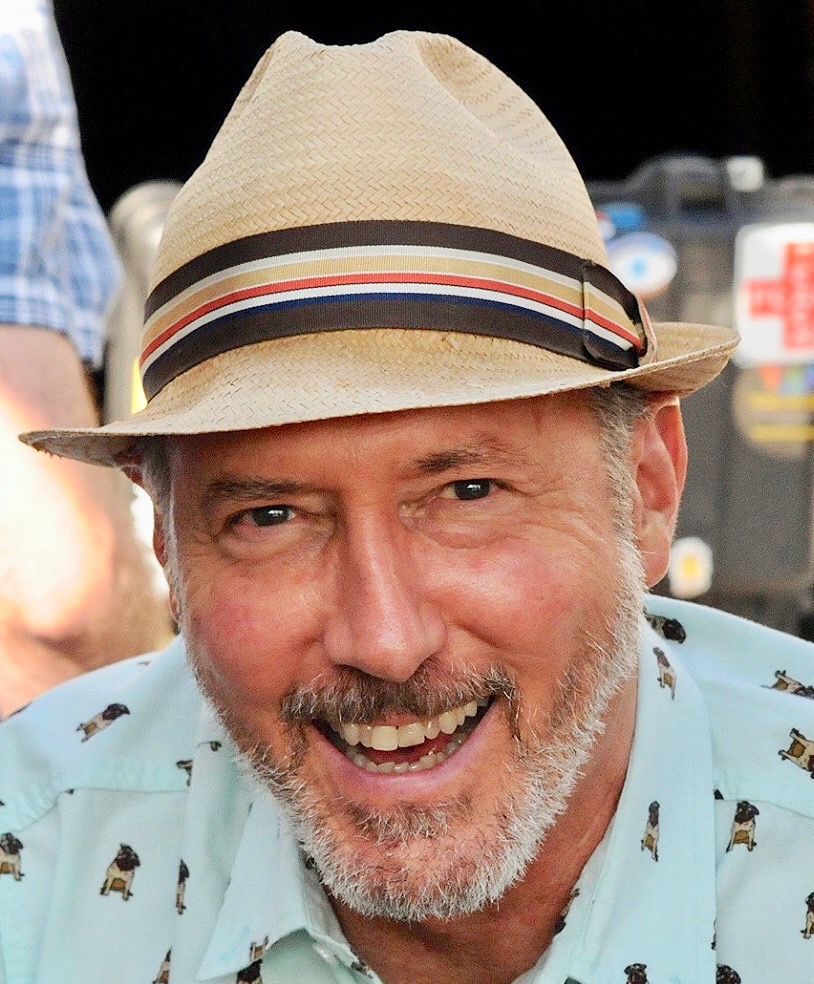
Account director Mark Rabinowitz adds an editorial perspective. He co-founded IndieWire, and PMG dates his arrival to January 2014. Its biography describes responsibility for editorial materials and film-festival, sales and distribution consulting. General manager Saeli Eshelman’s listed work includes producing electronic press kits. These are hands-on disciplines: knowing what to say, preparing usable material and understanding where a film might go.
The agency’s team biographies suggest a culture built around practitioners who cross adjacent parts of entertainment. That is useful positioning for clients who need an informed conversation about their work. The buyer’s test is straightforward: who will write the pitch, who will answer the journalist, and who stays responsible when the schedule moves?
“create the circumstances for media coverage”
Advice Henry Eshelman credits to mentor Josh Baran
The brief comes before the celebrity
Eshelman’s recollection of Josh Baran’s advice is a compact explanation of the craft. It puts responsibility on the publicist to establish a reason for coverage. The implication for clients is equally concrete: supply access, a credible occasion and useful material, then make it easy for someone to report the story.
A 2006 account of PMG’s early formation contains a cautionary example. Eshelman described an earlier consolidation effort in which corporate clients sought celebrity appearance quotes before deciding what kind of person they wanted. The acquisition of agencies had not solved the problem of an incoherent brief. His preferred sequence began by narrowing the request.
That lesson travels well beyond Hollywood. Specify the audience, the occasion, the person or expertise required, and the intended response. Otherwise, an agency can spend its time pricing possibilities that no one has properly chosen. A bigger contact book cannot make those choices on the client’s behalf.
What the buyer should put on the page
PMG’s broader work includes music, hospitality and causes. A 2011 announcement names it as Berkleemusic’s media contact for a SoundCloud partnership. Its hospitality offering covers openings and menu changes; its nonprofit offering includes benefits, sponsorship solicitation and crowdfunding communications. Across those categories, the common purchase is skilled work around a specific public-facing objective.
For budgeting, separate professional fees from the resources an assignment requires. Ask which deliverables, locations and dates the proposal covers, who approves additional spending, and which party supplies photography, video or event production. That is buying advice, rather than a description of a standard PMG contract. The network’s fee arrangement is a useful opening for that conversation.
Define the result with similar care. A festival might want relevant press attendance. A restaurant might need local awareness of an opening. A producer might need interviews around a release. Coverage alone should not be treated as proof of ticket sales, and a publicity appointment does not give an agency control over a critic’s opinion or a festival’s selection.
PMG’s service page acknowledges changing media needs and client economics after the pandemic. Its response emphasizes regular communication and adaptation. The enduring discipline is less fashionable: pay attention to the people receiving the pitch. For a business built around films, music and places to gather, the assignment begins with a deceptively simple question: who should be in this room, and why would they come?