In third grade, Phil Clement chose origami for a year-long assignment. By the end, he had taught his classmates to turn paper into shapes, including a crane. Decades later, a proposal for Chicago’s future brought the memory back: architect Alex Kelleher and his nine-year-old son, Roman, had imagined a sculptural landmark inspired by the same folded bird.
Clement singled out their Chicago Signal proposal while promoting Horizon Lines, World Business Chicago’s competition for civic ideas. Here was an executive with a career in global marketing, stopping to admire a child’s design. He saw an opening for more people to express what they imagined. The proposal also supplied an unusually good introduction to his current job: help people see a possibility, then work out how it might take shape.
A career takes the scenic route
Clement’s route into economic development included a stint doing stunts on the children’s game show Fun House. After studying at the University of Southern California, he worked in entertainment and wrote and illustrated children’s books. It is an appealingly untidy beginning for someone whose later responsibilities would include global corporate strategy.
He had spent formative years in Seattle before moving to the Chicago area during high school. His interests eventually took him to the University of Chicago, where he completed public policy and business degrees in 1993. He originally pictured a future in government or a nonprofit, working on equity, poverty and sustainability.
The corporate years that followed did not, in his telling, extinguish that intention. His account of the detour carries a useful reminder: the title on a business card can change more quickly than the reason a person wants to work.
“I’ve never felt removed from that core sense of mission.”
Phil Clement · 2021 conversation
The risk was choosing his own door
After his MBA, the expected route was a job at a large consultancy. Clement started a firm instead. In a later conversation about marketing leadership, he recalled that the economy weakened within a year, leaving established consultancies struggling while his own business was doing well. The respectable door had not necessarily been the safer one.
His advice was to assess both the desired result and the worst possible outcome, then favor work whose effect could be measured. He also described reserving time to understand market trends and learning from other practitioners’ experiments. That is a less theatrical account of risk than the familiar invitation to leap first and compose the autobiography afterward.
The early choice suggests a habit of mind that remains useful in his current work. Conventional wisdom deserves a hearing. It also deserves questions. An economic strategy needs the confidence to propose a change and the discipline to explain why somebody should spend money on it.
The Clement Group, founded in Chicago in July 2001, specialized in growth. Aon’s corporate record places his arrival there in May 2006. The consultancy had given him experience helping organizations find revenue; the new assignment put that experience inside a company operating internationally.
A football shirt, then the seating chart
At Aon, Clement’s work reached from corporate branding into sports sponsorship. His consultancy background included serving both large corporations and venture-backed startups, and he later discussed the growth of sports marketing at a Leaders Sport Business Summit. The subjects were connected by a practical question: how does an organization earn attention from the people it wants to reach?
Aon’s association with Manchester United offered a global stage. Clement described using specific objectives to judge the sponsorship: cohesion inside the firm, brand recognition and client engagement. A famous shirt could attract notice; the business still had to decide what that notice should accomplish.
When Aon moved its headquarters to London, he welcomed the chance to see the company from another vantage point. His Sunday routine included the Financial Times and gardening. Somewhere between the international branding brief and the flower bed, life continued to require ordinary attention.
His account of the CMO’s job made room for small tasks, too. There were name badges to print and restaurant seating arrangements to sort. Strategy did not exempt the executive from lending a hand.
“When the strategy’s been defined you’re just another pair of hands.”
Phil Clement · on putting plans to work
From marketing a company to making a city legible
Johnson Controls appointed Clement chief marketing officer in February 2020. Its announcement described responsibility for global market strategy, demand generation, research and planning. It also credited his Aon work with creating common customer-management systems, sales processes and a unified global brand.
Those responsibilities illuminate the operational side of his career. A consistent brand depends on people using shared systems and understanding the same proposition. Research has to inform a choice. A promising message has to reach a customer through an organization capable of delivering what it says.
By April 2024, Clement had been named president and CEO of World Business Chicago. The civic assignment gave that experience a different audience. Companies, investors, public officials and residents each have reasons to care about economic development. Their reasons do not arrive conveniently arranged into one marketing brief.
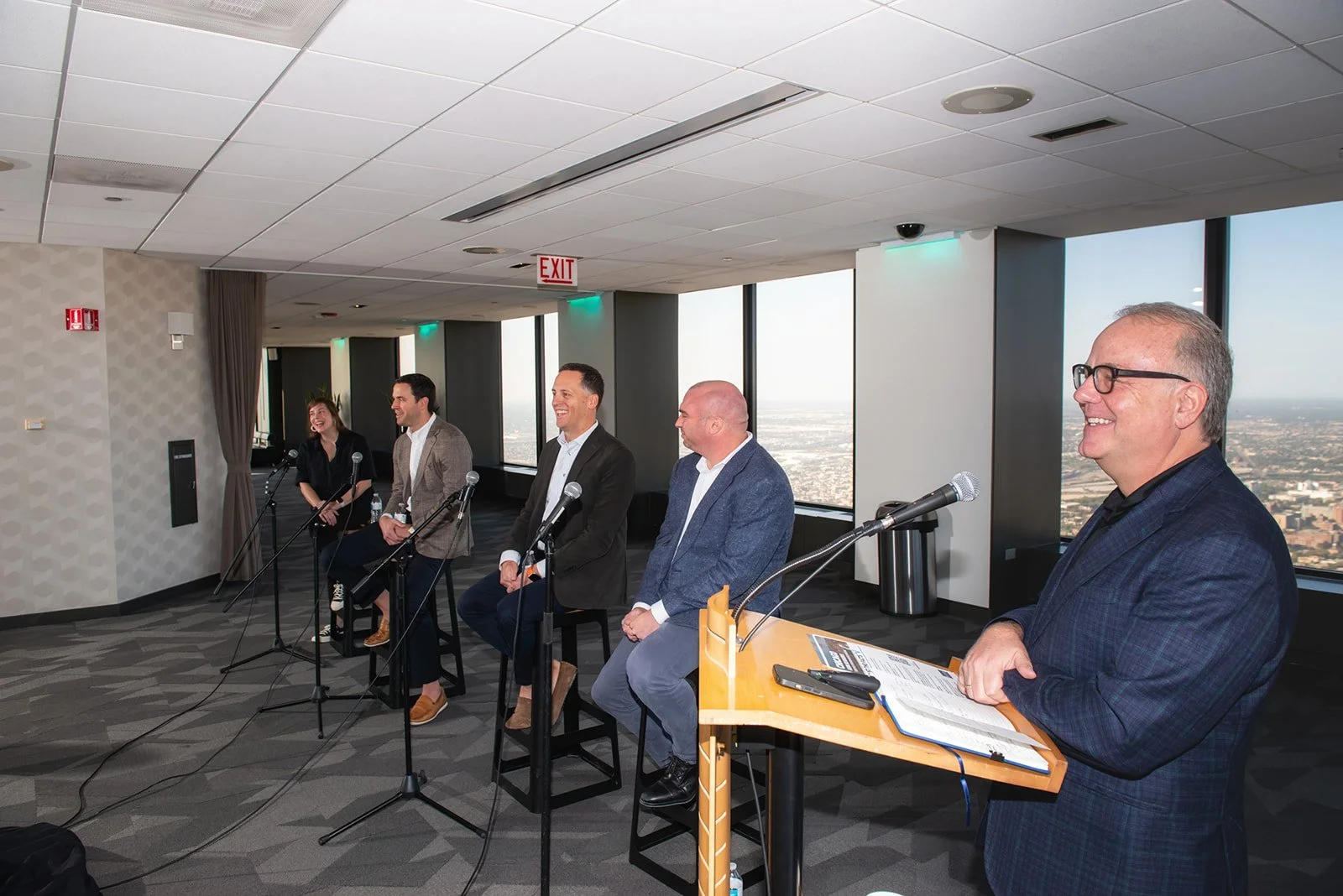
His current civic work spans the seven-county region and brings together established companies, startups, universities and civic leaders. His ambitions also extend to the WOW! Corridor, connecting cultural and economic projects including the Obama Presidential Center, Museum Campus, Navy Pier, Project 1901 and O’Hare modernization.
A regional growth argument has to make those connections useful. A university, a transport system and a cultural destination can each offer an advantage. The interesting question is what people can do when those advantages meet. Clement’s job places him close to that junction, where an introduction might become a partnership and a partnership might become an investment.
The future needs a number and a place to sit
Chicago 2050’s economic ambitions include targets of $1.4 trillion in annual regional output and 5.05 million jobs by 2034. The numbers describe goals. They also create a way to ask whether the work is delivering the growth it promises.
economic output
Planning goals for 2034. An ambition to measure against.
The plan pairs a near-term economic playbook with a longer view of the city. Its December 2025 public explanation described input from more than 300 leaders and treated cultural vibrancy as part of the economic proposition. ChiForward, a capital-attraction platform, was introduced as an early recommendation.
That changes the conversation a business-development organization needs to have. A company considering expansion asks about its own operations. An investor asks about the opportunity being offered and the conditions that might make it viable. Clement’s assignment includes helping the region answer both.
Culture also appears in his life beyond the plan. His Harris Council biography records Goodman Theatre board service beginning in 2003 and Chicago International Film Festival service beginning in 2018. His education brings statistics and policy analysis together with visual anthropology, cinema and journalism. The interests make an unusually apt combination for a person explaining a city: a way to interrogate its numbers and a reason to care about its stories.
In June 2026, he spoke about culture’s wider economic role around an Arts Alliance Illinois study. The argument asks businesses to consider the experience of a place alongside its commercial resources. A theater, a lively street or a sporting event gives someone a reason to spend time there. For a growth strategy, those choices matter.
His conversations have also included the less photogenic necessities. In September, he discussed the electric grid and economic development with ComEd’s Gil C. Quiniones. Quiniones highlighted Clement’s formulation of Chicago’s appeal: people, place and power. An attractive rendering will have a difficult opening night without electricity.
Nearly 200 sketches. Now comes the work.
Horizon Lines gave the public a way into the longer view. Nearly 200 ideas arrived; six became finalists. At a Chicago Architecture Center program, Clement joined a panel examining practical routes forward. Funding, policy, infrastructure and public support were questions for the ideas to answer.
The setting gave imagination a useful companion: people who could ask what a proposal would require. A pitch can make a place look different in a few minutes. Changing the place requires a sequence of decisions by people who may have different priorities. The appeal of this format is that it puts some of those questions in the same room as the drawing.
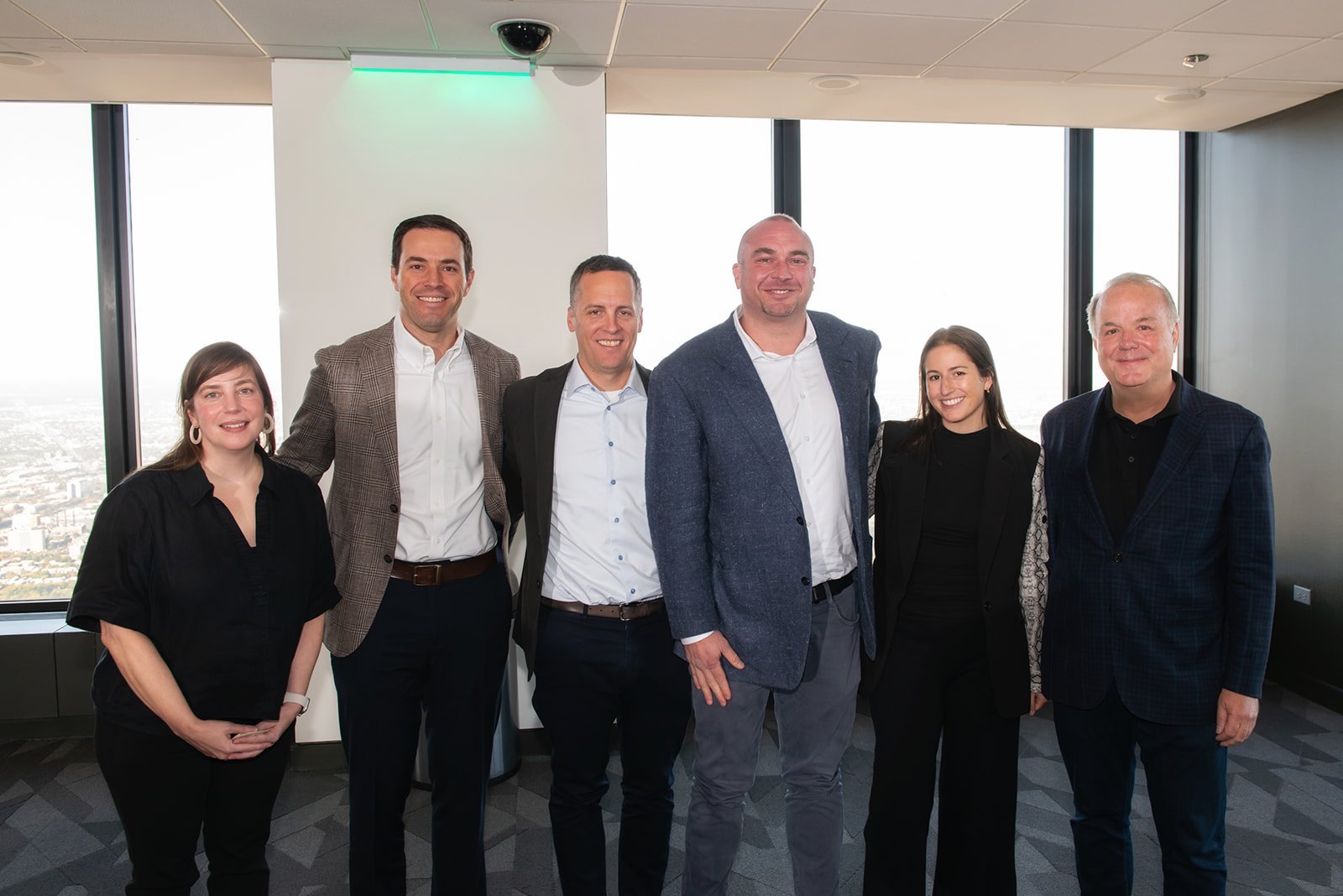
On September 15, 2026, Green City Rising and Wonderways! were announced as co-winners. The Morton Arboretum’s proposal envisions neighborhood arboreta shaped with residents. MKSK’s concept reimagines the city’s 28-mile boulevard system as connected green public space.
Next: partners, feasibility, potential funding.
The next phase involves exploring pilots, feasibility and funding. That is where the drawing encounters schedules and budgets. For Clement, it is also where experience in corporate growth could prove useful: an appealing idea must become something that partners can evaluate and help advance.
For now, the winning concepts sit inside a broader public exhibition of Chicago’s possible futures. They offer residents something concrete to discuss: a boulevard, a neighborhood green space, a route through the city that might work differently.
The paper crane that caught Clement’s attention was another such invitation. Its value in this story is the small personal recognition inside a large public assignment. A boy had an idea. An executive remembered being a boy with paper to fold. Between those moments lies the work Clement has taken on: bring people into the conversation, give the idea a form, and find out what it would take to build.
Continue the conversation
- Phil Clement at World Business Chicago · Personal LinkedIn
- Watch: Beyond The Loop - Chicago 2050: Innovation in Action · Clement with Luke Tanen
- Watch: The Growth of Sports Marketing · 2016 Leaders interview
- The public-policy years and the corporate detour
- Explore Chicago 2050 · Explore Horizon Lines
- The Aon and Manchester United conversation