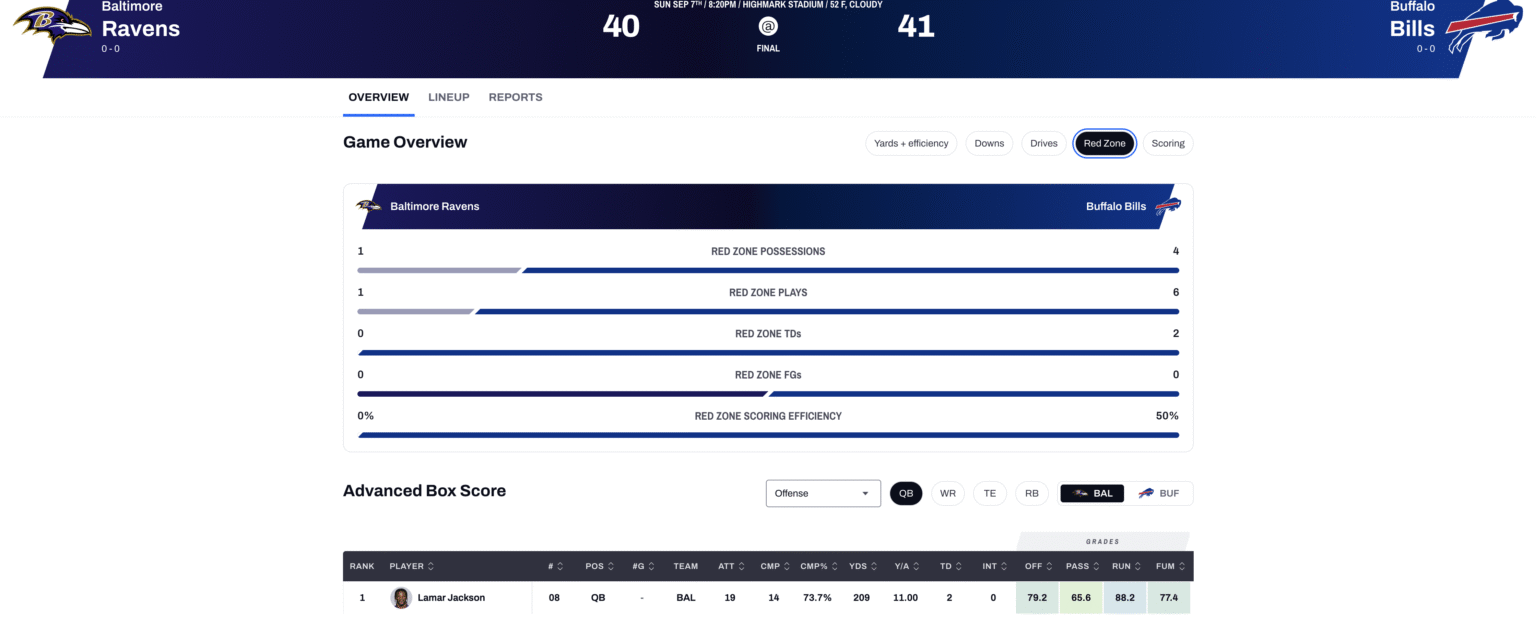
The quarterback makes the throw. The receiver drops it. On the stat sheet, the play becomes an incompletion, a small black mark beside the quarterback’s name. Something important has disappeared: he did his job. PFF’s business begins in that gap between the event everybody saw and the contribution almost nobody counted.
- PFF turns game film into grades, contextual statistics and football tools.
- Teams bought the data; fans buy help with drafts, fantasy and analysis.
- In March 2026, the enterprise business joined Teamworks. PFF.com stayed independent.
The throw that disappears
Consider the reverse: a routine screen pass becomes a long touchdown because the receiver escapes three defenders. The quarterback gets the yards. PFF asks how much of that achievement belongs to him. Its answer comes from watching the play, assessing the decision and throw, and separating those from what happened afterward.
This makes PFF a rather particular kind of information company. It manufactures observations. Analysts chart football film and evaluate individual performance, including the unglamorous blocking that makes someone else’s highlight possible. The public-facing number runs from zero to 100. Underneath it sits a play-level scale, position-specific rules and review.
Doing your job can earn a zero. Final grades use a separate 0-100 scale.
The origin fits the obsession. Neil Hornsby, an English football enthusiast, had spent years assembling historical statistics. Then he found Pro Football Reference, which had already occupied that territory. His next project moved toward information the existing tables could not supply. PFF dates its beginnings to 2006; its website launched in 2007.
A hobby with a payroll problem
The early bottleneck was time. Sports Illustrated’s 2015 account described Hornsby and Ben Stockwell finishing their analysis of the 2008 season only a week before the next season began. During 2009, the New York Giants made contact. Professional interest was arriving, but the people producing the work still needed paying.
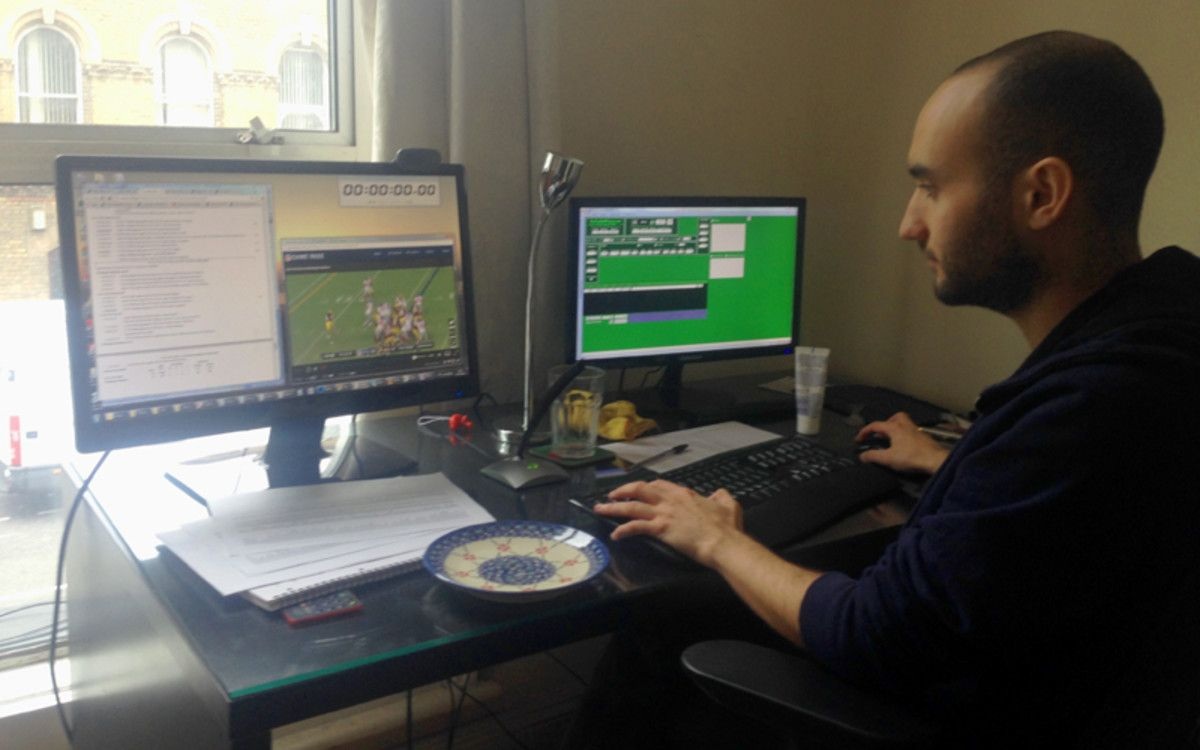
Hornsby was unusually blunt in a 2010 interview on PFF’s own site: “We had to generate some revenue”. He had been paying analysts himself. Advertising would not cover the costs. The site introduced subscriptions, while adding articles and fantasy coverage for readers who wanted help interpreting the numbers.
That last part involved a useful admission. Hornsby said the core team did not play fantasy football. Rather than bluff, PFF brought in Kevin Greenstein and Mike Clay. The customer was asking a different question from the film analyst. Serving that customer required different expertise.
The expensive part is seeing the play carefully enough to disagree with the scoreboard.
Cris Collinsworth bought a majority stake in 2014, and the operation moved to Cincinnati. A reported $50 million minority investment from Silver Lake followed in 2021. Expansion carried costs: in December 2022, Front Office Sports reported 16 full-time layoffs, confirmed by PFF, as the company redirected resources toward consumer betting products.
Same evidence, different decisions
The products make more sense when you start with the decision. A scout needs evidence about a prospect. A fantasy manager needs a player available in their particular league. A writer needs a defensible comparison. PFF packages football knowledge into tools for each, rather than expecting every customer to inspect the same spreadsheet.
The Live Draft Assistant, for instance, connects to a fantasy league and combines PFF rankings, projections and draft-position information to suggest picks as the draft unfolds. The Mock Draft Simulator serves a different appetite: try a trade, change a big board, and see how a roster-building scenario develops.
As listed in October 2026, PFF+ costs $9.99 monthly or $99.99 annually. Annual membership adds Premium Stats. PFF Pro costs $199.99 a year and adds expanded statistics, visualizations and API access. Free articles provide an entry point; recurring subscriptions sell deeper access and tools.
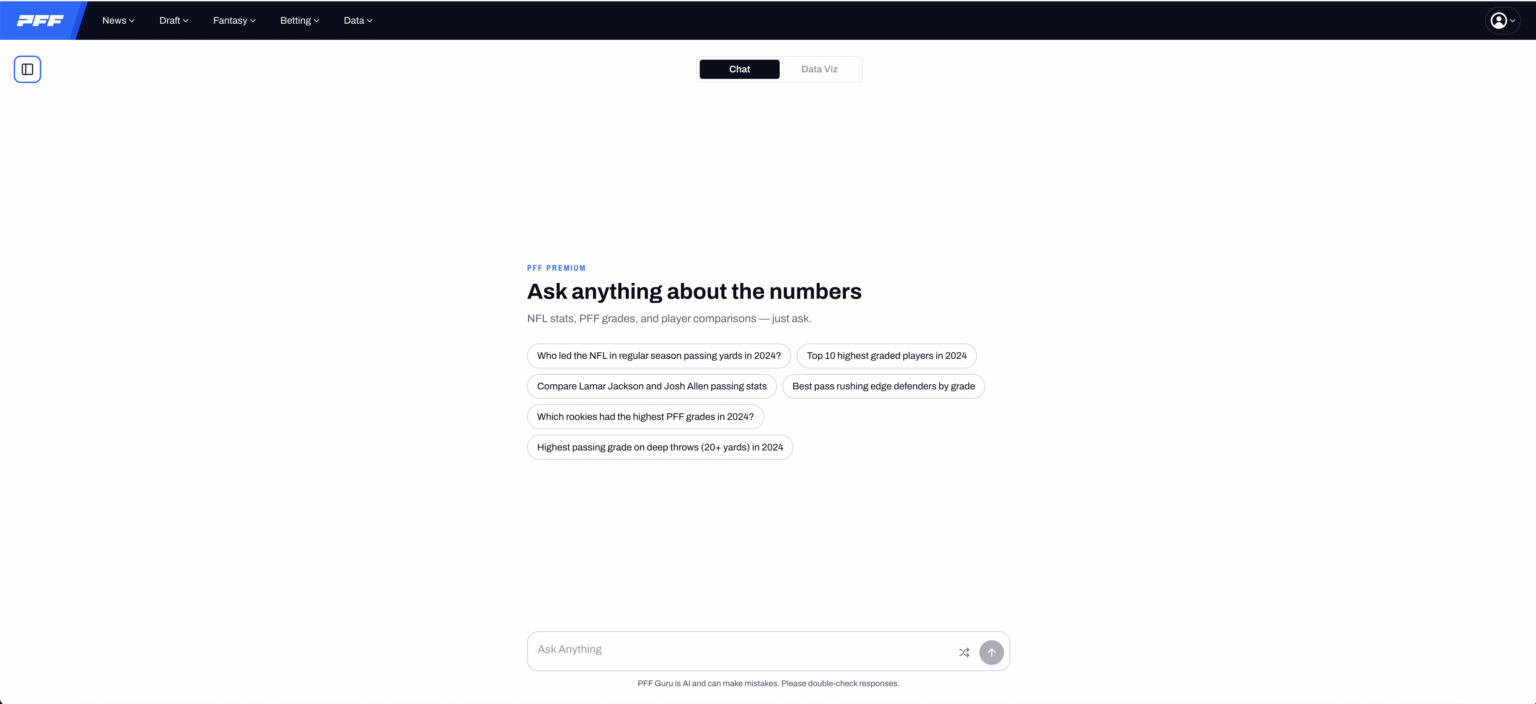
The developer offering is an interesting extension. Pro subscribers can query grades and statistics programmatically, bringing the data into their own analysis. Guru AI approaches the access problem from the other direction: ask a football question in ordinary language. Both reduce the distance between a database and someone who has a use for it.
The data changes hands
On March 30, 2026, Teamworks announced that it had acquired PFF’s enterprise business. By then, PFF data served all 32 NFL teams and more than 240 Division I college programs. The consumer operation remained independent; Sports Business Journal reported that it would license foundational metrics from Teamworks.
Enterprise operation acquired by Teamworks.
Independent PFF.com licenses the underlying metrics.
The deal followed a 2025 partnership combining PFF data with Teamworks’ predictive college-football analytics. The attraction is understandable: tracking a player’s movement and explaining the football meaning of that movement are separate tasks. Context about pressure, routes and assignments helps turn movement into evidence a coach can use.
Read the grade, then ask why
PFF occupies the space between a historical reference and a scouting department. Pro Football Reference answers many record-book questions; tracking statistics describe movement. PFF adds structured film judgment. That makes its grades useful, but also leaves room for disagreement. As its methodology acknowledges, “We are certainly not in the huddle”.
The company has changed its measurements, too. In 2018, it revised weights, separated additional facets and adjusted its scale after exceptional performances stretched earlier assumptions. A published number can look permanent. A measurement system needs maintenance.
The transferable lesson is practical: define the contribution you want to measure, collect evidence consistently, and hire expertise for the customer’s actual problem. For a reader, start with a question, check the sample and inspect the underlying facets. A single grade cannot reveal a private play call or promise a winning bet. It can give the next argument something better to work with.