BREAKING   Perry Gershon takes the CEO chair at FTN Network $3M+ seed round closed in roughly two months From Polo Grounds sports bar (1987) to DVOA data Subscriptions up nearly 60% year over year Two Congressional runs · One funding round won BREAKING   Perry Gershon takes the CEO chair at FTN Network $3M+ seed round closed in roughly two months From Polo Grounds sports bar (1987) to DVOA data Subscriptions up nearly 60% year over year Two Congressional runs · One funding round won
The Numbers Guy · Profile

Perry Gershon

Biophysicist. Barkeep. Billion-dollar lender. Ballot-box contender. Now the CEO who bought the numbers.

CEO, FTN Network Yale · Berkeley Haas East Hampton, NY
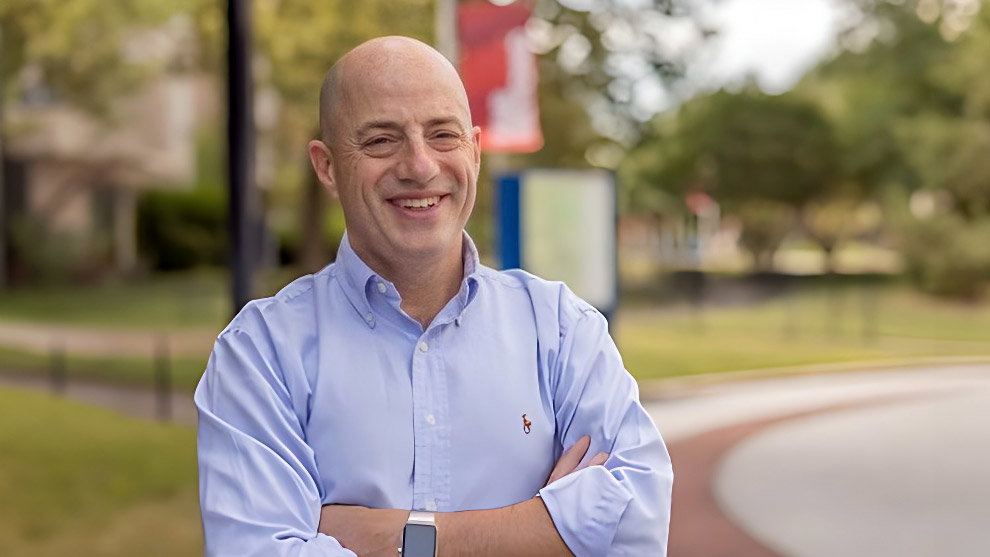
Perry Gershon, CEO of FTN Network

Perry Gershon, photographed as FTN's incoming chief executive. He has a habit of arriving in rooms nobody expected him in.

1987
Opened a sports bar
25+
Years in real estate finance
2
Congressional campaigns
$3M+
Seed round he led
Who he is now

The boss of the people who do the math.

Perry Gershon runs a company called FTN. The letters stand for "For The Numbers," which is either a mission statement or a confession, depending on how you feel about spreadsheets. FTN sells data, projections and analysis to people who play fantasy sports and bet on games - the kind of customer who wants to know a quarterback's expected value before he wants to know the score.

Gershon did not build FTN. He bought into it. In late 2023 he acquired a majority stake from founder Kevin Adams, took the CEO chair, and within two months had closed a seed round of more than $3 million, with backing that included a Techstars fund. Adams stayed on as chief strategy officer and joined the board. The handoff was clean. The math, fittingly, worked out.

What he's building

A data house for the betting age.

The timing is not subtle. As legal sports betting spread state by state across America, the appetite for sharp numbers stopped being a niche hobby and started being a market. FTN sits squarely inside it, straddling two customers at once: the everyday fan on DraftKings or FanDuel who wants better rankings, and the businesses that want to license the underlying data.

Under Gershon, FTN leaned into both. The company's consumer subscription revenue grew nearly 60% over the prior year, and third-quarter 2023 revenue reached roughly $1.05 million - a 52% jump. He then pushed the catalog outward: NBA data access for customers in 2024, plus MLB, NHL, PGA Tour and a deliberate bet on the surging WNBA.

The crown jewel he inherited and elevated is a name fantasy obsessives already revere: Aaron Schatz, the analyst who invented DVOA - Defense-adjusted Value Over Average - and built Football Outsiders into the analytics bible of the NFL. Bringing Schatz and his methodology under the FTN roof gave the company something money cannot quickly buy: credibility with the people who actually read the footnotes.

Gershon also put FTN on the radio, launching The FTN Fantasy Show on SiriusXM. For a man whose first business was helping strangers watch games they could not otherwise see, there is a tidy symmetry to now being in the business of helping them understand what they are watching.

I'm not a career politician.
Perry Gershon, on the campaign trail
The strange specific

He has been selling access to sports for almost forty years.

Fresh out of Yale in the mid-1980s, Gershon did not march straight into a corner office. He opened a bar. Not just any bar - one of the first places in New York City where a fan could walk in off the street and watch a local team's game that the networks would not carry. Before the streaming era, before the second-screen era, before the very idea that you were owed every game on demand, Gershon had already figured out the underlying truth of his entire career: people will pay to follow the teams they love, and they will pay more for an edge.

The bar was called the Polo Grounds, a wink at the old Manhattan ballpark. It was a strange thing for a magna cum laude biophysics graduate to do. But strange first moves are the throughline of his story, and the bar was the seed of everything that followed - a bet that sports fandom was an industry, not just a pastime.

Pedigree

A scientist who never quite left the lab.

Gershon's bachelor's degree is in molecular biochemistry and biophysics, earned magna cum laude at Yale in 1984. He later collected an MBA from the University of California, Berkeley's Haas School - bicoastal credentials for a man who would spend his life in New York. He was a scientist before he was anything else, trained to trust the data and distrust the hunch.

It runs in the family. Both of his parents built careers as medical researchers and professors at Columbia University. Gershon grew up around people who measured things for a living - which makes a company literally named "For The Numbers" feel less like a swerve and more like a homecoming.

Three degrees of Gershon

  • Yale University - B.S., molecular biochemistry & biophysics, magna cum laude, 1984
  • UC Berkeley (Haas) - M.B.A.
  • The family table - two Columbia research professors for parents
The middle act

Twenty-five years deciding who gets the loan.

Between the bar and the ballot, there was the balance sheet. Gershon spent more than a quarter century as a commercial real estate lender, the person on the other side of the table when developers came looking for capital. He rose through senior roles - chief investment officer, chief operating officer - at firms including RBS Greenwich Capital, Jefferies LoanCore and LoanCore Capital.

It was a career built on the same instinct that powers FTN: pricing risk correctly when the future is uncertain. A lender and a fantasy analyst are, deep down, doing the same job. Both are asked to assign a number to something that has not happened yet. In 2017, Gershon divested from his company. He was about to assign a number to himself.

The detour into democracy

He ran for Congress. Twice. He came close once.

In 2018, Gershon did the thing successful businessmen usually only threaten to do at dinner parties: he actually ran. He entered a crowded Democratic primary in New York's 1st Congressional District - the eastern end of Long Island, Hamptons included - and won it, beating four rivals to claim the nomination. Then he faced two-term Republican incumbent Lee Zeldin in November.

He lost. But not by much. Zeldin took it 51.5% to 47.4%, a roughly four-point margin in a district that had not been treating Democrats kindly. For a first-time candidate, coming that close to an entrenched incumbent was a genuine result, the kind that gets you taken seriously the next time.

So he tried again. In 2020 Gershon entered the NY-1 primary a second time and lost the nomination to Nancy Goroff. Two campaigns, two defeats, zero seats in Congress - and yet the man who insisted he was "not a career politician" had at least proved he meant it. He went back to business. Three years later, he found a different kind of race to run.

The whole strange map

Five careers, one restless operator.

1984
Graduates Yale, magna cum laude, in molecular biochemistry and biophysics.
1987
Opens the Polo Grounds, one of NYC's first sports bars, so fans can watch out-of-market games.
1990s - 2017
Builds a 25-plus-year career in commercial real estate finance, rising to CIO and COO roles at RBS Greenwich Capital, Jefferies LoanCore and LoanCore Capital.
2017
Divests from his company to run for public office.
2018
Wins the NY-1 Democratic primary; loses the general to incumbent Lee Zeldin by roughly four points.
2020
Runs for NY-1 again; loses the Democratic primary to Nancy Goroff.
2023
Buys a majority stake in FTN, becomes CEO in November, and leads a $3M+ seed round closed in about two months.
2024
Expands FTN's data into the NBA, WNBA, MLB, NHL and PGA Tour.
The margins

Notes pinned to the corkboard.

The win column

Two campaigns. One round.

He has run two political campaigns and one funding round. The funding round is the one he won - and it closed in roughly two months.

Full circle

Sports, then not, then sports

He opened a sports bar in 1987, spent decades far from sports in real estate finance, then came roaring back to sports as a data CEO.

The lab coat

A biophysicist first

Before the loans, the ballots and the betting, his training was in molecular biochemistry. He was measuring things long before he was selling the measurements.

The hire that mattered

He landed Mr. DVOA

Bringing Aaron Schatz, the inventor of DVOA and founder of Football Outsiders, under FTN gave the company instant credibility with hardcore analytics fans.

Star power

An A-list endorsement

His Long Island campaigns drew Hamptons wattage, including an appearance from neighbor Alec Baldwin.

Coast to coast

Yale to Berkeley

An Ivy League science degree on one coast, a Haas MBA on the other, and a career spent stubbornly in New York.

Where it's going

The next number.

The plan is not complicated, which is exactly why it might work. Gershon wants FTN to be the default data and content engine for fantasy sports and betting across every major league - not just football, but basketball, baseball, hockey and golf, served to fans and businesses alike. He inherited a respected brand and a respected analyst. The job now is to make "For The Numbers" the answer to the question every bettor and every fantasy manager keeps asking before they lock their lineup: what do the numbers say?