A driver pulls into a Petrol station for an uncomplicated reason: the car needs fuel. Behind the pumps sits a shop. Inside are coffee, food and things the driver might otherwise have bought somewhere else. That small rearrangement of an ordinary journey explains a great deal about Petrol Group. The Slovenian company has spent decades adding useful transactions to a place people already have a reason to visit.
- Fuel and convenience retail share the same customer stop.
- Electricity, gas and charging extend the relationship beyond the forecourt.
- Regulated fuel economics can squeeze even a busy network.
The company behind petrol.eu is Petrol d.d., Ljubljana, the parent of Petrol Group. Its business stretches across Slovenia and neighbouring Southeast European markets. Think of it as an energy distributor with a substantial retail operation: it supplies drivers, households, fleets, businesses and municipalities. Its expertise includes procurement, logistics, fuel testing and managing the places where energy reaches customers.
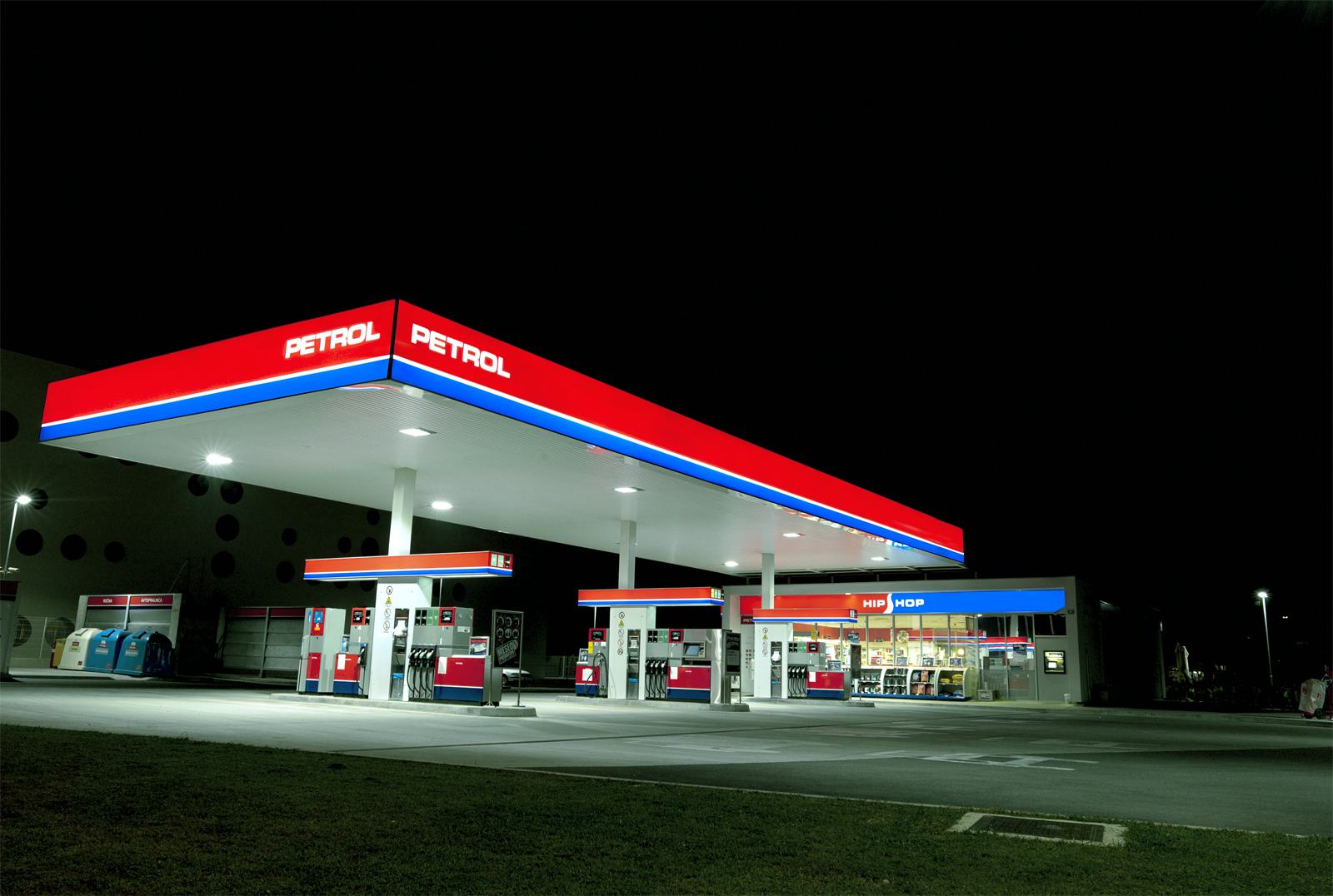
The shop changes the arithmetic
In 2025, Petrol Group reported €6.1 billion in revenue. Merchandise and services contributed €662 million. These are different kinds of sales, with different cost structures. A litre of fuel carries the price of the commodity through the accounts; a sandwich or coffee adds another transaction at the same location. Revenue alone tells you surprisingly little about the attractiveness of either business.
The group’s 2025 results presentation makes the distinction tangible. Fuel and petroleum products generated €157.2 million in EBITDA, while merchandise and services generated €97.3 million. Energy and solutions contributed €66.3 million. EBITDA is an earnings measure before interest, tax, depreciation and amortisation; it is not cash available to spend. Still, the split shows why a fuel retailer pays attention to what happens inside the shop.
The alternatives depend on the task. MOL and INA compete for fuel customers. For Petrol, the useful advantage is the combination of locations on transit routes, retail services and energy supply. That combination gives it several opportunities to serve a customer. It also leaves the company responsible for several demanding operations at once.
A habit built over decades
The expansion beyond fuel began well before electric cars. Petrol traces its origins to the Yugoslav government’s creation of Jugopetrol in 1945; the Ljubljana branch became independent in 1947. Its first modern service station opened in Solkan in January 1953. By 1960, it had entered catering through a restaurant in Čatež. Feeding people alongside their vehicles has a longer pedigree than the smartphone.
The business kept adding ways to organise the customer relationship. A first franchise agreement arrived in December 1990. The Magna payment card followed in 1993. Petrol shares began trading on the Ljubljana Stock Exchange in 1997. These were practical changes to operating the network, collecting payment and financing a company whose useful assets were spread across many locations.
Expansion also required a substantial cheque. In October 2021, Petrol acquired Croatia’s Crodux Derivati Dva for €191.7 million and assumed €19.2 million in net bank debt. A €200 million syndicated loan financed the purchase and refinancing. Petrol said the deal consolidated its position as Croatia’s second-largest petroleum-products provider. Buying geographic density meant accepting the debt and integration work alongside the additional sites.
The cable beside the pump
By the end of 2025, the group had 598 service stations. Separately, it operated 694 public charging stations, providing more than 1,150 charging points. Keep those units separate: a charging point serves a vehicle; a service station is a retail location. The counts describe different pieces of infrastructure, rather than interchangeable measures of size.
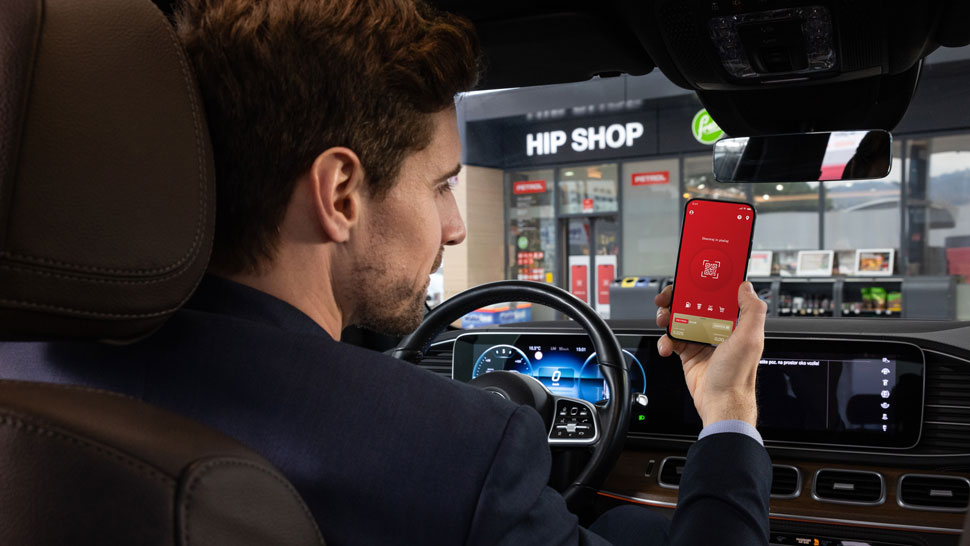
For drivers, OneCharge offers charger discovery, availability information and payment. Petrol GO addresses another part of the visit: paying for fuel from the car, buying coffee, ordering food and scanning shop goods. Together, these services reduce the small delays that make a routine stop annoying. Drivers still need to check the relevant tariff, equipment and vehicle compatibility.
The wider energy business reaches beyond motorists. Electricity and natural gas supply bring Petrol into homes and workplaces; heating, efficiency and public-lighting projects serve businesses and municipalities. Its February 2025 partnership with NGEN adds digital energy management and flexibility, including coordination of consumption, generation and battery storage. For an industrial customer, the problem is managing energy costs and timing rather than finding the nearest pump.
More litres, less room
Then came an awkward demonstration of the core business’s limits. Petrol reported a €27.5 million loss from Slovenian petroleum-product sales in March 2026. The company blamed volatile procurement costs and a regulated pricing model that could not adjust adequately. That is management’s explanation, not a neutral verdict on regulation. The operating lesson is clear: additional demand cannot rescue a sale whose economics have turned against the seller.
“Strong core, ambitious transition.”Petrol Group’s 2026–2030 strategy slogan
On 8 October 2026, Petrol warned that full-year EBITDA would be 15–20% below plan. Its investment programme faces the same financial reality. The group invested €100 million in 2025; first-half 2026 net investment was €58.2 million, 43% below plan. The latter shortfall, Petrol said, reflected constraints from the domestic regulatory framework.
Borrow the adjacency
My reading of Petrol’s approach is useful beyond energy: start with an existing customer habit, then solve the task beside it. Food belongs beside a road journey. Payment belongs inside the phone already in the driver’s hand. Energy management belongs beside an electricity contract. Each addition needs its own workable margin.
The conditions matter. This approach needs traffic, capital and operational skill; charging also needs grid access and enough use to justify its cost. Petrol’s stated goal of more than €500 million EBITDA in 2030 remains an ambition. The next chapter depends on whether the ordinary stop can pay for everything being built around it.