A consultant once gave Peter V. Stanton a piece of advice about running his public relations agency: put the firm first. In Stanton’s later account, the consultant ceased to be part of the arrangement. The clients remained the priority. It is a small episode, almost too tidy for a business memoir, but it tells you where this particular founder draws the line. An agency can become so absorbed in its own success that it forgets whose problem it was hired to solve.
Stanton founded Stanton Communications in 1989. He had already worked on assignments involving Pope John Paul II’s American tour and communications around the shuttle Discovery’s return to space. Those are substantial occasions to have on a résumé. Yet the recurring subject in his writing is less spectacular: paying attention, understanding what people need, and resisting the temptation to confuse a busy agency with a useful one.
His career offers a look at how that preference plays out over time. It appears in the way a campaign starts, the way partners are chosen abroad, and the question of who should own the business after decades of building it. Even the founder eventually has to listen to an answer that makes his own name a little less central.
The consultant whose advice did not stick
Stanton began with a one-person shop. His earlier agency experience was at the business now known as MSL, where he spent nearly a decade before starting out independently. The founding proposition was straightforward: clients should get the attention and judgment of experienced people. An agency’s size did not excuse it from that obligation.
Early work ranged from technology to the Preakness Stakes. The breadth matters because it makes the founding principle more demanding. A racing event and a technology company do not arrive with interchangeable needs. The adviser has to learn enough to be useful without acquiring the delusion that a few meetings have made him the client’s intellectual superior.
Stanton’s published advice is unusually alert to that delusion. He treats humility as part of the work. Expertise gives a communicator something to contribute; it does not grant ownership of every answer. There is a pleasingly practical consequence to this outlook. When a plan needs changing, the adviser can change it without first staging a small funeral for his own genius.
“Deliver your counsel with humility.”
Peter V. Stanton
An ear for the unfinished sentence
Stanton studied psychology before making his career in communications. By 2023, he was writing explicitly about the value of listening in public relations. He described a planning process that makes room for conversation before the campaign hardens into a proposal. The questions concern the organization’s goals, its understanding of success and the people whose views deserve attention.
A discussion guide helps, but he leaves room for the person being interviewed to take the conversation somewhere unexpected. Anyone who has endured a meeting in which the questions matter more than the answers will appreciate the distinction. A useful exchange can wander. The revealing detail may arrive after the prepared questions have run out.
In one example he described, a utility wanted help communicating its investments in reliability after prolonged storm outages. Conversations with customers revealed complaints extending into everyday operations. That changed the problem the company needed to address. The lesson was uncomfortable and useful: explaining the investment would only take the company so far if other frustrations remained untouched.
Listening can therefore alter the assignment itself. It asks the adviser to risk discovering that the proposed solution is incomplete. For a profession paid to offer answers, that requires some composure. It also gives clients a reason to trust the eventual recommendation: their experience has had a chance to shape it.
- 01AskWhat would success change?
- 02ListenLet the conversation develop.
- 03ReviseBuild the plan around what you learn.
An editorial illustration of the planning approach he describes.
The people outside the camera frame
There is another side to this quiet method. Stanton has worked around events in which attention is measured in thousands of journalists. His career includes media logistics and coverage coordination for four papal visits to the United States. The photographs belong to the public occasion. Behind them sits a less photogenic world of credentials, access arrangements and places from which a camera can see.
The 2015 New York visit of Pope Francis makes that work tangible. Stanton’s team worked with the Archdiocese’s press office on media access. At a Harlem school, security plans initially constrained who could see the arrival. Negotiations helped create an opportunity for children to greet the Pope. Their encounters became part of the visit’s public memory.
That detail offers a useful way to think about Stanton’s profession. A public message depends on arrangements that allow people to encounter it. Access can determine the story a photograph tells. A credential, dull as it sounds, may be the difference between an event happening and an event being seen.
Papal visits to the United States with media logistics and coverage coordination in Stanton’s career.
His participation also appears in the acknowledgments for the Madison Square Garden Mass. There, Stanton Communications is identified under his leadership among the organizations supporting the occasion. The acknowledgment suits the work: a name in the practical machinery of a much larger event, helping others get close enough to do their jobs.
A founder makes room at his own table
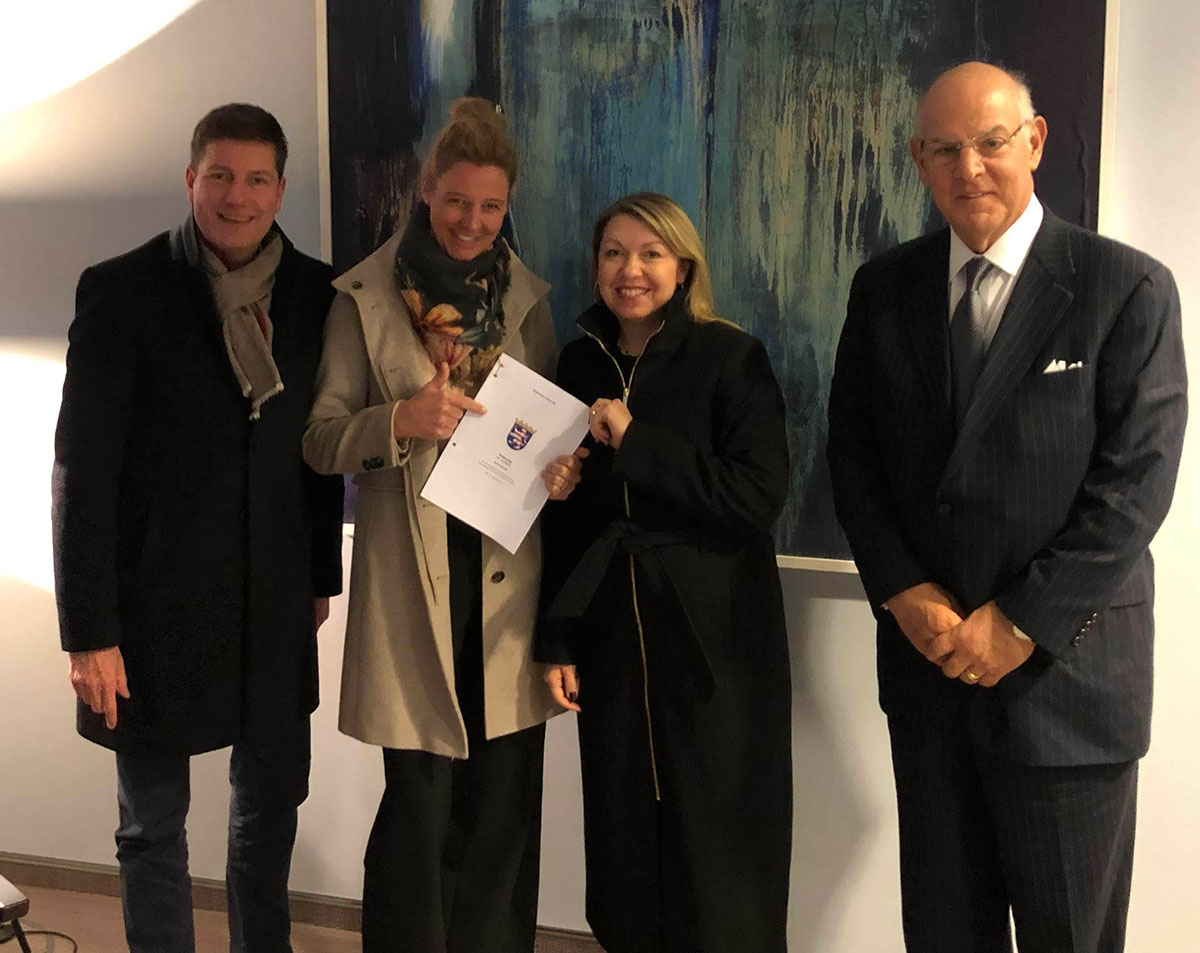
In January 2022, Stanton described a decision with a different kind of audience. Lori Russo and Emily Wenstrom had gained equity in the agency. For decades, the firm had operated under a sole owner. Now the people helping lead it would hold a formal stake in its future.
He had received inquiries about an acquisition. The familiar founder’s calculation was available: sell a business, realize the value, consider what comes next. Stanton widened the calculation to include colleagues whose talent had helped produce that value and clients who depended on familiar leaders. A buyer’s check could not answer every question those relationships raised.
The ownership change followed a collective examination of the firm’s culture. It gave the discussion a concrete consequence. Russo and Wenstrom became owners, while Stanton continued at the helm with an expressed interest in guiding another generation. The decision also preserved the firm’s independence.
It is easy to declare that a company belongs to its people in some expansive, emotional sense. An equity stake has the advantage of being considerably more specific. In Stanton’s case, ownership became a way of acknowledging contributions already made and offering experienced leaders a reason to help shape what followed.
A passport is a poor substitute for a local ear
The same question of whose judgment counts appears in Stanton’s international work. He helped build PR World Alliance and went on to develop regional businesses with independent partners. Joe Communications serves transatlantic needs; Melius was formed with partners at Argentina’s Minerba Corporate Communications to work across the Americas.
For Melius, the partnership had a long runway. Stanton and Minerba founder Patricia Santa-Marina began discussing an alliance in 2019. The new firm launched in 2023, based in Miami, with the two founders as equal owners. Their existing agencies continued serving clients whose needs did not require the new cross-border arrangement.
That structure recognizes a practical limit to the agency map. Having a country shaded on a presentation slide says little about the depth of understanding available there. Cultural expectations, business customs and preferred channels can all affect how a message is received. A partner with local knowledge brings judgment that headquarters cannot supply merely by approving the wording.
Stanton returned to this argument in a July 2025 conversation with Art Stevens on the PR Masters podcast. He described regional expertise as a response to clients whose needs reach beyond a single country while still requiring attention to local differences. The ambition is international; the working relationships need to remain close enough to notice detail.
“Clients need a pan-regional approach as much as they need support in a single country.”
Peter V. Stanton
Joe’s leadership brings American and European practitioners together, including Stanton, Russo, Wenstrom, Christian Josephi and Meike Grisson. The arrangement gives his argument a business form. Independence can accommodate cooperation across borders. It requires choosing people whose understanding adds something the original firm does not possess.
The report that needs a question
There is a final part of Stanton’s outlook that deserves space beside the events and partnerships. He has argued for examining what coverage accomplishes, beyond counting how much of it appears. A message can generate activity without reaching the audience whose decisions matter. The total alone cannot tell you whether the work served its purpose.
His more recent activity keeps him close to the daily business of running an agency. In June 2025, he welcomed the return of Angela Ruggiero as director of strategic communication. She had previously worked at Stanton from 2007 to 2013. Bringing back an experienced colleague gives the language of relationships a recognizable, ordinary setting: someone chooses to return.
There has been recognition, too. In March 2024, the firm announced his Indie Legend Bronze Award from thenetworkone’s 2023 awards cycle. Later that year, interviewer Helen Anderson described his calm, reassuring manner. It is another person’s impression, but it fits the pace of the ideas he has repeatedly put into writing.
The through line is attention. It survives a change in the size of an audience, from a client conversation to a papal visit, and a change in the size of a decision, from revising a plan to sharing ownership. After decades in a business devoted to being heard, Stanton still gives people a reason to finish their sentence.