In the mailroom of Senator Daniel Patrick Moynihan, Jennifer Curley learned a peculiar fact about persuasion: it arrives in piles. The office could receive 10,000 pieces of mail in a week. Each envelope was only a small signal. Together they became something that had to be counted, logged and carried upstairs. Washington, she saw, did not merely listen to messages. It noticed patterns.
Curley later worked in the White House and State Department protocol office, ran Edelman's technology policy practice, and in 2002 put her own name on the door. Her founding complaint was almost modest. Agencies said they put clients first, but she thought the service could be sharper: more strategic thinking, more problem solving, more daily evidence that the account had to be earned again.
That became Curley Company, a woman-owned strategic communications and public affairs firm headquartered a few blocks from the White House. Its clients range from Fortune 100 companies to trade associations, nonprofits, health systems and startups. They tend to arrive with problems that refuse to stay in one department: a policy fight that needs public support, a leader with expertise but no platform, a reputation threatened by a fast news cycle, or a complicated issue that must make sense before anybody will care.
The death of the single loudspeaker
The agency's memorable phrase for its answer is surround sound. It means that a campaign should not depend on a single press hit, a single social channel or a stack of identical postcards. First decide whose behavior matters. Then shape a clear message for that audience. Finally, coordinate the places where the message can credibly appear: a reporter's story, an executive's voice, an advocate's email, a stakeholder meeting, a short video, a social post, an event.
The first thing to fail in this model is the old fantasy that one prestigious outlet automatically creates influence. Curley now describes media as a network rather than a newsstand. A beat reporter with a few thousand policy readers may matter more than a famous masthead with a huge general audience. The useful question is not merely, “How many saw it?” It is, “Who carried it into a briefing, a hearing, an earnings call or another story?”
“Influence today lives in networks, not newsstands.”Curley Company, 2026
What happened after people heard it?
The portfolio supplies unusually tangible answers. For Inova Health System, Curley built a values-driven news engine around the hospital's bench of experts. Over three years it produced more than 3,000 media hits for hundreds of spokespeople, from CNBC and NBC Nightly News to local and health-trade outlets. This was not one lucky headline. It was an operating rhythm that kept matching the right expert to the right moment.
In a national transportation campaign, the agency combined earned and paid media with coalition building and generated more than 10,000 letters to Congress. Other digital advocacy work motivated women in Connecticut and Texas to act on health legislation; Curley says thousands of letters helped support two bills that became law. For CES, the agency has managed organic social, digital and media work since 2019, using the world's largest technology show as both an event and an always-on source of industry authority.
This is where Curley sits in the market. A large network agency can offer global scale. A specialist advocacy shop can mobilize a list. An in-house communications team knows the institution from the inside. Curley sells the connective tissue: senior counsel and execution across public affairs, messaging, earned media, digital, creative, reputation and crisis work, delivered by a team small enough to change course before a news cycle is over.
The pandemic changed the tempo
Curley was founded before Facebook, Twitter or LinkedIn existed. The firm's earliest advantage was classic Washington fluency: the personalities, process and politics behind a decision. Digital media did not replace that knowledge. It multiplied the number of routes into the room.
Then 2020 compressed the timetable. Clients needed crisis counsel, new event formats, digital advocacy and brand repositioning at once. Curley created a rapid-response offer called Pivot, hired into digital and expanded its association practice. Fee income grew 63 percent to nearly $4 million, while the association business grew 47 percent. The firm later reported three consecutive years of triple-digit organic growth, a doubled client roster and a tripled operating profit.
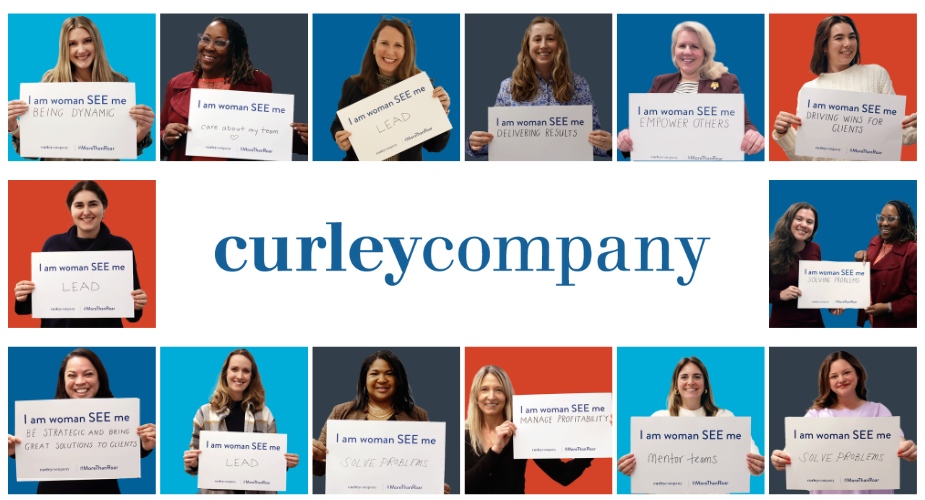
Growth can make a service business worse if every new account dilutes attention. Curley's response was partly operational and partly cultural. KayAnn Schoeneman became president in 2022, separating more day-to-day leadership from the founder's role. Curley College formalized professional development. The company adopted SEE - Service, Empathy, Excellence - as its stated values, along with summer Fridays, mandatory paid time off and a culture committee. PRWeek named it a Best Place to Work three years running through 2024. For an agency whose product is judgment, keeping good judges is not an HR footnote. It is quality control.
A second coast and a second audience
In 2025 the company opened Curley West in Seattle under Heather Knox, a communications executive with experience at Microsoft, Amazon and SAP. The geography expresses the new pitch. Washington understands policy and regulation; Seattle understands platforms, AI and fast-moving technology companies. Modern corporate problems tend to involve both.
The agency also packaged part of its thinking into a three-session Executive Impact Accelerator. It asks a leader to find the overlap among what the public cares about, what the organization can credibly own and what the executive has personally earned the right to say. The output is not simply more posts. It is a narrative, a channel strategy and a roadmap for sustained influence.
By 2026 Curley was arguing that AI itself had become an audience. Answer engines read an organization's website, compare it with earned coverage and retell the story before a customer or policymaker ever visits the home page. The technical advice - structured pages, consistent naming, clear summaries - sounds new. The strategic advice is the mailroom lesson again: make the pattern legible.
The part worth stealing
- Name the action before choosing the channel.
- Map the people who can confer trust, not merely the people with the largest audience.
- Give every channel one disciplined narrative, adapted to its context.
- Measure what traveled and what changed, then prune the rest.
This method is not magic. Repetition cannot rescue a weak claim, manufacture expertise or substitute for a product that disappoints people. It also loses its advantage when an organization cannot agree on the action it wants or cannot respond quickly enough to the conversation it starts. Surround sound works when the core is credible and the channels reinforce one another. Otherwise it is just noise in stereo.
Curley Company's most transferable idea is therefore smaller than a campaign and larger than a tactic. Communication is not the art of being everywhere. It is the discipline of making a useful signal recognizable wherever the people who matter happen to encounter it. Twenty-four years after Jennifer Curley first hung her name on the door, the media keep changing. The pattern is still what gets carried upstairs.