Peter Kiss once had a company of thirty people and enough paying work for five. A subcontract had stopped; other projects were ending. He kept the employees paid while Sentar looked for replacement business. It is an awkward opening for a story about a person whose business card said “Visionary.” Visions tend to photograph better than payroll obligations.
Yet the awkwardness is useful. Kiss’s career includes software engineering, artificial intelligence research and cybersecurity, subjects easily buried under a handsome mound of terminology. The decision to hold a team together gives those abstractions a human scale. Before a company can build its next system, somebody has to decide whether the people who understand the last one will still be there.
“I don’t like giving up, I’m much more of a long-term doer.”
Peter Kiss
The phrase offers a way into a career that began in research organizations and large corporations, passed through the purchase of a small Huntsville engineering business, and eventually reached national conversations about cyber talent. The future, in this telling, has rather a lot of ordinary work attached.
An engineer before an owner
Kiss came to entrepreneurship with an engineering career already behind him. He worked at IIT Research Institute, then joined General Electric as an analyst. At GE he progressed through chief engineer and deputy program manager responsibilities on a classified program, ultimately becoming manager of advanced programs. He also received management training at Crotonville, GE’s executive education complex.
BDM came next. There he developed a new business area, adding commercial responsibility to his technical experience. His work on missile-defense and battle-management programs dated from 1983. These were environments in which software belonged to a larger apparatus: people, procedures, equipment and decisions had to function together. An elegant answer to one isolated problem could still leave the whole system waiting.
In 1990, Peter and Karen Kiss bought Wake Research Group, a small systems engineering operation, and renamed it Sentar. The founding therefore involved taking responsibility for an existing business. There was work to continue, as well as a direction to choose. It is a less theatrical beginning than the empty garage, but it has the advantage of including something to do on Monday.
Sentar’s path soon changed. Two DARPA contracts in 1995 helped move the company toward research and development. Kiss served as CEO for twenty years, spanning the period in which a small engineering business built a technical identity around software, knowledge systems and, increasingly, cyber defense. The continuity matters: the later work grew from capabilities the company had already spent years developing.
- 1990Peter and Karen Kiss purchase the business that becomes Sentar.
- 1995Two DARPA contracts help shift the company toward R&D.
- 2025Sentar announces employee ownership through an ESOP.
When knowledge needed a network
The AI chapter begins well before the current enthusiasm for conversational interfaces. In the early 1990s, Sentar worked on knowledge-based systems, including methods for checking and validating them. Later projects investigated how intelligent software agents could cooperate across distributed systems. The underlying question was practical: how could knowledge held in different places contribute to an answer someone could use?
By 1997 and 1998, that work included the architecture called KnoWeb. Subsequent projects applied agents to knowledge design and intrusion detection. One way to read this history is as a series of attempts to manage complexity without requiring every useful piece of information to live in one place. The challenge is familiar to anyone who has tried to obtain a simple answer from three departments.
A patent publication makes Kiss’s contribution concrete. Published in February 2001, it names Peter A. Kiss, Robert S. Daniel III and Jeffrey S. Yalowitz as inventors of a system for distributed knowledge-based problem solving. Sentar is the original assignee. The document identifies KnoWeb as an example and describes software agents collaborating with knowledge modules to address problems submitted by users.
The division of labor is the interesting part. Different agents have different roles; knowledge is organized to match those roles; results must be coordinated. That description gives substance to an executive biography that might otherwise disappear into the word innovation. Kiss’s involvement included named technical work with named collaborators. A founder can sign the payroll and still have a place on the invention.
resource A
resource B
Conceptual illustration of distributed reasoning, not a reproduction of the patent architecture.
The civilian side of the problem
Cybersecurity became a focus of Kiss’s technical work in the early 2000s. The connection to distributed systems is easy to appreciate: the more components depend on one another, the more consequential their connections become. In Sentar’s history, work on intelligent agents fed into efforts to detect intrusions and support responses within missile-defense environments.
In 2015, Kiss was invited to a panel at the Association of Old Crows’ international symposium in Washington. Its subject was the application of electronic-warfare and cyber technologies to non-military requirements. The invited group included participants from Aerospace, MITRE and Gartner, with a chair from the Air Force Nuclear Weapons Center.
The announced discussion had a useful complication at its center. Technology developed for military purposes does not automatically fit civilian organizations. Capabilities can exceed what a user needs; design choices can introduce compromises; sophisticated electronics can become widely available to adversaries. The invitation placed Kiss in a conversation about translation, including the judgment required to decide what should cross from one setting into another.
That is a more demanding assignment than simply carrying a successful tool next door. The users change. The constraints change. The consequences of getting it wrong change. For an engineer whose career had crossed research, management and defense work, the panel’s premise brought several strands together: technical experience is valuable partly because it helps identify where an apparently familiar solution needs rethinking.
A classroom is part of the infrastructure
There is another dependency in cybersecurity that no software architecture can make disappear: someone has to learn how to do the work. On June 6, 2012, Kiss joined administration representatives and leaders from twenty private-sector companies at a White House discussion about future cyber jobs. Participants could offer ideas to officials including Homeland Security Secretary Janet Napolitano.
Kiss reached for a comparison close to Huntsville’s identity. Developing cyber talent, he argued, required the kind of national effort that had developed rocket scientists in earlier decades, with government, industry and academia working together. The comparison gave the workforce problem a timescale. Expertise develops through institutions and opportunities long before it appears on an applicant’s résumé.
In 2018, Sentar pledged $100,000 to U.S. Cyber Camp at the U.S. Space & Rocket Center. The commitment included curriculum support, technical expertise and speakers. Kiss connected the program to the difficulty of recruiting qualified cyber practitioners. Money mattered, and so did access to people who could turn the subject into something students could try.
In January 2020, the company announced a separate $100,000 gift to the Alabama School of Cyber Technology and Engineering Foundation. Kiss emphasized beginning education early. Dan Lambert, then a Sentar vice president and foundation board member, was also involved in developing the school. The involvement extended beyond one founder’s remarks into colleagues’ work and a local institution.
U.S. Cyber Camp pledge, 2018 · School foundation gift, 2020
These commitments make the talent argument tangible without requiring a prediction about any individual student’s future. A camp provides an encounter with a field. A school creates a longer opportunity to study it. Employers eventually benefit from a workforce that has somewhere to begin. In the meantime, the investment has to precede the convenient evidence that it worked.
The people who inherit the work
“Sentar was founded on the premise that employees are our most important asset.” Kiss returned to that principle when the company marked thirty years in 2020. The anniversary celebration took place at the U.S. Space & Rocket Center, bringing employees together with customers and corporate partners. The location neatly connected a company’s past with its interest in future technical talent.
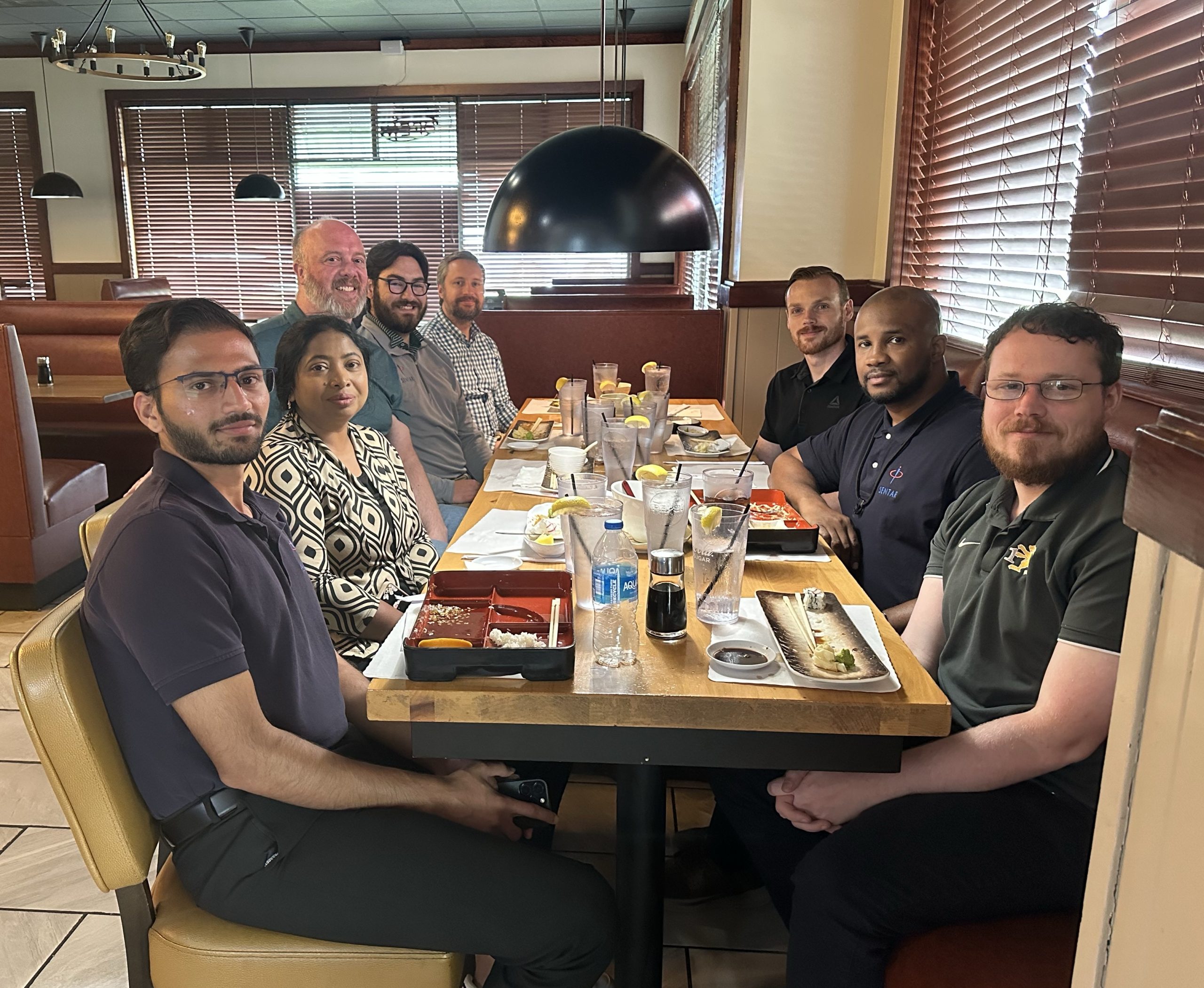
In July 2025, Sentar announced an Employee Stock Ownership Plan. Under CEO Bridget McCaleb, the company introduced a mechanism through which employees became co-owners and could share in its success. The development belongs to the organization Kiss helped establish; it also gives his longstanding emphasis on employees a later chapter with a financial structure attached.
It would be too tidy to turn thirty-five years into one uninterrupted plan. A purchase, research awards, new technical problems and an ownership change are different events, involving many people. What connects them in Kiss’s story is a recurring willingness to invest before the outcome becomes comfortable: in a business, in accumulated expertise, in people entering a field.
His chosen title leaves room for a little amusement. “Visionary” usually suggests someone gazing beyond the horizon. The career is more interesting at closer range: engineering responsibilities, collaborative invention, the maintenance of a team, the patient preparation of its successors. Staying in business means having a future for other people to arrive in. That is plenty of work for one business card.