A price looks so well behaved on a screen. It sits there with decimal places, perhaps blinking politely, and implies that the difficult thinking has already been done. Then somebody tries to trade. The best quote is on one venue, the deeper liquidity is on another, the hedge belongs somewhere else, and the software stack begins to resemble a kitchen drawer full of chargers. Peter Bai built his young career around this gap between seeing a market and actually moving through it.
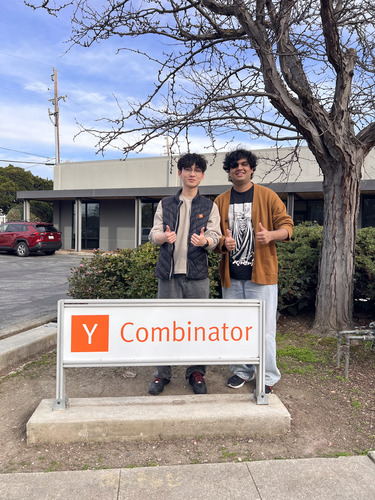
Bai is the Canadian co-founder and CEO of Sequence Markets, a company in Y Combinator's Winter 2026 batch. Sequence is building low-latency execution infrastructure across crypto exchanges, prediction markets, and tokenized-asset venues. Its pitch is less about inventing another place to trade than connecting the places that already exist. A user expresses one market view; the machinery underneath handles routing, venue connectivity, hedge legs, risk controls, and reporting.
The company is new. The obsession is not. Bai's YC biography begins with a declaration that deserves to be read at its intended volume: “I LOVE MARKETS RAHHHH.” The exuberance sits beside an unusually early apprenticeship. At 17, he was hired by TMX Group, whose businesses include the Toronto Stock Exchange. About a year later, he joined University Pension Plan Ontario, working around private investments and macro trading at a fund managing approximately $12.8 billion.
The serious work arrived with a playful résumé
If Bai's path sounds as though it was optimized by a career adviser, the details rescue it from neatness. He played organized youth hockey from 2011 to 2023, skating for teams including the Newmarket Redmen and Unionville Jets. He trained in classical piano through the Royal Conservatory of Music's Level 10 practical standard. At Western University, he pursued Management and Organizational Studies before entering Ivey Business School's Honours Business Administration program.
He also wandered. Bai slipped into lectures outside his program when the topic caught his attention. He automated small tasks for the pleasure of making them less tedious. A business student found himself leading Western AI, first in development and later as co-president. Under that student group's leadership, teams built projects, published research, presented at the Canadian Undergraduate Conference on Artificial Intelligence, and ran DataQuest, a 36-hour machine-learning hackathon.
The extracurricular record has the charming breadth of a form whose owner refused to respect the number of blank lines. Bai's public honours include first place at the 2025 UPP AI Summer Hackathon, honours standing in Level 10 practical piano, and podium finishes in classical-piano competitions. His hockey teams won the CAN/AM Hockey Championship, an Ontario provincial novice title, and a North York league championship. At Western, he made the dean's honour list.
None of those results predicts a routing company on its own. Together, they reveal a taste for practiced performance: learn the structure, repeat until the structure becomes instinct, then show up when the clock is running. Market infrastructure offers fewer medals and worse lighting, but it asks for a related temperament. Small timing errors compound. Coordination matters. A technically correct move can still produce a poor result if it arrives at the wrong moment.
A business background doesn't limit you to business.Peter Bai
Friends describe the social version of the same curiosity. At a Western AI mixer, Bai was the visible centre of the operation, running the event while students drifted toward him for advice. His own mentorship formula is brisk: find someone in the role you want, talk to them, learn from them. He values complementary partnerships, the sort in which one person supplies a technical depth and another brings a market or business lens.
There is an appealing lack of ceremony in his other advice. “So what if no one replies to your email?” he has said. “Whatever idea you have, just do it.” He calls “Just do it” his motto, Nike parenthesis included. One suspects the swoosh's lawyers can sleep soundly. Bai is interested in execution in both senses of the word.
One idea, too many pieces
Sequence began in August 2025 with a macro view that Bai and co-founder Muhammad Awan wanted to express across several digital markets at once. They needed a prediction-market position tied to a catalyst, onchain exposure in the rails they expected to benefit, tokenized-asset exposure where it made sense, and liquidity from the best available venue.
The ingredients existed. The meal did not. Bai and Awan had to stitch together venues, APIs, chains, contracts, and liquidity sources by hand. They already had terminal workflows for trading different views, but no single system connected every market they cared about. Traditional products stayed within traditional finance. Crypto tools stayed in crypto. Prediction markets and tokenized assets occupied still other islands.
The user thinks in the trade. The infrastructure thinks in connections, paths, controls, and fills.
Their frustration became the product brief: build the system they had wanted to use. Sequence would let traders package one view into one trade, while proprietary routing software and low-latency connectivity worked underneath. The product surface includes a terminal for human users and API, SDK, and MCP access for algorithms and agent workflows. The same execution layer is meant to serve active traders, funds, market makers, and software.
This is a subtle product choice. Sequence does not ask a trader to admire its network map. It asks the trader to stop carrying the map. The complexity still exists, of course. It simply becomes the system's responsibility.
Speed matters, but the fill matters more
In execution technology, low latency is not decorative engineering. A route that waits can become a route to a price that no longer exists. Sequence says its internal latency is roughly two microseconds and that its network has run as much as 2.5 times faster than public-internet paths on benchmark routes. Those are company benchmark figures, useful as a description of the engineering target rather than a promise about every trade.
Bai frames the larger problem as execution quality and certainty. The visible quote is only one variable. Slippage, failed hedge legs, venue access, operational drag, and what can be reconstructed after a fill all change the result. The company begins in crypto because fragmentation is already acute there, then plans to extend the same system toward prediction markets and tokenized assets.
Sequence also reported that its first-week signup base represented $104 billion in self-reported trading volume. That figure is not money routed through the platform; it describes the trading volume claimed across those prospective users. The more concrete product signal was over $10 million in test volume completed on the platform within two weeks. For a small team, the numbers suggest that the irritation Bai and Awan encountered was not uniquely theirs.
If your intent is to do something in a market, you should be able to do it.Peter Bai and the Sequence Markets team
Thinking in views instead of venues
Bai's aspiration is not merely to make a faster crypto terminal. Sequence's longer view is that more assets will enter a common digital market stack while the connective infrastructure remains stubbornly fragmented. If that happens, the valuable position may belong to the layer that translates human or machine intent into the best executable path across many kinds of market.
That ambition comes with an honest difficulty. Every added venue brings its own interface, failure modes, liquidity, geography, and operational rules. A system promising simplicity to the user must absorb that variation without hiding the facts that matter. The product has to be both invisible and explainable: quiet while it works, legible after it fills.
Here Bai's mixed portfolio begins to look less mixed. Hockey is systems plus repetition. Piano is timing plus precision. Student leadership is the art of getting different specialists to play the same piece. Macro trading is a view searching for expression. Even his fondness for wandering into unrelated lectures belongs to the pattern. He likes interfaces between disciplines, then asks whether the seam can be made useful.
At the moment, Sequence remains an early company with a large map in front of it. Bai and Awan have chosen the seam rather than the spectacle: routing instead of another venue, execution instead of another prediction, plumbing instead of marble. Markets will always reward a good idea. They are less generous about a good idea that arrives late, fills badly, or cannot find the right door.
Peter Bai started close enough to exchange machinery to notice the difference. Now he is trying to turn that difference into a business.