The alarm is the size of a key fob. Press its yellow button and the quiet machinery begins: the device finds a location, opens an audio channel and lands the call with a trained controller in Epsom. On Peoplesafe's published average, somebody answers in under three seconds. The controller sees who is calling, where that person should be and what their employer wants done. A false alarm may end with a password. A real one can move directly to police.
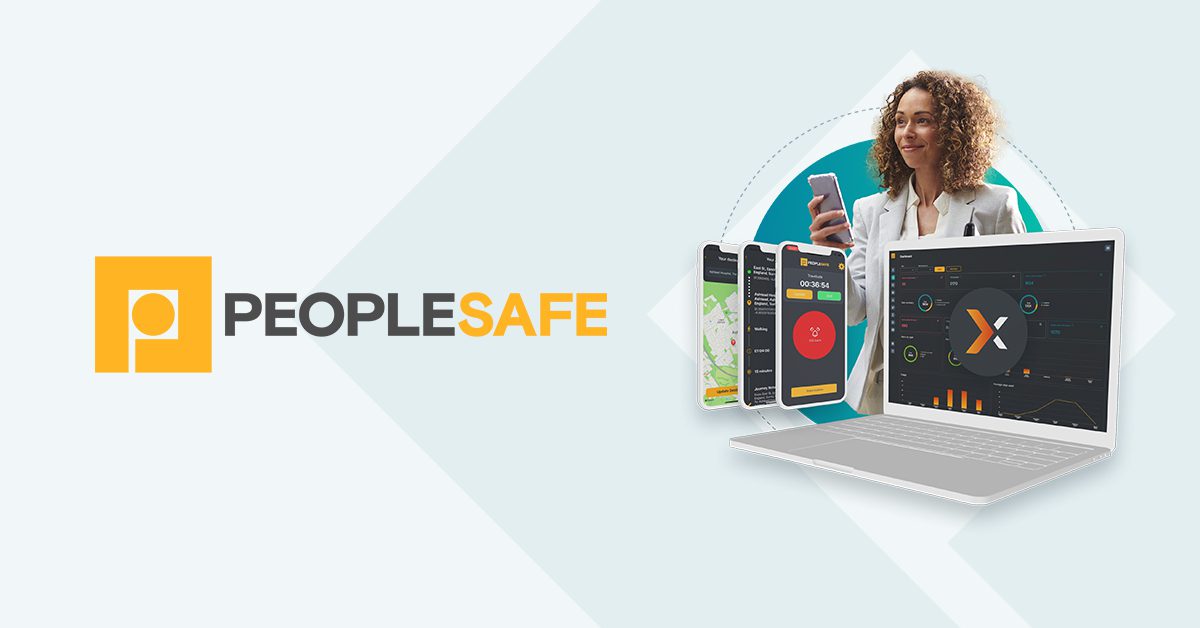
That sequence explains Peoplesafe better than its crowded catalogue. The company sells smartphone apps, watches, badges, rugged alarms, satellite messengers, body cameras and mass-notification software. Yet the object is only the edge of a managed safety network. At its centre is Nexus, the administration and reporting platform, and a continuously staffed Alarm Receiving Centre, or ARC. The proposition is deliberately heavier than “download an app and hope.”
A panic button grew into a platform
Peoplesafe did not begin in an innovation lab. Police officers founded its predecessor, Skyguard, in 2001 to protect people vulnerable to domestic abuse. Brothers James and Will Murray bought Skyguard in 2010 through Send for Help Group, launched the MySOS alarm and widened the target from victims at home to people working alone. Guardian24 arrived by acquisition in 2014, Rocksure in 2017. ECI Partners bought the group in 2018 and helped turn the cabinet of brands into one name: Peoplesafe, relaunched in 2020 under chief executive Naz Dossa.
The most consequential investment was less visible than the new logo. In 2019, the business moved to Epsom and built a purpose-designed control room to EN 50518 standards. A visiting MP later described the steel-reinforced, bomb-proof, airlocked facility. That is an unexpectedly physical foundation for a SaaS story, but safety software has to terminate somewhere. Peoplesafe chose to make that somewhere its own building and its own staff.
What happens after the press
This vertical control is the useful distinction. Smaller rivals may provide an app and outsource monitoring to a general-purpose centre that also handles property alarms. Peoplesafe says its controllers deal specifically with personal-safety events, while customers can create different escalation instructions for different teams and risks. The company is accredited to all five parts of BS 8484 covering the supplier, device or app, staff, receiving centre and response. That standard matters because a verified alarm from a compliant service can take a defined route to police rather than simply dropping the worker into the public 999 queue.
“If a system is difficult then staff just won't use it.”Karl Reid, health, safety and security manager, quoted by Peoplesafe
The first failure is usually boring
A safety service can be impeccable in a demonstration and absent on a bad Tuesday. The phone has no signal. Location permission was switched off. The dedicated alarm sat uncharged in a drawer. An employee changed teams, but the escalation plan still calls an old manager. Or staff simply stopped checking in because nothing happened for six months. Peoplesafe's own end-user terms make the dependencies plain: alerts rely on third-party networks, device capability, GPS, battery and environmental conditions. No provider can guarantee an uninterrupted path.
A silent battery produces a very quiet safety programme. Charging and test routines belong in the shift, not the manual.
Apps need a network. Roamsafe uses an eSIM to seek available mobile coverage; SPOT devices serve satellite use cases.
The controller needs the right person, location and contacts. Nexus APIs can sync joiners, leavers and role changes.
Low usage defeats good hardware. Training, welfare checks and reports reveal whether protection has become routine.
The product roadmap reads like a campaign against these boring failures. The current MySOS has a roaming SIM, 4G, fall detection and GPS plus Wi-Fi positioning. Its magnetic charger removes a common source of damaged ports. Roamsafe seeks another mobile network when the usual one disappears. Travelsafe monitors a planned journey and checks in when somebody misses an arrival. Nexus APIs connect with HR directories so administrators do not have to retype the workforce. The technology is not magic; it is redundancy arranged around predictable human and mechanical lapses.
What the safety net costs
Peoplesafe has two shops under one roof. Individuals and small teams can buy online. The basic SOS App is listed at £4.99 upfront and £4.49 a month. The more capable PS Pro App costs £7.99 monthly after the same upfront fee. A MySOS unit costs £49.99 to £54.99, then £14.99 to £16.49 a month. The 4G ID badge is £64.99 and £19.99 monthly. Larger employers negotiate per-user subscriptions, hardware and options; a published UK government-cloud schedule shows rates declining with greater volume and longer commitments. Peoplesafe Alert carries no setup charge, but its recurring price depends on administrators and audience size.
| Public offer | Upfront | Monthly |
|---|---|---|
| SOS App | £4.99 | £4.49 |
| PS Pro App | £4.99 | £7.99 |
| MySOS | £49.99-£54.99 | £14.99-£16.49 |
| MySOS ID Badge 4G | £64.99 | £19.99 |
That subscription pays for more than licence access. There is hardware support, onboarding, reporting and the standing cost of people ready to answer at strange hours. It also creates recurring revenue attractive to private equity. Summa Equity acquired control from ECI in January 2026 for an undisclosed amount. ECI kept a minority stake and reported a 2.7-times return on its eight-year investment. The announcement disclosed £22.6 million of revenue in the previous financial year, giving the market at least one firm scale marker without pretending the private deal price is known.
Customers changed the definition of “at work”
The conventional user inspects a housing property alone, repairs a utility in a field, visits a patient at home or closes a shop after dark. More than 100 NHS trusts have used Peoplesafe, alongside councils, L&Q, Capita, LNER, The Works and other employers whose staff meet the public away from a desk. The Works allocates MySOS units to sites it judges at risk and can extend protection to a colleague being harassed outside work. L&Q mixes hardware for frequent frontline visits with an app for lower-risk roles; its administrators praise the API for keeping employee records current.
Tesco stretched the perimeter further in September 2025. It made Peoplesafe's journey-monitoring app available to 300,000 UK retail and distribution colleagues after listening sessions found that some felt unsafe travelling to and from work. The app can watch an opted-in trip, prompt a welfare check and involve the control room if the traveller is late or does not answer. It is optional and follows the person beyond the store. Openreach followed in 2026 with a rollout across 27,000 employees.
The shift is commercially important. Peoplesafe began with the obviously exposed lone worker. It now sells to the whole workforce, including hybrid staff, commuters and international travellers. Alert and Team Broadcast add one-to-many crisis communications. Alarm Intelligence, introduced in 2025, uses AI in a dedicated UK Azure environment to condense closed-alarm logs into a narrative, key facts and a timeline. Sensibly, the feature tackles paperwork after an incident rather than asking a model to decide the emergency.
The expansion lesson: research before airfare
Peoplesafe's most copyable strategic move happened before its 2023 purchase of Canadian app company OK Alone. Working with ECI's New York team, it mapped customer concentration, search demand, regulation, associations and events across US states, Canadian provinces and industry verticals. The study chose where commercial effort should go before the acquisition closed. It is a prosaic answer to the grand question of internationalisation: score the map, then hire.
ECI says North American recurring revenue doubled after the deal, while trailing-twelve-month regional ARR growth accelerated from roughly 40 percent at acquisition to 65 percent. New customers included corrections departments in Florida and Nebraska and Fraser Health in home care. Existing OK Alone partnerships with workforce platform ADP and fleet system Geotab supplied distribution and integrations. This approach works when regulation, employer liability and a dense target sector create enough willingness to pay. It is less persuasive where mobile coverage is thin, emergency-service integration is weak, workers reject monitoring, or a company will not maintain the underlying data and training.
Five turns in 25 years
Police officers create Skyguard for domestic-abuse protection.
MySOS launches, three businesses combine, ECI invests and Peoplesafe becomes the single brand.
Nexus launches and the OK Alone acquisition opens North America.
Travelsafe, Roamsafe and Alarm Intelligence widen both use case and platform.
Summa Equity takes control; ECI remains a minority investor.
There is a useful modesty to the best version of the Peoplesafe pitch. It cannot remove a hostile customer, a slippery ladder or a dark commute. It gives an exposed person a short route to somebody trained, informed and awake. Employers can copy the operating logic without buying the product: assess each role, choose the least intrusive tool that fits, write specific escalation rules, sync personnel changes, practise the alarm and inspect usage. The hard part is not ordering yellow buttons. It is keeping the chain intact until the day one of them matters.